Unisciti a noi in un viaggio nel mondo dei libri!
Aggiungi questo libro allo scaffale
Grey
Scrivi un nuovo commento Default profile 50px
Grey
Iscriviti per leggere l'intero libro o leggi le prime pagine gratuitamente!
All characters reduced
Everybody's business - cover

Everybody's business

Agnes Giberne

Casa editrice: Good Press

  • 0
  • 0
  • 0

Sinossi

In "Everybody's Business," Agnes Giberne weaves a compelling narrative that explores the dynamics of social responsibility and communal life in a rapidly modernizing world. The text exhibits a rich interplay of Victorian ideals and burgeoning social consciousness, reflecting a time when individuals were encouraged to recognize their duties not only to themselves but to society at large. Giberne employs a mix of lyrical prose and didactic elements, aiming to enlighten her readers on the importance of civic engagement while challenging them to rethink the nature of personal ethics within the social fabric of their time. Agnes Giberne, a prolific author and advocate of social causes, was undoubtedly influenced by the progressive movements of her era. Born in the mid-19th century, she had firsthand experience of the changing social landscape, which likely informed her desire to address the urgent issues of her day through literature. Her varied background in science, theology, and advocacy for women's rights provided her with a unique perspective that she integrates into her narrative, making it both an educational and thought-provoking read. "Everybody's Business" is highly recommended for those interested in the intersections of literature, social change, and ethical living. Giberne's insightful reflections remain relevant today, offering timeless lessons on the importance of community responsibility and individual agency. Readers will find themselves challenged and inspired, making this work a significant addition to the discourse on social ethics.
Disponibile da: 24/04/2025.
Lunghezza di stampa: 200 pagine.

Altri libri che potrebbero interessarti

  • The Lost Reflection - From their pens to your ears genius in every story - cover

    The Lost Reflection - From their...

    E T A Hoffman

    • 0
    • 0
    • 0
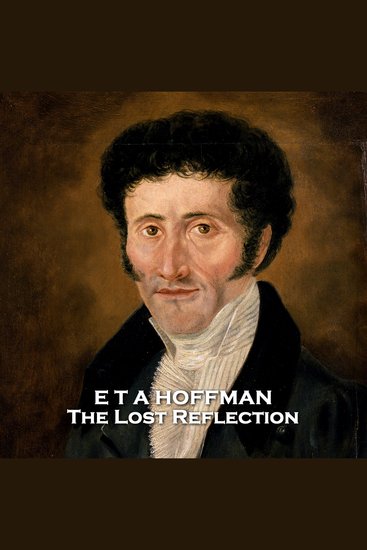
    Ernst Theodor Wilhelm Hoffman was born on the 24th January 1776, the youngest of three children, in Königsberg, then in Prussia but now part of the Kaliningrad Russian enclave. 
    His parents separated when he was two and for many years life was to be provincial and, despite his talents for the creative arts and the classics, much was passing him by. 
    At 20 Hoffman obtained employment as a clerk and to the art that now surrounded him.  Two years later he was in Berlin attempting a career as a composer with an operetta called ‘Die Maske’.  His gift for drawing caricatures and sharing them often got him into trouble that was easier to avoid. 
    The years of Napoleon ravaging Europe were bad for Hoffman; he moved often and took on works as varied as theatre management and music critic.  In this his talents were now more evident.  His works on Beethoven where highly regarded by the master himself. 
    His literary breakthrough came in 1809, with ‘Ritter Gluck’, about a man who believes he has met the composer 20 years after his death.  However the various jobs and the wars continued and plagued any career advancement despite his constant travel for opportunities, often through dangerous territories. 
    In the wake of Napoleon’s defeat in 1814, Hoffmann returned to Berlin where his opera ‘Undine’ was performed by the Berlin Theatre.  Life was now more settled and many of his most famous works were written at his time. 
    From 1819, Hoffmann was struggling with both legal disputes and ill health.  Alcohol abuse and syphilis were physically weakening him and from 1822 paralysis set in.  His last works were dictated to his wife or to a secretary as all around him society descended into an anti-liberal agenda, stifling dissent with threats of legal action and even treason.  The ailing Hoffman was among them. 
    E T A Hoffmann died on the 25th June 1822 in Berlin of syphilis.  He was 46.
    Mostra libro
  • HG Wells Twice Told Tales - Read by Dennis Edward Delaney - cover

    HG Wells Twice Told Tales - Read...

    HG Wells

    • 0
    • 0
    • 0
    About this Audiobook 
    Cover Design by David Earl DeWitt | ZacaPublishing.com 
    Original and Public Domain Source Material was used to Publish this Collection 
    Available at Spotify & Other Distributors! 
    – 
    This audiobook is a real treat! We have a collection of rare HG Wells stories that includes the unique Welles Meets Wells radio broadcast of 1940 between HG Wells and Orson Welles discussing his famous broadcast The War of the Worlds and the state of the world on KTSA Radio October 28th, 1940. 
    - 
    Your Stories 
    - 
    1. Under the Knife 
    2. Le Marie Terrible 
    3. The Man Who Could Work Miracles 
    4. The Sea Raiders 
    5. The Empire of the Ants 
    6. The Valley of Spiders 
    7. A Deal in Ostriches 
    8. The Treasure in the Forest 
    9. The Stolen Bacillus 10. The Star 
    11. Introduction and the Wells and Welles Meeting 
    12. Introduction and War of the Worlds 
    - 
    Run Time: 05:53:09.63 
    -
    Mostra libro
  • Two Temptations - The Fragile Facades of Marriage Morality and Ruin - cover

    Two Temptations - The Fragile...

    George Eliot

    • 0
    • 0
    • 0
    In the intricately woven society of Middlemarch, the threads of respectability are beginning to snap. 
    What happens when the life you promised yourself becomes a cage of your own making? 
    In Book 7: Two Temptations of George Eliot's masterpiece, the suffocating grip of financial ruin forces proud men to their knees. Dr. Tertius Lydgate, once fueled by brilliant medical ambition, now finds himself drowning in debt and completely isolated by the glacial, secret-keeping defiance of his beautiful wife, Rosamond. As the auctioneer's hammer looms over their home, Lydgate is driven to the brink, eyeing the billiard tables and the intoxicating, destructive lure of chance. 
    Meanwhile, the pious and wealthy banker Nicholas Bulstrode faces a reckoning of a different kind. A ghost from his unsavory past has arrived on his doorstep, demanding a price for his silence. As Bulstrode's carefully constructed empire of morality threatens to collapse, the desperation of these two very different men collides in a heart-wrenching climax of betrayal and pride. 
    Beautifully narrated by Evelia Farias this explosive installment of Middlemarch dives deep into the dark waters of human frailty, the bitter ironies of marriage, and the agonizing compromises we make when everything is on the line. It is a timeless exploration of temptation that will leave you breathless.
    Mostra libro
  • Twenty-Six Men and a Girl - From their pens to your ears genius in every story - cover

    Twenty-Six Men and a Girl - From...

    Maxim Gorky

    • 0
    • 0
    • 0
    Alexei Maximovich Peshkov was born on 28th March 1868, in Nizhny Novgorod, Russia. 
    Better known as Maxim Gorky he was orphaned at 11 and ran away from home at 12.  At 19 he had already attempted suicide and thereafter travelled, by foot, across the Russian Empire for 5 years. 
    His first book ‘Essays & Stories’ in 1898 was a sensation and so began a long career as an author of short stories, novels and plays.  Gorky saw writing as a moral and political act that would help to change the unjust world around him.  He was an ardent early advocate of the emerging Marxist movement and publicly opposed the Tsarist regime leading several times to his arrest.  
    In 1904 he began his own theatre but the censor banned every play and Gorky was forced to abandon the project. 
    But Gorky was a financially successful author, editor, and playwright and gave monies to political parties as well as for civil rights and social reform.  The brutal shooting of workers, which set in motion the Revolution of 1905, pushed Gorky more decisively toward radical solutions.  
    In 1906 he went to the United States to raise funds for the Bolsheviks. Those experiences including a scandal over travelling with his lover and not his wife deepened his contempt for the ‘bourgeois soul.’ 
    Gorky now moved to Capri in Italy, both for health reasons and to escape the increasingly repressive times in Russia.  
    An amnesty for the 300th anniversary of the Romanov dynasty saw him return to Russia in 1914. His politics remained close to the Bolshevik cause.  But soon, after the 1918 revolution, his essays referred to Lenin as a tyrant for his senseless arrests and repression.  He was soon appealing to the outside world for food aid after the catastrophic crop failure. 
    In October 1921 Gorky returned to Italy, now in Fascist hands, and settled in Sorrento until 1932.  His health worsened with the onset of tuberculosis. 
    He wrote several successful books there but now decided to find an understanding with the communist regime. Stalin invited him home and his return was hailed as a major propaganda victory.  He was decorated with the Order of Lenin, and a province, a park, and various streets re-named in his honour. 
    But he had his faults too.  In 1933, Gorky co-edited a book on the White Sea-Baltic Canal and denied even a single prisoner died during its construction, but thousands had. As well, knowing that some Nazis were homosexual, a phrase was attributed to him that said ‘exterminate all homosexuals and fascism will vanish’.  Although he was himself was quoting another he was decidedly homophobic. 
    With the increase of Stalinist repression in 1935 Gorky was placed under unannounced house arrest. 
    Maxim Gorky died on the 18th June 1936 from pneumonia.  He was 68. 
    Stalin and Molotov were among those who carried Gorky's urn of ashes at his funeral.
    Mostra libro
  • Henry V - cover

    Henry V

    Pierre Arthur Laure, Tom...

    • 0
    • 0
    • 0
    Henry V is a study of kingship, patriotism, and heroic determination tempered by tender comedy as Henry courts Katherine, princess of France.  
    Henry, the noble and courageous young king of England, decides to invade France, believing he has a rightful claim to the throne. At Agincourt he leads his army into battle against the powerful French forces and, against all the odds, wins a famous victory. 
    Henry is played by Jamie Glover, Brian Cox is the Chorus, and the Hostess is played by Elizabeth Spriggs.
    Mostra libro
  • Typhoon - cover

    Typhoon

    Joseph Conrad

    • 0
    • 0
    • 0
    Typhoon is a gripping maritime novella by Joseph Conrad that showcases his masterful ability to blend elemental adventure with deep moral insight. Centered on a violent storm at sea, the story becomes a powerful meditation on leadership, duty, and human resilience in the face of overwhelming natural forces.
    
    The narrative follows Captain Tom MacWhirr, a steady, literal-minded, and unromantic sea captain whose greatest strength lies in his unwavering sense of responsibility. When his ship, the Nan-Shan, sails directly into a devastating typhoon, MacWhirr must rely not on imagination or heroics, but on endurance, discipline, and quiet determination to safeguard his crew and passengers.
    
    As the storm rages, Conrad vividly captures the physical terror of the sea and the psychological strain imposed on every man aboard. The crew's fear and confusion contrast sharply with MacWhirr's stubborn calm, raising questions about what true courage looks like under pressure. Leadership, Conrad suggests, is revealed not in grand gestures but in steadfast commitment to duty.
    
    Written in Conrad's richly textured prose, Typhoon transcends its setting to explore universal themes of responsibility, perseverance, and moral strength. The novella stands as both a thrilling sea tale and a subtle character study, highlighting the dignity of ordinary heroism.
    
    Intense, atmospheric, and deeply human, Typhoon remains one of Conrad's most accessible and compelling works—a testament to his enduring reputation as a master of maritime fiction.
    Mostra libro