Unisciti a noi in un viaggio nel mondo dei libri!
Aggiungi questo libro allo scaffale
Grey
Scrivi un nuovo commento Default profile 50px
Grey
Iscriviti per leggere l'intero libro o leggi le prime pagine gratuitamente!
All characters reduced
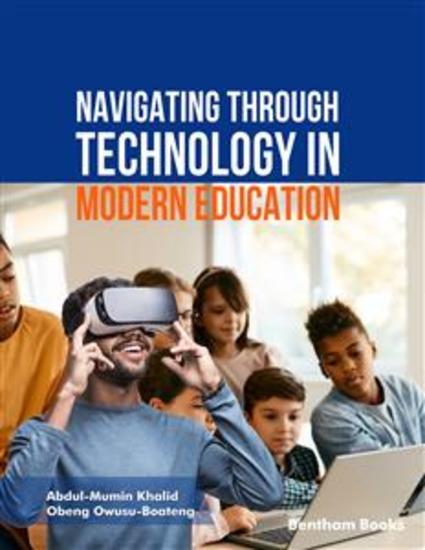
Navigating through Technology in Modern Education - cover

Navigating through Technology in Modern Education

Abdul-Mumin Khalid, Obeng Owusu-Boateng

Casa editrice: Bentham Science Publishers.

  • 0
  • 0
  • 0

Sinossi

Advances in technology have enabled medicinal chemists to discover and formulate several highly specific, biocompatible, and non-toxic therapeutic agents for clinical applications. Nanotechnology has achieved significant progress in the last few decades and is crucial in every field of science and technology. Nanotechnology-based pharmaceuticals offer multifaceted and alternative methodologies in comparison to the limitations of many conventional clinical therapies. Expertise in designing and developing nanoformulations has helped in targeted drug delivery. Recently, the use of innovative therapeutic agents, particularly in nanomedicine, has accounted for a significant portion of the global pharmaceutical market and is predicted to continue to grow rapidly in the near future. Nanotherapeutic Strategies and New Pharmaceuticals is an accessible multi-part reference which informs the reader about several new techniques based on nanotechnology. The chapters explain relevant topics in detail. The book is designed to encourage and help undergraduate, graduate and post-graduate students in the field of nanotherapeutics, pharmaceuticals and bio-organic chemistry through the use of didactic language and simple illustrations. Part 2 of this book covers the potential of nanotherapeutics and natural therapies for treating neurological diseases, targeting ion channels, signal transduction therapy, gene therapy of single gene mutation diseases and for nanoformulations for special purposes such as wound healing and stimuli-responsive drug delivery. The book also features a chapter that summarizes the types of nanoparticles tailored for specific molecular targets that mediate different diseases. The book set serves as a textbook for students in pharmacology and medical biochemistry, as well as a quick reference for researchers on bio-organic chemistry, as well as general readers interested in nanomedicine
Disponibile da: 15/05/2024.
Altri libri che potrebbero interessarti

  • Active Listening - How to listen understand and validate to improve and deepen relationships by becoming an active listener - cover

    Active Listening - How to listen...

    Lilly De Sisto

    • 0
    • 0
    • 0
    Finally available is a guide to know everything, really everything, about really listening to others! 
      
    You've finally found the listen you've been looking for: minute after minute, you'll be able to embark on a path that will guide you, step by step, to the knowledge of how to effectively communicate with other people! 
    In this pause-resisting listen, you will get to know and understand the following topics:Types of listeningThe characteristics necessary for empathic listening skillsHow to improve these characteristicsHow to listen to your clientsHow to listen to your employeesHow to listen to your childrenHow to listen to your partner 
    Buy the manual now! 
    What are you waiting for? 
    Don't you want to finally stop pretending to listen to people, not understanding what they really want to tell you, and coming off as cocky? 
    Get a copy of the book and learn everything you need to know about actively listening even if you are denied to do it! 
    Mostra libro
  • The Lake Filled with Skeletons - Uncovering the Mysteries of Roopkund - cover

    The Lake Filled with Skeletons -...

    John Harpoon

    • 0
    • 0
    • 0
    The discovery of Roopkund Lake, a high-altitude lake nestled in the Indian Himalayas, shocked the world with its eerie and haunting mystery. Known as the "Skeleton Lake," the site became a focus of international attention when dozens of human skeletons were found in and around the lake, scattered across the landscape. Hidden among the rugged mountains, at an elevation of about 16,500 feet, the lake was nearly inaccessible, which contributed to its preservation for centuries. This discovery raised more questions than answers and sparked numerous theories about the origins and circumstances surrounding the remains. 
      
    The skeletons found at Roopkund are not just ordinary human remains. They are unique in that they are incredibly well-preserved despite their age, leading researchers and scientists to embark on an extraordinary quest to uncover their origins. Some of the bones belong to people who lived thousands of years ago, while others are more recent, creating an enigmatic mixture of the past and present. Various expeditions have sought to determine who these people were, how they died, and why their bodies were left in such an unusual location. 
      
    Roopkund Lake, located in the state of Uttarakhand in India, was long known to the local populations, who regarded it with awe and fear. The lake and its surrounding areas are deeply ingrained in local folklore, with stories that attempt to explain the presence of these bones. Some claim that the skeletons are those of pilgrims who perished in a sudden snowstorm, while others suggest the lake holds the remains of ancient warriors or victims of a mass sacrifice. Over time, these legends have woven themselves into the cultural fabric of the region, adding an extra layer of mystique to an already puzzling phenomenon.
    Mostra libro
  • Gaslight Days: Book 2 - The Road Ahead - cover

    Gaslight Days: Book 2 - The Road...

    Edward Forde Hickey

    • 0
    • 0
    • 0
    A chance to delve into the minds of children and adults among the ruined streets of post-war London. The streets were our playground with not a car in sight, where we played all day.On Sundays, bugle boy bands marched past us and in the evening the military band raised our spirits.Life was never dull. Our parents took us to the zoo and for boat rides on the Serpentine.
    Mostra libro
  • Canaanites - The Ancient History of the People Who Inhabited Israel - cover

    Canaanites - The Ancient History...

    Kelly Mass

    • 0
    • 0
    • 0
    During the late 2nd millennium BC, Canaan was a Semitic-speaking civilization located in the Ancient Near East. The region held significant geopolitical importance, especially during the Late Bronze Age Amarna Period in the 14th century BC, when it became a crossroads for major empires. The Egyptian, Hittite, Mitanni, and Assyrian Empires all had areas of interest that converged or overlapped in Canaan, making it a key territory for trade, warfare, and cultural exchange. Much of our understanding of Canaan comes from archaeological excavations at sites such as Tel Hazor, Tel Megiddo, En Esur, and Gezer, where remnants of ancient Canaanite life have been uncovered. 
    In biblical texts, the term "Canaan" frequently appears to refer to the broader geographical region known as the Levant, particularly the Southern Levant. This area includes several territories that are central to the Bible’s narrative, such as the Land of Israel, Philistia, and Phoenicia. The Canaanites were the indigenous peoples of this region, and their diverse societies included both settled agricultural communities and nomadic-pastoral groups.
    Mostra libro
  • Reading Confederate Monuments - cover

    Reading Confederate Monuments

    Maria Seger, Joanna...

    • 0
    • 0
    • 0
    Contributions by Danielle Christmas, Joanna Davis-McElligatt, Garrett Bridger Gilmore, Spencer R. Herrera, Cassandra Jackson, Stacie McCormick, Maria Seger, Randi Lynn Tanglen, Brook Thomas, Michael C. Weisenburg, and Lisa Woolfork
    
    Reading Confederate Monuments addresses the urgent and vital need for scholars, educators, and the general public to be able to read and interpret the literal and cultural Confederate monuments pervading life in the contemporary United States.  
    
    The literary and cultural studies scholars featured in this collection engage many different archives and methods, demonstrating how to read literal Confederate monuments as texts and in the context of the assortment of literatures that produced and celebrated them. They further explore how to read the literary texts advancing and contesting Confederate ideology in the US cultural imaginary—then and now—as monuments in and of themselves. On top of that, the essays published here lay bare the cultural and pedagogical work of Confederate monuments and counter-monuments—divulging how and what they teach their readers as communal and yet contested narratives—thereby showing why the persistence of Confederate monuments matters greatly to local and national notions of racial justice and belonging. In doing so, this collection illustrates what critics of US literature and culture can offer to ongoing scholarly and public discussions about Confederate monuments and memory.
    
    Brought to audio through new AI narrative technology, Reading Confederate Monuments teaches us that even as we remove, relocate, and recontextualize the physical symbols of the Confederacy dotting the US landscape, the complicated histories, cultural products, and pedagogies of Confederate ideology remain embedded in the national consciousness. To disrupt and potentially dismantle these enduring narratives alongside the statues themselves, we must be able to recognize, analyze, and resist them in US life. The pieces in this collection position us to think deeply about how and why we should continue that work.
    Mostra libro
  • Fort Henry: The History of the Union’s First Major Victory in the West during the Civil War - cover

    Fort Henry: The History of the...

    Jonathan Gianos-Steinberg

    • 0
    • 0
    • 0
    While the Lincoln Administration and most Northerners were preoccupied with trying to capture Richmond in the summer of 1861, it would be the little-known Ulysses S. Grant who delivered the Union’s first major victories, over a thousand miles away from Washington. Grant’s new commission led to his command of the District of Southeast Missouri, headquartered at Cairo, after he was appointed by “The Pathfinder”, John C. Fremont, a national celebrity who had run for President in 1856. Fremont was one of many political generals that Lincoln was saddled with, and his political prominence ensured he was given a prominent command as commander of the Department of the West early in the war before running so afoul of the Lincoln Administration that he was court-martialed. 
    In January of 1862, Grant persuaded General Henry “Old Brains” Halleck to allow his men to launch a campaign on the Tennessee River. As soon as Halleck acquiesced, Grant moved against Fort Henry, in close coordination with the naval command of Flag Officer Andrew Hull Foote. The combination of infantry and naval bombardment helped force the capitulation of Fort Henry on February 6, 1862, and the surrender of Fort Henry was followed immediately by an attack on Fort Donelson on the Cumberland River, which earned Grant his famous nickname “Unconditional Surrender”. Grant’s forces enveloped the Confederate garrison at Fort Donelson, which included Confederate generals Simon Buckner, John Floyd, and Gideon Pillow. In one of the most bungled operations of the war, the Confederate generals tried and failed to open an escape route by attacking Grant’s forces on February 15. Although the initial assault was successful, General Pillow inexplicably chose to have his men pull back into their trenches, ostensibly so they could take more supplies before their escape. Instead, they simply lost all the ground they had taken, and the garrison was cut off yet again.
    Mostra libro