Join us on a literary world trip!
Add this book to bookshelf
Grey
Write a new comment Default profile 50px
Grey
Subscribe to read the full book or read the first pages for free!
All characters reduced
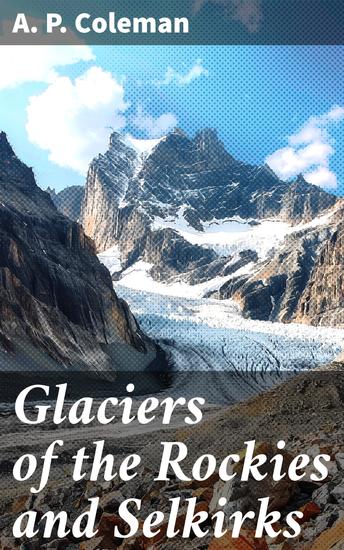
Glaciers of the Rockies and Selkirks - With Notes on Five Great Glaciers of the Canadian National Parks - cover

Glaciers of the Rockies and Selkirks - With Notes on Five Great Glaciers of the Canadian National Parks

A. P. Coleman

Publisher: Good Press

  • 0
  • 0
  • 0

Summary

In "Glaciers of the Rockies and Selkirks," A. P. Coleman delivers an intricate exploration of the magnificent glacial landscapes that define the North American Rockies and Selkirks. Employing a meticulous scientific approach combined with vivid, descriptive prose, Coleman captures not only the grandeur of these natural formations but also elucidates their geological significance. The book is rich with illustrations, photographs, and maps that enhance the reader's understanding, situating the volcanic and glacial activity within a broader environmental context during the late 19th and early 20th centuries'Äîan era marked by burgeoning mountaineering and environmental awareness. A. P. Coleman, a prominent geologist and a key figure in the early 20th-century Canadian scientific community, was profoundly influenced by his surroundings in the Canadian Rockies. His lifelong passion for geology and nature is reflected in this work, driven by a desire to inspire others to appreciate the beauty and importance of glacial environments. Coleman's academic background and field experience lend credibility to his observations, making his insights indispensable to both the scientific community and the general public interested in natural history. This book is a compelling read for geologists, environmentalists, and nature enthusiasts alike. Coleman's dedication to unraveling the complexities of glacial phenomena invites readers to reconnect with the grandeur of the Rockies and Selkirks while fostering a deeper understanding of the geological processes that shape our planet. For anyone eager to explore the nexus of nature and science, this book stands as a profound testament to the beauty and fragility of glacial landscapes.
Available since: 10/26/2023.
Print length: 28 pages.

Other books that might interest you

  • Ultimate coaching for fears worries & anxieties Coaching Sessions Hypnosis & meditations - release toxic thought break free chronic anxiety receive abundance attract miracles fear of change - cover

    Ultimate coaching for fears...

    Shining Mind

    • 0
    • 0
    • 0
    We all come across feelings of anxiety fears & worries in our lives. Many of us worry about health, finance, relationships, or family problems. If there are frequent anxieties and worries, it becomes a chronic syndrome. Sometimes it also affects our health. We may have difficulty sleeping. There could be migraines or unexplained muscle pains. There is a restlessness that is difficult to control. 
    Coaching sessions, Meditations & Hypnosis could help us to ease the syndromes without meditations. We talk to our subconscious mind directly. We look for the root causes of the worries and anxieties. We bring our attention back to the present moment. Thus, we shift our realities and transform our thoughts and emotions 
    In this course, we willBe your personal coachRelease worries & fearsFind out the root causeLet go of toxic thoughtsRewire your brain to feel goodOpen yourself to infinite possibilitiesLiving in the momentAffirm your loving qualitiesAnd much more 
    This course will help you to regain your center. You will have more clarity strength and calmness after the course
    Show book
  • Your Cozy Minimalist Home & Amazon Alexa User Guide - The Ultimate 2 in 1 Home Improvement Bundle - cover

    Your Cozy Minimalist Home &...

    Steve Alverson, Dana Sales

    • 0
    • 0
    • 0
    Looking for a way to improve your daily life? This audiobook bundle is the perfect solution!  
    Whether you want to learn how to get the most out of your Alexa device or create a more organized and functional living space, this 2-in-1 audiobook bundle is full of practical advice and helpful tips. 
    Here are some of the highlights of what you'll learn: 
    "Amazon Alexa User Guide":How to properly operate Echo devices and integrate them into your daily routineThe technology behind Alexa and the Echo line of devicesEvery trick imaginable to get the most out of Alexa, from the simplest instructions to the most complex Smart Home SetupsCreating your own commands and skillsAdvanced Echo hacks that you've never heard of beforeHow to integrate Alexa with Smart Home DevicesHow to simply have more fun with Alexa 
    "Your Cozy Minimalist Home":How to declutter your home and simplify your lifeHow to identify and eliminate unnecessary possessionsPractical advice on optimizing storage solutions 
    By purchasing this audiobook bundle, you'll receive two valuable resources at a discounted price. This bundle will help you unlock the full potential of your Alexa device and create a more organized and efficient living space for you and your family! 
    Don't miss out on the opportunity to improve your life with these two valuable resources. Get your copy of the audiobook bundle today! 
    Scroll to the top of the page and select one of the BUY options!
    Show book
  • The Elements of Marie Curie - How the Glow of Radium Lit a Path for Women in Science - cover

    The Elements of Marie Curie -...

    Dava Sobel

    • 0
    • 0
    • 0
    The acclaimed Pulitzer Prize finalist and #1 New York Times bestselling author of Galileo’s Daughter crafts a luminous chronicle of the most famous woman in the history of science, and the untold story of the remarkable young women trained in her laboratory 
     
    “Even now, nearly a century after her death, Marie Curie remains the only female scientist most people can name,” writes Dava Sobel at the opening of her shining portrait of the sole Nobel laureate decorated in two separate fields of science—Physics in 1903 with her husband, Pierre, and Chemistry by herself in 1911. And yet, as brilliant and creative as she was in the laboratory, Marie Curie was equally memorable outside it. Grieving Pierre’s untimely death in 1906, she took his place as professor of physics at the Sorbonne, devotedly raised two brilliant daughters, drove a van she outfitted with X-ray equipment to the front lines of World War I, befriended Albert Einstein and other luminaries of twentieth-century physics, won support from two US presidents, and inspired generations of young women to pursue science as a way of life.  
     
    As Sobel did so masterfully in her portrait of Galileo through the prism of his daughter, she approaches Marie Curie from a unique angle, narrating her remarkable life of discovery and fame alongside the women who became her legacy—from France’s Marguerite Perey, who discovered the element francium, and Norway’s Ellen Gleditsch, to Mme. Curie’s elder daughter, Irène, winner of the 1935 Nobel Prize in Chemistry. For decades the only woman in the room at international scientific gatherings that probed new theories about the interior of the atom, Marie Curie traveled far and wide, despite constant illness, to share the secrets of radioactivity, a term she coined. Her two triumphant tours of the United States won her admirers for her modesty even as she was mobbed at every stop; her daughters, in Ève’s later recollection, “discovered all at once what the retiring woman with whom they had always lived meant to the world.” 
     
    With the consummate skill that made bestsellers of Longitude and Galileo’s Daughter, and the appreciation for women in science at the heart of The Glass Universe, Dava Sobel has authored a radiant biography and a masterpiece of storytelling, illuminating the life and enduring influence of one of the most consequential figures of our time.
    Show book
  • Walking Wild - Hiking the length of the Kruger National Park - cover

    Walking Wild - Hiking the length...

    Jose A Neves

    • 0
    • 0
    • 0
    "A must-read for anyone who loves Kruger and adventure." - Tony Park 
    WALKING WILD is not your typical safari - no game drives, no cool sundowners and definitely no fences. Instead, it's 605 km of dust, sweat and unforgettable moments as an unlikely group of strangers sets out to walk the entire length of Kruger National Park. Over six stages and three years, they walked from Crooks' Corner in the far north to Malelane in the south, averaging 20 km a day with heavy backpacks and only the wild for company. 
    Led by two armed guides, they braved blistering heat and violent storms. At night, as hyenas nosed their tents and lionesses strolled right through camp, some slept soundly - others lay wide eyed, waiting for dawn. They drank from murky trickles in dry riverbeds, navigated thick riverine bush teeming with hippo, buffalo and crocodiles, and slowly learnt to read the bush - from the smallest antlion to the distant roar of a lion. 
    But Kruger's wilderness is not without its challenges. Poachers - both criminal syndicates and those in search of bushmeat - move in the shadows, rivers bring pollution from beyond its borders, and conservation battles rage on. WALKING WILD captures the magic and the madness of life on foot in one of the world's most iconic national parks. It's a story of adventure, camaraderie and deep immersion in the wild - a journey that leaves no one unchanged. 
    WALKING WILD is a testament to resilience, discovery and the deep connection between people and nature. If you've ever dreamt of experiencing Kruger beyond the safari vehicle, this book is your ticket to the trail.
    Show book
  • Owning the Sun - A People's History of Monopoly Medicine from Aspirin to COVID-19 Vaccines - cover

    Owning the Sun - A People's...

    Alexander Zaitchik

    • 0
    • 0
    • 0
    Owning the Sun tells the story of one of the most contentious fights in human history: the legal right to control the production of lifesaving medicines. Medical science began as a discipline geared toward the betterment of all human life, but the merging of research with intellectual property and the rise of the pharmaceutical industry warped and eventually undermined its ethical foundations. Why does the US government fund the development of medical science in the name of the public, only to relinquish exclusive rights to drug companies, and how does such a system impoverish us, weaken our responses to global crises, and, as in the case of AIDS and COVID-19, put the world at risk? 


    Outlining how generations of public health and science advocates have attempted to hold the line against Big Pharma and their allies in government, Alexander Zaitchik's first-in-kind history documents the rise of medical monopoly in the United States and its subsequent globalization. From the controversial arrival of patent-wielding German drug firms in the late nineteenth century, to present-day coordination between industry and philanthropic organizations—including the influential Gates Foundation—that stymie international efforts to vaccinate the world against COVID-19, Owning the Sun tells one of the most important and least understood histories of our time.
    Show book
  • Space Telescopes - Astronomy and the Electromagnetic Spectrum - cover

    Space Telescopes - Astronomy and...

    Steff Jaywan

    • 0
    • 0
    • 0
    Space telescopes are powerful instruments designed to observe astronomical objects and phenomena from outside the Earth's atmosphere. Unlike ground-based telescopes, which suffer from atmospheric distortion, space telescopes provide a clearer and more detailed view of the universe. They have revolutionized our understanding of the cosmos by capturing images and data across various wavelengths of light, from visible to infrared to ultraviolet and beyond. 
      
    The primary advantage of space telescopes is their ability to operate above the Earth's atmosphere. The atmosphere absorbs and scatters light, which limits the capabilities of ground-based observations. By placing telescopes in space, astronomers can avoid these issues and achieve several key benefits. Space telescopes have an unobstructed view, not being affected by weather, daylight, or atmospheric turbulence, allowing for continuous and consistent observations. They also have broader wavelength coverage, as Earth's atmosphere blocks many wavelengths of light, such as ultraviolet and X-rays. This enables space telescopes to detect and study these wavelengths, offering a more comprehensive view of the universe. Moreover, without atmospheric distortion, space telescopes can capture sharper and more detailed images.
    Show book