Unisciti a noi in un viaggio nel mondo dei libri!
Aggiungi questo libro allo scaffale
Grey
Scrivi un nuovo commento Default profile 50px
Grey
Iscriviti per leggere l'intero libro o leggi le prime pagine gratuitamente!
All characters reduced
Clarinet Quartet "Oh Happy Day" (score & set of parts) - for intermediate players - cover

Clarinet Quartet "Oh Happy Day" (score & set of parts) - for intermediate players

a cura di Francesco Leone, Gospel Traditional, Glissato Series Clarinet Quartet

Casa editrice: Glissato Edizioni Musicali

  • 0
  • 0
  • 0

Sinossi

Experience the uplifting and joyful spirit of the gospel classic "Oh Happy Day" with this beautifully arranged version for Clarinet Quartet by Francesco Leone. Designed for intermediate-level musicians, this arrangement captures the essence of the original song, bringing its infectious melody and harmonies to your clarinet ensemble.
Includes:

	Full Score
	Set of Parts (5):
	
		3 Bb Soprano Clarinets
		Bass Clarinet
		Optional Eb Alto Clarinet (included as an alternative to Bb Clarinet 3)


Features:


	Authentic Gospel Feel: Francesco Leone's arrangement maintains the joyous and spirited qualities of the original gospel composition, ensuring an engaging and uplifting performance.
	Intermediate Level: This arrangement is tailored for intermediate-level clarinetists, offering a balanced challenge that is both rewarding and accessible.
	Flexible Instrumentation: The inclusion of an optional part for Eb Alto Clarinet provides greater flexibility in ensemble configuration, accommodating different instrumental setups.
	Comprehensive Package: Includes a full score and individual parts for each member of the quartet, ensuring a smooth rehearsal and performance process.

Why Choose This Arrangement? This arrangement is perfect for clarinet quartets looking to explore the rich traditions of gospel music and add a piece of joyous celebration to their repertoire. Whether for concerts, recitals, or community events, "Oh Happy Day" arranged by Francesco Leone offers a captivating and enjoyable musical experience.
Bring the uplifting and dynamic sounds of "Oh Happy Day" to your clarinet quartet and delight audiences with this gospel classic. Get your copy today and let the music inspire your next performance!
Disponibile da: 10/07/2024.

Altri libri che potrebbero interessarti

  • House Rules - How to Decorate for Every Home Style and Budget - cover

    House Rules - How to Decorate...

    Myquillyn Smith

    • 0
    • 0
    • 0
    Simple, personal, livable decorating for your space 
     
    From the New York Times and Wall Street Journal bestselling author of Cozy Minimalist Home comes this inviting collection of 100 universal interior design truths that apply to every house, style, and budget. By guiding you to do what you know, use what you have, and finish what you started, Myquillyn Smith will help you find 
     
    ● understanding of why you love (or don't love) your spaces 
    ● confidence to make rewarding decisions that feel risky 
    ● satisfaction with small wins that combine to create big changes 
    ● inspiration and motivation resulting in finished, personalized rooms 
     
    Learn how to make better home organization decisions with ease. House Rules is packed full of simple, encouraging truths and quick takeaways you can apply to your home today--and return to again and again.
    Mostra libro
  • David Bowie's Low - cover

    David Bowie's Low

    Hugo Wilcken

    • 0
    • 0
    • 0
    Los Angeles, 1976. David Bowie is holed up in his Bel-Air mansion, drifting into drug-induced paranoia and confusion. Obsessed with black magic and the Holy Grail, he's built an altar in the living room and keeps his fingernail clippings in the fridge.  There are occasional trips out to visit his friend Iggy Pop in a mental institution. His latest album is the cocaine-fuelled Station To Station (Bowie: "I know it was recorded in LA because I read it was"), which welds R&B rhythms to lyrics that mix the occult with a yearning for Europe, after three mad years in the New World.Bowie has long been haunted by the angst-ridden, emotional work of the Die Brucke movement and the Expressionists. Berlin is their spiritual home, and after a chaotic world tour, Bowie adopts this city as his new sanctuary. Immediately he sets to work on Low, his own expressionist mood-piece.
    Mostra libro
  • Journey into the magical world - and other stories - cover

    Journey into the magical world -...

    Pabitra Adhikary

    • 0
    • 0
    • 0
    Since my childhood, one question used to haunt me again and again. What is next after death? Does demise mean an unperturbed and relaxed slumber? There will be no urgency to wake up one day. Does death mean the failure of heart? And then there will be no feelings at all.
     
    What will the soul do after death? Will the soul get reunited with the great soul or
     
    paramatma or will it wander around as a ghost? Will there be salvation or will there be new rebirth?
    Mostra libro
  • The Cultural Politics of Affect and Emotion - A Case Study of Chinese Reality TV - cover

    The Cultural Politics of Affect...

    Wei Dong

    • 0
    • 0
    • 0
    Against the background of the media commercialization reform since the 1990s in China and drawing on the case of »X-Change« (2006-2019), Wei Dong investigates the affective meaning-making mechanism in the multimodal text of Chinese reality TV. The focus lies on the ways in which emotions are appropriated and disciplined by regimes of power and identity, and the ways in which affect - in this case primarily kuqing (bitter emotions) communicated by the material and the body - have the potential to challenge or exceed existing relations of power in the mediascape. Wei Dong shows how Chinese reality TV provides a historical and theoretical opportunity for understanding the affective structures of contemporary China in the dynamic process of fracture and integration.
    Mostra libro
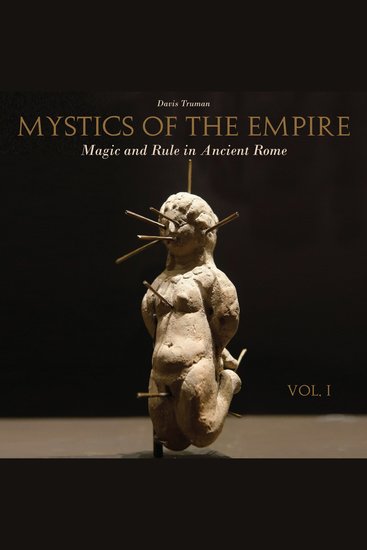
  • Mystics of the Empire - Magic and Rule in Ancient Rome - Volume 1 - cover

    Mystics of the Empire - Magic...

    Davis Truman

    • 0
    • 0
    • 0
    In Mystics of the Empire, this groundbreaking study delves into the often-overlooked relationship between Roman emperors and magic, offering a fresh perspective on how sorcery and power intersected in the ancient world. While the lives and reigns of emperors have long captivated scholars, the fascinating role of magic in their rule remains a largely unexplored area of historical inquiry. This book examines how emperors were depicted as patrons of magical practices and as victims and persecutors of sorcery, revealing the complex political, social, and religious ramifications of magic in the Roman Empire. 
    From the mystical associations of the early emperors to the later, more controversial reigns of figures like Elagabalus, Mystics of the Empire analyzes the twofold nature of magic’s role — whether it was used as a tool for imperial authority or as a threat to Roman stability. The book explores how emperors employed magicians for their own purposes and how their engagement with magic could be a source of political intrigue and downfall. Drawing on ancient sources and case studies, the narrative illuminates how these magical associations shaped the representation of emperors while also addressing the motivations behind these portrayals. 
    By offering a detailed examination of the magical context from the establishment of the Principate to the end of the Severan dynasty, Mystics of the Empire reveals the intricate interplay between the mystical and the political in ancient Rome. This work challenges traditional understandings of Roman governance, providing readers with a deeper appreciation of how magic was used as a tool of power, control, and subversion in one of history’s most enduring empires.
    Mostra libro
  • Heian Period - The Golden Age of Art Literature and Aristocratic Rule - cover

    Heian Period - The Golden Age of...

    Rolf Hedger

    • 0
    • 0
    • 0
    The Heian Period, spanning from 794 to 1185 CE, marks one of the most culturally rich and politically significant eras in Japanese history. This chapter lays the groundwork for understanding the historical context, political dynamics, and societal structure that defined the early stages of the Heian era. The period officially began when Emperor Kanmu moved the imperial capital from Nara to Heian-kyō, present-day Kyoto. This relocation was intended to establish a new seat of power free from the influence of powerful Buddhist monasteries that had grown too entwined with politics in Nara. 
    The move to Heian-kyō signified more than a change in geography—it was the beginning of a new political and cultural identity. The city was meticulously planned, modeled after the Chinese capital of Chang’an, with a grid-like structure that reflected a vision of order and centralized authority. However, over time, the influence of the emperor waned as powerful aristocratic families, particularly the Fujiwara clan, rose to prominence. By marrying their daughters into the imperial family and acting as regents, the Fujiwara effectively controlled the court, shaping policy and governance from behind the scenes. 
    The political landscape of early Heian Japan was one of ceremonial grandeur and subtle manipulation. Real power resided in the hands of a few elite families, and the imperial court became increasingly detached from the provinces. This created a division between the cultured, refined life of the capital and the often turbulent realities of rural Japan, where local warrior clans began to assert their own authority.
    Mostra libro