Unisciti a noi in un viaggio nel mondo dei libri!
Aggiungi questo libro allo scaffale
Grey
Scrivi un nuovo commento Default profile 50px
Grey
Iscriviti per leggere l'intero libro o leggi le prime pagine gratuitamente!
All characters reduced
Les alegres comares de Windsor - cover

Les alegres comares de Windsor

William Shakespeare

Casa editrice: Caelwick Press

  • 0
  • 0
  • 0

Sinossi

"Les alegres comares de Windsor" by William Shakespeare is a comedy first published in 1602. The impoverished Sir John Falstaff schemes to seduce two wealthy married women for financial gain, but the clever wives turn the tables on him with a series of humiliating pranks. Meanwhile, three suitors compete for the hand of Anne Page, each with different supporters among her family. Set in Elizabethan England, the play weaves together romantic deception, jealous husbands, and escalating revenge in Shakespeare's comic portrait of middle-class life. This Catalan-language digital edition is prepared with active navigation, clean typography, a custom cover and a reading file stripped of source-site notices, donation text and unnecessary external links.
Disponibile da: 17/06/2026.
Lunghezza di stampa: 91 pagine.
Altri libri che potrebbero interessarti

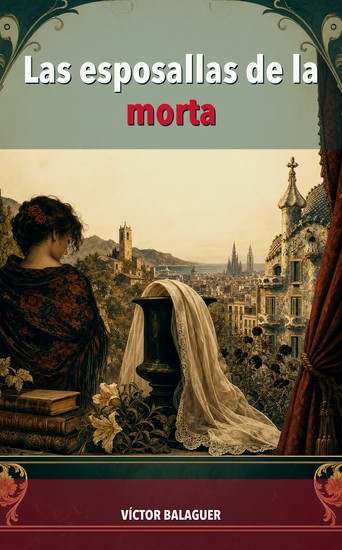
  • Las esposallas de la morta - cover

    Las esposallas de la morta

    Victor Balaguer

    • 0
    • 0
    • 0
    "Las esposallas de la morta" by Víctor Balaguer is a dramatic work likely written in the late 19th century. This piece can be classified as a tragic play that draws inspiration from the timeless themes of love and fate, ultimately exploring the intense emotions and tragic consequences of forbidden love. It is set against a backdrop reminiscent of classic romances, specifically echoing the well-known story of Romeo and Juliet. The play centers around the doomed love affair between Julieta Capuletti and Romeu Monteschi, who are members of feuding families. The plot unfolds with their secret meetings and passionate exchanges, set amidst the tensions and violent rivalries that separate them. As the narrative progresses, tragedy strikes when Romeo is unwittingly drawn into conflict with Julieta's family, resulting in the death of her cousin Tybalt. In a desperate attempt to be together despite their families' enmity, Julieta fakes her own death using a narcotic provided by Friar Lawrence. However, the plan goes awry when Romeo, believing Julieta to be truly dead, takes his own life. When Julieta awakens and finds Romeo dead beside her, she too chooses to end her life, culminating in the heartbreaking message of the futility of their love amidst familial hatred. This Catalan-language digital edition is prepared with active navigation, clean typography, a custom cover and a reading file stripped of source-site notices, donation text and unnecessary external links.
    Mostra libro
  • L'ignoscenta: Tragedia en tres quadros - cover

    L'ignoscenta: Tragedia en tres...

    Joan Puig i Ferreter

    • 0
    • 0
    • 0
    L'ignoscenta by Joan Puig i Ferreter is a tragic stage play written in the early 20th century. Set in a Pyrenean castle in the late 17th century, it probes honor, vengeance, and the devastating consequences of sexual violence and buried family ties. Anxious after his daughter Dorotea vanishes, the old noble Pacià waits as search parties scour the countryside. Dorotea returns at last, pale and rigid, and tells her husband Pere d'Ildevert and her father that a stranger abducted and assaulted her in a cave; at dawn he recognized her by a medallion of her mother, cried for pardon, and killed himself. When the body is brought to the castle, Pacià recognizes the dead man as his long-lost son—Dorotea's brother—who, consumed by hatred of Ildevert, had vowed to harm the woman he married, unaware she was his own sister until too late. Faced with the horror, Dorotea takes her own life, and Ildevert, shattered, begs forgiveness as the tragedy closes. This Catalan-language digital edition is prepared with active navigation, clean typography, a custom cover and a reading file stripped of source-site notices, donation text and unnecessary external links.
    Mostra libro
  • El cor del poble: Drama en tres actes - cover

    El cor del poble: Drama en tres...

    Ignasi Iglesias

    • 0
    • 0
    • 0
    "El cor del poble: Drama en tres actes" by Ignasi Iglesias is a play written in the early 20th century. The drama unfolds in a working-class neighborhood of Barcelona, focusing on the characters' daily struggles and interactions that explore themes of familial ties, societal expectations, and personal aspirations. The opening of the play introduces us to a modest room where the main character, Madrona, prepares for the evening's festivities, alluding to her husband Passarell's involvement in a choir performance. Through dialogue between Madrona and a young neighbor, Xic, we learn about Madrona's concerns for her household and her son, Fidel. As the conversation develops, we are introduced to the complex web of relationships and character dynamics that will shape the narrative. The arrival of Don Albert brings a significant twist, as he reveals to Madrona that Fidel's biological mother is alive and wishes to acknowledge him, leading to underlying tension within the household. The scenes are rich with emotion, reflecting the characters' aspirations and their connections to each other as they navigate their socio-economic environment. This Catalan-language digital edition is prepared with active navigation, clean typography, a custom cover and a reading file stripped of source-site notices, donation text and unnecessary external links.
    Mostra libro
  • Gala Placidia: Tragedia en tres actes - cover

    Gala Placidia: Tragedia en tres...

    Ángel Guimerá

    • 0
    • 0
    • 0
    "Gala Placidia: Tragedia en tres actes" by Àngel Guimerà is a dramatic play written in the late 19th century. This tragedy is rooted in historical events, focusing on the life of Gala Placidia, the Roman empress and daughter of Emperor Theodosius. The narrative traverses her complex relationships, mainly with her husband, the Gothic king Ataulf, setting the stage for themes of love, power, and ethnic strife. The opening of the play introduces the setting in Barcelona in the year 416, emphasizing the tension between the Goths and Romans. The first act unfolds within the chamber of King Ataulf, who grapples with the pressures of leadership and his love for Placidia. The dialogues reveal the backdrop of political intrigue, with characters expressing their loyalties and conflicts. Ataulf's interactions with the newly introduced characters, such as Sigerich—who seems to bear a grudge against Roman authority—foreshadow the turbulent emotional landscape that will evolve throughout the tragedy. The act concludes with a sense of foreboding regarding the fate of Placidia and the Gothic realm, hinting at deeper betrayals and conflicts that lie ahead. This Catalan-language digital edition is prepared with active navigation, clean typography, a custom cover and a reading file stripped of source-site notices, donation text and unnecessary external links.
    Mostra libro
  • Un pis al ensanche: Comedia en un acte y en prosa - cover

    Un pis al ensanche: Comedia en...

    Jose Feliu y Codina

    • 0
    • 0
    • 0
    Un pis al ensanche by José Feliú y Codina is a one-act stage comedy written in the late 19th century. Set in contemporary Barcelona, it centers on a bachelor's Eixample apartment and the romantic mix-ups that swirl around it. The play playfully explores courtship, jealousy, and gossip as a wedding plan collides with old flames and new tenants. The action follows Feliu, a middle-aged bachelor preparing to marry Eulalia and vacate his beloved flat. While a meticulous notary keeps asking if he is truly decided, two prospective tenants arrive: Carreras, a hot-blooded gentleman, and Guadalupe, his former fiancée, whose engagement to him collapsed amid rumors about a notorious "invited guest." Recognizing each other in Feliu's living room, they relive their quarrel and trade accusations, with Feliu awkwardly mediating. The argument uncovers that the scandalous guest was Eulalia herself, prompting Feliu to break off his wedding and cling to his bachelor's life. The notary reappears as Feliu nudges Carreras and Guadalupe toward reconciliation, and a final message announces that the scheming Miralles has married Eulalia—leaving Feliu happily in his old apartment and the estranged pair newly open to making peace. This Catalan-language digital edition is prepared with active navigation, clean typography, a custom cover and a reading file stripped of source-site notices, donation text and unnecessary external links.
    Mostra libro
  • Disputa de l'ase - cover

    Disputa de l'ase

    Anselm Turmeda

    • 0
    • 0
    • 0
    Narrat per: Bernat Quintana, Josep Pedrals.
    La Disputa, escrita de vers els anys 1417-1418, constitueix una divertida sàtira de la pretesa superioritat humana respecte dels animals. S'hi narra un àgil diàleg entre fra Anselm i l'ase del títol, que posa de manifest el profund escepticisme doctrinal del seu autor.L'obra utilitza diferents gèneres del món literari medieval: l'apòleg, la disputa, la profecia i el relat satírico-còmic, sense oblidar els elements al•legòrics i cavallerescos. Inclou també components autobiogràfics (o que volen semblar-ho) de Turmeda, un frare apòstata que acabà abraçant l'Islam. El resultat és un producte irònic, amb una aparença moralista. És per això que sovint ha estat mal interpretat pels estudiosos del segle XX com a obra d'un autor penedit de la seva deserció religiosa. L'obra no va poder esquivar la censura coetània, fou condemnada per la Inquisició i només en restà la traducció al francès. La versió d'Albert Mestres i Marta Marfany és una traducció de l'original francès. Argument de l'obra L'aventura s'inicia amb un passeig pel bosc, fra Anselm s'adorm mentre les bèsties debaten l'elecció del nou rei.L'assemblea d'animals, que reuneix des dels més nobles (com el lleó i l'elefant) fins als més baixos (el poll, la puça, la lladella) és una metàfora de la societat humana, un tema molt recurrent a la literatura medieval. En arribar a un acord, els animals ho celebren cantant, saltant i provocant un esvalot que desperta Turmeda. El conill el reconeix de la seva vida captiva anterior, i el rei Lleó, després de sentir-ne a parlar, sol•licita la seva compareixença per tal que aquest "fill d'Adam" els esclareixi cert rumor: que considera l'espècie humana superior als animals. I és així com s'inicia el nus de la faula, un diàleg entre el frare i un "ase cap de suro i desgraciat" que contradiu totes les raons de l'home. Fra Anselm s'esforça a pronunciar dinou arguments a favor de la superioritat de la seva espècie enfront de les altres. Exposa amb audàcia i gosadia raons de costums, d'aparença, de virtuts, d'intel•lecte… però no és fins a l'últim i decisiu argument que desarma el seu interlocutor:Déu es va encarnar en home i no en animal. Davant la derrota, el rei reconeix la seva naturalesa inferior i submisa als éssers humans i deixa anar lliure el captiu. L'autor insereix entremig de la trama vuit històries còmiques que ataquen els frares sense pietat i una profecia de caire transcendental i en vers predita pel "reverendíssim" ruc.
    Mostra libro