Unisciti a noi in un viaggio nel mondo dei libri!
Aggiungi questo libro allo scaffale
Grey
Scrivi un nuovo commento Default profile 50px
Grey
Iscriviti per leggere l'intero libro o leggi le prime pagine gratuitamente!
All characters reduced
El metode objectiu - cover

El metode objectiu

Ramon Turro

Casa editrice: Caelwick Press

  • 0
  • 0
  • 0

Sinossi

"El mètode objectiu" by Ramón Turró is a philosophical treatise written in the early 20th century. The book delves into the relationship between psychological phenomena and their physiological underpinnings, emphasizing the need to understand the interplay between these realms through objective methods. Turró argues against purely introspective approaches to psychology, making a case for a more integrated view that recognizes the importance of empirical evidence in understanding mental processes. The opening of the book presents a discussion on the merits and limitations of introspective psychology. Turró critiques the common practices of psychologists who rely solely on observations of the mind's workings without considering the underlying physiological conditions that give rise to them. He draws on various philosophical and scientific perspectives, engaging with the ideas of figures like W. James and H. Ebbinghaus to illustrate the necessity of establishing causal relations between psychological and physiological states. Through this examination, he sets the stage for a more comprehensive understanding of the mental processes that define human experience. This Catalan-language digital edition is prepared with active navigation, clean typography, a custom cover and a reading file stripped of source-site notices, donation text and unnecessary external links.
Disponibile da: 17/06/2026.
Lunghezza di stampa: 61 pagine.
Altri libri che potrebbero interessarti

  • Espill - cover

    Espill

    Jaume Roig

    • 0
    • 0
    • 0
    «D'una altra cosa feia pudor quan li venia la menstruació: sense pensar-hi més, tot ho omplia, les cames i les cuixes i les mitges mig abaixades.»
    
    De perles com aquesta, el protagonista i narrador de l'Espill n'engalta sense parar. Diu que passa dels noranta, que no s'aguanta els pets i que explica la mala vida que li han donat les dones perquè el jovent en prengui nota. La solució, la té molt clara: «¡Bullir enmig de l'oli, menjar-me les mans, morir-me abans, primer els peus estendre que muller prendre, primer soterrat que no pas casat!».
    
    El vell xaruc és un adversari furibund del gènere femení. Però això no vol dir que l'autor també ho sigui: Jaume Roig és tan misogin com els seus companys de generació, no pas més. Escriu l'Espill en forma de comèdia i amb el model de la sàtira de Juvenal a la memòria. Busca el somriure i la rialla del públic contemporani i la sap fer esclatar. La seva diatriba és tan exagerada que ni al segle XXI no es pot prendre al peu de la lletra. Jaume Roig és un geni de la hipèrbole i l'exabrupte, per això el salvem de la picota.
    Mostra libro
  • La mort del rei Artús - cover

    La mort del rei Artús

    Anònim

    • 0
    • 0
    • 0
    «Puja dalt d'aquell turó, hi trobaràs un llac. Llença-hi la meva espasa, no s'ha de quedar en aquest reialme perquè no vull que se n'apoderin els hereus infames que vindran.»
    
    La mort del rei Artús és una novel·la anònima francesa del segle XIII. Mestre Galter Map, el fals cronista de la història, ens explica la fi dels protagonistes de les Aventures del Sant Graal. És, per tant, la fi de l'univers narratiu que gira entorn d'una saga de personatges heroics, els campions de la Taula Rodona: Artús, Lancelot, Galvany, Girflet o Mordred.
    
    La guerra s'hi barreja amb l'amor, i per això cal la presència de donzelles i dames il·lustres: la reina Ginebra, la donzella d'Escalot o la dama de Beloé. Si antigament la matèria de Bretanya era coneguda pels contes de Chrétien de Troyes, les novel·les de Tristany i de Lançalot i la compilació de Malory, avui dia ho és sobretot gràcies al cinema i a les sèries, que han convertit aquest món mític en un referent conegut i admirat.
    
    Les traduccions de Lola Badia són un banquet que ens serveix les millors obres de l'univers artúric en un català ric i actual. Galvany i el cavaller verd va ser la primera. La mort del rei Artús, la segona. I en vindran més.
    Mostra libro
  • L'estudiant de la Garrotxa: Novela de costums - cover

    L'estudiant de la Garrotxa:...

    Josep Berga i Boix

    • 0
    • 0
    • 0
    "L'estudiant de la Garrotxa" by Josep Berga i Boix is a novel written in the late 19th century. Set between Girona and the stark valleys and cliffs of La Garrotxa, it follows a poor seminarian who discovers a talent for decorative painting, rises to local renown, and is pulled between priesthood, art, and his growing love for Margarida, the rector's niece. The story blends lively portraits of student poverty and small-town life with an intimate emotional conflict over vocation and desire. The opening of the work presents a first-person narrator among a band of penniless seminarians in Girona, hustling for food and lodging while he earns coins modeling pessebre figures and learning gilding. His craft brings him to paint chapels, first in Girona and then in a Garrotxa village, where the kindly rector Mossèn Anton hosts him and his niece Margarida quietly captivates him. As they decorate the church together, shared glances, garden walks, and whispered exchanges turn affection into a consuming inward struggle that clashes with his supposed calling. The narrator's fame grows, yet seeing older masterful canvases humbles him and pushes him to study drawing seriously. Sent to an isolated hermitage, he endures comic overfeeding at a farmer's house, returns by pretext to the rectory, and faces village gossip and the suspicious eye of the fiery vicar Mossèn Just. Forced back to Girona, he parts from Margarida in a painful dawn farewell, throws himself into drawing and small commissions, and then a chance encounter with the vicar shakes his resolve to return—leaving the early narrative poised at a tense crossroads. This Catalan-language digital edition is prepared with active navigation, clean typography, a custom cover and a reading file stripped of source-site notices, donation text and unnecessary external links.
    Mostra libro
  • Josafat - cover

    Josafat

    Prudenci Bertrana

    • 0
    • 0
    • 0
    "Josafat" by Prudenci Bertrana is a novel written in 1906 during Catalan modernism. A rural young man enters the city to pursue his religious calling, becoming a bell-ringer in a church. His vocation is marked by fanaticism and violence. When he encounters two prostitutes from his past, an erotic fascination leads to a sexual encounter that spirals into horror. What follows is a descent into fear, violence, and madness within the walls of the church itself. This Catalan-language digital edition is prepared with active navigation, clean typography, a custom cover and a reading file stripped of source-site notices, donation text and unnecessary external links.
    Mostra libro
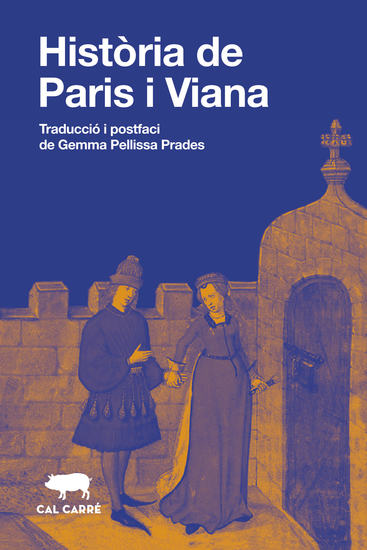
  • Història de Paris i Viana - cover

    Història de Paris i Viana

    Anònim

    • 0
    • 0
    • 0
    Les bones històries d'amor són una garantia d'èxit literari. Ho són ara i sempre ho han estat. Ho demostra el fet que es conservin versions en quinze llengües de la Història de Paris i Viana. Un dels best-sellers de la literatura del segle XV.
    
    
    Els ingredients de l'èxit segueixen sent els mateixos: dos amants que s'estimen desesperadament i alguna cosa que faci aquest amor impossible, en aquest cas la diferència de classe social i un pare cruel. Afegim-hi alguns referents que tothom pugui entendre: Paris és el nom de l'heroi que va provocar la guerra de Troia en raptar Helena després d'haver triat Afrodita com la donzella més bella de totes i Viana és el nom d'una ciutat situada a vint-i-cinc quilòmetres al sud de Lió que en temps dels reis carolingis era un comtat important. Sigui servit el drama a gust de tothom.
    Mostra libro
  • El "Tirant lo Blanch" i "D Quijote de La Mancha" - cover

    El "Tirant lo Blanch" i "D...

    J. (Juan) Givanel Mas

    • 0
    • 0
    • 0
    "El 'Tirant lo Blanch' i 'D. Quijote de La Mancha'" by J. Givanel Mas is a scholarly publication written in the early 20th century. The book presents a critical examination of the influences between two seminal works of literature, exploring the connections and inspirations that exist between Miguel de Cervantes' "Don Quijote" and the earlier chivalric novel "Tirant lo Blanch" by Martí de Riquer. Through an analysis of various passages and characters, the work seeks to shed light on how these texts interact and inform each other within the context of their respective literary traditions. The opening of this study outlines the current academic discourse surrounding "Don Quijote," indicating a shift from purely celebratory analysis towards a search for the sources and influences that shaped Cervantes' work. Givanel Mas cites notable literary critics, referencing their arguments about the connections between "Don Quijote" and chivalric literature, particularly "Tirant lo Blanch." The text highlights Cervantes' extensive reading and engagement with chivalric romances, suggesting that his representation of knightly adventures and characters in "Don Quijote" was significantly influenced by the earlier work, providing textual examples that illustrate both similarities and contrasts between the two narratives. This Catalan-language digital edition is prepared with active navigation, clean typography, a custom cover and a reading file stripped of source-site notices, donation text and unnecessary external links.
    Mostra libro