¡Acompáñanos a viajar por el mundo de los libros!
Añadir este libro a la estantería
Grey
Escribe un nuevo comentario Default profile 50px
Grey
Suscríbete para leer el libro completo o lee las primeras páginas gratis.
All characters reduced
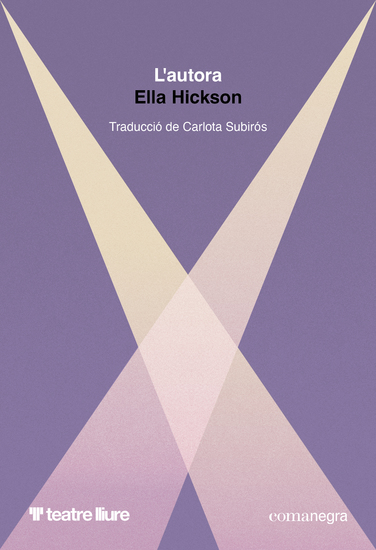
L'autora - cover

L'autora

Ella Hickson

Traductor Carlota Subirós

Editorial: Comanegra

  • 0
  • 0
  • 0

Sinopsis

Una jove escriptora vol fer la revolució. Trobar una manera nova d'explicar una història. Trencar els esquemes d'un imaginari dominat pels homes en la construcció de les ficcions. Començar de zero. La pregunta és: com? I a quin preu? Ella Hickson explora els mecanismes del patriarcat a la societat contemporània i al món de la creació amb una peça mordaç i incòmoda sobre l'autoria, el desig, el poder i les violències —visibles i invisibles— que travessen l'escena i la vida.
Disponible desde: 13/05/2026.
Longitud de impresión: 116 páginas.

Otros libros que te pueden interesar

  • Una nit de carnaval: Pessa en un acte y en vers - cover

    Una nit de carnaval: Pessa en un...

    Joaquin Dimas

    • 0
    • 0
    • 0
    Una nit de carnaval: Pessa en un acte y en vers by Joaquín Dimas is presented as a clean Catalan-language ebook in the general tradition. The edition preserves the work's literary character while preparing it for sustained digital reading with an active table of contents and clear structure. The opening pages establish the tone with this passage: Personas Sr. Climent. Barber Teresa. Sa muller. Salvador. Germá de Teresa. Máscara 1.ª. Vehins. Idem 2.ª. " Idem 3.ª. " Sr. Pau. " Sr. Xarápi. " Comparsas. " La escena passa en Barcelona, á la nit de Carnaval. Una nit de carnaval. Lo teatro representa un carre The file has been rebuilt for fluent reading without source-site boilerplate or extraneous links.
    Ver libro
  • Llibre d'horas - cover

    Llibre d'horas

    Apeles Mestres

    • 0
    • 0
    • 0
    "Llibre d''horas by Apeles Mestres" is a lyrical poetry collection written in the late 19th century. Shaped like a traditional book of hours, it traces a single day from dawn to night, blending vivid nature imagery with gentle philosophical reflections on time, presence, love, and a discreet sense of the divine. The morning poems awaken with the lark and first light, urging us to seize the only sure moment—now—while counseling calm, constancy, and trust in a higher purpose. Midday celebrates sunlit fields alive with birds, blossoms, and buzzing life. Afternoon turns meditative: clouds transform and pass, losses are met with nature's renewals, melancholy lengthens yet yields to hope, and twilight hushes the landscape as mountains sleep and two vigilant cats face off in a garden. Night widens the gaze to the cosmos—the moon's silent path, the world stilled under silver light, the Angel of Sleep, the clock grinding moments into eternity, questions whispered to the stars—and closes with a luminous vision of God moving through sky, sea, and fields, affirming the quiet rhythms of life and a serene, steadfast faith. This Catalan-language digital edition is prepared with active navigation, clean typography, a custom cover and a reading file stripped of source-site notices, donation text and unnecessary external links.
    Ver libro
  • Els fills: Drama - cover

    Els fills: Drama

    J. Puig I.

    • 0
    • 0
    • 0
    Els fills by J. Puig I.. is a three-act stage drama written in the early 20th century. Set in a rural mountain community, it is a moral tale about filial duty, parental authority, and repentance, shaped by Catholic counsel and village life. Magdalena, a strict and loving widow, clashes with her wayward sons Alfred and Manel, while her neighbor Quica indulges her own son, Tomàs. Spurred by Tomàs, the brothers rebel, abandon their mother, and slip into petty crime, even robbing her. Village guards eventually seize Tomàs, and the frightened brothers hide near an hermitage, where the priest Mossèn Geroni guides them toward remorse. Longing for forgiveness, they return home to beg their mother's pardon; she embraces them with open arms, extracts their promise to live rightly under the priest's guidance, and, spent by suffering and joy, dies in their presence, leaving them reconciled and transformed. This Catalan-language digital edition is prepared with active navigation, clean typography, a custom cover and a reading file stripped of source-site notices, donation text and unnecessary external links.
    Ver libro
  • Andronica: Tragedia en tres actes y en vers - cover

    Andronica: Tragedia en tres...

    Angel Guimera

    • 0
    • 0
    • 0
    "Andrónica: Tragedia en tres actes y en vers" by Àngel Guimerà is a dramatic tragedy written in the early 20th century. The play is set in Anatolia in the year 1022 and features a range of characters including the main character, Andrónica, as well as Nicéfor, the emperor, and various nobles, priests, and soldiers. The work likely explores themes of power, betrayal, and the struggles of the people against tyranny, particularly against Nicéfor, who seems to embody oppressive rule. The opening of the play introduces a tense political climate in Anatolia, with Nicéfor's reign being challenged amidst concerns of betrayal and the impending threat of the Byzantine army. Initial scenes depict discussions between key figures, like the Abbot of Sant Thimur and the knight Livani, as they plot to remove Nicéfor from power. As the atmosphere grows increasingly fraught, Andrónica emerges as a crucial figure who challenges the emperor's authority, passionately advocating for the people and calling out Nicéfor's shortcomings. The dynamics among the characters hint at a brewing conflict that intertwines personal grievances with the larger struggle for freedom and justice, setting the stage for the dramatic events that are sure to unfold throughout the play. This Catalan-language digital edition is prepared with active navigation, clean typography, a custom cover and a reading file stripped of source-site notices, donation text and unnecessary external links.
    Ver libro
  • La barca dels afligits: Marina en un acte - cover

    La barca dels afligits: Marina...

    Apeles Mestres

    • 0
    • 0
    • 0
    "La barca dels afligits: Marina en un acte" by Apel·les Mestres is a theatrical play written in the early 20th century. This work, marked by its dialogue-driven narrative, explores themes of familial conflict, emotional struggles, and the quest for understanding among its characters, all set against the backdrop of a fishing community. The play unfolds on a beach where a group of fishermen and their families face a tempest of silent despair. Key characters include Cinto, the father grappling with his uncommunicative sons Cintet and Ciset, along with Mero, whose daughter Ventureta yearns for connection. As the characters oscillate between moments of humor and reflective sorrow, their misunderstandings and grievances become palpable. The story reaches a pivotal point when the characters finally confront each other, leading to revelations and resolutions that transform their relationships. Thus, the narrative not only depicts the trials of everyday life but also emphasizes the healing power of communication and relationship building within intimate circles, capturing the essence of human interaction in a vividly relatable way. This Catalan-language digital edition is prepared with active navigation, clean typography, a custom cover and a reading file stripped of source-site notices, donation text and unnecessary external links.
    Ver libro
  • La reina del cor: Comedia lirica en un acte - cover

    La reina del cor: Comedia lirica...

    Ignasi Iglesias

    • 0
    • 0
    • 0
    "La reina del cor : Comedia lírica en un acte by Ignasi Iglesias" is a one-act lyric comedy (stage play with songs) written in the early 20th century. Set in a rural Catalan inn on Saint Anthony Abbot's day, it blends music, festivity, and romantic intrigue; the likely topic is a simple love story unfolding amid a carters' celebration. The play follows Reina, a virtuous young maid, and Tralla, a frank, big-hearted widowed carter who adores her and dreams of giving her a home and a daughter to love. Paula, the bustling innkeeper, nudges Reina to accept him, and Reina finally admits she has loved Tralla all along. As the village revels in the Tres Toms—drinking, joking, and preparing for the evening dance—Ramonet, Paula's son and a local favorite, realizes too late that he also loves Reina. Tralla publicly declares his intentions, warns Ramonet to show respect, and sets off to fetch the marriage papers. The comic bustle of Milhomes and the other carters, the musicians' lively tunes, and the promise of the ball frame the happy resolution: Reina joyfully waves her kerchief to Tralla as he departs, sealing a straightforward, affectionate union in the midst of communal merriment. This Catalan-language digital edition is prepared with active navigation, clean typography, a custom cover and a reading file stripped of source-site notices, donation text and unnecessary external links.
    Ver libro