Begleiten Sie uns auf eine literarische Weltreise!
Buch zum Bücherregal hinzufügen
Grey
Einen neuen Kommentar schreiben Default profile 50px
Grey
Jetzt das ganze Buch im Abo oder die ersten Seiten gratis lesen!
All characters reduced
Essays in Idleness - cover

Essays in Idleness

Yoshida Kenkō

Verlag: CLXBX

  • 0
  • 0
  • 0

Beschreibung

Essays in Idleness by Yoshida Kenkō is one of the most treasured works of classical Japanese literature, a timeless collection of reflections that captures the beauty, simplicity, and fleeting nature of life. Written in the fourteenth century by the Buddhist monk and courtier Yoshida Kenkō, this remarkable work offers a series of short observations and meditations on human experience, nature, culture, and the passing of time.

Composed of brief and often contemplative passages, the book invites readers into the quiet inner world of its author. Rather than following a single narrative, the work presents a collection of thoughts, anecdotes, and reflections written during moments of leisure and contemplation. Each entry reveals Kenkō's keen eye for detail and his deep appreciation for the subtle beauty found in everyday life.

Through these reflections, Kenkō explores themes such as impermanence, simplicity, beauty, and the changing nature of human fortune. Influenced by Buddhist philosophy and the aesthetic traditions of medieval Japan, his writing celebrates the idea that life's most meaningful moments often lie in quiet observation and thoughtful reflection rather than in grand achievements.

Many passages focus on the natural world—falling blossoms, quiet gardens, changing seasons, and the delicate atmosphere of twilight. These images become symbols of life's transience, reminding readers that beauty is often most powerful because it does not last forever.

At the same time, Kenkō reflects on human behavior, social customs, and the complexities of daily life. With gentle humor and thoughtful insight, he comments on the habits of people, the rituals of courtly society, and the lessons that can be learned from ordinary experiences.

The work is also closely connected to the Japanese aesthetic principle often described as finding beauty in imperfection and impermanence. Kenkō's observations encourage readers to appreciate the quiet elegance of incomplete things, fading moments, and the natural flow of time.

Elegant, reflective, and deeply philosophical, Essays in Idleness has influenced generations of writers, artists, and thinkers in Japan and around the world. Its timeless wisdom continues to resonate with readers seeking a slower, more thoughtful perspective on life.

Gentle, poetic, and profoundly insightful, this classic invites readers to pause, observe, and rediscover the quiet beauty present in the ordinary moments of everyday existence.
Verfügbar seit: 14.03.2026.
Drucklänge: 12 Seiten.
Weitere Bücher, die Sie mögen werden

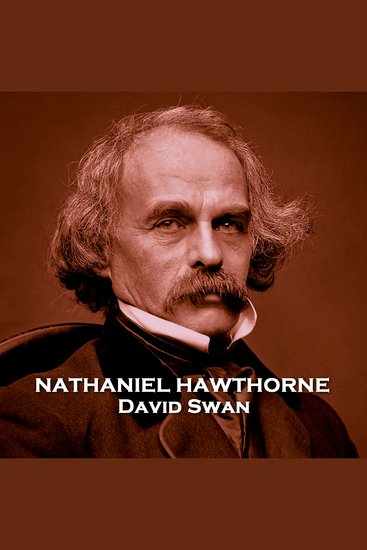
  • David Swan - From their pens to your ears genius in every story - cover

    David Swan - From their pens to...

    Nathaniel Hawthorne

    • 0
    • 0
    • 0
    Nathaniel Hawthorne was born on 4th July 1804 in Salem, Massachusetts, a town synonymous with the earlier Salem Witch Trials. It was instrumental in Hawthorne’s later use of American Gothic and dark romanticism in his writing. 
    He was a mere four years old when his father died and his mother took him and his two sisters to live with her family and then on to their own home in Raymond, Maine. The young Hawthorne had a passion for fiction and poetry and voraciously read the works of Ann Radcliffe, Henry Fielding and Lord Byron.  
    He was sent to college at his maternal uncle’s insistence. During these years he met and befriended Henry Wadsworth Longfellow and future U S president Franklin Pierce. These friendships were lifelong and to have a crucial impact on his writings and career.  
    At college Hawthorne had made attempts at writing short stories and essays but without opportunities to publish. It was only in 1828 that he finally published his novel ‘Franshawe’ to little success and so he began work as editor for the American Magazine of Useful and Entertaining Knowledge.  
    Hawthorne’s short stories were first published in magazines but in 1837 were collected and published as ‘Twice-Told Tales’. A steady literary career still did not come his way and so he worked in a good position at Salem’s port and married the love of his life Sophia Peabody. They moved to live in ‘The Old Manse’ at Concord, Massachusetts.   
    Finally. in 1850 came spectacular literary and commercial success with ‘The Scarlet Letter’ followed by ‘The House of the Seven Gables’ the following year.  
    In 1852, Hawthorne published a biography of presidential candidate Franklin Pierce. After Pierce’s victory he was appointed consul in Liverpool, a position that offered prestige, money and fame. At the end of this appointment he returned several times to Europe before settling in Massachusetts and resuming writing and publication. 
    During the early 1860’s his health declined and on 19th May 1864 during a trip to Plymouth, New Hampshire. He was 59 and was buried in Sleepy Hollow Cemetery in Concord, Massachusetts.
    Zum Buch
  • Common Sense - cover

    Common Sense

    Thomas Paine

    • 0
    • 0
    • 0
    Common Sense was published anonymously by Thomas Paine in the year 1776. The book advocated independence from Great Britain to people in the Thirteen Colonies. Writing in clear and persuasive prose, Paine marshalled moral and political arguments to encourage common people in the Colonies to fight for egalitarian government.
    Thomas Paine also wrote The American Crisis, The Rights of Man, and The Age of Reason.
    Zum Buch
  • The Autobiography of Charles Darwin - cover

    The Autobiography of Charles Darwin

    Charles Darwin

    • 0
    • 0
    • 0
    The Autobiography of Charles Darwin is the autobiography of the British naturalist Charles Darwin which was published in 1887, five years after his death.Darwin wrote the book, which he entitled Recollections of the Development of my Mind and Character, for his family. He states that he started writing it on about May 28, 1876 and had finished it by August 3.The book was edited by Charles Darwin's son Francis Darwin, who removed several passages about Darwin's critical views of God and Christianity (see Charles Darwin's views on religion). It was published in London by John Murray as part of The life and letters of Charles Darwin, including an autobiographical chapter.The omitted passages were later restored by Darwin's granddaughter Nora Barlow in a 1958 edition to commemorate the 100th anniversary of the publication of The Origin. This edition was published in London by Collins under the title of The Autobiography of Charles Darwin 1809-1882. With the original omissions restored. Edited and with appendix and notes by his granddaughter Nora Barlow.The original is in the public domain as its copyright has expired, but the later version remains under copyright.(Summary by Wikipedia)
    Zum Buch
  • Dishing the Dirt - The Hidden Lives of House Cleaners - cover

    Dishing the Dirt - The Hidden...

    Nick Duerden

    • 0
    • 0
    • 0
    'A jaw-dropping investigation' – The Bookseller
    'A great book, well researched, funny and poignant. I loved it.' – Kit De Waal
    Dishing the Dirt pulls back the polished surfaces of modern London to reveal the people who make our homes, offices and Airbnb rentals sparkle – and the secrets they're expected to swallow while doing it.
    In the prologue, a cleaner quietly clears away the evidence of an affair in the marital bed. Nobody apologises. Nobody even really looks at her. She's "just the cleaner" – present in the most intimate spaces, yet treated as if she doesn't count. From that moment on, journalist Nick Duerden follows the trail into a hidden, booming industry where class, money, migration and modern work collide behind closed doors.
    Because here's the uncomfortable truth: cleaners are everywhere, yet we know almost nothing about them. We hand over keys, alarm codes and private routines – then avert our eyes. We talk about the "service" but rarely about the worker.
    Over 15 months, Nick Duerden interviewed dozens of cleaners from all over the world who have settled in London, capturing a series of vivid, eye-opening snapshots of what it's really like to clean up after other people in a country that's often far from home – where cultural misunderstandings loom large, standards can be punishingly exact, and the line between "cleaning" and "everything else" is constantly pushed.
    You'll discover how this shadow workforce actually functions: the ads in shop windows and online listings; the WhatsApp groups where jobs are swapped like favours; the haggling over hourly rates; the agency placements that promise security and deliver anxiety; the travel costs that quietly eat up wages; and the small humiliations that can come with being simultaneously essential and invisible.
    You'll meet:
    
    - The businesswoman training cleaners to satisfy demanding clients (and defuse the panic when something "goes missing")
    
    - An actress balancing auditions with vacuuming
    
    - Workers trapped in exploitation and slave labour, trying to rebuild a life
    
    - A trade unionist helping newcomers learn their rights, find community, and escape abuse
    
    - The lesser-spotted male cleaner and the judgments he faces
    
    - Crime scene cleaners dealing with the aftermath the rest of us can't bear to see
    
    - Housekeepers serving the super-rich in Mayfair mansions, where "domestic cleaner" becomes "house manager" and discretion is everything
    
    - The naked cleaner offering dusting, banter and blurred boundaries
    
    - A modern butler navigating hierarchy, etiquette and "New Money"
    
    - And the clients who treat their cleaner as confidante, therapist… or furniture
    
    These stories are sometimes shocking, sometimes hilarious, and often heartbreaking – but never abstract. Duerden writes with warmth and wit, letting cleaners speak for themselves as they describe pride in their work, loneliness in an expensive city, the pressure to please, and the dreams they're saving for.
    Dishing the Dirt is narrative nonfiction that reads like a page-turner: social history, investigative journalism and human drama rolled into one. It's a compelling look at domestic labour, migrant stories, the gig economy and the modern British class system – told through the dirt we leave behind and the people we pay to remove it.
    'Succeeds brilliantly in dismantling casual assumptions about the drudgery of cleaning' – The Guardian
    Zum Buch
  • Living By My Rules - cover

    Living By My Rules

    Simon Ingram

    • 0
    • 0
    • 0
    Living By My Rules, an eloquent insight into the daily struggles of living with an incurable, degenerative disease such as Parkinson’s disease. Simon’s stories of his early life will transport you back to a far simpler time; the 1970s. Amusing tales which will stir fond memories in all but the youngest readers … Flares, scooters, Mods and of course a nostalgic look back at his beloved football; especially QPR. This book will make you laugh and it will make you cry but, what shines through is Simon’s ability to laugh in the face of adversity and his dogged determination to kick Parkinson’s into touch. - Karen Gran
    Zum Buch
  • Walking the Theological Life - Discovering Method for Theology in the Lives of Biblical Characters - cover

    Walking the Theological Life -...

    Timothy Gaines, Timothy Raymond...

    • 0
    • 0
    • 0
    Explore how to do theology virtuously through the lives of biblical characters.
    For many who are not initiated into the discipline, theology can feel either overwhelming or just plain boring, especially when theological discourse is disconnected from the lives we live. But for centuries, theology wasn't a disconnected discipline—but an invitation to respond to God from the deepest parts of who we are.
    Theologian Tim Gaines invites readers into the adventure of theology, breathing life into the study of God. More than an intellectual pursuit, Walking the Theological Life explores the lives of key biblical characters pursuing their own theological paths, helping us learn and grow in our own understanding of how to do theology in a virtuous fashion. Enter into the stories of biblical characters and discover the joy of the theological journey.
    Zum Buch