Join us on a literary world trip!
Add this book to bookshelf
Grey
Write a new comment Default profile 50px
Grey
Subscribe to read the full book or read the first pages for free!
All characters reduced
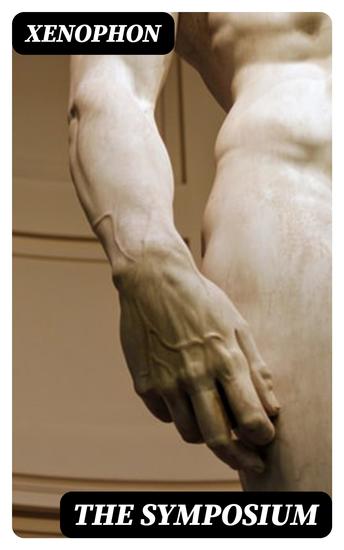
The Symposium - cover

The Symposium

Xenophon

Translator Henry Graham Dakyns

Publisher: DigiCat

  • 0
  • 0
  • 0

Summary

In "The Symposium," Xenophon presents a fascinating exploration of love, companionship, and social discourse through a series of lively conversations amongst notable figures of ancient Athens. Written in the tradition of Socratic dialogues, this work employs a straightforward yet engaging style, allowing readers a transparent glimpse into the philosophical views prevailing in the 4th century BCE. The text serves not only as a literary artifact but also as a vital commentary on the cultural and social dynamics of ancient Greek society, particularly regarding the complexities of human relationships and the nature of desire. Xenophon, an Athenian historian, soldier, and student of Socrates, was deeply influenced by his philosophical training and his experiences in numerous military campaigns. His unique perspective as both a participant and observer granted him insight into the multifaceted nature of human interaction. In crafting "The Symposium," Xenophon aimed to preserve the intellectual legacy of his time while also reflecting on the moral and ethical dimensions of love and friendship. Readers seeking to grasp the intricate interplay of love and thought in ancient Greek culture will find "The Symposium" both enlightening and enjoyable. This text not only enriches one's understanding of classical philosophy but also resonates with contemporary discussions of love and human connection, making it a timeless addition to any literary collection.
Available since: 09/04/2022.
Print length: 56 pages.

Other books that might interest you

  • Reality and the Arts - cover

    Reality and the Arts

    Albert A. Anderson

    • 0
    • 0
    • 0
    Art is the creative manifestation of essences. In order to understand the relation between art and reality, we need a philosophical guide. The best way to comprehend how the creative act of imagining enables the mind to seek reality is to employ the kind of dialectical thinking that Plato used in his dialogues. Beginning with the shadows on the wall of the cave in which each person dwells, that process gradually enables us to grasp the essences that are manifested in individual works of art.
     
    Without a philosophical guide, we are likely to encounter only a blur of images in the visual arts, a cacophony of sounds in music, a whirl of activity in the theater, and chaos in the building of cities. It is too much to expect a set of final answers to any serious question about what is true, good, or beautiful. If we abandon the quest for reality we settle for too little. Plato’s dialectical approach offers a path between Scylla and Charybdis.
    Show book
  • The Grammar of Self - Collected Poems 2000-2023 - cover

    The Grammar of Self - Collected...

    George Watt

    • 0
    • 0
    • 0
    In THE GRAMMAR OF SELF, George Watt presents a lifetime of memories, which seemingly move at random from decade to decade, from continent to continent, from cosmos to microcosm. It does have one central goal: to look at poetry as an attempt towards objectification of aspects of personal identity, as a means through which the self may be confronted, challenged and celebrated. But the volume of verse does more than that as it subscribes to a notion from Thomas Szasz about the self: it is “not something that one finds. It is something that one creates.” (T.S. Szasz, The Second Sin (New York: Anchor Press, 1973, p. 49.) This volume accepts that the poetic text, or multiples thereof, is one means through which a self finds articulation. This articulation is open-ended, chaotic, composed of innumerable experiential fragments that come from deed, time, place and person. The self in this volume is composed of psychic jigsaw pieces (single poems) each of which assert their right to placement, but which will never collate into a perfect picture. This volume of poetry is a collection of many of these pieces, which together present an incomplete movement towards Szaszian self-creation.
    Show book
  • The Prince - cover

    The Prince

    Nicoló Machiavelli

    • 0
    • 0
    • 0
    The lion cannot guard himself from the toils, nor the fox from wolves. A Prince must therefore be a fox to discern toils, and a lion to drive off wolves. The modern-day term “Machiavellian” is used to describe deception, dishonesty, and cruelty to meet a goal. The Prince by Niccolò Machiavelli was written as a guide for autocrats on how to govern using means that were meant to deceive and manipulate a government’s constituency—to the extent of advocating the use of evil for political expediency. In this classic work, the end justifies the means reigns paramount to Machiavelli’s system of government.
    Show book
  • Malcolm X The CIA and Other Blacks - cover

    Malcolm X The CIA and Other Blacks

    Don Rojas, Herb Boyd

    • 0
    • 0
    • 0
    Like two intrepid leftist sleuths, Herb Boyd and Don Rojas take a deep dive into the files of the CIA, mainly inspired by Malcolm X's belief that he was under surveillance. They unearth and disclose enough evidence to confirm Malcolm's suspicion as well as to suggest, through circumstantial documentation, at least one agent stalking him. The book offers valuable insight into the history of government agencies spying on Black activists, and targeting Malcolm was just among the most notable of those in the CIA's crosshairs. Plummeting the depths of secrecy and intrigue of the CIA and Black radicals, Boyd and Rojas provide a promising blueprint and when, if ever, the agencies decide to declassify more documents on Malcolm, their work will be pivotal in the further pursuit of this ignominious truth.
    Show book
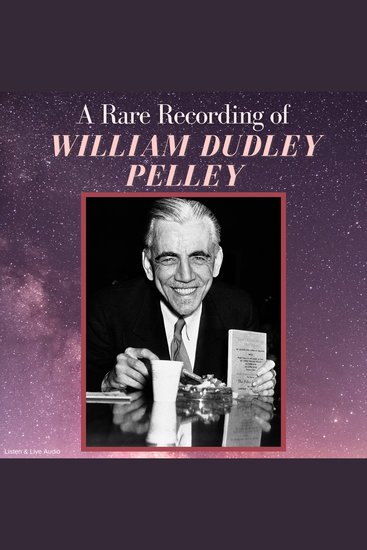
  • A Rare Recording of William Dudley Pelley - cover

    A Rare Recording of William...

    William Dudley Pelley

    • 0
    • 0
    • 0
    William Dudley Pelley (March 12, 1890–July 1, 1965) was a journalist, publisher, novelist, Hollywood screenwriter, spiritualist, and the founder of the Silver Legion of America (Silver Shirts). Pelley ran for President of the United States in 1936 as the Christian Party candidate. He was indicted twice for sedition and was sentenced to 15 years imprisonment. Pelley was paroled in 1950 from Federal Prison in Terra Haute, Indiana. After his release, he returned to Noblesville, Ind. and began publishing metaphysical magazines and books avoiding political topics. He spent his time developing Liberation doctrine into a full-blown religion known as Soulcraft.
    Show book
  • The January 6th Tapes - The Unabridged Audio Recordings of The Select Committee to Investigate the Attack - cover

    The January 6th Tapes - The...

    The Select Committee to...

    • 0
    • 0
    • 0
    The only audiobook of the live Jan. 6 Select Committee Hearings, illuminating one of the most shocking days in contemporary American history through the unforgettable testimony and a foreword by lawyer and legal analyst Preet Bharara. 
     
    The select committee's investigation into the Jan. 6 attack on the Capitol gripped the country in ways reminiscent of Watergate or the Clinton Impeachment. From the opening statements by Congressman Bennie Thompson and Congresswoman Liz Cheney, to Cassidy Hutchinson’s riveting surprise testimony, to the vote to subpoena former President Donald J. Trump, the hearings were carefully crafted to tell the story of the day our democracy was put in peril.   
     
    The January 6th Tapes is the only audiobook where listeners can hear all 20 hours of unabridged audio recordings – each of the nine public hearings is full of stunning testimony from Trump allies, aides, and lawyers; legal experts; participants in the attacks; and members of the team tasked with protecting the Capitol building that day. It includes a foreword from Preet Bharara, former U.S. Attorney for the Southern District of New York, examining the historical impact of the committee and the hearings, as well as the effect they will have on American democracy.  
     
    Hearing the testimony helps all students of history understand the stakes in a way simply not possible from reading the report. As such, The January 6th Tapes is an easily accessible archive providing a lasting chronicle of one of the darkest days in U.S. history.
    Show book