¡Acompáñanos a viajar por el mundo de los libros!
Añadir este libro a la estantería
Grey
Escribe un nuevo comentario Default profile 50px
Grey
Suscríbete para leer el libro completo o lee las primeras páginas gratis.
All characters reduced
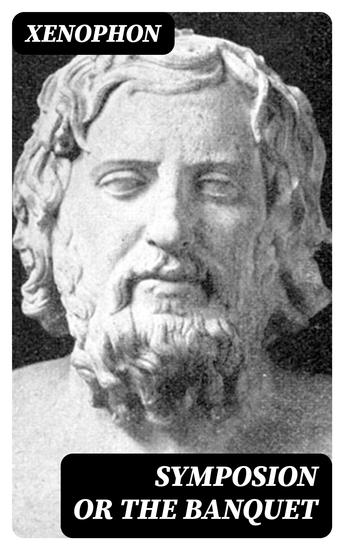
Symposion or The Banquet - cover

Symposion or The Banquet

Xenophon

Traductor H. G. Dakyns

Editorial: DigiCat

  • 0
  • 0
  • 0

Sinopsis

Xenophon's "Symposion," commonly translated as "The Banquet," is a rich philosophical dialogue set within the confines of a convivial gathering, showcasing the social and intellectual dynamics of classical Athenian society. Written with a distinctive blend of elegance and accessibility, the text captures the nuanced interplay of friendship, virtue, and the pursuit of wisdom through a series of speeches by renowned figures of the time, including Socrates. The stylistic elements reflect both the humor and seriousness of the discussions, offering a vivid portrayal of aristocratic life while simultaneously engaging with profound ethical inquiries, a hallmark of Socratic thought. Xenophon, a student of Socrates and a significant figure in his own right, provides a unique historical perspective shaped by his experiences as a soldier, historian, and philosopher. His writings often reflect a practical wisdom, steeped in the Socratic method of inquiry. This dual identity, as both an observer and participant in the shifts of Greek intellectual thought, informs his approach in "Symposion," where he examines themes of identity, community, and the essence of a good life amidst societal challenges. Recommended for readers interested in the intersections of philosophy and social discourse, "Symposion" serves not only as a window into ancient Greek culture but as a timeless exploration of the human condition. Its dialogue format encourages reflection on contemporary issues of ethics and relationship, making it indispensable for students of philosophy, history, and literature.
Disponible desde: 15/09/2022.
Longitud de impresión: 56 páginas.

Otros libros que te pueden interesar

  • For ALL the People - Redeeming the Broken Promises of Modern Media and Reclaiming Our Civic Life - cover

    For ALL the People - Redeeming...

    Michael Slaby, Deval Patrick

    • 0
    • 0
    • 0
    "Slaby is the Yuval Noah Harari of media. He pointedly outlines the fracture of our culture and democracy while providing hopeful next steps for how we can redesign our systems for a more civically-minded world."
    
    —Megan Kiefer, author of The Third Dimension of Literacy
    A leader in digital communication and grassroots political campaigns explains how the internet and modern media have undermined America and how we can reclaim our voices for the good of civic life.
    The creators of the internet promised us jetpacks: better experiences, more choices, and deeper relationships.
    Built on a diversity of voices, our online freedom was supposed to spark a democratic transformation. But our platforms don't work for us—we're the inventory and our outrage fuels a tech revolution optimized for profit, not civic life.
    As one of the top digital strategists for Barack Obama's two presidential campaigns, Michael Slaby saw the beginning of a new kind of national division. What he witnessed would spawn the Tea Party movement, upset the 2016 election, and accelerate the polarization of American civic life.
    Slaby presents the four core areas which can be reclaimed to work better for all of us: platforms, government institutions, corporations, and even the users ourselves. Optimistic, future-focused, and deeply passionate, For ALL the People breaks down how we got here, and how we, the users, can work toward a better democracy through tech.
    Ver libro
  • European Regions - Perspectives Trends and Developments in the 21st Century - cover

    European Regions - Perspectives...

    Gabriele Abels, Elisabeth Donat,...

    • 0
    • 4
    • 0
    At the beginning of the 21st century, the EU is facing deep political, social, and economic changes. The benefit of supranational organization is no longer obvious to European citizens and questions of legitimacy have accompanied the EU's development over the last decades. Regions - albeit often deemed »obsolete« - present themselves as stable and reliable partners in this turbulent environment: in being important objects of identification to their citizens, but also relevant political and legal entities in the EU's multilevel governance system. This edited volume asks about the role of regions and regional identity in a European Union that is perhaps struggling more than ever about its future.
    Ver libro
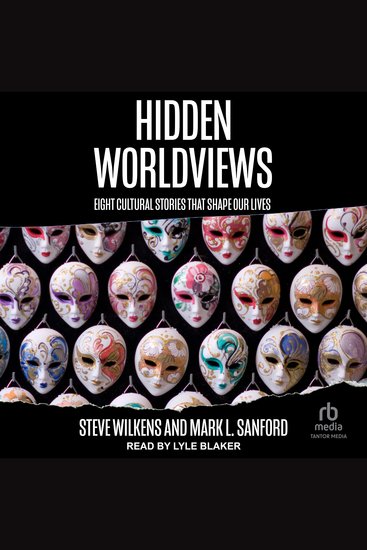
  • Hidden Worldviews - Eight Cultural Stories That Shape Our Lives - cover

    Hidden Worldviews - Eight...

    Mark L. Sanford, Steve Wilkens

    • 0
    • 0
    • 0
    Why do we buy what we buy, vote the way we vote, eat what we eat, and say what we say? Why do we have the friends we have, and work and play as we do? It's our choice? Yes, but there are forces, often unseen, that shape every decision we make and every action we take. 


    These hidden, life-shaping values and ideas are not promoted through organized religions or rival philosophies but fostered by cultural habits, lifestyles and the institutional structures of society. Steve Wilkens and Mark Sanford shine a spotlight on the profound challenges to Christianity and faithful Christian living that come from worldviews that comprise the cultural soup we swim in. 


    The authors show how to detect the individualism, consumerism, nationalism, moral relativism, scientific naturalism, New Age thinking, postmodern tribalism, and salvation as therapy that fly under our radar. Building on the work of worldview thinkers like James Sire, this book helps those committed to the gospel story recognize those rival cultural stories that compete for our hearts and minds.
    Ver libro
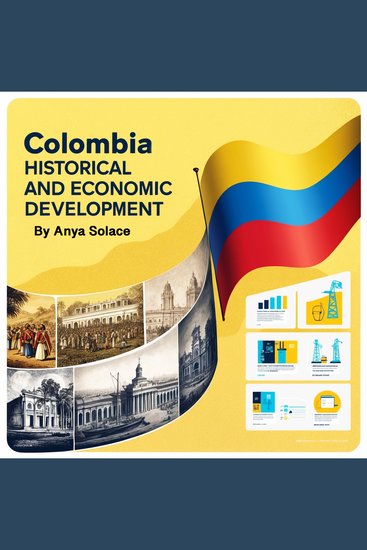
  • Colombia - Historical and Economic Development - cover

    Colombia - Historical and...

    Anya Solace

    • 0
    • 0
    • 0
    Colombia, located in the northwestern part of South America, is a country of remarkable geographical diversity and cultural richness. Bordered by the Caribbean Sea to the north, Venezuela to the east, Brazil to the southeast, Peru to the south, Ecuador to the southwest, and Panama to the northwest, it stands as a bridge between the continents of North and South America. Its geographical expanse is characterized by lush rainforests, the majestic Andes mountains, vast plains, and a significant coastline. This diversity shapes the country’s economy, society, and political history, making it a land of both opportunities and challenges. 
    Colombia’s population is approximately 51 million, making it the third-most populous country in Latin America, after Brazil and Mexico. The country’s people are as diverse as its landscape, with a population made up of mestizos, Afro-Colombians, indigenous groups, and a small percentage of people with European ancestry. This blend of cultures has contributed to the development of a rich, multifaceted society with deep-rooted traditions in music, dance, literature, and art. Cities like Bogotá, Medellín, and Cali are cultural hubs, while small towns across the country preserve indigenous practices and lifestyles that have been passed down through generations. 
    The political landscape of Colombia has been shaped by a complex history of colonization, independence, civil conflict, and efforts to modernize. Initially colonized by the Spanish in the early 1500s, Colombia gained independence in 1810. However, political fragmentation and civil war marked the country’s early years as a republic. It wasn’t until the mid-20th century that Colombia began to establish a more stable government, although violence from guerilla groups, drug cartels, and paramilitary forces has intermittently disrupted the peace.
    Ver libro
  • 101 Amazing Facts About France - cover

    101 Amazing Facts About France

    Jack Goldstein

    • 0
    • 0
    • 0
    In this amazing Audiobook you can find more than one hundred facts about the country of France. Separated into sections such as its geography, its people, famous French figures and many more you will find some fascinating information inside!. Whether you are planning on visiting France, working on a geography project or just want to know more about this beautiful country, this is an excellent addition to your Audiobook library.
    Ver libro
  • The Civic Bargain - How Democracy Survives - cover

    The Civic Bargain - How...

    Josiah Ober, Brook Manville

    • 0
    • 0
    • 0
    A powerful case for democracy and how it can adapt and survive—if we want it to 


    Is democracy in trouble, perhaps even dying? Pundits say so, and polls show that most Americans believe that their country's system of governance is being "tested" or is "under attack." But is the future of democracy necessarily so dire? In The Civic Bargain, Brook Manville and Josiah Ober push back against the prevailing pessimism about the fate of democracy around the world. Instead of an epitaph for democracy, they offer a guide for democratic renewal, calling on citizens to recommit to a "civic bargain" with one another to guarantee civic rights of freedom, equality, and dignity. That bargain also requires them to fulfill the duties of democratic citizenship: governing themselves with no "boss" except one another, embracing compromise, treating each other as civic friends, and investing in civic education for each rising generation. 


    Manville and Ober trace the long progression toward self-government through four key moments in democracy's history: Classical Athens, Republican Rome, Great Britain's constitutional monarchy, and America's founding. Comparing what worked and what failed in each case, they draw out lessons for how modern democracies can survive and thrive.
    Ver libro