Join us on a literary world trip!
Add this book to bookshelf
Grey
Write a new comment Default profile 50px
Grey
Subscribe to read the full book or read the first pages for free!
All characters reduced
Anabasis - cover

Anabasis

Xenophon

Translator Henry Graham Dakyns

Publisher: DigiCat

  • 0
  • 0
  • 0

Summary

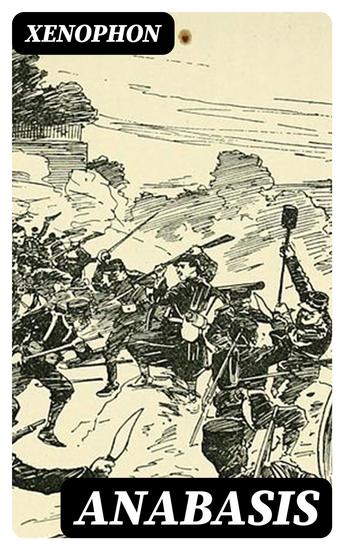
Xenophon's 'Anabasis' is a seminal work of classical literature that recounts the extraordinary journey of Greek mercenaries who fought for Cyrus the Younger in his ill-fated campaign against the Persian king Artaxerxes II. Written in an immersive, first-person narrative style, the text intricately blends military history, travelogue, and philosophical reflection. The work details the harrowing experiences of the 'Ten Thousand,' illuminating themes of leadership, survival, and the nature of adversity. In its historical context, 'Anabasis' stands out not only as a military memoir but also as a vital commentary on Greek identity and imperial ambitions during a period of political fragmentation and social upheaval. Xenophon, a student of Socrates, was himself a soldier, historian, and philosopher, which profoundly influenced his portrayal of the complexities faced by his fellow Greeks in foreign territories. His unique blend of personal experience and rigorous inquiry provided him with a distinctive lens through which to explore the interplay of power, loyalty, and human resilience. His writing reflects a deep concern for moral virtue and governance, evident in the nuanced depiction of both leaders and soldiers. Readers interested in historical narratives, military strategies, and the exploration of personal and collective identity will find 'Anabasis' an indispensable text. This work invites reflection not only on the trials faced by the 'Ten Thousand' but also on overarching questions about human ambition and survival. Through Xenophon's eloquent prose, readers are transported into a world where courage is tested, and the human spirit shines, making this a profound addition to both the literary and historical canon.
Available since: 10/11/2022.
Print length: 284 pages.
Other books that might interest you

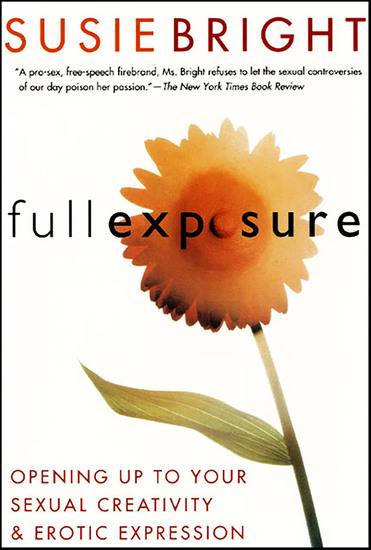
  • Full Exposure - Opening Up to Sexual Creativity & Erotic Expression - cover

    Full Exposure - Opening Up to...

    Susie Bright

    • 0
    • 0
    • 0
    Hailed by  Utne Reader as "a visionary" and the  San Francisco Chronicle as "the X-rated" intellectual," Susie Bright is indiputably  the  sexpert of our times.Now, in a frank and intimate look at our own erotic experience, she reveals the ways in which individual sexual expression has the power to inspire, challenge, and transform all of our lives.  Bright explores some of the most complex questions about sexuality todaym including:   What are the real differences between men's and women's sense of the erotic?Why is it so threatening to conscioulsy address sexual desire?Is there a line to be drawn in erotic creativity-can you go so far?How can articulate erotic expression make us better lovers, more important, better people?
    Show book
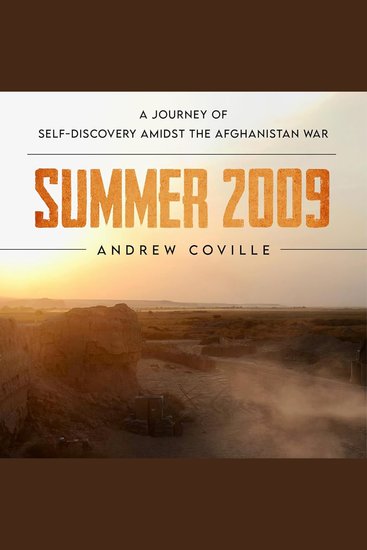
  • Summer 2009 - A Journey of Self-Discovery Amidst the Afghanistan War - cover

    Summer 2009 - A Journey of...

    Andrew Coville

    • 0
    • 0
    • 0
    The Afghanistan war endured for two decades, involving an all-volunteer military force deployed repeatedly between 2001-2021. Over the course of these 20 years, thousands of young Americans lived through their own unique versions of the war, each marked by personal war stories and life-altering events. The war concluded on August 30th, 2021, leaving both the United States and the people of Afghanistan with a somber and perplexing aftermath. An entire generation now grapples with questions surrounding the reasons behind their sacrifices, as well as the thousands of lives lost or forever changed during the conflict. 
    This narrative presents a firsthand account of a Marine who played a small role in the Afghan War. It begins with his enlistment in the Marine Corps immediately after high school, driven by dreams of earning the prestigious title of United States Marine and serving his country in combat. The story culminates with his reentry into the civilian world, marked by the challenging task of making sense of the profound experiences he underwent. 
    The account unfolds through a journey kept by the Marine during a significant offensive in the Helmand Province in the summer of 2009. These firsthand entries, composed by a 21-year-old, are revisited 15 years later, offering a continually evolving perspective and outlook on life. This is not merely a war story, or a detailed military operation account; rather, it is a vulnerable and revealing exploration into the inner thoughts of a young man navigating the complexities of war. It delves into what he learned from those experiences as the years unfolded.
    Show book
  • Suvorov & business Everlasting lessons from the russian master strategist - cover

    Suvorov & business Everlasting...

    Yury Yavorsky

    • 0
    • 0
    • 0
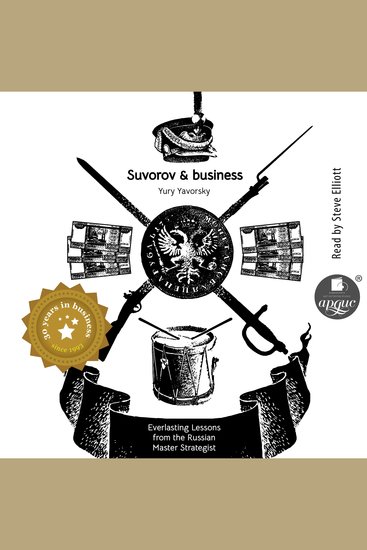
    Alexander Suvorov, Russian military general, is known to have spoken seven languages, including Turkish and Finnish. He was an expert in military history, a brilliant mathematician, and never lost a single battle. The wisdom of this distinguished strategist and tactician of military art finds practical applications in any business. Suvorov's strategy is the key to success.Some of the famous general's ideas will be considered in this book through the prism of the business environment.Content:Part one1. Act outside the box!2. Smart calculation paves way to victory3. Lessons from the drawings4. The three laws of tactics5. Amid a protracted war...Part two1. Covenants in drawings2. The power and its grace: symbols and styles3. "Fall of evil"4. Defying yourself5. Superiors and subordinates6. The ultimate recruiter's guide7. The importance of being wiseAbout the Author
    Show book
  • Golden Rule - The Investment Theory of Party Competition and the Logic of Money-Driven Political Systems - cover

    Golden Rule - The Investment...

    Thomas Ferguson

    • 0
    • 0
    • 0
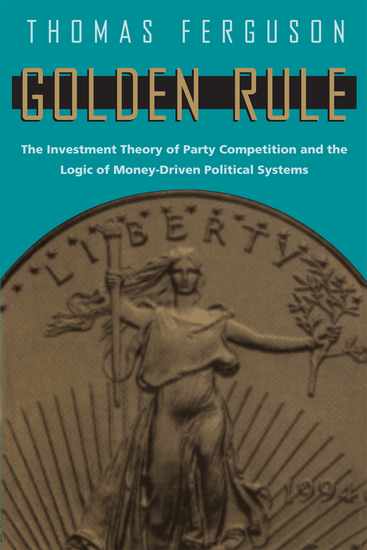
    "To discover who rules, follow the gold." This is the argument of Golden Rule, a provocative, pungent history of modern American politics. Although the role big money plays in defining political outcomes has long been obvious to ordinary Americans, most pundits and scholars have virtually dismissed this assumption. Even in light of skyrocketing campaign costs, the belief that major financial interests primarily determine who parties nominate and where they stand on the issues—that, in effect, Democrats and Republicans are merely the left and right wings of the "Property Party"—has been ignored by most political scientists. Offering evidence ranging from the nineteenth century to the 1994 mid-term elections, Golden Rule shows that voters are "right on the money." Thomas Ferguson breaks completely with traditional voter centered accounts of party politics. In its place he outlines an "investment approach," in which powerful investors, not unorganized voters, dominate campaigns and elections. Because businesses "invest" in political parties and their candidates, changes in industrial structures—between large firms and sectors—can alter the agenda of party politics and the shape of public policy.Golden Rule presents revised versions of widely read essays in which Ferguson advanced and tested his theory, including his seminal study of the role played by capital intensive multinationals and international financiers in the New Deal. The chapter "Studies in Money Driven Politics" brings this aspect of American politics into better focus, along with other studies of Federal Reserve policy making and campaign finance in the 1936 election. Ferguson analyzes how a changing world economy and other social developments broke up the New Deal system in our own time, through careful studies of the 1988 and 1992 elections. The essay on 1992 contains an extended analysis of the emergence of the Clinton coalition and Ross Perot's dramatic independent insurgency. A postscript on the 1994 elections demonstrates the controlling impact of money on several key campaigns. This controversial work by a theorist of money and politics in the U.S. relates to issues in campaign finance reform, PACs, policymaking, public financing, and how today's elections work.
    Show book
  • Trying Lesbian - cover

    Trying Lesbian

    Rainbow Press

    • 0
    • 0
    • 0
    She’s never been attracted to women before. 
      
    Not before Sarah. But that curvy body, and especially those huge tits? It’s an attraction that — just this once — she can’t deny. 
      
    Staying at the same hotel, will she have the courage to come on to Sarah… and to take her first ever woman up to her room?
    Show book
  • Stanford Prison Experiment The: The History of the Notorious Psychological Experiment on Guards’ Treatment of Prisoners - cover

    Stanford Prison Experiment The:...

    Editors Charles River

    • 0
    • 0
    • 0
    What happens when you put good people in a bad place? 
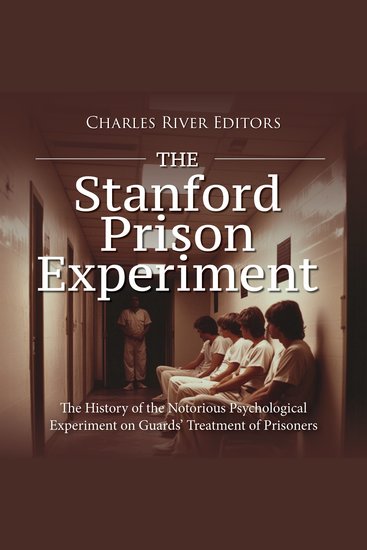
    That was the question that an experiment in 1971 set out to answer when Stanford University professor and psychologist Philip Zimbardo used funding provided by the U.S. Office of Naval Research to create a make-believe prison in the basement of a university building. Male students were offered the chance to take part in the two-week experiment (and to make $15 per day). All applicants were carefully screened to ensure that they were healthy, emotionally and psychologically stable. 24 men were selected out of 75 that had applied. These men were then randomly assigned to play the role of either prisoners or guards in the “prison.” 
    Initially, nobody was particularly concerned: after all, these were stable, intelligent young men who understood that they would be playing a role for just two weeks. Some people even considered that the experiment was pointless because everyone involved knew that they were simply acting roles for a limited time, so they couldn’t be expected to behave in the ways that real prisoners and guards did. 
    Nonetheless, the experiment began on August 15th, 1971, and just six days later, on August 20th, it was abruptly and unexpectedly terminated after the “guards” had become brutal and sadistic and the “prisoners” had become withdrawn, fearful, and apathetic. There were real concerns that someone might end up being seriously hurt or suffer long-term psychological damage. 
    How could a group of nice, healthy, intelligent young men suddenly transform into sadistic thugs? How could another equally intelligent group of young men suddenly become apathetic victims of this brutality? What did this say about the malleability of human behavior, even when everyone involved knew that this wasn’t real?
    Show book