Begleiten Sie uns auf eine literarische Weltreise!
Buch zum Bücherregal hinzufügen
Grey
Einen neuen Kommentar schreiben Default profile 50px
Grey
Jetzt das ganze Buch im Abo oder die ersten Seiten gratis lesen!
All characters reduced
The Hero (1901) - cover

The Hero (1901)

William Somerset Maugham

Verlag: Librorium Editions

  • 0
  • 0
  • 0

Beschreibung

Many war heroes return from battle to a world that has changed dramatically. In the case of James Parsons, the protagonist of W. Somerset Maugham’s The Hero, his family and hometown have remained exactly as they were before he left to serve his country abroad – it is his own outlook and values that have shifted. Will he be able to settle back into his old life and regain the happiness that was once his? Read The Hero to find out.
Verfügbar seit: 27.11.2021.

Weitere Bücher, die Sie mögen werden

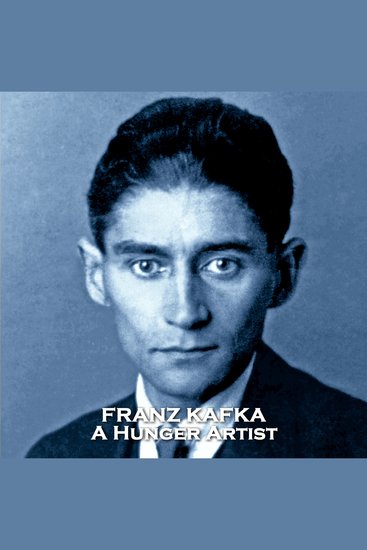
  • A Hunger Artist - A study in artistic pursuit and the sacrifices one must make - cover

    A Hunger Artist - A study in...

    Franz Kafka

    • 0
    • 0
    • 0
    Franz Kafka was born on 3rd July 1883 in Prague, then in Bohemia, the eldest of 6, into a middle-class Jewish family. 
     
    Life for the young Kafka and his passion for literature was often made an ordeal by his over-bearing and domineering entrepreneur of a father.   
     
    In 1889 Kafka was sent to the Deutsche Knabenschule, an elementary school in Prague. His father would only allow him to be educated in German-speaking schools and even went so far as to limit visits to the synagogue to four a year. 
     
    In 1901 he graduated from the classics-oriented Altstädter Gymnasium. Kafka did well there and across a large range of subjects.  He now enrolled at the Charles Ferdinand University, to study chemistry, but quickly switched to law for which he obtained his degree in June 1906 and then performed the mandatory year of unpaid service as clerk at the civil and criminal courts. 
     
    A job at an Italian insurance company left him little time to write and after a year he took another job with the Worker's Accident Insurance Institute for the Kingdom of Bohemia where he stayed until ill health led to his resignation in 1922. 
     
    Although he saw work as a means to pay the bills and to allow him time to write, he received several promotions and was noted as a good employee. 
     
    By 1917 Kafka was suffering from tuberculosis, which required frequent periods of convalescence. Interspersed with this, were several intense affairs before he settled in Berlin with Dora Diamant, a 25-year-old kindergarten teacher who herself having left the ghetto now influenced Kafka's interest in the book of Jewish law, the Talmud. 
     
    Kafka’s on-going health was littered with problems. Apart from TB there were several other ailments, including migraines, insomnia, boils, depression, all usually brought on by excessive stresses and strains. He attempted to counteract all of this by naturopathic treatments, a vegetarian diet and consuming large quantities of unpasteurized milk. 
     
    His tuberculosis still worsened. He returned to Prague, where he died on 3rd June 1924. He was 40. 
     
    His literary works are few in number but towering in influence.  His masterpieces include ‘The Trial’, ‘The Metamorphosis’ as well as a number of short stories which reveal facets of humankind that truthfully could only be born from Kafka’s brain and pen.
    Zum Buch

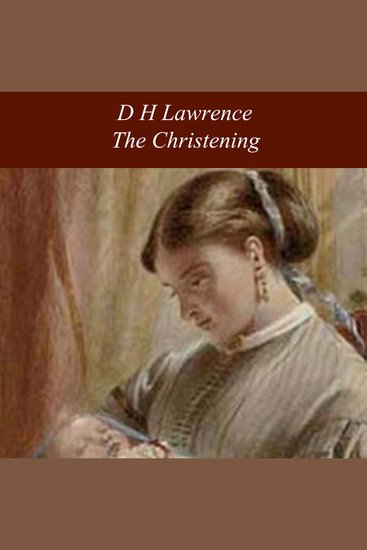
  • The Christening - cover

    The Christening

    D H Lawrence

    • 0
    • 0
    • 0
    'The Christening' was written by D H Lawrence in 1911. Lawrence is at his best in this story, taken from the scenes of his childhood and based on characters he knew intimately. The theme of the unmarried mother, and the frictions the situation caused in the family and in the local community were further explored in his play ‘The Daughter-in-Law’. In this story, the emphasis moves around each member of the family and the visiting clergyman as the tensions in family life are released.
    Zum Buch
  • The Thirty-Nine Steps - cover

    The Thirty-Nine Steps

    John Buchan

    • 0
    • 0
    • 0
    As war looms in Europe, Richard Hannay returns from Rhodesia to his home in London. His neighbor, an American freelance spy named Franklin Scudder, claims to know of an assassination plot to destabilize Europe. When Hannay finds Scudder dead in his flat, he is drawn into a fast-paced labyrinthine adventure that takes him from the hills of Scotland to an unassuming location by the sea.
    Zum Buch
  • Anticipations (Unabridged) - cover

    Anticipations (Unabridged)

    H. G. Wells

    • 0
    • 0
    • 0
    Anticipations of the Reaction of Mechanical and Scientific Progress upon Human Life and Thought, generally known as Anticipations, was written by H.G. Wells at the age of 34. He later called the book, which became a bestseller, "the keystone to the main arch of my work." His most recent biographer, however, calls the volume "both the starting point and the lowest point in Wells's career as a social thinker." Taking the revolution in transport facilitated by the "mechanical revolution" as his point of departure, Wells told readers they were living through a reorganization of human society that would alter every dimension of life. An academic biographer has described the degree of accuracy of Wells's predictions as "certainly phenomenal.
    Zum Buch
  • The Sorrows of Young Werther - cover

    The Sorrows of Young Werther

    Goethe, Johann Wolfgang von Goethe

    • 0
    • 0
    • 0
    "The Sorrows of Young Werther" (in German, "Die Leiden des jungen Werthers") is a novel by the German author Johann Wolfgang von Goethe, first published in 1774. This novel is considered one of the foundational works of the Sturm und Drang literary movement, characterized by emotional intensity and individualism. The story is presented as a series of letters written by the young artist Werther to his friend Wilhelm. It explores themes of unrequited love, longing, and the conflict between societal expectations and personal desires. Werther's intense and tragic passion for Charlotte, who is already engaged to another man, forms the central emotional narrative.
    Zum Buch
  • Utopia - cover

    Utopia

    Thomas Moore

    • 0
    • 0
    • 0
    'For if you suffer your people to be ill-educated and their manners to be corrupted from their infancy, and then punish them for those crimes to which their first education disposed them, what else is to be concluded from this, but that you first make thieves and then punish them.'
    
    A classic work of socio-political satire and still widely read and studied to this day, Utopia sees a fictional traveller describe an ideal society; a vehicle for More to highlight the flaws of sixteenth-century Europe.
    
    First published in 1516, Utopia is a political and philosophical satire presented as a dialogue between More and the traveller Raphael Hythlodaeus. Raphael recounts his time visiting the island of Utopia, where private property ceases to exist, all citizens work, and the laws promote equality, education and religious tolerance. Through this imagined society, More indirectly challenges the injustices of European politics, and cleverly reflects on the meaning of justice, governance and what it takes to create a 'perfect' society.
    Thomas More (1478 – 1535) was an English philosopher, statesman, lawyer and author. Venerated in the Catholic Church, More served Henry VIII as Lord Chancellor from 1529 to 1532. Today, he is noted for being a Renaissance humanist, and is best known for his political work, Utopia.
    Zum Buch