Join us on a literary world trip!
Add this book to bookshelf
Grey
Write a new comment Default profile 50px
Grey
Subscribe to read the full book or read the first pages for free!
All characters reduced
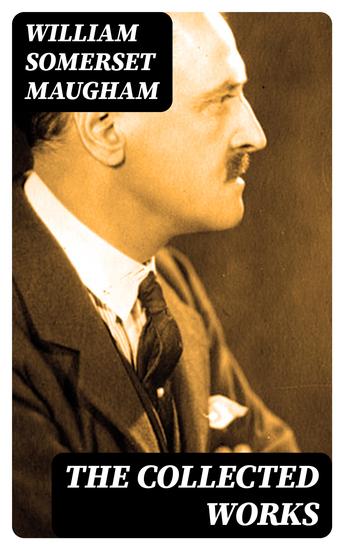
The Collected Works - cover

The Collected Works

William Somerset Maugham

Publisher: DigiCat

  • 0
  • 0
  • 0

Summary

William Somerset Maugham's "The Collected Works" is an expansive anthology that encapsulates the rich tapestry of human experience through his keen observations and masterful storytelling. Maugham's literary style is characterized by its clarity and psychological insight, seamlessly blending realism with a touch of irony. The collection traverses various genres, offering short stories, plays, and novels that reflect the socio-political landscapes of the early 20th century while delving deeply into the complexities of personal relationships and moral dilemmas. Each piece invites readers into a world where character often grapples with existential questions, showcasing Maugham's profound understanding of human nature. Maugham, an eminent figure in British literature, drew from his diverse life experiences, including his background in medicine and extensive travels, which influenced his narrative voice and thematic choices. Frequently reflecting on his own tumultuous relationships and the existential struggles he witnessed, Maugham's work serves as a mirror to society's ethos of his time, making his observations both poignant and relevant. Readers seeking an intellectually stimulating journey will find "The Collected Works" an invaluable treasure. This collection is not just a tribute to literary excellence but an invitation to engage with the timeless questions of love, ambition, and morality that underpin the human experience.
Available since: 10/11/2022.
Print length: 3635 pages.


Other books that might interest you

  • Son Nobel Prize 1933 - cover

    Son Nobel Prize 1933

    Ivan Bunin

    • 0
    • 0
    • 0
    Ivan Bunin received the 1933 Nobel Prize in Literature "for the strict artistry with which he has carried on the classical Russian traditions in prose writing." Aristocrat to the core, Bunin somehow remained connected to the land and people and keenly felt their pulse of life. His acute observations resulted in the accurate and unforgettable characters who populated his writing. His love for punctuation and punctilious choice of words is legendary. Reading Bunin's stories is one of the best ways to understand the mysterious Russian soul and begin to understand one of Russia's greatest periods of literature.
    Show book
  • Frankestein - cover

    Frankestein

    Mary Shelley

    • 0
    • 0
    • 0
    Delve into the haunting and thought-provoking world of Frankenstein, a timeless masterpiece of gothic literature. This audiobook brings to life the tragic tale of Victor Frankenstein, a brilliant but tormented scientist who defies the natural order by creating life. What emerges from his laboratory, however, is not the miracle he envisioned but a creature doomed to isolation and despair. 
    As Victor and his creation grapple with themes of ambition, responsibility, and the boundaries of human endeavor, listeners are drawn into a story that is as relevant today as it was in the 19th century. Shelley's narrative raises profound questions about morality, scientific exploration, and what it truly means to be human. 
    This audiobook is perfect for those who love suspenseful storytelling, philosophical reflection, and unforgettable characters. With its rich prose and deeply emotional core, Frankenstein offers a compelling listening experience that will stay with you long after the final words. Whether you’re revisiting this classic or discovering it for the first time, this audiobook invites you to explore the dark and beautiful complexities of creation and consequence.
    Show book
  • Candide Or Optimism - cover

    Candide Or Optimism

    Voltaire

    • 0
    • 0
    • 0
    Join Candide on a wild ride through life! This young man believes the world is the best it can be, but guess what? The world has other plans. Torn from his cozy life, Candide embarks on a journey through palaces and battlefields, across continents and seas. He sees war, gets betrayed, loses everything, and yet he keeps searching for meaning and love. 
    Voltaire, the master of wit, takes aim at blind faith and empty ideals. As Candide faces challenges and tests, we too are forced to confront the mysteries of fate and human nature. 
    This audiobook brings Voltaire’s original text to life with clear and powerful narration. It’s not just about following Candide’s adventures -- it’s about grappling with his questions, sharing his laughter, and finding wisdom in his quiet conclusion.
    Show book
  • Porch Swings Parlors & Pryin’ Eyes - Gossip Gumption and the Glories of Small-Town Life - cover

    Porch Swings Parlors & Pryin’...

    Anne Warner, Edna Ferber, Booth...

    • 0
    • 0
    • 0
    In the towns where the porch lights glow late, the screen doors creak often, and no secret stays secret for long, life unfolds with charm, chatter, and more than a touch of mischief. 
    Porch Swings, Parlors & Pryin’ Eyes invites you into parlors both prim and peculiar, where romances are whispered behind teacups, rivalries simmer at choir practice, and widows form committees with suspicious speed. Within these sixteen short stories, you’ll find aging sopranos and checker champions, tangled telegrams and moonlit deacons, poker parties gone sideways and gossip spun tighter than a handmade scarf. 
    Each tale captures the distinct rhythms of small-town American life in the late 19th and early 20th centuries—with all its humor, heartbreak, and sly subversion of social norms. These are stories not just of people, but of places—of communities that cradle, confine, and sometimes surprise those who call them home. 
    Pull up a chair, pour something sweet, and don’t be surprised if someone starts talkin’ about you next. 
    Featuring the work of renowned authors and some hidden gems of classic American fiction, including: 
    The Gay Old Dog, by Edna Ferber 
    Melinda's Humorous Story, by May McHenry 
    Friends in San Rosario, by O. Henry 
    The Associated Widows, by Katharine M. Roof 
    The Tale of the Tangled Telegram, by Wilbur D. Nesbit 
    A Village Singer, by Mary E. Wilkins Freeman 
    A New England Nun, by Mary E. Wilkins Freeman 
    The Scarf, by Madeline Yale Wynne 
    The Champion Checker-Player of Ameriky, by James Whitcomb Riley 
    How The Widow Won The Deacon, by William James Lampton 
    Evan Anderson's Poker Party, by Benjamin Stevenson 
    A Rivermouth Romance, by Thomas Bailey Aldrich 
    Not According to Schedule, by Mary Stewart Cutting 
    A Reward of Merit, by Booth Tarkington 
    Sand Flat Shadows, by Carl Sandburg 
    Mrs. Lathrop's Love Affair, by Anne Warner
    Show book
  • Anna Karenina - Audiobook - cover

    Anna Karenina - Audiobook

    Leo Tolstoy, Classic Audiobooks,...

    • 0
    • 0
    • 0
    Anna Karenina is a timeless masterpiece by the renowned Russian author Leo Tolstoy. Set against the backdrop of 19th-century Russian society, the novel delves into the complexities of love, passion, and betrayal. The story intertwines the lives of its central characters: Anna, a woman trapped in a loveless marriage who embarks on a doomed affair with the dashing Count Vronsky, and Konstantin Levin, a landowner seeking meaning and fulfillment in his personal and spiritual life. Tolstoy masterfully explores themes of morality, family, and the human condition, painting a vivid portrait of a society on the cusp of change. With its intricate character development and profound insights, Anna Karenina is widely regarded as one of the greatest novels of all time.
    Show book
  • Hide And Seek - From their pens to your ears genius in every story - cover

    Hide And Seek - From their pens...

    Fyodor Sologub

    • 0
    • 0
    • 0
    Fyodor Kuzmich Teternikov was born on 1st March 1863 in St. Petersburg into the family of a poor tailor.  When his father died of tuberculosis in 1867, his illiterate mother was forced to become a servant in the home of an aristocrat, where Sologub and his younger sister grew up.  
    Seeing how difficult his mother's life was, Sologub was determined to rescue her from it, and after graduating from the St. Petersburg Teachers' Institute in 1882 he took his mother and sister with him to his first teaching post in Kresttsy.  It was here he began his literary career in 1884 with his poem ‘The Fox and the Hedgehog’ under the name Te-rnikov. 
    It would be another decade before he could escape his various jobs to move to Moscow and begin his literary career on what would be his most famous novel, ‘The Petty Demon’.  It was now suggested that he use a pseudonym and so Sologub became his new identity. 
    In 1896 he published a book of poems, a collection of short stories, and his first novel, ‘Bad Dreams’, which is considered one of the first decadent Russian novels. 
    In 1905 ‘The Petty Demon’, was published, initially in serial form. But life was still difficult unrewarding jobs, little time to write and a small, cramped apartment lightened only by gatherings of friends, poets and writers. 
    By the October Revolution his work was becoming popular and with the novel of ‘The Petty Demon’, finally published as a book, he now had a growing income. 
    His sister's tuberculosis could now be more easily treated with treatments in proper sanitoria, even as far away as Finland, but in June 1907 she passed. 
    He returned to St. Petersburg and retired.  The following year he married the translator Anastasia Chebotarevskaya who reordered his life.  A big new apartment was rented, small gilt chairs were bought, and the walls of the large cold office were decorated with paintings. 
    Sologub continued to write and publish poems, plays, and translations and in 1914 he started a magazine, Writers' Journals, but the outbreak of World War I put an end to it.  
    The October Revolution, with publishing under Bolshevik control, ensured he now had no outlets for his writing and could only lecture. 
    His wife’s suicide in September 1921, mainly due to deprivation and uncertainty, as they prepared for a new life abroad, grieved him for the rest of his life. 
    In May 1927 Sologub became seriously ill, and by summer he could leave his bed only rarely.  
    After a long struggle, Fyodor Sologub died on 5th December 1927 in Leningrad.  He was 64.
    Show book