¡Acompáñanos a viajar por el mundo de los libros!
Añadir este libro a la estantería
Grey
Escribe un nuevo comentario Default profile 50px
Grey
Suscríbete para leer el libro completo o lee las primeras páginas gratis.
All characters reduced
Titus Andronicus - cover

Titus Andronicus

William Shakespeare

Editorial: ePembaBooks

  • 0
  • 0
  • 0

Sinopsis

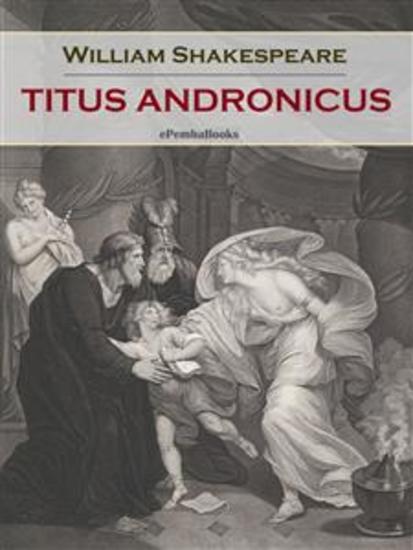
"Titus Andronicus" is a tragedy by William Shakespeare believed to have been written between 1588 and 1593, probably in collaboration with George Peele. Many scholars consider "Titus Andronicus" to be Shakespeare's first tragedy and is often seen as his attempt to emulate the violent and bloody revenge plays of his contemporaries, which were extremely popular with audiences throughout the 16th century.

"Titus Andronicus" tells the story of the Roman general of the same name, who upon returning from a long war campaign, discovers that he is the people's choice to be the emperor after the recent death of the previous one. Though he rejects the people's will and backs the former emperor's son, the manipulative politics between his family, a family of Goths that he has taken back to Rome as prisoners, and the sons of the last emperor, resulting in violence, bloodshed, and many gruesome murders.
Disponible desde: 18/01/2022.

Otros libros que te pueden interesar

  • Top 10 Short Stories The - The Ukrainians - The top ten short stories written by - cover

    Top 10 Short Stories The - The...

    Nikolai Gogol

    • 0
    • 0
    • 0
    Short stories have always been a sort of instant access into an author’s brain, their soul and heart.  A few pages can lift our lives into locations, people and experiences with a sweep of landscape, narration, feelings and emotions that is difficult to achieve elsewhere. 
     
    In this series we try to offer up tried and trusted ‘Top Tens’ across many different themes and authors. But any anthology will immediately throw up the questions – Why that story? Why that author?  
     
    The theme itself will form the boundaries for our stories which range from well-known classics, newly told, to stories that modern times have overlooked but perfectly exemplify the theme.  Throughout the volume our authors whether of instant recognition or new to you are all leviathans of literature. 
     
    Some you may disagree with but they will get you thinking; about our choices and about those you would have made.  If this volume takes you on a path to discover more of these miniature masterpieces then we have all gained something. 
     
    Between the Russian Empire and Europe warily sits Ukraine.  Her own history has been brush stroked either by periods of independence or under the oppressive yoke of other more powerful and belligerent neighbours. 
     
    It’s authors, almost always cited as ‘Russian’, or from ‘Little Russia’ are diverse and brilliant.  Some of them stayed, some moved to other lands but always their works harbour part of their Ukrainian souls despite the ever-changing territorial borders. 
     
    01 - The Top 10 - The Ukrainians - An Introduction 
    2 - The Nose by Nikolai Gogol 
    3 - The Shades, A Phantasy by Vladimir Korolenko 
    4 - Morphine by Mikhail Bulgakov 
    5 - A Witches Den by Helena Blavatsky 
    6 - The Informer by Joseph Conrad 
    7 - The Signal by Vsevolod Garshin 
    8 - The General's Will by Vera Jelihovsky 
    9 - The Blind Ones by Isaac Babel 
    10 - The Revolutionist by Mikhail Petrovich Artzybashev 
    11 - Dethroned by Ignaty Potapenko
    Ver libro
  • The Story Of Gulliver's Travels - cover

    The Story Of Gulliver's Travels

    Jonathan Swift

    • 0
    • 0
    • 0
    Gulliver's Travels (1726, amended 1735), officially Travels into Several Remote Nations of the World, is a novel by Jonathan Swift that is both a satire on human nature and a parody of the "travelers' tales" literary sub-genre. It is widely considered Swift's magnum opus and is his most celebrated work, as well as one of the indisputable classics of English literature.Jonathan Swift was an Anglo-Irish satirist, author, essayist, political pamphleteer, poet, and Anglican cleric who became Dean of St Patrick's Cathedral, Dublin, hence his common sobriquet, "Dean Swift".
    Ver libro
  • Aloysha the Pot - From their pens to your ears genius in every story - cover

    Aloysha the Pot - From their...

    Leo Tolstoy

    • 0
    • 0
    • 0
    Leo Tolstoy was born in 1828 in the Russian province of Tula to a wealthy noble family. As a child, he had private tutors but he showed little interest in any formal education. When he went to the University of Kazan in 1843 to study oriental languages and law, he left without completing his courses.  Life now was relaxed and idle but with some writing also taking place.  Gambling debts forced an abrupt change of path and he joined the army to fight in the Crimean War.  He was commended for his bravery and promoted but was appalled at the brutality and loss of life.  He recorded these and other earlier experiences in his diaries which formed the basis of several of his works. 
    In 1852 ‘Childhood’ was published to immediate success and was followed by ‘Boyhood’ and ‘Youth’. 
    His experience in the army and the horrors he witnessed resulted in ‘The Cossacks’ in 1862 and the trilogy ‘Sevastopol Tales’. After the war he travelled around Europe, visiting London and Paris and meeting such luminaries as Victor Hugo and Charles Darwin.  
    It was now that Tolstoy began his masterpiece, ‘War and Peace’. Published in 1869 it was an epic work that changed literature. He quickly followed this with ‘Anna Karenina’.  
    These successes made Tolstoy rich and helped him accomplish many of his dreams but also brought problems as he grappled with his faith and the lot of the oppressed poor. These revolutionary views became so popular that the authorities now kept him under surveillance.  
    He led a life of asceticism and vegetarianism and put his socialist ideals into practice by establishing numerous schools for the poor and food programmes. He also believed in giving away his wealth, which caused much discord with his wife.  
    His writing continued to bring forth classics such as ‘The Death of Ivan Ilyich’ and many brilliant and incisive short stories such as ‘How Much Land Does A Man Need’.  
    In 1901 Tolstoy was excommunicated from the Church and controversially deselected for the Nobel Prize for Literature. 
    Whilst undertaking a pilgrimage by train in October 1910 with his daughter Aleksandra he caught pneumonia in the nearby town of Astapovo.  Leo Tolstoy died on November 9th, 1910, he was 82.
    Ver libro
  • Candide - The Classic Tale - cover

    Candide - The Classic Tale

    Voltaire

    • 0
    • 0
    • 0
    Candide is characterized by its tone as well as by its erratic, fantastical, and fast-moving plot. A picaresque novel with a story similar to that of a more serious coming-of-age narrative, it parodies many adventure and romance clichés, the struggles of which are caricatured in a tone that is bitter and matter-of-fact. Still, the events discussed are often based on historical happenings, such as the Seven Years' War and the 1755 Lisbon earthquake. As philosophers of Voltaire's day contended with the problem of evil, so does Candide in this short theological novel, albeit more directly and humorously. Voltaire ridicules religion, theologians, governments, armies, philosophies, and philosophers. Through Candide, he assaults Leibniz and his optimism. 
     
    Candide has enjoyed both great success and great scandal. Immediately after its secretive publication, the book was widely banned to the public because it contained religious blasphemy, political sedition, and intellectual hostility hidden under a thin veil of naïveté. However, with its sharp wit and insightful portrayal of the human condition, the novel has since inspired many later authors and artists to mimic and adapt it. Today, Candide is considered as Voltaire's magnum opus and is often listed as part of the Western canon. It is among the most frequently taught works of French literature. The British poet and literary critic Martin Seymour-Smith listed Candide as one of the 100 most influential books ever written.
    Ver libro
  • The Sun Also Rises - cover

    The Sun Also Rises

    Ernest Hemingway

    • 0
    • 0
    • 0
    This is a narration of the classic book, "The Sun Also Rises", by Ernest Hemingway.
    Ver libro
  • The Lost World - cover

    The Lost World

    Arthur Conan Doyle

    • 0
    • 0
    • 0
    Reporter Edward Malone, seeking a really heroic assignment to impress his would be paramour; Gladys, is sent to try to gain an interview with the irascible Professor Challenger. But he has little idea of the strange chain of events he is about to become embroiled in! He soon finds himself as a chronicler of a strange expedition that journeys to a strange hidden plateau, where dinosaurs and other strange life still lives...  
    Narrated by Michael Ward
    Ver libro