Join us on a literary world trip!
Add this book to bookshelf
Grey
Write a new comment Default profile 50px
Grey
Subscribe to read the full book or read the first pages for free!
All characters reduced
The Tragedy of Troylus and Cressida - cover

The Tragedy of Troylus and Cressida

William Shakespeare

Publisher: CLXBX

  • 0
  • 0
  • 0

Summary

Set against the backdrop of the legendary Trojan War, The Tragedy of Troilus and Cressida by William Shakespeare is a powerful exploration of love, betrayal, honor, and the harsh realities of war. Unlike traditional heroic tales of the Trojan conflict, Shakespeare presents a darker, more cynical view of both romance and warfare, revealing the fragile nature of loyalty and the complexities of human desire.

At the heart of the story is Troilus, a young Trojan prince who falls deeply in love with the beautiful Cressida. Their love begins with passion and promise, nurtured with the help of the witty and manipulative Pandarus. Yet the chaos of war soon tears them apart. When Cressida is exchanged to the Greek camp as part of a political bargain, their romance is tested by distance, uncertainty, and temptation. What follows is a painful unraveling of trust that leaves Troilus heartbroken and disillusioned.

Meanwhile, the battlefield itself becomes a stage for pride, ambition, and rivalry. Legendary warriors such as Achilles, Hector, and Ajax are portrayed not only as heroic figures but also as flawed individuals driven by ego, jealousy, and political maneuvering. Shakespeare strips away the glorified image of war, showing instead the pettiness, manipulation, and moral ambiguity that lie beneath the surface of heroic legend.

Through sharp dialogue, biting satire, and deeply human characters, Shakespeare challenges the ideals of honor, heroism, and romantic devotion. The play presents a world where promises are easily broken, alliances shift quickly, and love struggles to survive in a climate of distrust and ambition.

The Tragedy of Troilus and Cressida stands out among Shakespeare's works for its unique tone—blending tragedy, satire, and dark comedy. It invites readers to question the myths of heroism and the reliability of human loyalty, offering a thought-provoking reflection on the nature of war and relationships.

This timeless drama continues to resonate with modern audiences, reminding us that behind every epic story of war and love are imperfect people grappling with power, passion, and betrayal.
Available since: 03/30/2026.
Print length: 100 pages.

Other books that might interest you

  • The Poetry of John Gould Fletcher - The first Southern poet to win the Pulitzer Prize - cover

    The Poetry of John Gould...

    John Gould Fletcher

    • 0
    • 0
    • 0
    John Gould Fletcher was born in Little Rock, Arkansas on the 3rd of January 1886 to a socially prominent family.  
     
    He was educated at Phillips Academy, Andover before advancing to Harvard University, which he attended from 1903 to 1907, before dropping out after his father's death. 
     
    As a young man Fletcher spent many years in England where he became part of the influential Imagist group of poets together with Amy Lowell and Ezra Pound.   
     
    His first marriage came from a resumed relationship with the now married Florence Emily ‘Daisy’ Arbuthnot.  Her adultery with Fletcher was the grounds for her divorce.  They married on 5th July 1916 but later divorced.  
     
    Fletcher first published in 1912, with ‘The Dominant City’ to much praise and admiration and followed this with other well-regarded volumes such as ‘Irradiations: Sand and Spray’, and ‘Goblins and Pagodas’. 
     
    In the late 1920s and 1930s Fletcher became increasingly active with a group of Southern writers and poets known as the Southern Agrarians. They published the classic ‘I'll Take My Stand: The South and the Agrarian Tradition’. 
     
    Although he was highly regarded as a poet, he was not very prolific.  However, such was the undoubted quality that in 1939 he received the Pulitzer Prize for his work ‘Selected Poems’.  He was the first poet from the south to receive such an accolade.  Fletcher’s other passion and pursuit was as an authority on modern painting, a subject on which he also published. 
     
    A second marriage followed in 1936 to the children’s author, Charlie May Simon.  They built ‘Johnswood’, a residence on the bluffs of the Arkansas River and travelled frequently to New York for shots of modern culture and intellectual stimulation as well as to the American West and South for the climate after Fletcher developed chronic arthritis. 
     
    In 1937 he wrote his autobiography, ‘Life is My Song’. 
     
    His developing passion for his roots and background resulted in the writing of a history of his State and published in 1947; ‘Arkansas’. 
     
    By now Fletcher was suffering from bouts of depression and on 10th May 1950, he committed suicide by drowning himself in a pond near his home in Little Rock, Arkansas.  He was 64.
    Show book
  • Blood Orange - cover

    Blood Orange

    Yaffa AS

    • 0
    • 0
    • 0
    "Blood Orange" is a highly emotional, important and timely poetry collection by Mx. Yaffa (They/She), a trans Muslim displaced Indigenous Palestinian. Their writings probe the yearning for home, belonging, mental health, queerness, transness, and other dimensions of marginalization while nurturing dreams of utopia against the background of ongoing displacement and genocide of indigenous Palestinians. 
    The collection came quickly and relentlessly, drawn from the depths of the author's soul during a movement for a free Palestine and aligned with a solar eclipse. It beckons readers to re-evaluate what is perceived as immutable and to imagine pathways toward Utopia.  
    "Blood Orange"- the title an homage to the Yaffa Oranges (which were appropriated first by the British and subsequently by Israel) refers to the author themselves, their homeland and blood spilled in the name of settler colonialism. 
    This highly charged and cathartic body of work confronts the anguish and loss inflicted by genocide but also embraces a vision of a world free of it. The poems within "Blood Orange" were a means of working through and processing the grief caused by recent events and serve as an act of protest and defiance against settler colonialism as a whole.
    Show book
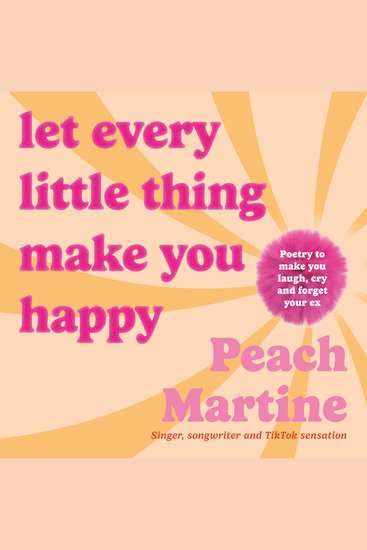
  • Let Every Little Thing Make You Happy - Poetry to make you laugh cry and forget your ex - cover

    Let Every Little Thing Make You...

    Peach Martine

    • 0
    • 0
    • 0
    Meet your new best friend and let every little thing make you happy!Alongside her refreshingly honest and magnetic lyrics, which have caught the attention of millions of fans across the globe, singer-songwriter Peach Martine has dreamed up a dazzling collection of poems to make you laugh, cry, forget your ex and find your chosen family.Take a bite of her sumptuous musical cores with refreshing ways to manifest your best life, feel fierce and choose joy at every turn.Peach Martine follows up her debut EP Love, Peach with a collection of poems to inspire, entertain and heal your heart.
    Show book
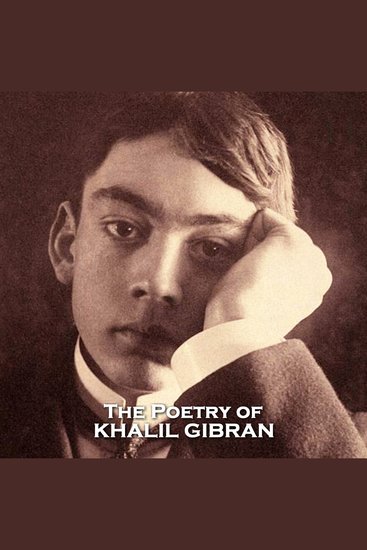
  • The Poetry of Khalil Gibran - Collection from the titan of world literature author of The Prophet - cover

    The Poetry of Khalil Gibran -...

    Kahlil Gibran

    • 0
    • 0
    • 0
    Gibran Khalil Gibran was born on 6th January 1883 in the village of Bsharri, Beirut Vilayet, then part of the Ottoman Empire 
    His mother took him and his siblings to the United States in 1895 where he was enrolled into a Boston school and his creative talents soon noted.  He was sent home to be schooled at the Collège de la Sagesse in Beirut but returned to Boston following the death of his youngest sister in 1902.  Within a year his mother had also died. 
    In 1904, Gibran's drawings were displayed for the first time and, a year later, his first book, in Arabic, was published in New York City.  With financial help from a benefactress he studied art in Paris from 1908 and here his path crossed with dissident Syrian exiles.  Over the years he would meet many more like-minded exiles who were exploring ways to overthrow the yoke of the Ottoman Empire.   
    By 1911 he had settled in New York working on his drawings and paintings which were now being regularly exhibited. His writing was also attracting much attention and gaining an audience.   
    His first book in English, ‘The Madman’ became an international phenomenon.  Whilst his writing has overshadowed his visual works there is no doubt that a copy of ‘The Mad Man’ is never far from any bookshelf.  This and other works have ensured his stature as an artist is world-wide and that it continues into these more modern times.  Gibran was regarded as a literary rebel and a leading figure of the Arabic literary Renaissance and made influential contributions to Western poetry, stories and thought. 
    Khalil Gibran died on 10th April 1931 in New York City from cirrhosis and incipient tuberculosis in one lung.  He was 48.   
    Gibran was one of a number of Arab intellectuals and writers who lived in the United States at the beginning of the twentieth century and who had a great influence on the development of modern Arabic literature through the exploration of Western literary movements.  The group was presided over by Gibran himself and was baptized Arrabitah, or “The League.”  Its influence is acknowledged as fundamental. 
    In this volume of poetry Gibran is able to capture and demonstrate and enlighten much of the human condition and the wonder of the world around him.
    Show book
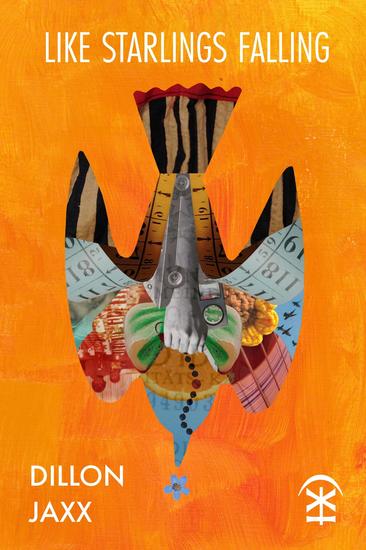
  • like starlings falling - cover

    like starlings falling

    Dillon Jaxx

    • 0
    • 0
    • 0
    The debut poetry collection by Dillon Jaxx, like starlings falling, is a mixtape from an eighties childhood that moves between requiems for a dead brother, anthems for the queer self, and love songs for a body sabotaging itself and its keeper through chronic illness.
    In Jaxx's bold and precise poems of absence and discovery, surreal and sometimes grotesque family portraits are painted through the changing weather of time, with humour, irony, and love. Unsettling and tender, this forensic poetry knows how the traces of bereavement and dislocation cling to us like evidence, and the way languages and precious memory stitches things together. And ultimately, how we find belonging and selfhood, keeping the 'holy days' of childhood self-discovery alive within us.
    Poetry Book of the Month, The Observer, July 2026
    Jerwood Prize for Best First Collection longlist
    Show book
  • The Tragical History of Doctor Faustus - cover

    The Tragical History of Doctor...

    Christopher Marlowe

    • 0
    • 0
    • 0
    The Tragical History of Doctor Faustus is one of the earliest and most compelling presentations of the story of a man who sold his soul to the Devil. It is based on the popular history of Johann Georg Faust (1466–1541) a German chemist and magician, who allegedly perished in an explosion during an alchemical experiment. In the theologically charged world of early reformation Germany, a report spread that his violent death was a demonstration that the devil had come to collect his soul. The legend spread quickly and has formed the basis of many later literary and dramatic works. 
    Marlowe’s play is essentially a morality play. However, unlike medieval morality plays, in this version, Faust is portrayed as a tragic hero rather than as a hapless sinner.  
    Marlowe’s play was published posthumously in two separate folios, the first in 1604 and a more extended version in 1616. The earlier version was divided into sixteen scenes and the latter into twenty. This performance is based on a special conflation of material from both folios.
    Show book