Rejoignez-nous pour un voyage dans le monde des livres!
Ajouter ce livre à l'électronique
Grey
Ecrivez un nouveau commentaire Default profile 50px
Grey
Abonnez-vous pour lire le livre complet ou lisez les premières pages gratuitement!
All characters reduced
Bi-sexual love; the homosexual neurosis - cover

Bi-sexual love; the homosexual neurosis

Wilhelm Stekel

Maison d'édition: Librorium Editions

  • 0
  • 1
  • 0

Synopsis

The present work is the English version of a part of one of the volumes in the author’s massive series of clinical studies bearing the generic title, Disorders of the Instincts and Emotions and covering the whole range of the so-called Parapathic Maladies. The translation represents approximately one-half of the Homosexualität of the volume entitled Onanie und Homosexualität, and bearing the sub-title, Die Homosexuelle Neurose. The balance of the Homosexual Neurosis and the author’s clinical study of Autoerotism are also translated and will appear shortly.
Disponible depuis: 05/12/2021.

D'autres livres qui pourraient vous intéresser

  • EQ+MH=PH Emotions! How to live an Emotionally Effective Life? - EQ+MH=PH - cover

    EQ+MH=PH Emotions! How to live...

    Dr. Uma Arora

    • 0
    • 0
    • 0
    “How emotional you are!”  
    So often we hear this comment from a friend or a family member.   
    Mostly we fumble as we think of a response because we do not know what to say as we cannot relate to what it means to be ‘emotional.’  
    Emotions make us human.  
    They give us information about what is going on inside us.  
    Emotional Quotient (EQ) is the level of awareness of what is taking place or going to take place. It is the ability to comprehend and use that knowledge effectively. Emotions help us reflect on how we are mentally equipped to give our life direction. Our emotional responses make us win friends, build healthy relationships or lose them. It is our EQ that allows us to stay ahead at work, and be focused and cheerful.   
    In recent times there is a lot of focus on one dimension of human well-being, physical health.  
    But then, physical health is just one part of our overall health. A partial one.  
    The equation to have a healthy life begins with a healthy and high EQ plus a healthy mind.  
    Once these two, our emotional quotient (EQ) and mental health (MH) are in place then our physical health (PH) will be in good shape. If we have a high EQ then even if we have any physical illness it will not make us stressed or discouraged to live a good and effective life. This seems understandable and logical but is very difficult to follow. This is where this book helps. Not only to open the perspective of well-being and health to have a multidimensional outlook but also to sustain it. too,  
                    
                            
    Voir livre
  • The Persian Empire – The Forgotten Superpower - The Rise Glory and Legacy of the First Great Empire in History - cover

    The Persian Empire – The...

    Andrew Rogers

    • 0
    • 0
    • 0
    Before Rome, before Greece, there was Persia—a vast empire that revolutionized governance, culture, and warfare. It was the first empire to embrace religious tolerance, international trade networks, and complex administration. Yet today, it remains overshadowed by its rivals. 
    This audiobook takes you deep into the history of the Persian Empire, revealing its greatest rulers, monumental achievements, and legendary battles. Discover: 
    ✅ How Cyrus the Great built the first global empire 
    ✅ The rise of Darius I and Xerxes, and their wars with Greece 
    ✅ The Persian system of governance, roads, and military tactics 
    ✅ How Alexander the Great conquered Persia—and what he admired about it 
    The Persian Empire – The Forgotten Superpower is a must-listen for history lovers, ancient warfare enthusiasts, and anyone fascinated by the rise and fall of great civilizations.
    Voir livre
  • The Jews of Summer - Summer Camp and Jewish Culture in Postwar America - cover

    The Jews of Summer - Summer Camp...

    Sandra Fox

    • 0
    • 0
    • 0
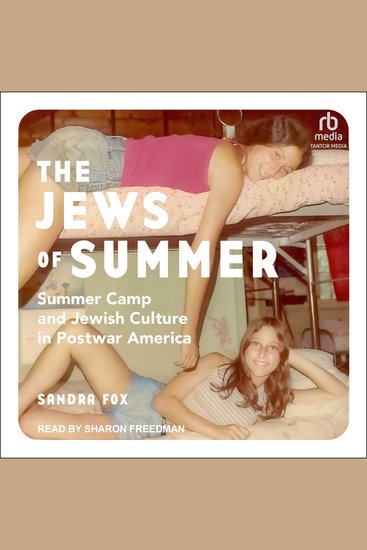
    In the decades directly following the Holocaust, American Jewish leaders anxiously debated how to preserve and produce what they considered authentic Jewish culture, fearful that growing affluence and suburbanization threatened the future of Jewish life. Many communal educators and rabbis contended that without educational interventions, Judaism as they understood it would disappear altogether. They pinned their hopes on residential summer camps for Jewish youth: institutions that sprang up across the United States in the postwar decades as places for children and teenagers to socialize, recreate, and experience Jewish culture. Adults' fears, hopes, and dreams about the Jewish future inflected every element of camp life, from the languages they taught to what was encouraged romantically and permitted sexually. But adult plans did not constitute everything that occurred at camp: children and teenagers also shaped these sleepaway camps to mirror their own desires and interests and decided whether to accept or resist the ideas and ideologies their camp leaders promoted. Focusing on the lived experience of campers and camp counselors, The Jews of Summer demonstrates how a cultural crisis birthed a rite of passage that remains a significant influence in American Jewish life.
    Voir livre
  • Chaldeans The: The History and Legacy of the People Who Ruled Babylon in the Iron Age - cover

    Chaldeans The: The History and...

    Charles River Editors

    • 0
    • 0
    • 0
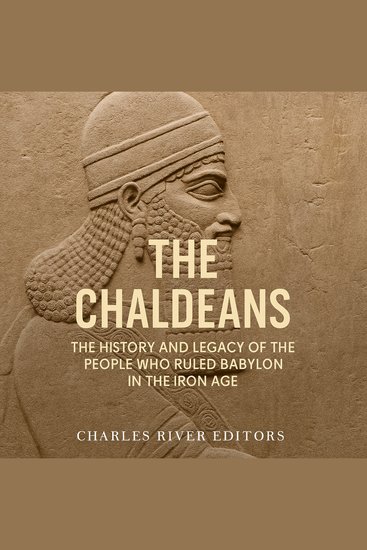
    Today, Babylon has become a byword for greed, excess, and licentiousness, mostly due to its mention in the Bible, but a closer examination reveals that Babylon was so much more, and even perhaps the most important city in the ancient world. Ancient Babylon was home to great dynasties that produced some of the world’s most influential leaders, most notably Hammurabi and Nebuchadnezzar, and these rulers invoked their wills on the entire ancient Near East and have been remembered as both progressive and cruel all at the same time. Babylon was also the seat of culture in ancient Mesopotamia and the place where scholars made amazing scientific advances that would not be eclipsed for several centuries. Babylon was also instrumental in the development of the region’s religions, and naturally, Westerners have been fascinated by the close connections between some of the Mesopotamian religious texts, which include a flood story, a creation story and a story of the righteous sufferer, and their parallels in the Hebrew Bible.  
    	The Chaldeans were among the last of the native Mesopotamian peoples to rule ancient Babylon. Before them, Akkadians, Kassites, Assyrians, and others ruled the land situated in the middle of Mesopotamia, and before them, the Sumerians ruled southern Mesopotamia and briefly most of the region in the late 3rd millennium BCE. Understanding ancient Mesopotamia requires knowing studying how different city-states and ethnic groups were often vying for power, asserting themselves and their ethnic identities while simultaneously accepting core elements of Mesopotamian culture – notably language, science, religion, and historiography – as they played a role in the region’s development.  
    	What makes the Chaldeans unique, however, is that they can be traced to the Levant. Sometime in the late 2nd millennium BCE, the Chaldeans began a trek across the region, as many people did at that time, and eventually occupied land along the Euphrates River.
    Voir livre

  • Egyptian Dynasties - The Pharaonic Lineages and Their Impact - cover

    Egyptian Dynasties - The...

    Omar Khalil

    • 0
    • 0
    • 0
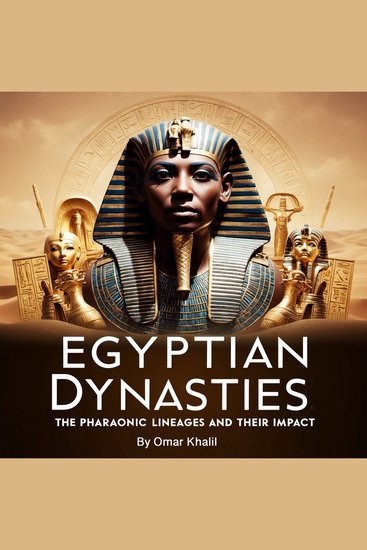
    The Early Dynastic Period marks the beginning of ancient Egyptian civilization, a time when the foundations of one of history’s most remarkable cultures were laid. Spanning approximately from 3100 to 2686 BCE, this period is characterized by the unification of Upper and Lower Egypt under a single ruler, leading to the establishment of the first dynasties and the concept of pharaonic rule. 
    The unification of Upper and Lower Egypt is often attributed to King Narmer, a powerful ruler who is believed to have brought the two regions together. The famous Narmer Palette, an ancient ceremonial artifact, depicts Narmer wearing the crowns of both Upper and Lower Egypt, symbolizing his authority over the unified land. This pivotal moment not only marked the creation of a centralized state but also set the stage for the development of a dynastic tradition that would persist for millennia. The consolidation of power allowed the pharaohs to wield significant control over the land, fostering political stability and cultural coherence. 
    The role of Narmer and the early pharaohs was instrumental in shaping the governance and societal structure of ancient Egypt. As divine rulers, these early kings were seen as earthly embodiments of the gods, responsible for maintaining ma'at, the concept of cosmic order and balance. This religious authority legitimized their political power and reinforced their role as mediators between the divine and mortal worlds. During this period, the pharaohs established court systems, oversaw the construction of monumental architecture, and promoted the development of writing, which became crucial for record-keeping and administration.
    Voir livre
  • Crystallizing Public Opinion - Complete and Original Edition - cover

    Crystallizing Public Opinion -...

    Edward Bernays, Mitch Horowitz

    • 0
    • 0
    • 0
    The Bare-Knuckled Truths of Edward BernaysYou may not know Edward Bernays, but Edward Bernays knows you.  His 1923 classic Crystallizing Public Opinion set down the principles that corporations and government have used to influence and manipulate public attitudes over the past century, and the mass media continues that practice today.This seminal work on how public opinion is created and shaped, offers a glimpse into the world of propaganda and advertising. Bernays, who believes the public behaves like a herd of animals, shows how ideas about what to eat, and how we should look and dress can easily be put into our heads. He outlines how the masses can be controlled in whatever way the influencer chooses.This original and complete edition includes a new Introduction by PEN Award-winning historian, Mitch Horowitz.By adapting the ideas that this pioneering PR strategist, who considered himself part of an intellectual and economic elite entitled to govern public opinion and global policy, governments and advertisers have been able to “regiment the mind.” His work explains the popularity of today’s TV news shout-fests and angry social media posts because, as Bernays observed, crowds love a contest. This crowd-contest dynamic fuels the hostile and sarcastic comment chains that populate Twitter, Facebook, and other social media outlets.We know that beliefs can gain sudden popularity based on the public’s proclivity for seven factors: “flight-fear, repulsion-disgust, curiosity-wonder, pugnacity-anger, self-display-elation, self-abasement-subjection, parental-love-tenderness.”Named as one of the 100 most influential Americans of the 20th Century by Life magazine, Bernays’ clients included the American Tobacco Company, several U.S. presidents and the opponents of the Guatemalan revolution. This Austrian-born nephew of Sigmund Freud made a study of the different ways to use propaganda.  "Crystallizing Public Opinion" was his first major effort to sell himself and his philosophy of public relations.
    Voir livre