¡Acompáñanos a viajar por el mundo de los libros!
Añadir este libro a la estantería
Grey
Escribe un nuevo comentario Default profile 50px
Grey
Suscríbete para leer el libro completo o lee las primeras páginas gratis.
All characters reduced
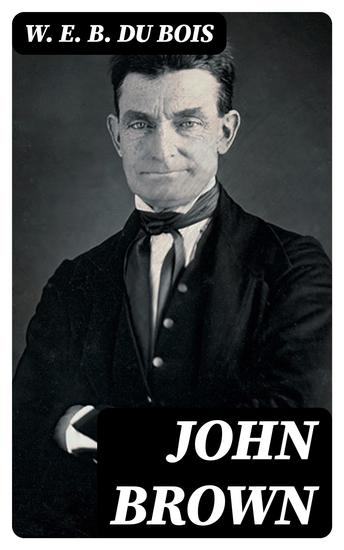
John Brown - cover

John Brown

W.E.B. Du Bois

Editorial: DigiCat

  • 0
  • 0
  • 0

Sinopsis

In "John Brown," W. E. B. Du Bois presents a compelling biography that merges historical narrative with philosophical introspection. The text delves into the life of the fierce abolitionist John Brown, situating his radical actions against the backdrop of America's tumultuous struggle over slavery. Du Bois employs a lyrical style, interweaving vivid descriptions with profound reflections on morality, justice, and the complexities of race in America. Written during a period when the American socio-political landscape was fraught with racial tensions, the work serves both as a tribute to Brown's revolutionary spirit and a critique of the inadequacies of his contemporaries. W. E. B. Du Bois, a prominent sociologist and civil rights activist, was profoundly influenced by his own experiences of racism and his relentless quest for racial equity. His scholarly background, particularly in social sciences, informed his exploration of Brown's unwavering commitment to abolition. Du Bois's engagement with historical figures like Brown reflects not only his admiration for their sacrifices but also his belief that profound change often arises from radical action. I highly recommend "John Brown" to readers seeking an insightful exploration of one of America's most controversial figures in the fight against slavery. Du Bois's masterful narrative not only provides historical context but also invites reflection on the enduring themes of justice and morality in contemporary society.
Disponible desde: 21/07/2022.
Longitud de impresión: 254 páginas.

Otros libros que te pueden interesar

  • Conquistadors: The Lives and Legacies of Hernán Cortés and Francisco Pizarro - cover

    Conquistadors: The Lives and...

    Editors Charles River

    • 0
    • 0
    • 0
    During the Age of Exploration, some of the most famous and infamous individuals were Spain’s best known conquistadors. Naturally, as the best known conquistador, Hernán Cortés is also the most controversial. Like Christopher Columbus before him, Cortés was lionized for his successes for centuries without questioning his tactics or motives, while indigenous views of the man have been overwhelmingly negative for the consequences his conquests had on the Aztecs and other natives in the region. Just about the only thing everyone agrees upon is that Cortés had a profound impact on the history of North America. Of course, the lionization and demonization of Cortés often take place without fully analyzing the man himself, especially because there are almost no contemporaneous sources that explain what his thinking and motivation was. If anything, Cortés seemed to have been less concerned with posterity or the effects of the Spanish conquest on the natives than he was on relations with the Mother Country itself.  
    	If Columbus and Cortés were the pioneers of Spain’s new global empire, Pizarro consolidated its immense power and riches, and his successes inspired a further generation to expand Spain’s dominions to unheard of dimensions. Furthermore, he participated in the forging of a new culture: like Cortés, he took an indigenous mistress with whom he had two mixed-race children, and yet the woman has none of the lasting fame of Cortés’s Doña Marina. With all of this in mind, it is again remarkable that Pizarro remains one of the less well-known and less written about of the explorers of his age. On the other hand, there are certain factors that may account for the conqueror of Peru’s relative lack of lasting glory. Cortés’s reputation was built on being the first to overthrow a great empire, so Pizarro’s similar feat, even if it bore even greater fruit in the long run, would always be overshadowed by his predecessor’s precedent. 
    Ver libro
  • Growth - A Mother Her Son and the Brain Tumor They Survived - cover

    Growth - A Mother Her Son and...

    Karen DeBonis

    • 0
    • 0
    • 0
    Can a woman who never learned to stand up for herself find the courage to speak up for her son? 
    Medical gaslighting collides with a mother's people-pleasing, shattering her expectations of motherhood and threatening the survival of her young son.  
    Karen is a happily married, slightly frazzled working mother of two when her eight-year-old son, Matthew, develops a strange eye-rolling tic. Over the next three years, Matthew's tics multiply. He becomes clumsy and lethargic, a gifted program dropout. Karen repeatedly tries to get her husband and the pediatrician to open their eyes, but she is too full of self-doubt, too compulsively agreeable to tear off their blinders. Exhausted and full of despair, Karen crumples to the bathroom floor one night, wondering if she has the will to carry on. But she must persevere. Who else will fight for her son? Matthew finally receives a horrifying diagnosis. He is expected to "bounce back," however, convincing Karen that the battle is over. But the pain drags on, and she discovers just how weak--and then exactly how strong--she is.
    Ver libro
  • A Dancer's Final Bow - cover

    A Dancer's Final Bow

    Louise Salisbury

    • 0
    • 0
    • 0
    A Dancer's Final Bow is a collection of autobiographical sketches based on the author's childhood in Colorado, her experiences as a single mom, and her life as a dancer. "Chokecherries" evokes an early life spent in Cheyenne Canyon surrounded by Native American lore. "The Cherry Coke" commemorates her first romance in fifth grade. "Green" calls on memories of a nearly fatal sledding accident when she was thiirteen. "The Boarders" reflects on her eleven-year stint as a host mother to foreign exchange students. "A Dancer's Final Bow" describes a horrific accident which ended her dance career.  
    Part II of the book contains portraits of eighteen women including "The Idol", "The Chameleon," " The Bitch," "The Coyote," "The Artist," "The Old-Fashioned Girl," " The Slut," "The Infanta." " The Madonna," and "The Sage." 
    Part III consists of Vignettes based on a theme such as " Innocence," "Discouraged," Regret," "Color," "Time," "Jobs," "Girlfriends, and "Hands."
    Ver libro
  • Defeating Jihadist Terrorism - cover

    Defeating Jihadist Terrorism

    Jacques Baud

    • 0
    • 0
    • 0
    Since the early 1990s, terrorism and its victims have increased exponentially. Without any action strategy or exit solution, through political and military incompetence, stupidity and ideological blindness, Western interventions have only contributed to its development. We eliminate terrorists, but not terrorism. The solution lies in a more holistic, more subtle, more intelligent and less dogmatic approach. Terrorism is not an ideology. It is a method that takes many forms, including jihadist terrorism. Each form of terrorism is fought with a specific strategy. Based on the original texts of jihadist strategists as well as on their own analyses of attacks in France, Belgium, Great Britain and the United States, Jacques Baud explains the reasons for Western failure. He uses the analyses of Western intelligence services to decipher the mechanisms of jihadist terrorism, in order to extract strategies of action likely to avoid it or to fight it effectively and durably. The author is a former head of Swiss strategic intelligence and former head of UN peace operations doctrine. In the course of his missions in Africa and Central Asia, the author has had several encounters with jihadists in the field. 
    This audiobook is read by a synthesized voice.
    Ver libro
  • Not My Father's Son - A Memoir - cover

    Not My Father's Son - A Memoir

    Alan Cumming

    • 0
    • 0
    • 0
    *Read by Alan Cumming himself* 
    NEW YORK TIMES BESTSELLER 
    In his unique and engaging voice, the acclaimed actor of stage and screen shares the emotional story of his complicated relationship with his father and the deeply buried family secrets that shaped his life and career. 
    A beloved star of stage, television, and film—“one of the most fun people in show business” (Time magazine)—Alan Cumming is a successful artist whose diversity and fearlessness is unparalleled. His success masks a painful childhood growing up under the heavy rule of an emotionally and physically abusive father—a relationship that tormented him long into adulthood. 
    When television producers in the UK approached him to appear on a popular celebrity genealogy show in 2010, Alan enthusiastically agreed. He hoped the show would solve a family mystery involving his maternal grandfather, a celebrated WWII hero who disappeared in the Far East. But as the truth of his family ancestors revealed itself, Alan learned far more than he bargained for about himself, his past, and his own father. 
    With ribald humor, wit, and incredible insight, Alan seamlessly moves back and forth in time, integrating stories from his childhood in Scotland, his experiences today as a film, television, and theater star, and the shocking revelations uncovered while investigating his family’s past. Equal parts memoir, family mystery, and tale of resilience, Not My Father’s Son is at times suspenseful, deeply moving, and wickedly funny—sure to make readers laugh even as it breaks their hearts.
    Ver libro
  • How Stella Learned to Talk - The Groundbreaking Story of the World's First Talking Dog - cover

    How Stella Learned to Talk - The...

    Anónimo

    • 0
    • 0
    • 0
    An incredible, revolutionary true story and surprisingly simple guide to teaching your dog to talk from speech-language pathologist Christina Hunger, who has taught her dog, Stella, to communicate using simple paw-sized buttons associated with different words. 
     
    When speech-language pathologist Christina Hunger first came home with her puppy, Stella, it didn’t take long for her to start drawing connections between her job and her new pet. During the day, she worked with toddlers with significant delays in language development and used Augmentative and Alternative Communication (AAC) devices to help them communicate. At night, she wondered: If dogs can understand words we say to them, shouldn’t they be able to say words to us? Can dogs use AAC to communicate with humans? 
    Christina decided to put her theory to the test with Stella and started using a paw-sized button programmed with her voice to say the word “outside” when clicked, whenever she took Stella out of the house. A few years later, Stella now has a bank of more than thirty word buttons, and uses them daily either individually or together to create near-complete sentences. 
    How Stella Learned to Talk is part memoir and part how-to guide. It chronicles the journey Christina and Stella have taken together, from the day they met, to the day Stella “spoke” her first word, and the other breakthroughs they’ve had since. It also reveals the techniques Christina used to teach Stella, broken down into simple stages and actionable steps any dog owner can use to start communicating with their pets. 
    Filled with conversations that Stella and Christina have had, as well as the attention to developmental detail that only a speech-language pathologist could know, How Stella Learned to Talk will be the indispensable dog book for the new decade. 
    Supplemental enhancement PDF accompanies the audiobook.
    Ver libro