Unisciti a noi in un viaggio nel mondo dei libri!
Aggiungi questo libro allo scaffale
Grey
Scrivi un nuovo commento Default profile 50px
Grey
Iscriviti per leggere l'intero libro o leggi le prime pagine gratuitamente!
All characters reduced
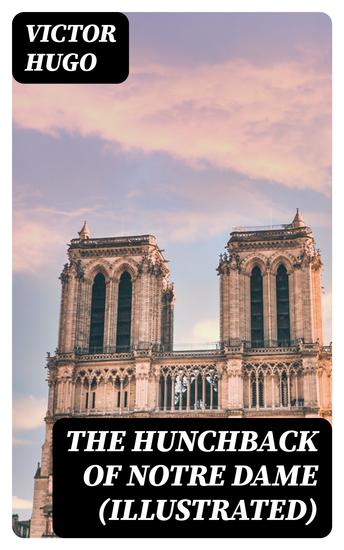
The Hunchback of Notre Dame (Illustrated) - cover

The Hunchback of Notre Dame (Illustrated)

Victor Hugo

Traduttore Isabel F. Hapgood

Casa editrice: DigiCat

  • 0
  • 0
  • 0

Sinossi

Victor Hugo's "The Hunchback of Notre Dame" is an evocative exploration of love, isolation, and the complexities of societal judgment, set against the backdrop of 15th-century Paris. The narrative is rich in descriptive detail, combining gothic elements with profound psychological depth, as it navigates the intertwining lives of its unforgettable characters—most notably, the disfigured bell-ringer Quasimodo and the exquisite Esmeralda. Hugo masterfully captures the architectural grandeur of Notre Dame itself, employing it as a symbol of human aspiration and the tragic consequences of social estrangement. Victor Hugo, a leading figure in the Romantic movement, drew upon his deep empathy for the marginalized and oppressed to craft this timeless tale. His own experiences of political exile, as well as his keen interest in the plight of the poor and the downcast in society, profoundly influenced his writing. By examining themes of beauty and monstrosity, Hugo invites readers to reflect on their own judgments of others, a significant ethos that shaped his literary career. I highly recommend "The Hunchback of Notre Dame (Illustrated)" not only for its intricate storytelling and stunning illustrations but also for its rich themes that resonate across the ages. This book serves as an essential reminder of the complexities of human existence and the powerful forces of empathy and compassion.
Disponibile da: 11/10/2022.
Lunghezza di stampa: 503 pagine.

Altri libri che potrebbero interessarti

  • Katherine Mansfield - Six of the Best - Their legacy in 6 classic stories - cover

    Katherine Mansfield - Six of the...

    Katherine Mansfield

    • 0
    • 0
    • 0
    Six has always been a number we group things around – Six of the best, six of one half a dozen of another, six feet under, six pack, six degrees of separation and a sixth sense are but a few of the ways we use this number. 
     
    Such is its popularity that we thought it is also a very good way of challenging and investigating an author’s work to give width, brevity, humour and depth across six of their very best. 
     
    In this series we gather together authors whose short stories both rivet the attention and inspire the imagination to visit their gems in a series of six, to roam across an author’s legacy in a few short hours and gain a greater understanding of their writing and, of course, to be lavishly entertained by their ideas, their narrative and their way with words. 
     
    These stories can be surprising and sometimes at a tangent to what we expected, but each is fully formed and a marvellous adventure into the world and words of a literary master.
    Mostra libro
  • The Pit and the Pendulum - cover

    The Pit and the Pendulum

    Edgar Allan Poe

    • 0
    • 0
    • 0
    "I was sick—sick unto death with that long agony"
    
    Imprisoned in a nightmarish dungeon by the Spanish Inquisition, a man awakens in darkness, knowing he is about to face a series of terrifying tortures designed to break his body, mind and spirit. Chained beneath the slowly descending blade of a pendulum, with the walls closing in and the yawning mouth of a deadly pit in the centre of the floor, he is forced to confront fear, madness, and the unknown.
    
    Edgar Allan Poe's classic short story is a masterclass in psychological terror, creating an atmosphere of fear and suspense not through the use of supernatural monsters, but through isolation, anticipation and the diabolical ingenuity of man. One of the author's most enduring tales, it has been adapted multiple times for film, television and radio, with notable adaptations including the 1961 film starring Vincent Price and the animated 2013 film Extraordinary Tales.
    Edgar Allan Poe (1809–1849) was an American writer, poet, editor and literary critic known for his dark, atmospheric tales and haunting poetry. Widely regarded as one of the most influential figures in American literature, Poe helped shape the horror and science-fiction genres and is widely credited with inventing detective fiction in his 1841 short story, Murders in the Rue Morgue. Despite a life marked by personal tragedy and financial hardship, Poe produced a number of enduring classics such as The Raven, The Tell-Tale Heart, and The Fall of the House of Usher, and since his somewhat mysterious death, he and his writings have had a wide-ranging influence in popular culture. In 1946, the Mystery Writers of America established the annual Edgar award, which honour the best in mystery fiction, non-fiction, and film.
    Mostra libro
  • What the Goodman Does is Always Right - cover

    What the Goodman Does is Always...

    H. C. Andersen

    • 0
    • 0
    • 0
    Short story by H. Ch. Andersen about a charming couple. As with most of the works by the author, it is fit for both children and adults.
    Mostra libro
  • A Thing That Glistened - From their pens to your ears genius in every story - cover

    A Thing That Glistened - From...

    Frank R Stockton

    • 0
    • 0
    • 0
    Frank Richard Stockton was born in Philadelphia on 5th April 1834.  
    His father, a Methodist minister, discouraged Stockton’s literary career from an early age.  Feeling unable to go against those wishes it was for many years that Stockton’s income was maintained as a wood engraver.   
    His first work was published in 1867 and his first collection only appeared in 1870.  Despite this late arrival Stockton’s innovative and often far-fetched stories, with a gentle ‘poking fun’ humour were very popular.  Like his contemporary Mark Twain he avoided the scolding, hectoring and moral tones of many other authors and instead gently teased and cajoled his reader to open their eyes to the ills, the greed and the ambitions of the world around them.  His sci-fi stories in particular were far-seeing and inventive including a tale of negative gravity and a bloodless Anglo-US war won by technological feats.  
    Perhaps his most enduring tale though is ‘The Lady, or the Tiger?’ from 1882.  A condemned man is given a choice of being eaten alive or marrying his princess lover.  But he has to choose which door each is behind. 
    Frank R Stockton died in Washington, DC, on 20th April 1902, of a cerebral haemorrhage.  He is buried at The Woodlands in Philadelphia.
    Mostra libro
  • Mr Britling Sees It Through (Unabridged) - cover

    Mr Britling Sees It Through...

    H. G. Wells

    • 0
    • 0
    • 0
    Mr. Britling Sees It Through is H.G. Wells's "masterpiece of the wartime experience in south eastern England." The novel was published in September 1916.
    Mr. Britling Sees It Through tells the story of a renowned writer, Mr. Britling, a protagonist who is quite evidently an alter ego of the author. The garrulous, easy-going Mr. Britling lives with family and friends in the fictional village of Matching's Easy, located in the county of Essex, northeast of London. The novel is divided into three parts. Book the First, entitled "Matching's Easy At Ease," is set in June-July 1914 and is at first narrated from the point of view of an American, Mr. Direck, who visits Mr. Britling's establishment in Dower House and falls in love with Cissie, the sister of Mr. Britling's secretary's wife. Also in the company are Mr. Britling's son Hugh and a visiting German student, Herr Heinrich, who is forced to leave when war breaks out. Book the Second, "Matching's Easy at War," covers August 1914 to October 1915, when Mr. Britling's son Hugh is killed at the front. In Book the Third, "The Testament of Matching's Easy," Mr. Britling learns that Herr Heinrich has also been killed, and writes a long letter to the dead German soldier's parents.
    Mostra libro
  • The House Of The Arrow - cover

    The House Of The Arrow

    A. E. W. Mason

    • 0
    • 0
    • 0
    A young English girl is accused in Dijon of murdering her French aunt. Hanaud to the rescue! Inspector Hanaud is a member of the French Sûreté. He is said to have been the model for Agatha Christie’s Hercule Poirot, as well as the opposite of Conan Doyle’s Sherlock Holmes. In 1910, Mason undertook to create a fictional detective as different as possible from Sherlock Holmes, who had recently been resuscitated after his supposed death by Arthur Conan Doyle in 1903. Inspector Gabriel Hanaud was stout, not gaunt like Holmes; a professional policeman, not a gentleman amateur; from the French Sûreté, not Victorian England; and relying on psychological insights rather than physical evidence. His "Watson" is a retired London banker named Mr. Julius Ricardo, though he appears only briefly in this novel.
    Mostra libro