Join us on a literary world trip!
Add this book to bookshelf
Grey
Write a new comment Default profile 50px
Grey
Subscribe to read the full book or read the first pages for free!
All characters reduced
The American Operations in WW2: Ryukyus - cover

The American Operations in WW2: Ryukyus

U.S. Army Center of Military History, Fisch Jr. Arnold G.

Publisher: Madison & Adams Press

  • 0
  • 0
  • 0

Summary

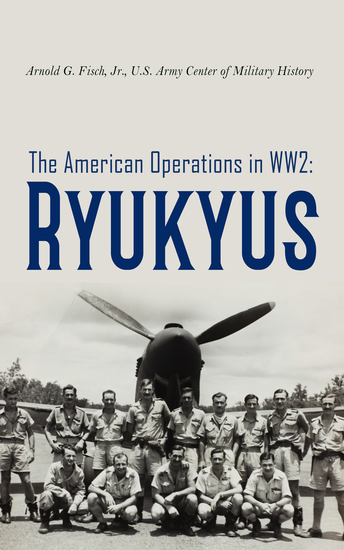
World War II was the largest and most violent armed conflict in the history of mankind. Highly relevant today, World War II has much to teach us, not only about the profession of arms, but also about military preparedness, global strategy, and combined operations in the coalition war against fascism. This book follows military operations of the US Army in the Ryukyus, Japan from 26 March to 2 July 1945. 
In late September 1944 the Joint Chiefs of Staff (JCS) in Washington decided to invade Okinawa, the largest island in the Ryukyu Islands, as part of a strategy to defeat Japan. The effort was code-named Operation ICEBERG. Okinawa had initially emerged as an objective in the spring of 1943, when the Allies believed that an invasion of the home islands might be necessary to force Tokyo's surrender. Possession of Okinawa would give the American forces additional, better-positioned air bases for intensifying the air campaign against the home islands and also provide important anchorages and staging areas for the huge, ambitious effort needed to invade Japan.
Beginning in late September 1944 American aircraft and submarines began to tighten a noose around the Ryukyus, making surface shipping extremely hazardous for the Japanese. Heavy bombers of the Fourteenth and Twentieth Air Forces and carrier planes from Admiral William F. Halsey's Third Fleet struck repeatedly at Japanese positions in the Philippines, Taiwan, and the Ryukyu Islands. On 29 September B-29 bombers conducted the initial reconnaissance mission over Okinawa and its outlying islands. On 10 October nearly two hundred of Admiral Halsey's planes struck Naha, Okinawa's capital and principal city, in five separate waves. The city was almost totally devastated. The American war against Japan was coming inexorably closer to the Japanese homeland...
Available since: 09/05/2023.
Print length: 27 pages.

Other books that might interest you

  • Joel - The World English Bible Book 29 (Unabridged) - cover

    Joel - The World English Bible...

    Various Authors

    • 0
    • 0
    • 0
    The Book of Joel is collected as one of the twelve minor prophets of the Nevi'im ("Prophets") in the Hebrew Bible, and as a book in its own right in the Christian Old Testament.
    Show book
  • A Promise Kept - The Muscogee (Creek) Nation and McGirt v Oklahoma - cover

    A Promise Kept - The Muscogee...

    Robert J. Miller, Robbie Ethridge

    • 0
    • 0
    • 0
    "At the end of the Trail of Tears there was a promise," United States Supreme Court Justice Neil Gorsuch wrote in the decision issued in the case of McGirt v. Oklahoma. And that promise, made in treaties between the United States and the Muscogee (Creek) Nation more than 150 years earlier, would finally be kept. With the Court's ruling, the full extent of the Muscogee (Creek) Reservation was reaffirmed—meaning that 3.25 million acres of land in Oklahoma were recognized as "Indian Country." A Promise Kept explores the circumstances and implications of McGirt v. Oklahoma, likely the most significant Indian law case in well over a hundred years. Combining legal analysis and historical context, this book gives an in-depth, accessible account of how the case unfolded and what it might mean for Oklahomans, the Muscogee (Creek) Nation, and other tribes throughout the United States. 


    Robbie Ethridge traces the history of the Muscogee (Creek) Nation from its inception to its resurgence in Oklahoma in the twentieth and twenty-first centuries. Robert J. Miller considers McGirt v. Oklahoma, examining important related cases, precedents that informed the Court's decision, and future ramifications. Their work clarifies the stakes of a decision that, while long overdue, raises numerous complex issues profoundly affecting federal, state, and tribal relations and law.
    Show book
  • Day That Will Live in Infamy A: The History and Legacy of Japan’s Initial Attacks against the United States at Pearl Harbor Wake Island and the Philippines on December 7 1941 - cover

    Day That Will Live in Infamy A:...

    Editors Charles River

    • 0
    • 0
    • 0
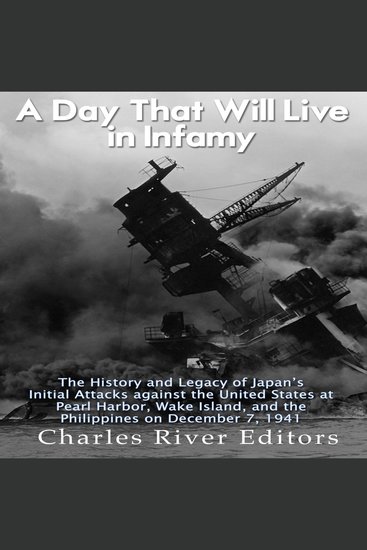
    All Americans are familiar with the “day that will live in infamy.” At 9:30 a.m. on Sunday, December 7, 1941, Pearl Harbor, the advanced base of the United States Navy’s Pacific Fleet, was ablaze. It had been smashed by aircraft launched by the carriers of the Imperial Japanese Navy. All eight battleships had been sunk or badly damaged, 350 aircraft had been knocked out, and over 2,000 Americans lay dead. Indelible images of the USS Arizona exploding and the USS Oklahoma capsizing and floating upside down have been ingrained in the American conscience ever since. In less than an hour and a half the Japanese had almost wiped out America’s entire naval presence in the Pacific. 
    Less than 24 hours earlier, Japanese and American negotiators had been continuing their diplomatic efforts to stave off conflict in the region, but as they did, President Roosevelt and his inner circle had seen intelligence reports strongly suggesting an imminent attack - though they did not know where. The U.S. rightly believed that Japan would take action to prevent the Americans from interfering with their military activities in Southeast Asia, and American military forces in the Philippines were already bracing for a potential attack. However, as the negotiations were ongoing, the powerful Japanese carrier fleet had been surging southwards through the Pacific while maintaining radio silence, preparing to strike the blow that would ignite war in an area spanning half the globe. 
    Posted on the other side of the world, it was early on the morning of December 8 in the Philippines when American general Douglas MacArthur received news of the Japanese attack on Pearl Harbor hours earlier. With that, it could only be a matter of time before the Japanese attacked the Philippines. Although MacArthur and Allied forces tried to hold out, they could only fight a delaying action, and the Japanese managed to subdue all resistance by the spring of 1942.
    Show book
  • The Shining Gateway - Illuminating the Path to Self-Mastery and Peace - cover

    The Shining Gateway -...

    James Allen, Tim Zengerink

    • 0
    • 0
    • 0
    What if you could illuminate a personal gateway that leads to inner strength, virtuous living, and enduring peace? 
    James Allen’s uplifting text explores the quest for self-mastery by emphasizing positive thought, ethical conduct, and spiritual harmony. Adapted for modern readers, The Shining Gateway underscores that each of us carries the capacity for profound transformation—a radiant journey that begins with how we choose to think, feel, and act. 
    What You’ll Discover in This Modern Translation: 
    - Key virtues that propel you toward higher living 
    - Techniques for sustaining a positive, resilient mindset 
    - The link between inner discipline and outer harmony 
    - Encouragement to see challenges as catalysts for self-growth 
    Imagine walking a bright, purposeful path every day—one in which your highest ideals guide each choice, cultivating a sense of deep fulfillment and tranquility. James Allen’s timeless guidance helps you unlock the shining gateway within. 
    Enter the radiant path. Get your copy now and kindle the inner light that leads to self-mastery and peace.
    Show book
  • Build Equity Join Justice - A Paradigm for School Belonging - cover

    Build Equity Join Justice - A...

    Wayne Sailor, Wade Kelly, Amy...

    • 0
    • 0
    • 0
    A playbook for designing schools where no student is marginalized. 


    Educators all over the country are waking to a collective realization: The hope and compassion they have for their students is not enough to counteract the inequitable policies and practices of the school system. Students and communities who have been historically disenfranchised along lines of race and disability continue to face predictable barriers to opportunity and independence. 


    In Build Equity, Join Justice, the authors present a new path forward that leads away from deficit-focused policies and toward strengths-based practices. The authors' ten equity-advancing principles, based on the groundbreaking work of the SWIFT Education Center in multiple school districts, are designed to address the learning needs and social concerns of all students without requiring them or their advocates to "ask permission" to be included. Complete with practical tools and reflective activities throughout, this book empowers educators at every level to transform their schools into equity-advancing, justice-centered institutions.
    Show book
  • More Stories from Langley - Another Glimpse inside the CIA - cover

    More Stories from Langley -...

    Edward Mickolus

    • 0
    • 0
    • 0
    Who knew the CIA needed librarians? More Stories from Langley reveals the lesser-known operations of one of the most mysterious government agencies in the United States. 


    Edward Mickolus is back with more stories to answer the question, "What does a career in the CIA look like?" Advice and anecdotes from both current and former CIA officers provide a look at the side of intelligence operations that is often left out of the movies. What was it like working for the CIA during 9/11? Do only spies get to travel? More Stories from Langley has physicists getting recruited to "the agency" during the Cold War, foreign-language majors getting lucky chances, and quests to "learn by living" turning into sweaty-palmed calls to the U.S. embassy after being detained by Russian intelligence officers. 


    The world only needs so many suave super spies. More Stories from Langley shows how important academics, retired soldiers, and bilingual nannies can be in preserving the security of our nation.
    Show book