Rejoignez-nous pour un voyage dans le monde des livres!
Ajouter ce livre à l'électronique
Grey
Ecrivez un nouveau commentaire Default profile 50px
Grey
Abonnez-vous pour lire le livre complet ou lisez les premières pages gratuitement!
All characters reduced
The American Operations in WW2: East Indies - cover

The American Operations in WW2: East Indies

U.S. Army Center of Military History, Charles R. Anderson

Maison d'édition: Madison & Adams Press

  • 0
  • 0
  • 0

Synopsis

World War II was the largest and most violent armed conflict in the history of mankind. Highly relevant today, World War II has much to teach us, not only about the profession of arms, but also about military preparedness, global strategy, and combined operations in the coalition war against fascism. This book follows military operations of the US Army in the East Indies from 1 January to 22 July 1942. 
On 7 December 1941 Japan turned its war on the Asian mainland south and eastward into the Pacific. Attacks within hours on the Malay Peninsula, Hong Kong, Hawaii, Wake, Guam, and the Philippines not only shocked Allied governments, who believed Japanese envoys had been negotiating in good faith in Washington, but also caught them poorly prepared for war along the Asian rimlands. By the end of the day a sizable Japanese amphibious force had established itself on the Malay Peninsula; the backbone of the U.S. Pacific Fleet lay twisted and burning in the mud of Pearl Harbor; hundreds of Western aircraft sprawled crumpled on airfields and hillsides across the Central and South Pacific; and neither the British Eastern Fleet nor Royal Netherlands Navy units in the Pacific could steam safely through the Indian Ocean, around Malaya, or in the East Indies. It was imperative that the Western Powers somehow stop the Japanese southward advance, which now threatened to drive a wedge between the British in the Indian Ocean and the Americans in the Pacific, to seize the East Indies with its valuable natural resources, and to isolate Australia from both the United States and the British Commonwealth...
Disponible depuis: 05/09/2023.
Longueur d'impression: 21 pages.
D'autres livres qui pourraient vous intéresser

  • All God's Children - How Confronting Buried History Can Build Racial Solidarity - cover

    All God's Children - How...

    Terence Lester

    • 0
    • 0
    • 0
    The more you understand someone's history, the better you can see their humanity. This is true for individuals as well as for society at large. Race relations have suffered because of the erasure of important Black history and cultural context. As we fill in the gaps of our collective knowledge, communities can grow in understanding, empathy, and solidarity. 


    Terence Lester shares the buried history of the struggles Black people have faced against unjust systems. He tells powerful stories of courage, injustice, pain, and triumph, including ones from his own history. He also unpacks the sociological and cultural dynamics of unconscious bias and inattentional ignorance that keep us apart, and how they can be overcome. This honest account of what it's like to be Black in America paves the way for the church to move beyond showing support from a distance toward loving one another in long-term solidarity, advocacy, and friendship.
    Voir livre
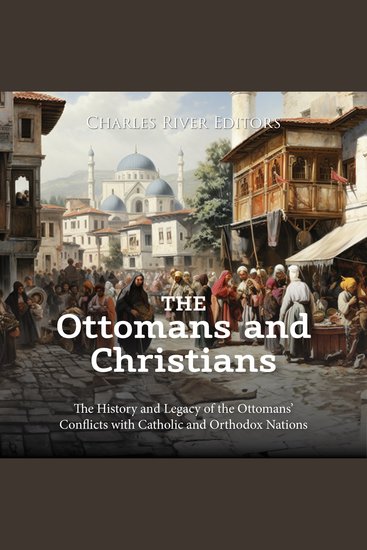
  • Ottomans and Christians The: The History and Legacy of the Ottomans’ Conflicts with Catholic and Orthodox Nations - cover

    Ottomans and Christians The: The...

    Editors Charles River

    • 0
    • 0
    • 0
    In terms of geopolitics, perhaps the most seminal event of the Middle Ages was the successful Ottoman siege of Constantinople in 1453. The city had been an imperial capital as far back as the 4th century, when Constantine the Great shifted the power center of the Roman Empire there, effectively establishing two almost equally powerful halves of antiquity’s greatest empire. Constantinople would continue to serve as the capital of the Byzantine Empire even after the Western half of the Roman Empire collapsed in the late 5th century. Naturally, the Ottoman Empire would also use Constantinople as the capital of its empire after their conquest effectively ended the Byzantine Empire, and thanks to its strategic location, it has been a trading center for years and remains one today under the Turkish name of Istanbul.  
    	The end of the Byzantine Empire had a profound effect not only on the Middle East but Europe as well. Constantinople had played a crucial part in the Crusades, and the fall of the Byzantines meant that the Ottomans now shared a border with Europe. In the wake of taking Constantinople, the Ottoman Empire would spend the next few centuries expanding its size, power, and influence, bumping up against Eastern Europe and becoming one of the world’s most important geopolitical players. It was a rise that would not truly start to wane until the 19th century. Naturally, the Islamic empire was viewed as a threat by the predominantly Christian continent to their west, and it took little time for different European nations to start clashing with the powerful Turks. In fact, the Ottomans would clash with Russians, Austrians, Venetians, Polish, and more before collapsing as a result of World War I, when they were part of the Central Powers. 
    Voir livre
  • Selling Vero Beach - Settler Myths in the Land of the Aís and Seminole - cover

    Selling Vero Beach - Settler...

    Kristalyn Marie Shefveland

    • 0
    • 0
    • 0
    Themes of unspoiled paradise tamed by progress can be seen in stories about pioneer history across the US, especially in Florida. Selling Vero Beach explores how settlers from northern states created myths about the Indian River area on Florida's Atlantic Coast, importing ideas about the region's Indigenous peoples and marketing the land as an idyllic, fertile place of possibilities. 


    Kristalyn Shefveland describes how the Indian River Farms Company and other boosters painted the region as a wild frontier, conveniently accessible by train via Henry Flagler's East Coast Railway. Shefveland provides an overview of local Aís and Seminole histories that were rewritten by salespeople, illustrates how agricultural companies used Native peoples as motifs on their fruit products, and includes never-before-published letters between Vero Beach entrepreneur Waldo Sexton and writer Zora Neale Hurston that highlight Sexton's interest in story-spinning and sales. 


    Selling Vero Beach unpacks real and fabricated pasts, showing how the settler memory of Florida distorted or erased the fascinating actual history of the region. With a wide variety of stories invented to lure investors and tourists, many of which circulate to this day, Vero Beach is an intriguing example of why and how certain pasts were concocted to sell Florida land and products.
    Voir livre
  • Queens of the Age of Chivalry - cover

    Queens of the Age of Chivalry

    Alison Weir

    • 0
    • 0
    • 0
    Medieval queens were seen as mere dynastic trophies, yet many of the Plantagenet queens of the High Middle Ages dramatically broke away from the restrictions imposed on their sex, as Alison Weir shows in this gripping group biography of England's fourteenth-century consorts. 
     
    Using personal letters and wonderfully vivid sources, Alison Weir evokes the lives of five remarkable queens: Marguerite of France, Isabella of France, Philippa of Hainault, Anne of Bohemia and Isabella of Valois. 
     
    The turbulent, brutal Age of Chivalry witnessed the Black Death, the Peasants' Revolt, the Hundred Years War against France and savage baronial wars against the monarchy in which these queens were passionately involved. Queens of the Age of Chivalry brilliantly recreates this truly dramatic period of history through the lives of five extraordinary women. 
     
    "Stunning... [Weir has] brought those five queens to life like never before. I just raced through it - it has all the drama and suspense of a novel." - Tracy Borman, praise for Queens of Crusades
    Voir livre
  • King Hancock - The Radical Influence of a Moderate Founding Father - cover

    King Hancock - The Radical...

    Brooke Barbier

    • 0
    • 0
    • 0
    Americans are more familiar with his signature than with the man himself. In this spirited account of John Hancock's life, Brooke Barbier depicts a patriot of fascinating contradictions—a child of enormous privilege who would nevertheless become a voice of the common folk; a pillar of society uncomfortable with radicalism who yet was crucial to independence. 


    Orphaned young, Hancock was raised by his merchant uncle, whose business and vast wealth he inherited—including household slaves, whom Hancock later freed. By his early thirties, he was one of New England's most prominent politicians, earning a place on Britain's most-wanted list and the derisive nickname King Hancock. While he eventually joined the revolution against England, his ever moderate—and moderating—disposition would prove an asset after 1776. Barbier shows Hancock appealing to southerners and northerners, Federalists and Anti-Federalists. He was a famously steadying force as president of the fractious Second Continental Congress. As governor of Massachusetts, Hancock convinced its delegates to vote for the federal Constitution and calmed the fallout from the shocking Shays's Rebellion. An insightful study of leadership in the revolutionary era, King Hancock traces a moment when passion was on the side of compromise and accommodation proved the basis of profound social and political change.
    Voir livre
  • Worrying Is Optional - Break the Cycle of Anxiety and Rumination That Keeps You Stuck - cover

    Worrying Is Optional - Break the...

    LCSW Ben Eckstein, PhD Lisa W....

    • 0
    • 0
    • 0
    We live in an increasingly uncertain world, and if you struggle with worry, you aren't alone. You should also know that there's nothing wrong with worry. Worry happens to all of us—and it can even be helpful at times. But excessive worrying—the kind that keeps us up at night, interferes with our thinking during the day, and hijacks our ability to make decisions—is a big problem. The good news is that, while worry is inevitable, worrying is completely optional. This book will show you how to break free from the unhelpful thinking habits that keep you stuck in a loop of rumination and anxiety. 


    With help from this guide, you'll learn to build your own customizable, anti-worrying toolbox using skills and strategies from metacognitive therapy, acceptance and commitment therapy (ACT), and cognitive behavioral therapy (CBT). You'll discover the science behind why you worry, and how to put the brakes on unhelpful rumination and anxious thoughts—before they kick your worry and anxiety into high gear. 


    There's no one-size-fits-all treatment, but by assembling an arsenal of tools, skills, and strategies, excessive worry can be managed. This book will help you get started now. 


    Contains mature themes.
    Voir livre