Rejoignez-nous pour un voyage dans le monde des livres!
Ajouter ce livre à l'électronique
Grey
Ecrivez un nouveau commentaire Default profile 50px
Grey
Abonnez-vous pour lire le livre complet ou lisez les premières pages gratuitement!
All characters reduced
From Many Gods to One - Divine Action in Renaissance Epic - cover

From Many Gods to One - Divine Action in Renaissance Epic

Tobias Gregory

Maison d'édition: The University of Chicago Press

  • 0
  • 0
  • 0

Synopsis

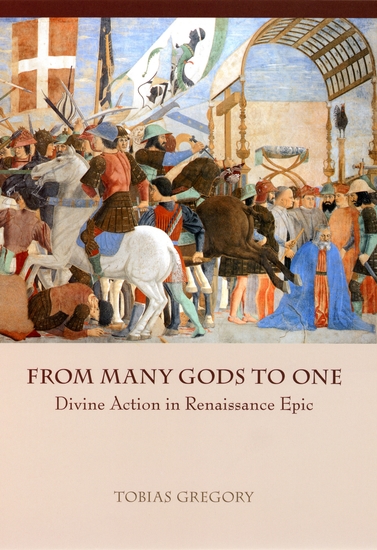
Epic poets of the Renaissance looked to emulate the poems of Greco-Roman antiquity, but doing so presented a dilemma: what to do about the gods? Divine intervention plays a major part in the epics of Homer and Virgil—indeed, quarrels within the family of Olympian gods are essential to the narrative structure of those poems—yet poets of the Renaissance recognized that the cantankerous Olympians could not be imitated too closely. The divine action of their classical models had to be transformed to accord with contemporary tastes and Christian belief.From Many Gods to One offers the first comparative study of poetic approaches to the problem of epic divine action. Through readings of Petrarch, Vida, Ariosto, Tasso, and Milton, Tobias Gregorydescribes the narrative and ideological consequences of the epic’s turn from pagan to Christian. Drawing on scholarship in several disciplines—religious studies, classics, history, and philosophy, as well as literature—From Many Gods to One sheds new light on two subjects of enduring importance in Renaissance studies: the precarious balance between classical literary models and Christian religious norms and the role of religion in drawing lines between allies and others.
Disponible depuis: 15/11/2009.
Longueur d'impression: 254 pages.
D'autres livres qui pourraient vous intéresser

  • Kissing Asphalt - The Courageous True Story of One Child's Unbreakable Spirit—From Kidnapping & Abuse to Self-Love - cover

    Kissing Asphalt - The Courageous...

    Delicia Niami

    • 0
    • 0
    • 0
    Resilience isn’t inherited. It’s a hard-fought skill forged by our ability to pick up the broken pieces of our past and remake them into something new. 
    Meet four-year-old Delicia, a poor but carefree child who is about to have her world shattered. Along with her seven-year-old brother Nile, she is kidnapped from her Los Angeles home by her estranged father and taken to Iraq, a foreign world she has never known. This is just the beginning of a string of traumas, hardships, and assaults Delicia will endure throughout her tumultuous childhood. 
    Now an adult living back in California, Delicia Niami bravely recounts how she survived the unimaginable in her debut memoir. Kissing Asphalt, the first in her memoir trilogy, ResilientAF, grapples with the power of resilience, acceptance, and self-love. She revisits her terrifying past with vulnerability, compassion, and the honesty of a true survivor. Hold hands with Delicia as she faces her childhood scars and learns how to confront her fears, accept her true value and identity, and embrace her unique gifts. It’s a multi-decade roller coaster ride that is the beginning of her liberation, propelling her to live an inspired life and embrace her full human potential—a human potential she knows lives inside everyone, no matter what life has thrown at us. 
    For anyone who has struggled with childhood trauma, Delicia’s unflinching journey through darkness and back to light will resonate. She has decided to share her story publicly in hopes that it will serve as a guide to the many who have suffered in silence and continue to struggle against the daunting weight imposed by childhood trauma. 
    Voir livre
  • The American Operations in WW2: Central Europe - cover

    The American Operations in WW2:...

    U.S. Army Center of Military...

    • 0
    • 0
    • 0
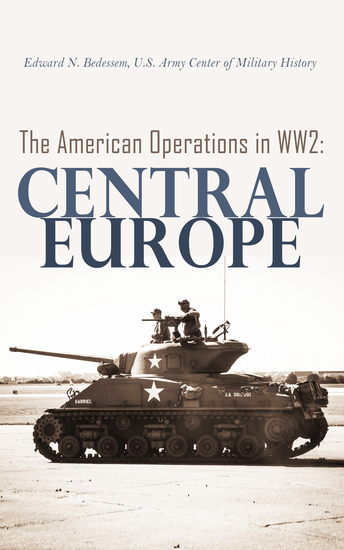
    World War II was the largest and most violent armed conflict in the history of mankind. Highly relevant today, World War II has much to teach us, not only about the profession of arms, but also about military preparedness, global strategy, and combined operations in the coalition war against fascism. This book follows military operations of the US Army in Central Europe from 22 March to 11 May 1945. 
    By the early spring of 1945 events favored the Allied forces in Europe. The Anglo-Americans had by January turned back the Germans' December counterattack in the Ardennes, in the famous Battle of the Bulge. The failure of this last great German offensive exhausted much of the Third Reich's remaining combat strength, leaving it ill-prepared to resist the final Allied campaigns in Europe. Additional losses in the Rhineland further weakened the German Army, leaving shattered remnants of units to defend the east bank of the Rhine. By mid-March the western Allies had pushed to the Rhine along most of the front, had seized an intact bridge at Remagen, and had even established a small bridgehead on the river's east bank.
    In the east the Soviets had overrun most of Poland, pushed into Hungary and eastern Czechoslovakia, and temporarily halted at the German border on the Oder-Neisse line. These rapid advances on the Eastern Front destroyed additional veteran German combat units and severely limited Hitler's ability to reinforce his Rhine defenses. Thus, as the western Allies completed their preparations for the final drive into the heart of Germany, victory seemed within sight.
    Voir livre
  • Yugoslavian Genocide - Causes Facts Death Toll and War Criminals - cover

    Yugoslavian Genocide - Causes...

    Kelly Mass

    • 0
    • 0
    • 0
    The Yugoslavian Genocide is hard to explain. So many factors have contributed to the war, and eventually, the genocide in Bosnia, that many UN soldiers didn’t even know what to do with it. A lack of response, though, made the problem worse. And looking back on some of the cowardice and indifference, I’m sure many countries involved would like to go back in time and do it over. A combination of historical aspects such as the division of religion, the world wars, the Iron Curtain, and the fall of the Soviet Union were part of what led to a conflict that lasted for years in this sensitive region in Europe. 
    Throughout the Bosnian War of 1992-- 1995, the Yugoslavian or Bosnian genocide describes either the Srebrenica massacre or the larger criminal activities against mankind and ethnic cleaning project performed by the Army of Republika Srpska (VRS) in areas controlled by the Army of Republika Srpska (VRS) More than 8,000 Bosniak (Bosnian Muslim) men and boys were killed in Srebrenica in the year 1995, while another 25,000-- 30,000 Bosniak people were by force expelled. 
    Bosniaks and Bosnian Croats were targeted in ethnic cleaning in VRS-controlled areas. Extermination, illegal confinement, mass rape, sexual assault, abuse, ransack and damage of personal and public property, and inhumane treatment of people; targeting of politicians, intellectuals, and experts; illegal deportation and transfer of citizens; illegal appropriation and plunder of real and personal effects; damage of houses and services The activities met the requirements for "guilty acts" of genocide, and "certain physical criminals had the purpose to physically get rid of the safeguarded populations of Bosnian Muslims and Croats," according to the report. 
    Let’s take a look at what happened, what caused it, and what it led to.
    Voir livre
  • You Are Not a Kinesthetic Learner - The Troubled History of the Learning Style Idea - cover

    You Are Not a Kinesthetic...

    Thomas Fallace

    • 0
    • 0
    • 0
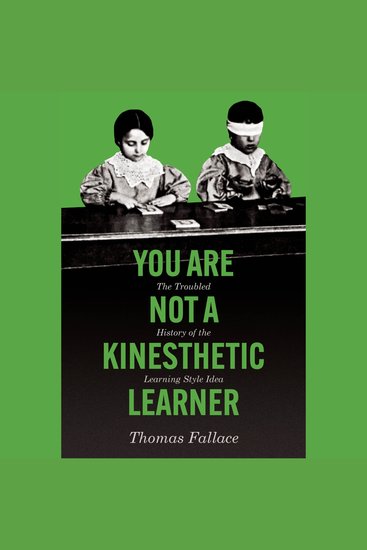
    A compelling history of the learning style concept and how it was shaped by shifting ideas in psychology, anthropology, and education. The widely embraced notion that we all process information in one of three distinct modes—visual, auditory, or kinesthetic—has informed educational practices for decades. In recent years, however, numerous studies have questioned the effectiveness of aligning instruction with the alleged learning styles of individual students. So, why is it still commonplace in the literature on beneficial teaching at all levels of education?In You Are Not a Kinesthetic Learner: The Troubled History of a Dangerous Idea, historian Thomas Fallace traces the origins, evolution, and history of the learning style idea, demonstrating its relationship to a legacy of unequal education for children of color. Fallace argues that the research supporting the learning style idea was problematic from its inception in the 1910s and that it was used to label and justify a diminished curriculum for many Black and Latine students, whose cultural differences were perceived as weaknesses. In recent years, numerous empirical studies have not found the approach to be effective. This fascinating history clearly shows the danger of sorting and labeling students with permanent style identities and makes a strong case for removing learning styles as the basis for any educators’ instructional toolkit.The first book-length history of learning styles, You Are Not a Kinesthetic Learner encourages us all to consider the research, be open to future developments and updates, and question even our most intuitive assumptions.
    Voir livre
  • The Pilgrims - History and Background of the Early English Settlers on the American Continent - cover

    The Pilgrims - History and...

    Kelly Mass

    • 0
    • 0
    • 0
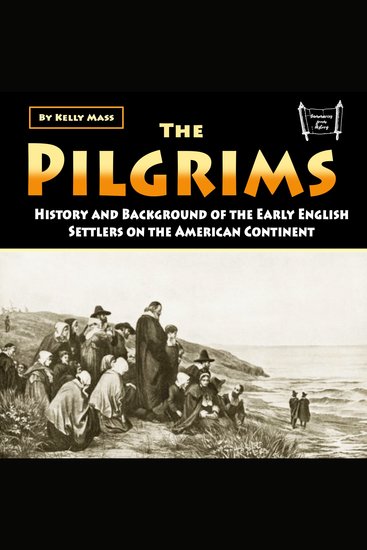
    The Pilgrims, also known as the Pilgrim Fathers, were a group of English settlers who made the historic journey across the Atlantic on the Mayflower and founded the Plymouth Colony in what is now Plymouth, Massachusetts. The colony was named after the port of Plymouth in England, which had been the final departure point for their voyage. The Pilgrims were part of a religious movement rooted in the Puritan faith, but with distinct beliefs that set them apart from other Puritans at the time. 
    The Pilgrims were part of a religious group called the Brownists, or Separatists, who believed that the Church of England was beyond reform. They shared many of the same Calvinist and Puritan religious convictions as the broader Puritan community, particularly in their emphasis on personal piety, Bible study, and the rejection of Catholic practices. However, unlike other Puritans, the Pilgrims felt that the Church of England was corrupt and that their congregations should be completely separate from it. This belief led them to seek religious freedom in places where they could practice their faith without interference from the English state church, which they saw as a violation of their spiritual beliefs. 
    Initially, the Pilgrims found refuge in Holland, where they lived for several years in the city of Leiden. The Netherlands offered a more tolerant environment for religious dissenters, allowing them to practice their faith freely. However, the Pilgrims faced challenges in Holland, including economic difficulties and concerns about the erosion of their cultural identity. They eventually decided to seek a new home in the New World, where they could establish a society that would align with their religious principles.
    Voir livre
  • North to Boston - Life Histories from the Black Great Migration in New England - cover

    North to Boston - Life Histories...

    Blake Gumprecht

    • 0
    • 0
    • 0
    Between World War II and 1980, tens of thousands of Black people moved to Boston from the South as part of the Great Migration, one of the most consequential mass movements of people in American history. Black migration from the South transformed the city, as it did urban areas across the country. North to Boston is the first book to examine that important subject. 


    Blake Gumprecht traces the history of this migration and explores its impacts in greater depth through the lives of ten individuals, each the subject of one chapter. Those chapters are short biographies based on extensive interviews by the author and are told in an engaging style that reflects the author's background as a journalist. 


    The ten people featured came from six southern states. They fled racism, limited opportunity, and hopelessness, and moved north in pursuit of better jobs, equal treatment, and greater freedom. They settled in neighborhoods such as Roxbury, Dorchester, and Mattapan. They worked as teachers, factory workers, welders, and security guards. Their stories are emblematic of the experiences of Black people everywhere who left the South, and provide a rare glimpse into the lives of ordinary people living in one city's Black community.
    Voir livre