¡Acompáñanos a viajar por el mundo de los libros!
Añadir este libro a la estantería
Grey
Escribe un nuevo comentario Default profile 50px
Grey
Suscríbete para leer el libro completo o lee las primeras páginas gratis.
All characters reduced
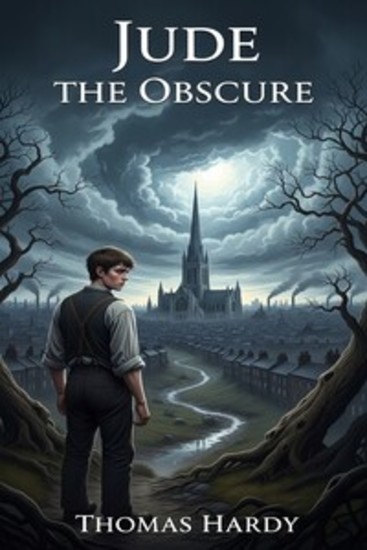
Jude the Obscure - cover

Jude the Obscure

Thomas Hardy

Editorial: Bu Classics Books

  • 0
  • 0
  • 0

Sinopsis

A devastating portrait of a man’s desperate attempt to rise above his station and the crushing weight of institutional barriers. Jude Fawley’s dreams of academia and intellectual fulfillment are systematically dismantled by a society that refuses to look past his humble origins. This provocative and heartbreaking narrative remains a powerful indictment of social rigidity and the pursuit of forbidden love.
Disponible desde: 06/03/2026.
Longitud de impresión: 577 páginas.

Otros libros que te pueden interesar

  • Sons and Lovers - cover

    Sons and Lovers

    D.H. Lawrence

    • 0
    • 0
    • 0
    "Sons and Lovers" is a semi-autobiographical novel by D.H. Lawrence and is often considered his earliest masterpiece. Set in the coal-mining town of Bestwood, Nottinghamshire, the narrative delves into the complexities of family, love, and Oedipal tensions. The story chronicles the life of Paul Morel and his bond with his mother, Gertrude Morel. As Paul matures, he navigates relationships with two very different women, all while struggling with his deep emotional ties to his mother. Lawrence's exploration of sexuality, class, and individual aspirations is both poignant and controversial, making "Sons and Lovers" a groundbreaking work in its time.
    Ver libro
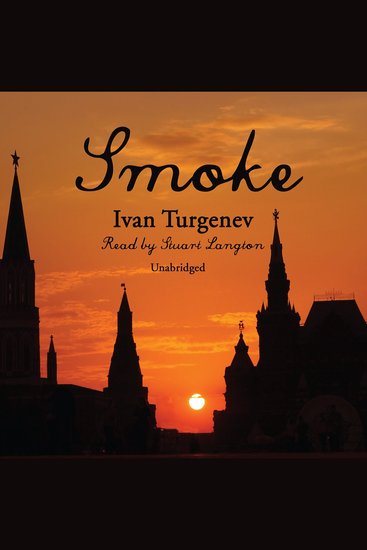
  • Smoke - cover

    Smoke

    Ivan Turgenev

    • 0
    • 0
    • 0
    Written by one of Russia’s literary masters, Smoke is both a poignant love story and a brilliant socio-political study. Marked with a barbed wit and a visionary modernism, it became the center of a famous philosophical breach between Turgenev and Dostoevsky. 
    On the brink of marriage, Grigorii Litvinov visits the fashionable European spa of Baden-Baden, a scene dominated by the Russian upper classes. Among them is the beautiful Irina Osinin, Litvinov’s first love, to whom he was engaged ten years earlier. Litvinov’s struggle with a nostalgic passion is set against the background of a society pulled both toward and against change as it feels the influence of the West. 
    A sensitive and intelligent commentary on human nature, Turgenev’s Smoke endures for its high aesthetic standards and its universal qualities of understanding.
    Ver libro
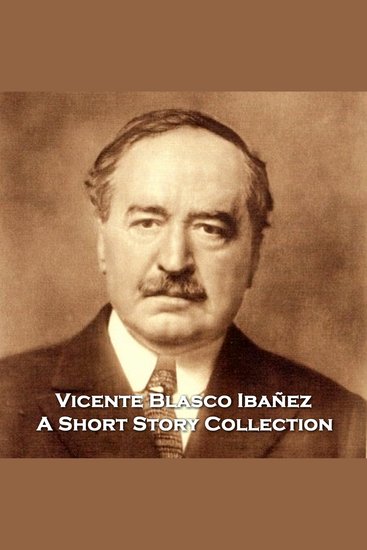
  • Vincente Blasco Ibanez - A Short Story Collection - One of Spains finest writers who's work has been made into countless Hollywood films we have an incredible anthology translated to English for your ears - cover

    Vincente Blasco Ibanez - A Short...

    Vincente Blasco Ibanez

    • 0
    • 0
    • 0
    Vicente Blasco Ibáñez was born in Valencia, Spain on 29th January 1867.  
     
    At university, he studied law and graduated in 1888 but never felt the urgency to practice - he was more interested in politics, journalism, literature and women.   
     
    Politically he was a militant Republican partisan and, in his youth, founded a newspaper, El Pueblo (The People). The newspaper was taken to court many times and he made many enemies. In one incident he was shot and almost killed. In 1896, Ibáñez was arrested and sentenced to a few months in prison. 
     
    Despite this colourful background he found time to write novels. His first published work was ‘La Araña Negra’ (The Black Spider) in 1892, a work that he later repudiated although at the time it was a useful vehicle for him to express his anti-clerical views. 
     
    In 1894, he published ‘Arroz y Tartana’ (Airs and Graces), about a late 19th Century widow in Valencia trying to keep up appearances in order to marry her daughters well.   
     
    Ibáñez’s next sequence of books studied rural life in the farmlands of Valencia and failed to gain much of an audience.   
     
    His writing now took on a new direction with its now familiar sensational and melodramatic themes in 1908 with ‘Sangre y Arena’ (Blood and Sand), which follows the career of Juan Gallardo from his poor beginnings as a child in Seville, to his rise to becoming a famous matador in Madrid 
     
    However, his greatest success was ‘Los Cuatro Jinetes del Apocalipsis (The Four Horsemen of the Apocalypse) in 1916, which tells a tangled tale of the French and German sons-in-law of an Argentinian land-owner who find themselves fighting on opposite sides in the First World War.  It was a literary and commercial sensation and became the best-selling book of 1919.  It also propelled Rudolph Valentino to stardom in the 1921 film. 
     
    Ironically his fame in the English-speaking world has come not as a novelist but as the stories behind some of Hollywood’s greatest silent movies. 
     
    Vicente Blasco Ibáñez died in Menton, France on January 28th, 1928, the day before his 61st birthday. 
     
    01 - Vicente Blasco Ibanez - A Short Story Collection - An Introduction 
    02 - Compassion by Vicente Blasco Ibanez 
    03 - Luxury by Vicente Blasco Ibanez 
    04 - Rabies by Vicente Blasco Ibanez 
    05 - The Last Lion by Vicente Blasco Ibanez 
    06 - The Windfall by Vicente Blasco Ibanez<
    Ver libro
  • Twenty-Six Men and a Girl - From their pens to your ears genius in every story - cover

    Twenty-Six Men and a Girl - From...

    Maxim Gorky

    • 0
    • 0
    • 0
    Alexei Maximovich Peshkov was born on 28th March 1868, in Nizhny Novgorod, Russia. 
    Better known as Maxim Gorky he was orphaned at 11 and ran away from home at 12.  At 19 he had already attempted suicide and thereafter travelled, by foot, across the Russian Empire for 5 years. 
    His first book ‘Essays & Stories’ in 1898 was a sensation and so began a long career as an author of short stories, novels and plays.  Gorky saw writing as a moral and political act that would help to change the unjust world around him.  He was an ardent early advocate of the emerging Marxist movement and publicly opposed the Tsarist regime leading several times to his arrest.  
    In 1904 he began his own theatre but the censor banned every play and Gorky was forced to abandon the project. 
    But Gorky was a financially successful author, editor, and playwright and gave monies to political parties as well as for civil rights and social reform.  The brutal shooting of workers, which set in motion the Revolution of 1905, pushed Gorky more decisively toward radical solutions.  
    In 1906 he went to the United States to raise funds for the Bolsheviks. Those experiences including a scandal over travelling with his lover and not his wife deepened his contempt for the ‘bourgeois soul.’ 
    Gorky now moved to Capri in Italy, both for health reasons and to escape the increasingly repressive times in Russia.  
    An amnesty for the 300th anniversary of the Romanov dynasty saw him return to Russia in 1914. His politics remained close to the Bolshevik cause.  But soon, after the 1918 revolution, his essays referred to Lenin as a tyrant for his senseless arrests and repression.  He was soon appealing to the outside world for food aid after the catastrophic crop failure. 
    In October 1921 Gorky returned to Italy, now in Fascist hands, and settled in Sorrento until 1932.  His health worsened with the onset of tuberculosis. 
    He wrote several successful books there but now decided to find an understanding with the communist regime. Stalin invited him home and his return was hailed as a major propaganda victory.  He was decorated with the Order of Lenin, and a province, a park, and various streets re-named in his honour. 
    But he had his faults too.  In 1933, Gorky co-edited a book on the White Sea-Baltic Canal and denied even a single prisoner died during its construction, but thousands had. As well, knowing that some Nazis were homosexual, a phrase was attributed to him that said ‘exterminate all homosexuals and fascism will vanish’.  Although he was himself was quoting another he was decidedly homophobic. 
    With the increase of Stalinist repression in 1935 Gorky was placed under unannounced house arrest. 
    Maxim Gorky died on the 18th June 1936 from pneumonia.  He was 68. 
    Stalin and Molotov were among those who carried Gorky's urn of ashes at his funeral.
    Ver libro

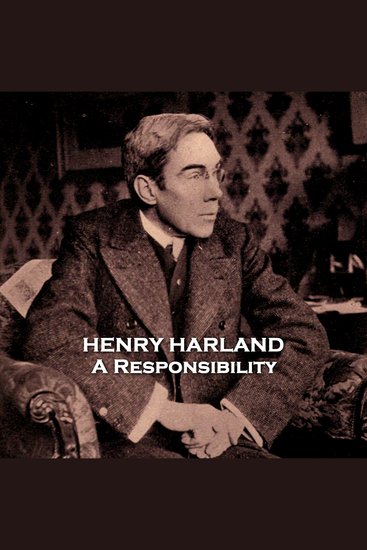
  • A Responsibility - From their pens to your ears genius in every story - cover

    A Responsibility - From their...

    Henry Harland

    • 0
    • 0
    • 0
    The bookshelves of American literature are incredible collections that have gathered together centuries of very talented authors.  From this continent their fame spread and whilst among their number many are now forgotten or neglected their talents endure.  Among them is Henry Harland.
    Ver libro
  • The Upper Berth - A sailor recounts his time on a mysterious ship unexplained forces and horror awaits - cover

    The Upper Berth - A sailor...

    F. Marion Crawford

    • 0
    • 0
    • 0
    Francis Marion Crawford, an only child, was born on 2nd August 1854 at Bagni di Lucca, Italy. He was a nephew to Julia Ward Howe, the American poet and writer of ‘The Battle Hymn of the Republic’.  
     
    Crawford was educated at St Paul's School, Concord, New Hampshire and then on to Cambridge University, the University of Heidelberg and the University of Rome.  
     
    In 1879 he went to India, to study Sanskrit and then to edit The Indian Herald. In 1881 he returned to America to continue his Sanskrit studies at Harvard University. 
     
    His family became increasingly concerned about his employment prospects.  After an attempt at a singing career as a baritone was ruled out, he was encouraged to write.  
     
    In December 1882 his first novel, ‘Mr Isaacs’, was published and was an immediate hit as was his second novel ‘Dr Claudius’ in 1883.  
     
    In October 1884 he married Elizabeth Berdan and encouraged by his excellent start to a literary career they returned to Sant Agnello, Italy to make a permanent home, buying the Villa Renzi that then became Villa Crawford.  
     
    In the late 1890s, Crawford began work on his historical works which would later include ‘Corleone’, in 1897, the first major treatment of the Mafia in literature.  
     
    Crawford is also exceedingly popular and anthologized as a short story writer of bizarre and creepy tales.   
     
    In 1908 came his classic ‘The Screaming Skull’. Without doubt its unsettling nature is heightened as the reader/listener is drawn into to the story by its narrator.  Everything is explained and plausible until, of course, it isn’t. 
     
    Francis Marion Crawford died at Sorrento on Good Friday 1909 at Villa Crawford of a heart attack.  
     
    In this classic supernatural story by F Marion Crawford a man takes a room on a liner and discovers that its previous occupants have all committed suicide.  When his room mate on the Upper Berth also disappears the evidence points to some unearthly sequence of happenings.
    Ver libro