Junte-se a nós em uma viagem ao mundo dos livros!
Adicionar este livro à prateleira
Grey
Deixe um novo comentário Default profile 50px
Grey
Assine para ler o livro completo ou leia as primeiras páginas de graça!
All characters reduced
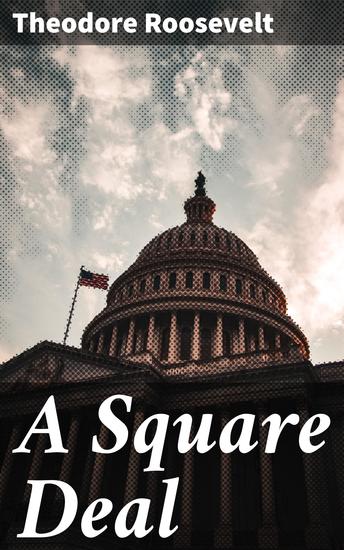
A Square Deal - Championing Social Justice and Conservation: Roosevelt's Vision for a More Equitable Society - cover
LER

A Square Deal - Championing Social Justice and Conservation: Roosevelt's Vision for a More Equitable Society

Theodore Roosevelt

Editora: Good Press

  • 0
  • 0
  • 0

Sinopse

In "A Square Deal," Theodore Roosevelt articulates his progressive vision for America at the turn of the 20th century, emphasizing the necessity for fairness, equity, and social justice in an era marked by rapid industrialization and economic disparity. Roosevelt employs a direct and vigorous rhetorical style, engaging readers through his characteristic clarity and passion. The book reflects the literary context of its time, steeped in the ideals of the Progressive Movement, and is infused with Roosevelt'Äôs unique blend of optimism and pragmatism, which champions regulatory reforms to protect the average citizen against corporate excesses. Theodore Roosevelt, the 26th President of the United States and a multifaceted figure, was deeply influenced by his experiences in ranching, politics, and conservation. His firsthand observations of the struggles faced by American workers and families, combined with a keen understanding of both domestic and foreign policy, fueled his commitment to creating a more just society. "A Square Deal" serves as a raison d'√™tre for Roosevelt'Äôs domestic policies, reflecting his belief that a fair government must actively support the welfare of its citizens. This book is an indispensable read for anyone interested in the roots of American progressive thought and the evolution of social policies. Roosevelt'Äôs eloquent arguments and indomitable spirit resonate with modern readers, making "A Square Deal" a timeless call for justice and equality.
Disponível desde: 17/01/2022.
Comprimento de impressão: 86 páginas.


Outros livros que poderiam interessá-lo

  • Roadblocked - Joe Biden's Rocky Transition to the Presidency - cover

    Roadblocked - Joe Biden's Rocky...

    Heath Brown

    • 0
    • 0
    • 0
    Joe Biden and Kamala Harris began their transition to the White House in the most unusual of circumstances: a global pandemic, a sitting president violently refusing to accept the results of the election, and a historic racial reckoning all posed profound questions about how they would staff large parts of the government and articulate policy remedies to pressing problems in just eleven weeks. 


    Heath Brown's Roadblocked is a revelatory look at the seventy days between the election and the inauguration with a focus on the ways the Biden-Harris transition team sought help and advice to overcome these obstacles. More than that, Roadblocked is also a gripping history of US presidential transitions over the past half-century that compares the transition teams of the last four administrations. 


    Biden-Harris transition leaders had a massive team with a stated aim to promote coordination, encourage teamwork, and avoid siloing staff. In the end, however, these aims were foiled by the conditions of the pandemic and steep hierarchies, which both reduced collaboration and information sharing. In the end, despite substantial changes in the Democratic coalition, newly influential groups armed with novel tactics, and great shifts in their political agenda, the Biden-Harris transition did not lead to transformation. Roadblocked explains why.
    Ver livro
  • 7 Areas Without Laws - Exploring the World's Last Anarchic Zones - cover

    7 Areas Without Laws - Exploring...

    John Harpoon

    • 0
    • 0
    • 0
    Laws are the invisible threads that hold societies together, shaping behavior, enforcing order, and establishing the boundaries of right and wrong. Yet, scattered across the world, there are rare places where laws hold little to no authority—zones where governments have little presence, where no single entity enforces regulations, and where the concept of governance is fluid or entirely absent. These places, whether by accident of history, geopolitical disputes, or deliberate rejection of authority, exist on the fringes of civilization.  
      
    This book explores seven of these anarchic zones, each with its own unique circumstances and challenges. From the open ocean, where maritime law is a complex tangle of loopholes and jurisdictions, to the frozen expanse of Antarctica, where no country claims true ownership, these areas defy traditional governance. Some, like Bir Tawil—a small strip of land between Egypt and Sudan—are unclaimed due to border disputes, while others, like Slab City in California or Freetown Christiania in Denmark, are self-declared autonomous communities that reject the rules of mainstream society.  
      
    The existence of these lawless zones raises important questions: Can true freedom exist without laws? Is lawlessness always synonymous with chaos, or can people thrive outside the framework of government? In some of these areas, the absence of enforcement has led to disorder, crime, and exploitation. Pirates take advantage of international waters to operate freely, and smugglers use ungoverned territories to traffic goods and people. In other places, however, the lack of laws has fostered alternative communities built on mutual cooperation, artistic expression, and self-sufficiency. 
    Ver livro
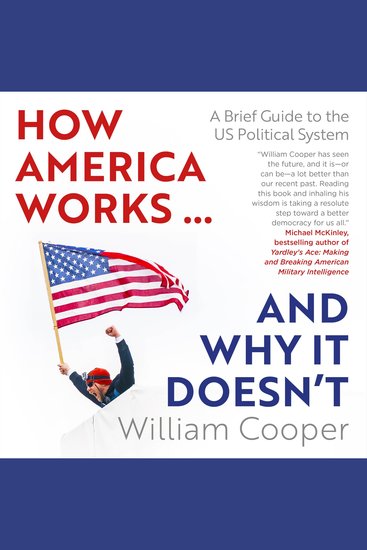
  • How America Worksand Why It Doesn't - A Brief Guide to the US Political System - cover

    How America Worksand Why It...

    William Cooper

    • 0
    • 0
    • 0
    Twenty-first-century America isn’t working the way it’s supposed to. 
    This book explains why. 
    Americans in the twenty-first century are becoming increasingly untethered from both reality and the essential principles and traditions that have shaped the nation’s historic success. A big part of why America isn’t working is because far too many Americans neither know nor care how it’s supposed to work. 
    “William Cooper presents an insightful, sensitive, and accessible account of the trials that face American democracy in the twenty-first century. This fair- and broad-minded volume makes compelling reading for those who are looking to build a better democracy.” Alexander Yen, Department of Politics and International Relations, University of Oxford 
    “Partisanship fuels personal convictions more than ever in our society, and convictions fuel mysided thinking and other cognitive biases. At no time have we needed this discussion of bias and partisan thinking more than now.” Keith E. Stanovich, author of The Bias That Divides Us 
    “William Cooper logically and authoritatively takes you step by step through all the reasons a President Trump couldn’t imprison his enemies, pardon his friends, overrule judges, weaponize the Department of Justice, prosecute Joe Biden, or order the military to enforce his unconstitutional actions” Cleveland Plain Dealer 
    “William Cooper is an insightful and thought-provoking writer about US politics. He deserves to be widely read.” Thomas Plate, former Editorial Page Editor, Los Angeles Times 
    "In How America Works . . . and Why It Doesn’t, William Cooper gives a thoughtful, readable guide to what ails American democracy. Required reading for any student of political science.” Uri Kaufman, author of Eighteen Days in October 
    "A must-read. His well-written and brief book covers a lot of important ground in a learned but accessible manner. Probably most noteworthy, though, is his astute and fair judgment―the book is not a polemic for the left or the right, but rather a fair appraisal of the strengths and weaknesses of both. I highly recommend reading it―it is an enjoyable tour of key aspects of history (as well as current events), ethics, political philosophy, constitutional law, environmental science, and cognitive psychology―all told in a lucid, efficient way." William O'Donohue, PhD, Professor, University of Nevada, Reno
    Ver livro
  • Dragonslayers - Six Presidents and Their War with the Swamp - cover

    Dragonslayers - Six Presidents...

    Larry Schweikart

    • 0
    • 0
    • 0
    The Swamp has been around for over 150 years, and six major presidents have tried to drain it with varying degrees of success. 
     
    Donald Trump promised to “Drain the Swamp,” by which he originally meant lobbyists. When he got in, he found an entirely different Swamp—a Deep State that had grown, layer upon layer, within the government. But he wasn’t the first to encounter entrenched Swamp opposition. Abraham Lincoln had to battle the  
    “Slave Power Conspiracy”; Grover Cleveland was the most successful of three presidents to fight the spoils Swamp. Theodore Roosevelt found a new iteration of the Swamp awaiting him: Trusts. After World War II, John F. Kennedy discovered that he had little control over the Central Intelligence Agency, and even found he  
    needed the CIA for his own purposes. Despite promising to shrink the bureaucracy Swamp, Ronald Reagan found himself helpless to even make a dent in it. And Trump soon learned that the Deep State could ensure no one ever brought any of its own to justice. Dragonslayers explains why these Swamps exist, and why they were—and remain—so hard to defeat.
    Ver livro
  • Second Treatise of Government - cover

    Second Treatise of Government

    John Locke

    • 0
    • 0
    • 0
    The Second Treatise of Government is a political treatise written by English philosopher John Locke in 1689. It is considered one of the most important works on political philosophy, as it presents Locke's ideas on the natural rights of individuals and the proper role and limits of government in a society based on the consent of the governed. 
    In the Second Treatise, Locke argues that all individuals have natural rights to life, liberty, and property, which cannot be taken away by any authority, including the government. These rights are inherent and universal, and are not granted by any social contract or agreement. 
    Locke also argues that governments are formed by the consent of the governed, and are therefore obligated to protect the natural rights of their citizens. He asserts that the purpose of government is to promote the common good, and that governments that fail to do so may be overthrown by the people. 
    Moreover, Locke suggests that there are limits to the power of government, and that individuals have the right to resist or even overthrow a government that becomes tyrannical or violates their natural rights. 
    The Second Treatise of Government has had a significant impact on political theory and the development of democratic governance. It influenced the United States Declaration of Independence and the Constitution, as well as many other constitutions around the world.
    Ver livro
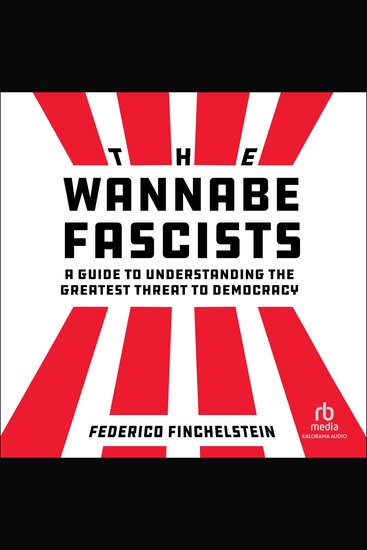
  • The Wannabe Fascists - A Guide to Understanding the Greatest Threat to Democracy - cover

    The Wannabe Fascists - A Guide...

    Federico Finchelstein

    • 0
    • 0
    • 0
    Meet today's almost fascists and learn the warning signs to intercept them on the road from populism to dictatorship. 


    With The Wannabe Fascists, historian Federico Finchelstein offers a precise explanation of why Trumpism and similar movements across the world belong to a new political breed, the last outcome of the combined histories of fascism and populism: the wannabe fascists. This new type of populist politician is typically a legally elected leader who, unlike previous populists who were eager to distance themselves from fascism, turns to totalitarian lies, racism, and illegal means to destroy democracy from within. 


    Drawing on almost three decades of research on the histories of fascism and populism around the world, this book lays out in clear language what the author calls the "four pillars of fascism"—xenophobia, propaganda, political violence, and ultimately dictatorship. Finchelstein carefully explains how and why wannabe fascists like Trump, Bolsonaro, and Modi embrace the first three pillars but don't quite succeed in dictatorship and total suppression of the popular vote. The Wannabe Fascists stresses the importance of preventing despots from reaching this tipping point and offers a clear warning for what's at stake.
    Ver livro