Join us on a literary world trip!
Add this book to bookshelf
Grey
Write a new comment Default profile 50px
Grey
Subscribe to read the full book or read the first pages for free!
All characters reduced
Sister Carrie - cover

Sister Carrie

Theodore Dreiser

Publisher: DigiCat

  • 0
  • 0
  • 0

Summary

In Theodore Dreiser's seminal work, "Sister Carrie," the narrative unfolds with a striking realism that encapsulates the struggles of the American dream in the early 20th century. Written in a naturalistic style, the novel follows the rise and fall of Carrie Meeber, a young woman who relocates to Chicago in search of fulfillment but ultimately encounters the harsh realities of love, ambition, and societal expectation. The rich, descriptive language intertwined with psychological depth allows the reader to navigate Carrie's poignant journey, reflecting broader themes of class, gender, and the moral ambiguities of a rapidly industrializing America. Dreiser, an influential figure in American literature, drew from his own experiences of poverty and ambition, shaping a narrative that portrays the tension between desire and reality. Growing up in a large, struggling family, he witnessed firsthand the societal constraints that women faced. His background, coupled with his belief in the importance of depicting life authentically, propelled him to craft "Sister Carrie," a work that boldly challenges prevailing moralistic narratives of his time. This novel is highly recommended for readers interested in exploring the complexities of the human spirit against a backdrop of socioeconomic change. With its unflinching honesty and depth, "Sister Carrie" offers a fascinating insight into the human condition, making it a timeless classic that continues to resonate with generations of readers.
Available since: 09/16/2022.
Print length: 386 pages.

Other books that might interest you

  • Ivan Turgenev - A Short Story Collection - The hugely popular author that helped connect Russian literature to the West - cover

    Ivan Turgenev - A Short Story...

    Ivan Turgenev

    • 0
    • 0
    • 0
    Ivan Sergeyevich Turgenev was born on 9th November 1818 in Oryol, Russia to parents from the nobility.  He and his two brothers were raised by their mother on the family estate.  Surrounded by foreign governesses he became fluent in French, German, and English.  Their father spent little time with them and this undoubtedly had an effect on him and his brothers.  When he was nine the family moved to Moscow to give their children a proper education. 
     
    Turgenev studied for a year at the University of Moscow and then at the University of St Petersburg to study Classics, Russian literature, and philology.  During that time his father died from kidney stone disease.  In 1838 Turgenev studied philosophy and history at the University of Berlin for 3 years before returning to St Petersburg for his master's. 
     
    He started his career with the Russian Civil Service and it was only in 1852 that he made his name with his short story collection, ‘A Sportsman's Sketches’, based on his observations of peasant life and nature. 
     
    That same year he wrote an obituary for Nikolai Gogol: "Gogol is dead!... What Russian heart is not shaken by those three words?... He is gone, that man whom we now have the right (the bitter right, given to us by death) to call great."  The St Petersburg censor banned publication but the Moscow censor allowed it.  He was dismissed but Turgenev was held responsible and imprisoned for a month, and then exiled to his country estate. 
     
    Along with many other Russian intellectuals Turgenev left and settled in Paris in 1854.  During this period he wrote his finest stories and four novels. 
     
    Alexander II ascended the Russian throne in 1855, and the political climate became more relaxed, Turgenev returned home. 
     
    ‘Fathers and Sons’, Turgenev's most famous and enduring novel, appeared in 1862. Its leading character is considered the first ‘Bolshevik’ in Russian literature. But the hostile reaction prompted Turgenev's decision to again leave Russia. 
     
    His health declined during his later years. In January 1883, an aggressive malignant tumor was removed but by then it had metastasized in his upper spinal cord, causing him intense pain in his final few months of life. 
     
    Ivan Turgenev died on 3rd September 1883 of a spinal abscess, a complication of the metastatic liposarcoma, in his house near Paris.  He was buried in St Petersburg. 
     
    1 - Ivan Turgenev - A Short Story Collection - An Introduction 
    2 - A Strange Story by Ivan Turgenev 
    3 - Mumu by Ivan Turgenev 
    4 - The District Doctor by Ivan Turgenev 
    5 - The Jew by Ivan Turgenev 
    6 - The Rendezvous by Ivan Turgenev 
     -  
     -  
     -  
    1 - Leonid Andreyev - A Short Story Collection - An Introduction 
    2 - Silence by Leonid Nikolaevich Andreyev 
    3 - Lazarus by Leonid Andreyev 
    4 - The City by Leonid Andreyev 
    5 - The Friend by Leonoid Andreyev 
    6 - The Lie by Leonid Andreyev 
    7 - The Marseillaise by Leonid Andreyev
    Show book
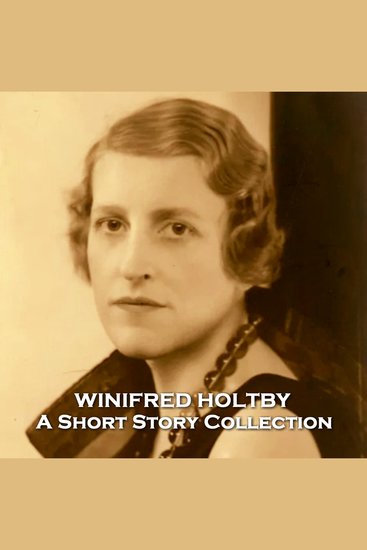
  • Winifred Holtby - A Short Story Collection - Ardent feminist and activist who wrote many stories before tragically dying young - cover

    Winifred Holtby - A Short Story...

    Winifred Holtby

    • 0
    • 0
    • 0
    Winifred Holtby was born on 23rd June 1898 to a prosperous farming family in the village of Rudston in Yorkshire.  
     
    A governess provided her early education before she went to Queen Margaret's School in Scarborough.  After passing the entrance exam for Somerville College, Oxford in 1917, she decided to join the Women's Army Auxiliary Corps in early 1918.  However, soon after her arrival in France, the War ended. 
     
    She returned to study at Oxford and met fellow student Vera Brittain.  After graduating from Oxford, in 1921, Winifred and Vera moved to London, hoping to establish themselves as authors. 
     
    Her early novels met with only moderate success but as a journalist she was both prolific and increasingly well-known.  Her articles graced more than 20 newspapers and magazines, including the Manchester Guardian newspaper.   
     
    Winifred was a committed feminist, socialist and pacifist.  She gave many lectures for the League of Nations Union.  She was also active in the Independent Labour Party and was a campaigner for the unionisation of black workers in South Africa. 
     
    In 1931 the symptoms of high blood pressure, recurrent headaches and bouts of lassitude brought forth a diagnosis of Bright's disease.  She was given two years to live and now put all her efforts into what was to become her crowning achievement: South Riding.  Released posthumously it received lavish praise and enormous sales.  Her canon of works tackle difficult subjects head on, many in unusual ways, brimming with verve and usually strong female protagonists. 
     
    Winifred Holtby died on 29th September 1935 in London.  She was 37. 
     
    1 - Winifred Holtby - A Short Story Collection - An Introduction 
    2 - The Voice of God by Winifred Holtby 
    3 - Truth is Not Sober by Winifred Holtby 
    4 - The Casualty List by Winifred Holtby 
    5 - The Man Who Hated God by Winifred Holtby 
    6 - Why Herbert Killed His Mother by Winifred Holtby
    Show book
  • The Flying Fish - cover

    The Flying Fish

    D H Lawrence

    • 0
    • 0
    • 0
    'The Flying Fish' is unfinished but tells the story of an Englishman, Gethin Day, returning home after years in South America. There is a hint of the home-sickness Lawrence may have felt during his long exile. The bulk of the story is the time spent on the ship which is taking Day back to England. It is a ship of fools, a 'plague ship' and the only positive note is the joy Day sees in the play of the flying fish and porpoises around the ship. It is tantalising to speculate how Day would have adapted to English life again, confined to an old house in an old country.
    Show book
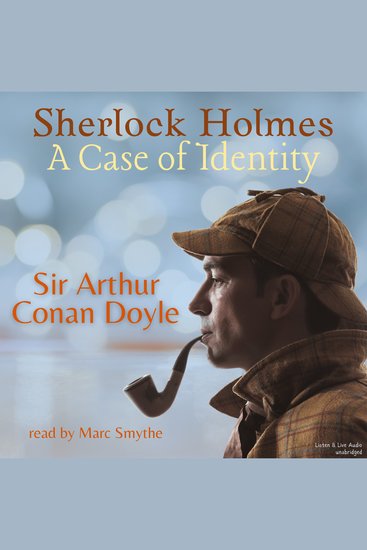
  • Sherlock Holmes: A Case of Identity - cover

    Sherlock Holmes: A Case of Identity

    Sir Arthur Conan Doyle

    • 0
    • 1
    • 0
    A Case of Identity is one of the 56 short stories written by Sir Arthur Conan Doyle and is the third story in The Adventures of Sherlock Holmesc. 
    The story revolves around the case of Miss Mary Sutherland, a woman with a substantial income from the interest on a fund set up for her. She is engaged to a quiet Londoner who has recently disappeared. Holmes' detective powers are barely challenged, as this turns out to be quite an elementary case for him, much as it puzzles Watson. 
    Public Domain (P)2016 Listen & Live Audio
    Show book
  • Washington Square - cover

    Washington Square

    Henry James

    • 0
    • 0
    • 0
    "Washington Square" by Henry James delves into the quiet yet intense world of Catherine Sloper, a plain but tender-hearted young woman living under the shadow of her domineering father, Dr. Austin Sloper, in 19th-century New York. When the charming but fortune-seeking Morris Townsend courts her, Catherine's hopes for love clash with her father's stern disapproval. Through keen social observation and psychological depth, James unravels a poignant tale of love, deception, and self-discovery in the heart of Washington Square.
    Show book
  • Travelling Musicians The - Story Time Episode 52 (Unabridged) - cover

    Travelling Musicians The - Story...

    Brothers Grimm

    • 0
    • 0
    • 0
    In a sometimes meandering, intermittently rhyming narrative, Page retells the Brothers Grimm tale about four animals who set out to make a new life for themselves after their masters reject them.
    Show book