Join us on a literary world trip!
Add this book to bookshelf
Grey
Write a new comment Default profile 50px
Grey
Subscribe to read the full book or read the first pages for free!
All characters reduced
Good Family - A Novel - cover

Good Family - A Novel

Terry Gamble

Publisher: HarperCollins e-books

  • 0
  • 0
  • 0

Summary

A retreat on Lake Michigan for old-money WASPs, Sand Isle has long been the summer residence of the Addison family. The youngest member of the clan, Maddie Addison, survived an awkward but sheltered adolescence only to be plagued in adulthood by alcoholism, a failed marriage, and an unendurable loss that sent her fleeing the burden of family expectations. Now, after an eleven-year hiatus, Maddie has been summoned back to Sand Isle, where her widowed mother languishes near death. What awaits Maddie is a collision of distinct, eccentric personalities -- by turns hilarious and poignant -- as well as an archive of memories that evoke pleasure, passion, and pain. Beneath the silent gaze of her ailing mother, Maddie and her family must confront their past and face the future to once again find a home in a house steeped in untold stories of its own.
Available since: 07/23/2009.
Print length: 323 pages.

Other books that might interest you

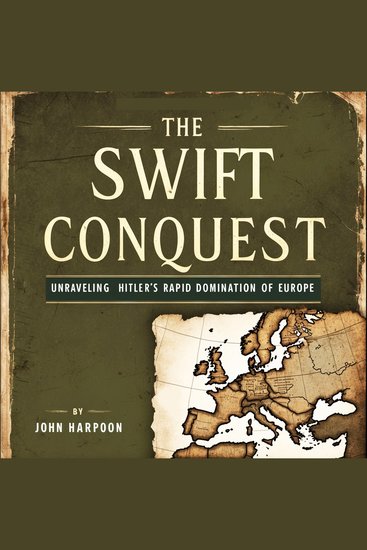
  • The Swift Conquest - Unraveling Hitler's Rapid Domination of Europe - cover

    The Swift Conquest - Unraveling...

    John Harpoon

    • 0
    • 0
    • 0
    The rise of Adolf Hitler and the Nazi Party did not occur in isolation but was the culmination of a confluence of societal, economic, and political factors. Post-World War I Germany was a nation in turmoil, grappling with humiliation, economic devastation, and political instability. The Treaty of Versailles, signed in 1919, placed the blame for the war squarely on Germany's shoulders, imposing severe reparations that crippled its economy. The German people, burdened by hyperinflation, unemployment, and poverty, became disillusioned with the democratic Weimar Republic, which they perceived as weak and ineffectual. 
    Amid this chaos, Hitler emerged as a figure of radical change. A decorated veteran of the First World War, Hitler initially joined the German Workers’ Party, a small and obscure nationalist group. With his fiery oratory skills and an unrelenting focus on propaganda, he quickly rose to prominence, transforming the group into the National Socialist German Workers' Party (NSDAP), or the Nazi Party. Hitler’s message was simple yet potent: he promised to restore Germany to greatness, overturn the Treaty of Versailles, and provide a scapegoat for the nation’s suffering—the Jewish people and other minorities. 
    By the early 1920s, Hitler had crafted a political doctrine that combined virulent nationalism, anti-Semitism, and a disdain for democracy. He also sought to exploit the populace’s fears of communism, which was gaining traction in Europe following the Bolshevik Revolution in Russia. The failed Beer Hall Putsch in 1923, an attempted coup in Munich, briefly landed Hitler in prison. However, this setback proved instrumental to his ideological development, as he used the time to dictate Mein Kampf, a manifesto outlining his vision for Germany’s future and the expansion of Lebensraum, or "living space," for the German people.
    Show book
  • Live Loudly: Claim the Life You Truly Deserve - Transform your life! Discover powerful audio lessons to live loudly and claim the life you deserve - cover

    Live Loudly: Claim the Life You...

    Thorne Wildercroft

    • 0
    • 0
    • 0
    Live Loudly: Claim the Life You Truly Deserve 
    ⭐⭐ Simplified Guide & Explanations Included ⭐⭐ 
    Are you ready to transform your life with empowering action steps and claim the life you truly deserve? 
    Searching for a comprehensive guide that provides all the necessary elements to guide you on this journey? 
    Your search ends here! 
    This guide serves as your essential companion for deepening your understanding, applying your skills, and engaging in hands-on exercises, ensuring you are geared for success. 
    Updated with the latest actionable steps for 2024-2025. 
    Key features of this enriched guide: 
    - Profound insights to help you transform your life with empowering action steps 
    - Detailed explanations of how to take charge of your life 
    - Fruitful strategies for preparation and tackling life's challenges 
    Our guide distinguishes itself through comprehensive coverage, which is essential for your success. Concepts aren't merely skimmed; they are delved into with precision 
    Designed with a clear structure and easy-to-understand language, our guide ensures smooth transitions between topics. Say goodbye to dense jargon and welcome clear, precise, and technically accurate content. 
    So, why wait? Click the BUY NOW button, secure your guide, and begin your journey to transforming your life and claiming the life you truly deserve!
    Show book
  • Maxim Gorky - A Short Story Collection - Nominated for the Nobel prize in literature 5 times Gorky was a truly special short story writer we implore you to see why in this collection - cover

    Maxim Gorky - A Short Story...

    Maxim Gorky

    • 0
    • 0
    • 0
    Alexei Maximovich Peshkov was born on 28th March 1868, in Nizhny Novgorod, Russia. 
     
    Better known as Maxim Gorky he was orphaned at 11 and ran away from home at 12.  At 19 he had already attempted suicide and thereafter travelled, by foot, across the Russian Empire for 5 years. 
     
    His first book ‘Essays & Stories’ in 1898 was a sensation and so began a long career as an author of short stories, novels and plays.  Gorky saw writing as a moral and political act that would help to change the unjust world around him.  He was an ardent early advocate of the emerging Marxist movement and publicly opposed the Tsarist regime leading several times to his arrest.  
     
    In 1904 he began his own theatre but the censor banned every play and Gorky was forced to abandon the project. 
     
    But Gorky was a financially successful author, editor, and playwright and gave monies to political parties as well as for civil rights and social reform.  The brutal shooting of workers, which set in motion the Revolution of 1905, pushed Gorky more decisively toward radical solutions.  
     
    In 1906 he went to the United States to raise funds for the Bolsheviks. Those experiences including a scandal over travelling with his lover and not his wife deepened his contempt for the ‘bourgeois soul.’ 
     
    Gorky now moved to Capri in Italy, both for health reasons and to escape the increasingly repressive times in Russia.  
     
    An amnesty for the 300th anniversary of the Romanov dynasty saw him return to Russia in 1914. His politics remained close to the Bolshevik cause.  But soon, after the 1918 revolution, his essays referred to Lenin as a tyrant for his senseless arrests and repression.  He was soon appealing to the outside world for food aid after the catastrophic crop failure. 
     
    In October 1921 Gorky returned to Italy, now in Fascist hands, and settled in Sorrento until 1932.  His health worsened with the onset of tuberculosis. 
     
    He wrote several successful books there but now decided to find an understanding with the communist regime. Stalin invited him home and his return was hailed as a major propaganda victory.  He was decorated with the Order of Lenin, and a province, a park, and various streets re-named in his honour. 
     
    But he had his faults too.  In 1933, Gorky co-edited a book on the White Sea-Baltic Canal and denied even a single prisoner died during its construction, but thousands had. As well, knowing that some Nazis were homosexual, a phrase was attributed to him that said ‘exterminate all homosexuals and fascism will vanish’.  Although he was himself was quoting another he was decidedly homophobic. 
     
    With the increase of Stalinist repression in 1935 Gorky was placed under unannounced house arrest. 
     
    Maxim Gorky died on the 18th June 1936 from pneumonia.  He was 68. 
     
    Stalin and Molotov were among those who carried Gorky's urn of ashes at his funeral. 
     
    01 - Maxim Gorky - A Short Story Collection - An Introduction 
    02 - Twenty-Six Men and a Girl by Maxim Gorky 
    03 - One Autumn Night by Maxim Gorky 
    04 - In The Steppe by Maxim Gorky 
    05 - Her Lover by Maxim Gorky 
    06 - Chelkash - Part 1 by Maxim Gorky 
    07 - Chelkash - Part 2 by Maxim Gorky 
    08 - Chelkash - Part 3 by Maxim Gorky
    Show book
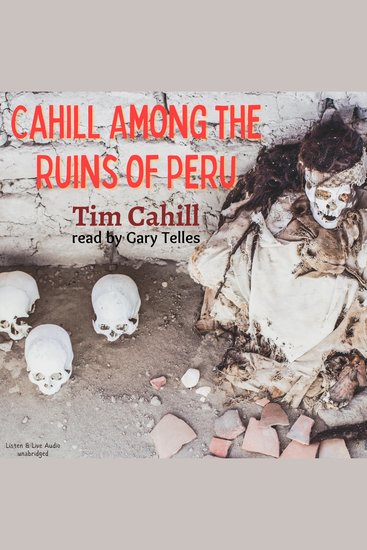
  • Cahill Among The Ruins of Peru - cover

    Cahill Among The Ruins of Peru

    Tim Cahill

    • 0
    • 0
    • 0
    Tim Cahill's adventures typically include equal parts farce and discovery. "Cahill Among The Ruins of Peru" is no exception. Here Cahill sets out to find undiscovered pre-Incan ruins in northeatern Peru. Oily beaueaucrats, superstitious locals, a know-it-all companion and the Peruvian wilderness did not daunt him. Though they were annoying. This selection is part of the full length audiobook, "Explore: Stories of Survival From Off The Map." 
     
    Tim Cahill (born in 1943) is a fount of arcane information and a master of self-deprecating humor. Gary Telles has been narrating audiobooks for the past ten years. A veteran stage actor, he has performed classical, contemporary and original theatre across the country, in addition to appearing on television, radio and CD-ROM.
    Show book
  • Not My Problem - Life With Chronic Illness Being Dismissed and How to Take Back Your Strength - cover

    Not My Problem - Life With...

    Caitlyn Ursillo

    • 0
    • 0
    • 0
    Not My Problem: Life with Chronic Illness, Being Dismissed, and How to Take Back Your Strength is a raw, unfiltered look at what it means to live with a chronic illness in a world that often refuses to understand. Caitlyn Ursillo shares her deeply personal journey with Postural Orthostatic Tachycardia Syndrome (POTS), a condition that turned her world upside down overnight. Through heartbreakingly honest storytelling, she exposes the gaslighting, medical dismissal, and societal misconceptions that countless people with chronic illnesses endure every day. 
    From a seemingly routine virus that spiraled into a life-altering diagnosis, to the moments of frustration, grief, and resilience that followed, Caitlyn’s story is one of both struggle and triumph. She challenges the damaging narratives that paint chronic illness as a “choice” or “laziness” and highlights the invisible battles fought behind closed doors—whether it’s pushing through symptoms to care for her son, advocating for herself in doctor’s offices, or simply trying to be understood. 
    This book is more than just a memoir; it’s a battle cry for those who have been dismissed, a guide for navigating the maze of medical bureaucracy, and a beacon of solidarity for anyone feeling lost in their health journey. With warmth, humor, and unflinching honesty, Caitlyn reminds readers that their pain is real, their fight is valid, and their strength is immeasurable. 
    For anyone who has ever been told “it’s all in your head,” this book is proof that it’s not—and that you are not alone.
    Show book
  • Shaking the Money Tree - Unlock your potential re-create your future - cover

    Shaking the Money Tree - Unlock...

    Brian P Stewart

    • 0
    • 0
    • 0
    When the economy changes it is often necessary to either move or change your skill set to find an appropriate job that will support both you and your family. This is a great motivational book to encourage you not just to rely on others but to follow spiritual principles and shake the money tree. We are trees planted by the rivers of running waters. God promises to keep us watered and that if we pray and get us sustenance from prayer and bible reading that we will be fruitful.
    Show book