Unisciti a noi in un viaggio nel mondo dei libri!
Aggiungi questo libro allo scaffale
Grey
Scrivi un nuovo commento Default profile 50px
Grey
Iscriviti per leggere l'intero libro o leggi le prime pagine gratuitamente!
All characters reduced
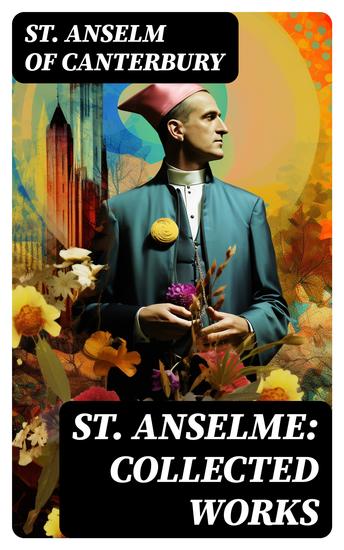
St Anselme: Collected Works - Proslogium Monologium In Behalf of the Fool by Gaunilon & Cur Deus Homo - cover

St Anselme: Collected Works - Proslogium Monologium In Behalf of the Fool by Gaunilon & Cur Deus Homo

St. Anselm of Canterbury

Traduttore Sidney Norton Deane

Casa editrice: DigiCat

  • 0
  • 0
  • 0

Sinossi

In "St. Anselme: Collected Works," the theological and philosophical writings of St. Anselm of Canterbury are brought together in a remarkable anthology that showcases his pioneering ideas in medieval scholarship. Known for his clear and logical prose, Anselm employs a dialectical style that bridges faith and reason, contributing to the development of scholastic thought. This compilation includes his famous arguments for the existence of God, reflections on the nature of atonement, and the essence of truth, embodying the intellectual fervor of the 11th century and influencing generations of thinkers thereafter. St. Anselm, a Benedictine monk and later Archbishop of Canterbury, is revered not only for his theological insights but also for his role in addressing the complexities of faith through rational inquiry. Living during a time of considerable upheaval in both church and state, Anselm's reflections were shaped by a deep commitment to understanding divine mysteries while engaging with contemporary philosophical questions, a duality that resonates throughout his collected works, marking him as a seminal figure in Christian theology. "St. Anselme: Collected Works" is an essential read for anyone seeking to delve into the foundations of Christian philosophy and theology. Through Anselm's compelling arguments and profound insights, readers will find an invitation to explore the intersection of faith, reason, and existential inquiry, making this collection a significant contribution to both historical and contemporary discourse.
Disponibile da: 23/11/2023.
Lunghezza di stampa: 351 pagine.
Altri libri che potrebbero interessarti

  • The Situation and the Story - The Art of Personal Narrative - cover

    The Situation and the Story -...

    Vivian Gornick

    • 0
    • 0
    • 0
    All narrative writing must pull from the raw material of life a tale that will shape experience, transform event, deliver a bit of wisdom. In a story or a novel the "I" who tells this tale can be, and often is, an unreliable narrator but in nonfiction the reader must always be persuaded that the narrator is speaking truth. 


    How does one pull from one's own boring, agitated self the truth-speaker who will tell the story a personal narrative needs to tell? That is the question The Situation and the Story asks—and answers. Taking us on a tour of some of the best memoirs and essays of the past hundred years, Gornick traces the changing idea of self that has dominated the century, and demonstrates the enduring truth-speaker to be found in the work of writers as diverse as Edmund Gosse, Joan Didion, Oscar Wilde, James Baldwin, or Marguerite Duras. 


    This book is itself a model of the lucid intelligence that has made Gornick one of our most admired writers of nonfiction. In it, she teaches us to write by teaching us how to read: how to recognize truth when we hear it in the writing of others and in our own.
    Mostra libro
  • Proofs of a Conspiracy - Against all the Religions and Governments of Europe Carried on in the Secret Meetings of Freemasons Illuminati and Reading Societies - cover

    Proofs of a Conspiracy - Against...

    John Robison

    • 0
    • 0
    • 0
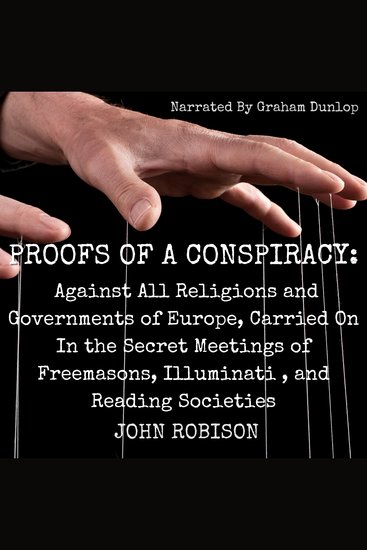
    Proofs of a Conspiracy was written by John Robison, a Scottish professor, to warn Britain and other kingdoms that the forces which toppled the French monarchy and started The Terror were still active. In his book, Robison traced the story of the 1776 founding of the Bavarian Illuminati by Adam Weishaupt, a professor at Ingolstadt and the suppression of the order by the royal and church authorities of Bavaria in 1785. The Illuminists went underground all over Europe and used existing Masonic lodges or set up their own as a cover for their activities. In Paris, the Duc d'Orleans headed the Illuminist front called the Grand Orient Lodge, his base to conspire against the ruling House of Bourbon. The English and Scottish lodges were generally apolitical many worked actively to keep out Illuminists as insincere applicants, but Robison maintained that some continental lodges remained hotbeds of revolutionary plotting, and therefore dangerous, at the time he wrote. Robison was a contemporary and collaborator with James Watt (with whom he worked on an early steam car), contributor to the 1797 Britannica, professor of philosophy at the University of Edinburgh, and inventor of the siren. Although Robison was very much an advocate of science and rationalism, he became an ardent monarchist later in life due to his disillusionment with the French Revolution. In Proofs of a Conspiracy, Robison laid the groundwork for modern conspiracy theorists by implicating the Bavarian Illuminati as responsible for the excesses of the French Revolution. The Bavarian Illuminati had an inner core of true believers, who secretly held radical anti-monarchist and possibly proto-feminist views, at that time considered beyond the pale. They recruited by infiltrating the numerous Freemasonic groups which were active at the time on the continent.
    Mostra libro
  • Constantine the Great - The Roman Emperor Who Made Christianity the Main Religion - cover

    Constantine the Great - The...

    Kelly Mass

    • 0
    • 0
    • 0
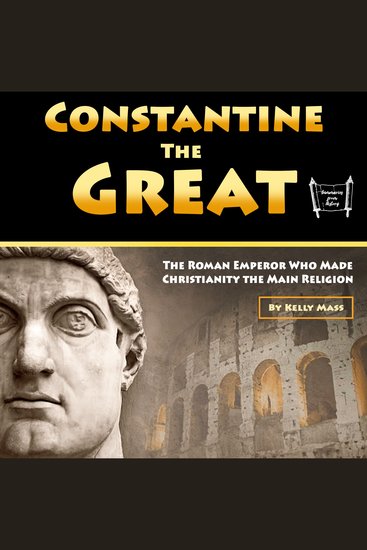
    Constantine I, often called Constantine the Great, was one of the most significant emperors of ancient Rome, reigning from 306 to 337 AD. Born in Naissus, in the province of Dacia Mediterranea (modern-day Niš, Serbia), he was the son of Flavius Constantius, a Roman army officer and a prominent figure in the Tetrarchy, and Helena, a woman of humble Greek origins. His father's position as one of the four emperors in the Tetrarchy was instrumental in shaping Constantine's early life and military career. Under emperors Diocletian and Galerius, Constantine demonstrated his military prowess, initially fighting against barbarian tribes and the Persians in the eastern provinces. In 305 AD, he was summoned to the West to aid his father in campaigns in Britain, where he earned further distinction. 
    Following the death of his father in 306 AD, Constantine’s soldiers declared him emperor at Eboracum (modern York, England). Over the next two decades, he would overcome rival emperors, such as Maxentius and Licinius, in a series of civil wars, eventually becoming the sole ruler of the Roman Empire by 324 AD. His reign marked a period of significant transformation, both militarily and administratively. 
    To strengthen the empire, Constantine initiated a series of reforms. He reorganized the imperial administration, separating civil and military powers to create a more efficient system of governance. Acknowledging the need for economic stability, he introduced the solidus, a new gold coin that helped curb inflation. This currency would become the standard for Byzantine and European economies for nearly a millennium. He also restructured the Roman army, creating specialized units that could respond swiftly to internal threats and barbarian invasions.
    Mostra libro
  • Understanding Human Evolution - cover

    Understanding Human Evolution

    Ian Tattersall

    • 0
    • 0
    • 0
    Human life, and how we came to be, is one of the greatest scientific and philosophical questions of our time. This compact and accessible book presents a modern view of human evolution. Written by a leading authority, it lucidly and engagingly explains not only the evolutionary process, but the technologies currently used to unravel the evolutionary past and emergence of Homo sapiens. By separating the history of palaeoanthropology from current interpretation of the human fossil record, it lays numerous misconceptions to rest, and demonstrates that human evolution has been far from the linear struggle from primitiveness to perfection that we've been led to believe. It also presents a coherent scenario for how Homo sapiens contrived to cross a formidable cognitive barrier to become an extraordinary and unprecedented thinking creature. Understanding Human Evolution is for anyone interested in the complex and tangled story of how we came to be.
    Mostra libro
  • A Rare Recording of Ian Fleming and Raymond Chandler - cover

    A Rare Recording of Ian Fleming...

    Ian Fleming, Raymond Chandler

    • 0
    • 0
    • 0
    Ian Lancaster Fleming (May 28, 1908 to August 12, 1964) was an English writer, best known for his James Bond series of spy novels, and his only children's novel, Chitty-Chitty-Bang-Bang. Fleming came from a wealthy family connected to the merchant bank Robert Fleming & Co., and his father was the Member of Parliament (MP) from 1910 until his death on the Western Front in 1917. Fleming himself was heavily involved in British intelligence during World War II. Raymond Thornton Chandler (July 23, 1888 to March 26, 1959) was an American novelist and screenwriter. His first novel, The Big Sleep, was published in 1939. All but one of his eight novels have been made into motion pictures. Chandler had an immense stylistic influence on American popular literature, including pioneering the hardboiled school of detective fiction. The protagonist of his novels, Philip Marlowe, is considered by some to be synonymous with "private detective." The following recording is from the late 1950s.
    Mostra libro
  • Bombing Hitler's Hometown - The Untold Story of the Last Mass Bomber Raid of World War II in Europe - cover

    Bombing Hitler's Hometown - The...

    Mike Croissant

    • 0
    • 0
    • 0
    In April 1945, Linz was one of Nazi Germany's most vital assets. It was a crucial transportation hub and communications center, with railyards brimming with war materiel destined for the front lines. Linz was also the town Hitler claimed as home and had long intended to remake as the cultural capital of Europe, filling its planned Fuehrermuseum with world-famous art stolen from his conquered territories. 


    Inevitably, Linz was also one of the most heavily defended targets remaining in Europe. The airmen of the Fifteenth Air Force were a mix of seasoned veterans and newcomers. As their mission was unveiled in the predawn hours of April 25th, audible groans and muffled expletives passed many lips. The reality of that mission would prove more brutal than any imagined. 


    Drawing on interviews with dozens of America's last surviving World War II veterans, as well as previously unpublished sources, Mike Croissant compellingly relates one of the war's last truly untold stories—a gripping chronicle of warfare, the death of Nazi Germany, and the beginning of the Cold War. It is also a timeless tale of courage and terror, loss and redemption, humanity and savagery.
    Mostra libro