¡Acompáñanos a viajar por el mundo de los libros!
Añadir este libro a la estantería
Grey
Escribe un nuevo comentario Default profile 50px
Grey
Suscríbete para leer el libro completo o lee las primeras páginas gratis.
All characters reduced
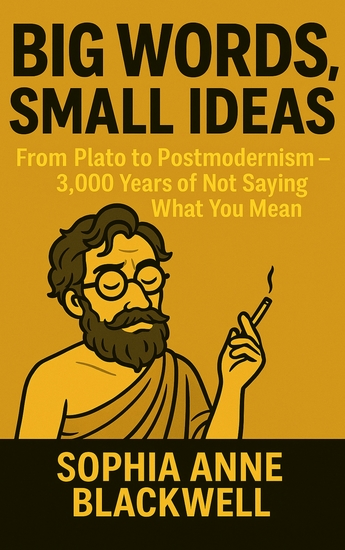
Big Words Small Ideas - From Plato to Postmodernism — 3000 Years of Not Saying What You Mean - cover

Big Words Small Ideas - From Plato to Postmodernism — 3000 Years of Not Saying What You Mean

Sophia Anne Blackwell

Editorial: Cogito Ergo Nope

  • 0
  • 0
  • 0

Sinopsis

If you’ve ever read a philosophy paper and wondered, “Did they really need that many syllables to say absolutely nothing?”—this book is for you.
 
Sophia Anne Blackwell, the wildly irreverent creator of the Cogito Ergo Nope! series, returns with her most hilariously scathing book yet: a no-holds-barred takedown of philosophy’s greatest (and most obscurantist) offenders. From the ancient Greeks who invented making things harder than they need to be, to French theorists who turned not making sense into a career, Big Words, Small Ideas traces the glorious tradition of intellectual smoke and mirrors with biting wit and actual clarity.
 
In these pages, you’ll meet:
 
Plato, who decided the real world was just a sad knockoff of Ideas That Don’t Exist
 
Aristotle, who invented philosophical filing cabinets with seventeen drawers too many
 
Plotinus, who tried to write about the indescribable in several hundred pages
 
Kant, who made thinking about thinking so hard you’d wish you never started
 
Hegel, the man who weaponized run-on sentences
 
Heidegger, who wrote an entire book about Being without explaining what Being means
 
And a whole cast of modern academics who think obscurity = genius
 
With ruthless humor, surprising accuracy, and zero patience for jargon masquerading as depth, Blackwell takes you on a tour through the theater of philosophical absurdity—and dares to ask the forbidden question: What the hell are they actually talking about?
 
Whether you’re a recovering philosophy major, a curious outsider, or just someone who’s tired of pretending to understand Lacan, this book is your guide to 3,000 years of intellectual gaslighting—with jokes.
Disponible desde: 24/08/2025.
Longitud de impresión: 121 páginas.


Otros libros que te pueden interesar

  • A Rare Recording of US Naval Rear Admiral and Computer Pioneer Grace Hopper Volume 1 - cover

    A Rare Recording of US Naval...

    Grace Hopper

    • 0
    • 0
    • 0
    Grace Brewster Hopper (December 9, 1906 to January 1, 1992) was an American computer scientist, mathematician, and United States Navy rear admiral. A pioneer of computer programming, Hopper was the first to devise the theory of machine-independent programming languages and used this theory to develop the FLOW-MATIC programming language and COBOL, an early high-level programming language still in use today. She was also one of the first programmers on the Harvard Mark I computer. She is credited with writing the first computer manual, "A Manual of Operation for the Automatic Sequence Controlled Calculator." The following audio recording is from a 1982 presentation.
    Ver libro
  • The American Operations in WW2: Ardennes-Alsace - 16 December 1944–25 January 1945 - cover

    The American Operations in WW2:...

    U.S. Army Center of Military...

    • 0
    • 0
    • 0
    World War II was the largest and most violent armed conflict in the history of mankind. Highly relevant today, World War II has much to teach us, not only about the profession of arms, but also about military preparedness, global strategy, and combined operations in the coalition war against fascism. This book follows military operations of the US Army in France from 16 December 1944 to 25 January 1945. 
    In his political testament Mein Kampf ("My Struggle") Adolf Hitler wrote, "Strength lies not in defense but in attack." Throughout World War II, attempts to gain or regain the initiative had characterized Hitler's influence on military operations. Thus, when the military situation in late 1944 looked darkest on the Western Front, an enemy offensive to redress the balance on the battlefield—and thereby cripple or delay the Allied advance—should have come as no surprise.
    Hitler's great gamble began during the nights of 13, 14, and 15 December, when the initial assault force of German armor, artillery, and infantry gradually staged forward to attack positions along the Belgian-German-Luxembourg border. This mustered force, with more than 200,000 men in thirteen infantry and seven panzer divisions and with nearly 1,000 tanks and almost 2,000 guns, deployed along a front of 60 miles—its operational armor holdings equaling that on the entire Eastern Front. Five more divisions moved forward in a second wave, while still others, equipped with at least 450 more tanks, followed in reserve.
    On the Allied side the threatened American sector appeared quiet. The 15 December daily situation report for the VIII Corps, which lay in the path of two of Hitler's armies, noted: "There is nothing to report." This illusion would soon be shattered.
    Ver libro
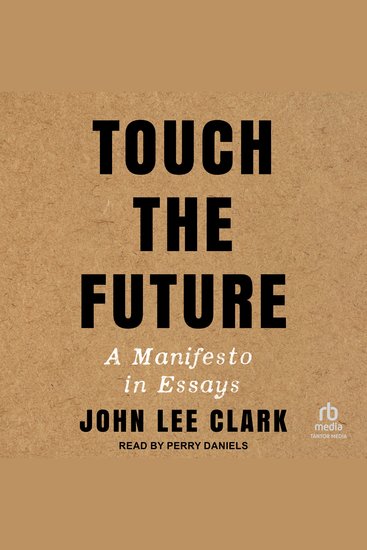
  • Touch the Future - A Manifesto in Essays - cover

    Touch the Future - A Manifesto...

    John Lee Clark

    • 0
    • 0
    • 0
    A revelatory collection of essays on the DeafBlind experience, and a manifesto on the power and untapped potential of touch. 


    Born Deaf into an ASL-speaking family and blind by adolescence, John Lee Clark learned to embrace the possibilities of his tactile world. He is on the frontlines of the Protactile movement, which gave birth to an unprecedented tactile language and a way of life based on physical connection. 


    In a series of paradigm-shifting essays, Clark reports on seismic developments within the DeafBlind community. In "Against Access," he interrogates the prevailing advocacy for "accessibility" that recreates a shadow of a hearing-sighted experience. In the National Magazine Award–winning "Tactile Art," he describes his relationship to visual art and encounters with tactile sculpture. He advocates for "Co-Navigation," a new way of guiding that respects DeafBlind agency and offers a brief history of the term "DeafBlind." As warm and witty as he is radical and inspiring, Clark welcomes listeners into the exciting Protactile landscape and celebrates the hidden knowledge that can be gained through touch.
    Ver libro
  • Extra Credit! - 8 Ways to Turn Your Education Expertise into Passion Projects and Extra Income - cover

    Extra Credit! - 8 Ways to Turn...

    Naomi O’Brien, LaNesha Tabb

    • 0
    • 0
    • 0
    In Extra Credit! 8 Ways to Turn Your Education Expertise into Passion Projects and Extra Income, a team of accomplished educators and content creators delivers an illuminating and engaging handbook for educators who seek to bring in extra income with their professional and personal talents. In the book, you'll explore a wide variety of potential income streams, including leveraging social media platforms, creating educational resources, writing, and online courses, just to name a few! 


    You'll also find out how educators are finding purpose and meaning in their various side hustles. You'll discover: 


    ● Outlets for your passion for teaching that go beyond the classroom and tap into new and exciting markets 


    ● Strategies for monetizing your interests and hobbies to create impressive and diverse income streams 


    ● Exciting ways to contribute to education that aren't limited to teaching in the classroom, like merchandising, professional development workshops, and resource creation 


    An essential for professors, teachers, teaching assistants, and other educators, Extra Credit! will earn a place in the libraries of school administrators, former educators, and other professionals.
    Ver libro
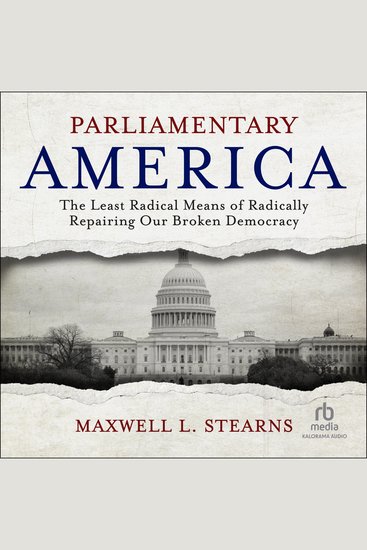
  • Parliamentary America - The Least Radical Means of Radically Repairing Our Broken Democracy - cover

    Parliamentary America - The...

    Maxwell L. Stearns

    • 0
    • 0
    • 0
    Americans face increasingly stark choices each presidential election and a growing sense that our government can't solve the nation's most urgent challenges.  Our eighteenth-century system is ill-suited to our twenty-first-century world. Information-age technology has undermined our capacity to face common problems together and turned our democracy upside down, with gerrymanders letting representatives choose voters rather than voters choosing them. In Parliamentary America, Maxwell L. Stearns argues that the solution to these complex problems is a parliamentary democracy. 


    Stearns considers such leading alternatives as ranked choice voting, the national popular vote, and congressional term limits, showing why these can't solve our constitutional crisis. Instead, three amendments—expanding the House of Representatives, having House party coalitions choose the president, and letting the House end a failing presidency based on no confidence—will produce a robust multiparty democracy. 


    Stearns takes listeners on a world tour—England, France, Germany, Israel, Taiwan, Brazil, and Venezuela—showing what works in government, what doesn't, and how to make the best features our own. Genuine party competition and governing coalitions, commonplace across the globe, may seem like a fantasy in the United States. But we can make them a reality.
    Ver libro
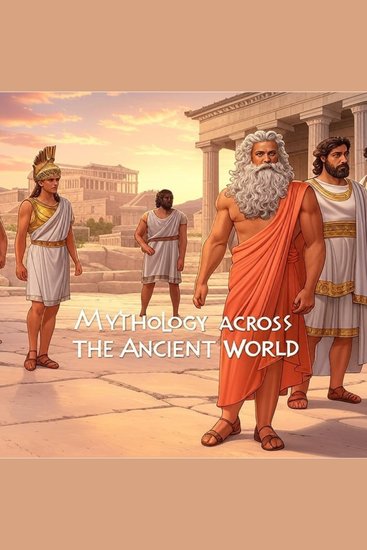
  • Mythology across the Ancient World - The History of Mythological Stories and Rituals in Antiquity - cover

    Mythology across the Ancient...

    Editors Charles River

    • 0
    • 0
    • 0
    Although the Egyptians may not have passed their civilization directly on to later peoples, the key elements that comprised Egyptian civilization, including their religion, early ideas of state, and art and architecture, can be found among other civilizations. For instance, civilizations far separated in time and space, such as China and Mesoamerica, possessed key elements that were similar to those found in ancient Egypt. Indeed, since Egyptian civilization represented some fundamental human concepts, a study of their culture can be useful when trying to understand many other pre-modern cultures.  
    	Today the Mesopotamians and their religion are sources of curiosity, but thousands of years ago, the religion was an integral part of their lives. From their birth to their death, deities surrounded them, and whether their social interactions were on the level of a smaller city or that of a larger nation-state, deities played key roles in the social fabric of their society. Whereas the Israelites were one people who worshipped a single god, Babylon had a succession of different dynasties derived from many ethnic groups, and since Babylonian religion originated from a plethora of sources, there were very few elements that maintained primacy throughout the city’s history. For example, the Sumerian influence resulted in citizens worshipping many deities in the city, but those numbers were reduced after the Amorites came to power.  
    	One of the reasons Zeus remains one of the most recognizable gods in history is because of the spread of his influence. Due to the conquests of Alexander the Great, Zeus was brought along with other elements of Hellenization to Egypt and the Near East, and a few centuries later, Rome all but adopted him as their own chief god, Jupiter. From there, he was exported around the Roman Empire and fused with numerous other local gods in the process.
    Ver libro