Junte-se a nós em uma viagem ao mundo dos livros!
Adicionar este livro à prateleira
Grey
Deixe um novo comentário Default profile 50px
Grey
Assine para ler o livro completo ou leia as primeiras páginas de graça!
All characters reduced
Exercises of Fluidodynamics and Thermodynamics - cover
LER

Exercises of Fluidodynamics and Thermodynamics

Simone Malacrida

Editora: BookRix

  • 0
  • 0
  • 0

Sinopse

In this book, exercises are carried out regarding the following physics topics:fluid theory and fluid dynamicscalorimetry and heat transferthermodynamics and laws of thermodynamicskinetic theory of gases
Disponível desde: 22/12/2023.
Comprimento de impressão: 13 páginas.

Outros livros que poderiam interessá-lo

  • The Sugar Code - Defeating Diabetes and Its Hidden Link to Alzheimer's - cover

    The Sugar Code - Defeating...

    Alice Jackson

    • 0
    • 0
    • 0
    What if the disease threatening your body could also be quietly stealing your mind? 
    For decades, doctors have treated diabetes and Alzheimer’s as separate battles. But groundbreaking research reveals a chilling truth: these two conditions are deeply connected — and the same processes that disrupt blood sugar can also sabotage your brain’s ability to think, remember, and thrive. 
    In The Sugar Code, you’ll uncover: 
    ·        The surprising science behind how insulin resistance affects the brain — and why some experts now call Alzheimer’s “Type 3 Diabetes.” 
    ·        Proven, practical strategies to prevent, manage, and even reverse the course of diabetes, without gimmicks or dangerous fads. 
    ·        How lifestyle, nutrition, and targeted medical advances can protect both your body and your memory. 
    ·        The hidden early-warning signs your brain may already be struggling, and what you can do right now to change its future. 
    Drawing on the latest global research, compelling patient stories, and decades of medical insight, The Sugar Code offers a clear, empowering plan to safeguard your health and extend not just your lifespan, but also your mindspan. 
    Your brain and body are speaking the same biochemical language. It’s time to learn how to decode it… and take back control of your future.
    Ver livro
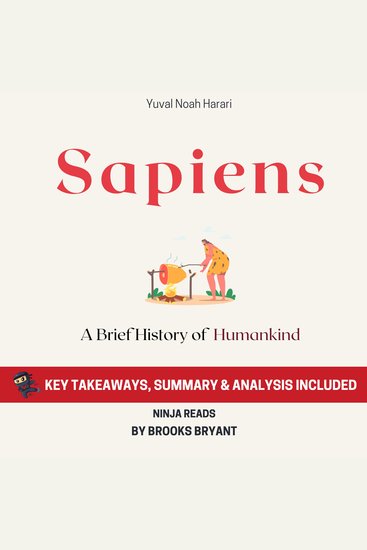
  • Summary: Sapiens - A Brief History of Humankind by Yuval Noah Harari: Key Takeaways Summary and Analysis - cover

    Summary: Sapiens - A Brief...

    Brooks Bryant

    • 0
    • 0
    • 0
    Disclaimer: This is not the official book. This is a summary, and it does not accompany the official text. 
    Embark on a transformative journey through the history of humanity with this succinct and insightful summary of Yuval Noah Harari's acclaimed work, "Sapiens." Distilling the essence of Harari's groundbreaking narrative, this guide invites readers to explore the creation, evolution, and impact of Homo sapiens on the world. 
    "Sapiens" delves deep into our past, tracing the steps of humanity from the appearance of modern cognition about 70,000 years ago to our current dominance as the sole surviving species of human on Earth. Harari’s work stands out for its integration of history and biology, challenging conventional narratives and encouraging readers to consider humanity’s role in the global ecosystem, the rise and fall of empires, and the potential futures that await us. 
    This summary encapsulates the key themes and insights of "Sapiens," offering a clear and concise exploration of how biology and history have intertwined to shape our understanding of what it means to be human. From examining our impact on the planet to contemplating the ethical implications of our increasing power to design the world and ourselves, this guide provides a thought-provoking overview of Harari’s revolutionary ideas. 
    Ideal for fans of Jared Diamond, James Gleick, Matt Ridley, Robert Wright, and Sharon Moalem, this summary provides a doorway to understanding humanity's past, present, and potential future. Join us on a journey of discovery and debate as we delve into the questions that define our species and consider the paths that lie ahead. 
    This is a summary, and it does not accompany the official text of "Sapiens" by Yuval Noah Harari.
    Ver livro
  • Time Will Tell - Memories of the Future 2082 - cover

    Time Will Tell - Memories of the...

    Holly von Bonin

    • 0
    • 0
    • 0
    Explore mind-bending tales from real-life time travelers who have experienced moments beyond our reality. These intriguing narratives not only entertain but also raise questions about the fabric of time itself, captivating both skeptics and believers alike. You'll find yourself immersed in experiences that challenge your understanding of existence and perception.
    Ver livro
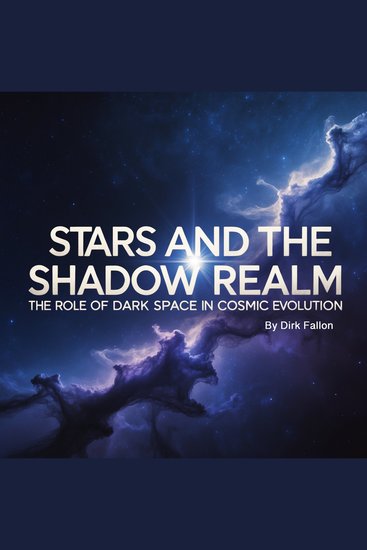
  • Stars and the Shadow Realm - The Role of Dark Space in Cosmic Evolution - cover

    Stars and the Shadow Realm - The...

    Dirk Fallon

    • 0
    • 0
    • 0
    The cosmos, an endless expanse of stars, planets, and unknown realms, is far more complex than it appears. Humanity has long gazed at the night sky, wondering about the vastness of space and the mysteries it holds. From ancient civilizations to modern scientific advancements, we have strived to understand the fundamental nature of the universe. Yet, the more we learn, the more we realize how little we truly know. The universe is constantly evolving, and its story is a tale of creation, destruction, and the delicate balance that sustains it all. 
    The birth of stars marks the beginning of cosmic evolution. Stars form from vast clouds of gas and dust, which collapse under their own gravity, eventually igniting nuclear fusion in their cores. This process is the foundation of stellar life, and it is responsible for the creation of all the elements we find on Earth. Stars shine brightly, providing energy and light to their surrounding environments, but their life cycles are fleeting. Over millions or even billions of years, stars undergo dramatic changes, from the fusion of lighter elements to the eventual formation of heavier ones. These transformations have profound implications for the surrounding space and the evolution of galaxies. 
    The concept of dark space is equally crucial to understanding the cosmos. Dark space, often associated with dark matter and dark energy, is an invisible component of the universe that does not emit or interact with electromagnetic radiation. While we cannot directly observe dark space, scientists have inferred its existence by studying the gravitational effects it has on visible matter. It is believed that dark space plays a vital role in the overall structure and expansion of the universe. In many ways, it serves as a backdrop to the more visible phenomena we observe, yet its influence is undeniable. Dark space not only shapes the formation of galaxies but also dictates their movement and evolution over time.
    Ver livro
  • The New World on Mars - What We Can Create on the Red Planet - cover

    The New World on Mars - What We...

    Robert Zubrin

    • 0
    • 0
    • 0
    When Robert Zubrin published his classic book The Case for Mars a quarter century ago, setting foot on the Red Planet seemed a fantasy. Today, manned exploration is certain, and as Zubrin affirms in The New World on Mars, so too is colonization. 


    We will settle on Mars, and with our knowledge of the planet, analyzed in depth by Dr. Zubrin, we will utilize the resources and tackle the challenges that await us. What we will we build? Populous Martian city-states producing air, water, food, power, and more. Zubrin's Martian economy will pay for necessary imports and generate income from varied enterprises, such as real estate sales—homes that are airtight and protect against cosmic space radiation, with fish-farm aquariums positioned overhead, letting in sunlight and blocking cosmic rays while providing fascinating views. Zubrin even predicts the Red Planet customs, social relations, and government that will overcome traditional forms of oppression to draw Earth immigrants. 


    With all of this in place, Zubrin's Red Planet will become a pressure cooker for invention, benefiting humans on Earth, Mars, and beyond. We can create this magnificent future, making life better, less fatalistic. The New World on Mars proves that there is no point killing each other over provinces and limited resources when, together, we can create planets.
    Ver livro

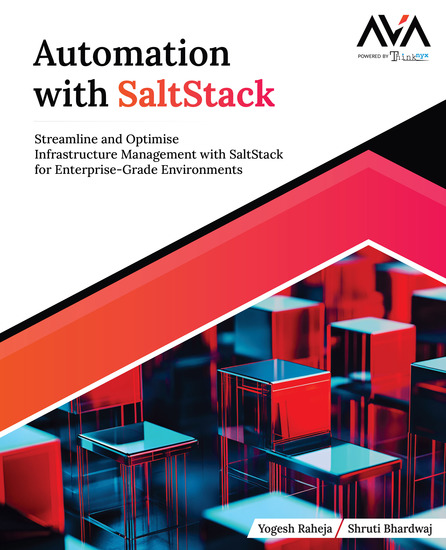
  • Automation with SaltStack - Streamline and Optimise Infrastructure Management with SaltStack for Enterprise-Grade Environments - cover

    Automation with SaltStack -...

    Yogesh Raheja

    • 0
    • 0
    • 0
    Empower Your Infrastructure with SaltStack Automation. 
    Book Description
    Unleash the full potential of SaltStack to transform your infrastructure management and automation practices. This book is crafted to provide clear, step-by-step guidance, ensuring you can apply SaltStack's capabilities to automate and streamline your workflows effectively. 
    Starting with the basics, the book introduces the fundamentals and SaltStack framework, guiding you through configuring and managing infrastructure with this versatile tool. Detailed chapters cover the architecture of SaltStack, various deployment models, and the prerequisites for setting up SaltStack masters and minions. You will learn how to effectively manage modules and perform remote execution tasks, mastering state file management and highstate concepts along the way. 
    Dive deep into advanced features such as grains for targeting and customizing data, Jinja templates for dynamic configuration, and multi-environment infrastructure management. Understand the critical role of pillars in SaltStack, their configuration, and their importance in managing sensitive data and configuring the state tree. 
    With a focus on practical application, this book includes real-world examples and scenarios to help you implement what you have learned. You will discover industry best practices for optimal configuration, deployment, maintenance, and scaling of SaltStack-managed infrastructure, ensuring your automation processes are efficient and robust. 
    
    Table of Contents
    
    1. Introduction to SaltStack and Its Framework
    2. Architecture and SaltStack Deployment
    3. Modules and Remote Execution with SaltStack
    4. State File Management
    5. HighState and Salt Tree
    6. Grains, Jinja Templates, and Environments
    7. Pillars
    8. The Salt Event-Driven Infrastructure
    9. Masterless and Agentless Salt   
    Index
    Ver livro