Begleiten Sie uns auf eine literarische Weltreise!
Buch zum Bücherregal hinzufügen
Grey
Einen neuen Kommentar schreiben Default profile 50px
Grey
Jetzt das ganze Buch im Abo oder die ersten Seiten gratis lesen!
All characters reduced
Drugging a Nation - The Story of China and the Opium Curse - cover

Drugging a Nation - The Story of China and the Opium Curse

Samuel Merwin

Verlag: DigiCat

  • 0
  • 0
  • 0

Beschreibung

In "Drugging a Nation," Samuel Merwin presents a gripping exploration of the socio-political landscape shaped by addiction and the pharmaceutical industry in early 20th-century America. Through vivid narrative and incisive critique, Merwin employs a mix of realism and satire to capture the grave implications of widespread drug use and societal complacency. His incisive prose invites readers to dissect the paradoxes of a nation in which pain relief coexists with deepening social malaise, revealing the intricate interplay between personal suffering and institutional complicity. The work serves as a profound reflection on the collective psyche of a nation grappling with its own dependencies. Samuel Merwin, an influential author and playwright of his time, was intimately acquainted with the complexities of addiction and its impacts on society. His experiences in the burgeoning literary scene and connections to contemporary social movements informed his critical stance towards established norms. Merwin's background in journalism further equipped him to investigate the undercurrents of societal issues, notably the narcotics crisis that plagued America, thus shaping his imperative to write this cautionary tale. Merwin's "Drugging a Nation" is an essential read for those interested in the intersections of history, society, and personal narratives. It provides a compelling lens into the era's struggles with substance misuse and serves as a timeless reminder of the consequences of ignoring societal ailments. This book not only enriches the historical understanding of addiction but also challenges contemporary readers to reflect on the ongoing issues surrounding drugs and public health.
Verfügbar seit: 10.08.2022.
Drucklänge: 113 Seiten.

Weitere Bücher, die Sie mögen werden

  • Mrs Balfame - cover

    Mrs Balfame

    Gertrude Atherton

    • 0
    • 0
    • 0
    Enid Belfame: 42 years old, 22 of them as a married woman; eminently respectable; founder of The Friday Club; small town dignitary; a paragon of virtue. But does she have what it takes to commit murder? And will the young and handsome Dwight Rush benefit if she does?
    Zum Buch
  • Black Heroes: Inspiring Stories of Resilience Courage and Triumph Against Adversity - cover

    Black Heroes: Inspiring Stories...

    Ahoy Publications

    • 0
    • 0
    • 0
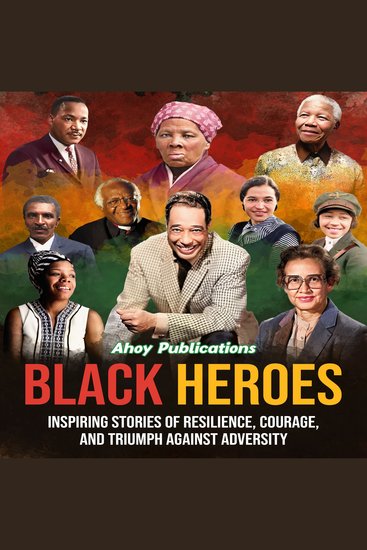
    If You Want to Be Inspired by Black Heroes Who Shaped History, Then Keep Reading... 
    For humanity to see where it is going, it must look back to the past. Exploring these stories of resilience, determination, and brilliance awakens a deep drive within to achieve. 
    This audiobook offers an enriching journey through the lives of remarkable individuals whose bravery and contributions have left an indelible mark on the world. 
    Here's what you'll discover inside these pages:Inspirational Journeys: Relive the awe-inspiring lives of figures like Harriet Tubman and Nelson Mandela.Brilliant Minds: Learn about Katherine Johnson's stellar contributions to space travel.Cultural Icons: Explore Duke Ellington's jazz innovations that defined an era.Defiant Leaders: Uncover the strategic brilliance of military leaders and activists who fought for justice.Resilient Spirits: Feel the power of stories from those who overcame immense challenges.Voices of Change: Hear the rallying cries of Martin Luther King Jr. and other advocates for equality.Peaceful Warriors: Discover the peaceful resistances led by icons like Desmond Tutu.Legacy of Innovation: See how George Washington Carver revolutionized agriculture. 
    "Black Heroes" is a celebration of resilience and the human spirit. Each chapter paints a vivid picture of the battles fought and the victories won by these courageous individuals. It offers not only a history lesson but also a source of motivation to stand strong, dream big, and push boundaries. 
    Grab your copy today and discover new heroes that reflect the enduring spirit and potential within themselves.
    Zum Buch
  • Summary: The Devil in the White City - Murder Magic and Madness at the Fair That Changed America by Erik Larson: Key Takeaways Summary & Analysis Included - cover

    Summary: The Devil in the White...

    Brooks Bryant

    • 0
    • 0
    • 0
    Disclaimer: This is not the official book, but a summary & it does not accompany the official. 
    Architect Daniel H. Burnham faces the mammoth task of constructing the fairground, a utopian city which would come to be known as "The White City." His vision of grandeur, innovation, and beauty aims to surpass the Parisian Eiffel Tower and establish America's cultural ascendancy in the world. Through herculean efforts, Burnham coordinates a vast number of workers, battling time constraints, tragedy, and countless other hurdles to turn his dream into reality. 
    In contrast, lurking in the shadows of this shimmering facade, Dr. H. H. Holmes utilizes the fair's attractions to lure victims into his specially constructed "Murder Castle," a horrifying structure equipped with secret passageways, gas chambers, and a crematorium. His charming demeanor and ruthless intelligence facilitate a series of grim murders, marking him as one of America's first recorded serial killers. 
    As you journey through our summary, explore the dual narratives that paint a vivid picture of the time period, encapsulating the heights of human achievement and the dark underbelly of its sins. Larson's meticulous research and mesmerizing storytelling breathe life into a bygone era, delving into the minds of the men who shaped it — one with a vision of beauty, the other with a vision of horror. 
    Witness the transformative period in American history, where unprecedented feats of ingenuity stood side by side with unimaginable cruelty. "The Devil in the White City" unveils the thin line between genius and madness, progress and destruction, that defines humanity.
    Zum Buch
  • The Battle of Tours - Defending Christendom - cover

    The Battle of Tours - Defending...

    Harris Ropes

    • 0
    • 0
    • 0
    The Umayyad Caliphate emerged as one of the most powerful empires in the early Islamic world, expanding its influence across vast territories from the Middle East to North Africa and into Europe. Following the death of Prophet Muhammad, the Islamic world underwent a rapid transformation, with the Rashidun Caliphs overseeing the initial expansion. However, it was under the Umayyads, beginning in 661 CE, that the Islamic empire reached unprecedented heights, establishing a vast and organized dominion. Their rule was characterized by military conquests, administrative advancements, and cultural integration, making them a formidable force in the medieval world. 
    One of the most defining aspects of Umayyad expansion was its push into Western Europe. After successfully conquering the Iberian Peninsula in 711 CE, the Muslim forces, primarily composed of Berbers and Arabs, established Al-Andalus under the leadership of governors appointed by the Umayyad Caliphate. The conquest of the Visigothic Kingdom was swift, with key victories such as the Battle of Guadalete opening the doors for further advances northward. By the early 8th century, the Umayyads had consolidated control over much of present-day Spain and Portugal, making their presence in Europe a significant political and military reality. 
    As the Umayyads strengthened their hold over Iberia, their attention turned toward the Frankish territories. The Islamic forces, seeking to expand their influence beyond the Pyrenees, launched several incursions into the southern regions of Gaul. These raids, initially aimed at securing wealth and resources, gradually evolved into more ambitious campaigns of territorial expansion. The city of Narbonne fell under Muslim control in 719 CE, serving as a critical stronghold for future campaigns. From there, the Umayyads pushed further into Aquitaine, where they encountered resistance from the local Christian rulers, most notably Duke Odo of Aquitaine.
    Zum Buch
  • Who Do We Choose to Be? Second Edition - Facing Reality Claiming Leadership Restoring Sanity - cover

    Who Do We Choose to Be? Second...

    Margaret J. Wheatley

    • 0
    • 0
    • 0
    In a world we cannot recognize, how do we find a way forward? In this world we do not understand, how do we know what to do? When so little is comprehensible, what is meaningful work? What is genuine contribution? 
     
    Bestselling author Margaret Wheatley has summoned us to be courageous leaders who strengthen community and rely on fully engaged people since her 1992 classic book, Leadership and the New Science, and eight subsequent books. In response to how quickly society is changing and the exponential increase in leadership challenges, this second edition of her latest bestseller is 80% new material. 
     
    How do we see clearly so that we can act wisely? Wheatley brings present reality into clear and troubling focus using multiple lenses of Western and Indigenous sciences, and the historic patterns of collapse in complex civilizations. With gentle but insistent guidance to face reality, she offers us the path and practices to be sane leaders who know how to evoke people's inherent generosity, creativity, and kindness. 
     
    Skillfully weaving science, history, exemplars, poetry, and quotes with stories and practices, Wheatley asks us to be Warriors for the Human Spirit, leaders and citizens who stay engaged, choose service over self, stand steadfast in the midst of crises, and offer our reliable presence of compassion and insight no matter what.
    Zum Buch
  • The Black Man's President - Abraham Lincoln African Americans & the Pursuit of Racial Equality - cover

    The Black Man's President -...

    Michael Burlingame

    • 0
    • 0
    • 0
    In a little-noted eulogy delivered after Lincoln's assassination, Frederick Douglass called the president "emphatically the black man's president," the "first to show any respect for their rights as men." Douglass pointed not just to Lincoln's official acts and utterances, like the Emancipation Proclamation or the Second Inaugural Address, but also to the president's own personal experiences with Black people. 


    But Lincoln's description as "emphatically the black man's president" rests on more than his relationship with Douglass or on his official words and deeds. Lincoln interacted with many other African Americans during his presidency. His unfailing cordiality to them, his willingness to meet with them in the White House, to honor their requests, to invite them to consult on public policy, to treat them with respect whether they were kitchen servants or leaders of the Black community, to invite them to attend receptions, to sing and pray with them in their neighborhoods—all those manifestations of an egalitarian spirit justified the tributes paid to him by Frederick Douglass and other African Americans. 


    Historian David S. Reynolds observed that only by examining Lincoln's "personal interchange with Black people do we see the complete falsity of the charges of innate racism that some have leveled against him over the years."
    Zum Buch