Rejoignez-nous pour un voyage dans le monde des livres!
Ajouter ce livre à l'électronique
Grey
Ecrivez un nouveau commentaire Default profile 50px
Grey
Abonnez-vous pour lire le livre complet ou lisez les premières pages gratuitement!
All characters reduced
The Vanity of Human Wishes (1749) and Two Rambler papers (1750) - cover

The Vanity of Human Wishes (1749) and Two Rambler papers (1750)

Samuel Johnson

Maison d'édition: DigiCat

  • 0
  • 0
  • 0

Synopsis

In "The Vanity of Human Wishes," Samuel Johnson presents a profound exploration of ambition, desire, and the inherent futility of human aspirations. With masterful use of an intricate verse structure and a wealth of classical allusion, Johnson critiques the chaotic pursuit of worldly success and the ephemeral satisfaction it brings. The poem draws heavily on the moral, philosophical, and aesthetic influences of the Augustan age, offering a reflective commentary that resonates with the disillusionment of the human condition. The two Rambler papers, also included, delve into themes of virtue, vice, and the social frictions of his time, showcasing Johnson's adeptness in essayistic prose that seeks to enlighten and entertain simultaneously. Samuel Johnson, an eminent figure in 18th-century English literature, was shaped by his tumultuous early life, including poverty and illness. His pursuit of knowledge led him to become a lexicographer and essayist of unparalleled significance, allowing him to imbue his works with both personal insight and rigorous moral philosophy. His experiences navigating the complexities of society uniquely inform the critical perspective present in both the poem and his essays. This book is essential for readers seeking to engage with the moral weight of Enlightenment thought and its dissection of personal ambition. Johnson's acute observations not only illuminate the foibles of human nature but also provoke deep reflection on the true essence of fulfillment. Encountering Johnson's work is thus an invitation to contemplate the deeper questions of existence in an era still relatable today.
Disponible depuis: 16/09/2022.
Longueur d'impression: 24 pages.

D'autres livres qui pourraient vous intéresser

  • LGBTQ - The Survival Guide for Lesbian Gay Bisexual Transgender and Questioning Teens - cover

    LGBTQ - The Survival Guide for...

    Kelly Madrone

    • 0
    • 0
    • 0
    Fully revised and updated guide with frank, sensitive information for LGBTQ teens, their families, and their allies. 


    LGBTQ is the indispensable resource for lesbian, gay, bisexual, transgender, queer, and questioning teens—and their allies. This fully revised and updated third edition includes current information on LGBTQ terminology, evolving understandings of gender identity and sexual identity, LGBTQ rights, and much more. Other advice covers topics such as coming out, confronting prejudice, getting support, making healthy choices, and thriving in school and beyond. 


    Resources point the way to books and websites with more information, and quotes from LGBTQ teens (and allies) share stories of personal experiences. Created with input from PFLAG, GLSEN, GLAAD, and others, this audiobook is for young people who are beginning to question their sexual orientation or gender identity, those who are ready to work for LGBTQ rights, and those who may need advice, guidance, or reassurance that they are not alone.
    Voir livre
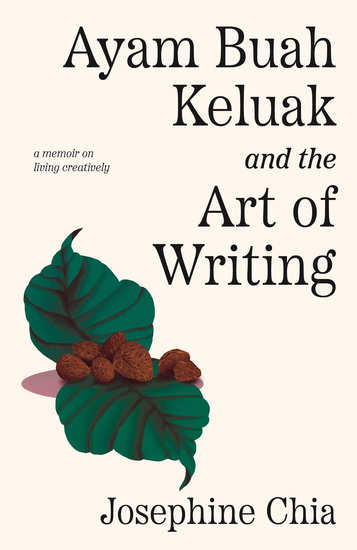
  • Ayam Buah Keluak and the Art of Writing: a memoir on living creatively - cover

    Ayam Buah Keluak and the Art of...

    Josephine Chia

    • 0
    • 0
    • 0
    Your creativity is your gift to the world. 
     
    Award-winning author Josephine Chia illustrates this in Ayam Buah Keluak and the Art of Writing, an account of her own emotional journey of becoming a writer. She believes that creativity is a portal to our inner strengths and talents, and can help us delve deeper into more meaningful experiences. 
     
    Josephine shares the parallels between two of the things she loves most—cooking and writing. As a craft and art, each goes through similar processes of creation. Being a Peranakan, she shares her culture’s quintessential recipe, Ayam Buah Keluak, as a metaphor for her philosophy. 
     
    In this heartbreaking memoir, Josephine bares her soul so that others who are experiencing what she had gone through, will take steps to uplift, and even save, themselves. This book is her gift to them. 
     
    An inspiring read for anyone looking to delve deeper into living fully and creatively.
    Voir livre
  • Unsolved Mysteries - Uncovering the World's Most Puzzling Cases (2 in 1) - cover

    Unsolved Mysteries - Uncovering...

    John Harpoon

    • 0
    • 0
    • 0
    This book consists of two titles: 
    - The Kraken: The Kraken, a legendary sea monster whose name evokes images of terror and fascination, has captivated the imaginations of people for centuries. First emerging from the shadows of Scandinavian folklore, this giant creature—often described as a massive octopus or squid—has become one of the most iconic symbols of the unknown depths of the ocean. The allure of the Kraken lies in its mysterious nature, its ability to stir both fear and wonder, and the enduring question: is it merely a myth, or could there be some truth behind the legend? 
    - The World's Youngest Criminal Genius: In the annals of crime, there are few figures as captivating or as puzzling as Michael McCrudden, often dubbed "The World's Youngest Criminal Genius." This title, given by the media and sensationalized through various reports, paints a picture of a brilliant, almost calculating young mind who orchestrated elaborate criminal schemes before reaching adulthood. But who was Michael McCrudden really, and what drove him to the heights of criminality at such a tender age? The concept of a "criminal genius" is fraught with paradoxes. On one hand, it invokes admiration for the ingenuity behind complex scams and heists, while on the other, it raises questions about morality, ethics, and the law. McCrudden’s story is one of talent gone awry, where a sharp intellect that could have achieved greatness in legitimate fields was instead channeled into subversive and illegal activities. His life forces us to grapple with uncomfortable truths about how society sometimes rewards intelligence in the wrong contexts.
    Voir livre
  • Uninhabitable Earth The: Book Summary & Analysis - cover

    Uninhabitable Earth The: Book...

    Briefly Summaries

    • 0
    • 0
    • 0
    This is a concise summary and analysis of The Uninhabitable Earth, by David Wallace-Wells.
     
    It is not the original book and is not affiliated with or endorsed by David Wallace-Wells.
     
    Ideal those seeking a quick and insightful overview.
     
    The Uninhabitable Earth presents a stark and urgent look at the consequences of climate change, exploring the devastating impact it will have on the planet if current trends continue. From extreme weather events to economic collapse, the book paints a chilling picture of a world plagued by rising temperatures, rising seas, and widespread ecological destruction. It urges immediate action to prevent the most catastrophic outcomes, urging readers to confront the reality of climate change and its global implications.
    Voir livre
  • Lady Pamela Berry - cover

    Lady Pamela Berry

    Harriet Cullen

    • 0
    • 0
    • 0
    This is a biography lightened with the intimate tone of a social memoir, about a woman who was both a bystander and protagonist through some fifty years of twentieth-century British history. Pamela Berry was the daughter of the buccaneering and brilliant politician and lawyer, FE Smith, the first Earl of Birkenhead, and married the son of another self-made man, William Berry from South Wales, who became Viscount Camrose and the owner of a group of national newspapers, including the Daily Telegraph. She had an unusually glamorous and precocious childhood, spoiled by her adoring father, and much photographed by Cecil Beaton. In her prime she used her position as a newspaper proprietor's wife to become the most famous political and press hostess of her generation, harnessing her beauty and wit to influence successive governments, and was accused of wielding 'petticoat power' during the Suez crisis. She had a decade-long affair with Malcolm Muggeridge, became a vigorous promoter of British fashion, dragging it out of the dowdy fifties, and in later life was active in the museum world.
    
    
    Harriet Cullen has opened a window back into the remarkable story of her mother's life from a rich cache of family diaries and letters, interweaving them with many other unpublished sources. It is revealing, in turns scathing and admiring, but always entertaining.
    Voir livre
  • World War II in 1941: The History of the War’s Most Pivotal Year - cover

    World War II in 1941: The...

    Editors Charles River

    • 0
    • 0
    • 0
    At the beginning of 1941, it was unclear whether the Allies would be able to remain in the war for much longer. British Prime Minister Winston Churchill had already immortalized the men of the Royal Air Force with one of the West’s most famous war-time quotes, but the potential of a German invasion of Britain still loomed. With the comfort of hindsight, historians now suggest that the picture was actually more complex than that, but the Battle of Britain, fought throughout the summer and early autumn of 1940, was unquestionably epic in scope.  
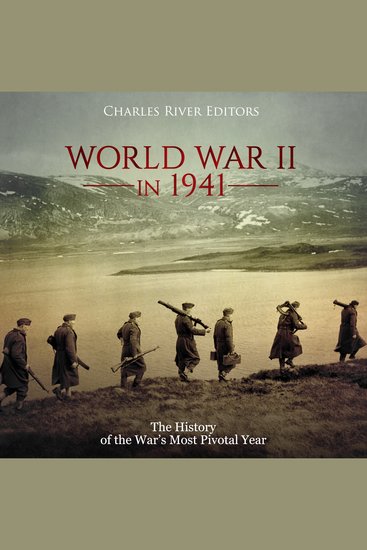
    In the warm predawn darkness of June 22, 1941, 3 million men waited along a front hundreds of miles long, stretching from the Baltic coast of Poland to the Balkans. Ahead of them in the darkness lay the Soviet Union, its border guarded by millions of Red Army troops echeloned deep throughout the huge spaces of Russia. This massive gathering of Wehrmacht soldiers from Adolf Hitler's Third Reich and his allied states – notably Hungary and Romania – stood poised to carry out Operation Barbarossa, Hitler's surprise attack against the country of his putative ally, Soviet dictator Joseph Stalin. 
    All Americans are familiar with the “day that will live in infamy.” At 9:30 a.m. on Sunday, December 7, 1941, Pearl Harbor, the advanced base of the United States Navy’s Pacific Fleet, was ablaze. It had been smashed by aircraft launched by the carriers of the Imperial Japanese Navy. All eight battleships had been sunk or badly damaged, 350 aircraft had been knocked out, and over 2,000 Americans lay dead. Indelible images of the USS Arizona exploding and the USS Oklahoma capsizing and floating upside down have been ingrained in the American conscience ever since. In less than an hour and a half the Japanese had almost wiped out America’s entire naval presence in the Pacific.
    Voir livre