¡Acompáñanos a viajar por el mundo de los libros!
Añadir este libro a la estantería
Grey
Escribe un nuevo comentario Default profile 50px
Grey
Suscríbete para leer el libro completo o lee las primeras páginas gratis.
All characters reduced
The red terror in Russia - cover

The red terror in Russia

S. P. Melʹgunov

Traductor C. J. Hogarth

Editorial: Good Press

  • 0
  • 0
  • 0

Sinopsis

S. P. Melʹgunov's The Red Terror in Russia is a documentary indictment of Bolshevik repression during the Russian Civil War, tracing the emergence of state violence, summary executions, hostage-taking, and the machinery of the Cheka. Written in a sober yet morally charged prose, the book combines reportage, testimony, and political analysis, situating terror not as an accidental excess but as a structural feature of revolutionary rule. As an early émigré account, it occupies an important place in the historiography of Soviet violence and anti-Bolshevik witness literature. Melʹgunov (1879–1956) was a Russian historian, public intellectual, and socialist of the populist tradition whose opposition to Bolshevik authoritarianism profoundly shaped his work. Arrested after the Revolution and later expelled from Soviet Russia, he wrote from exile with both the archival instincts of a historian and the urgency of a survivor of political upheaval. His background in Russian political history and his firsthand knowledge of revolutionary circles gave him unusual authority in documenting the terror he believed had betrayed the ideals of liberation. This is an essential book for readers interested in revolutionary violence, Soviet history, and the ethics of political power. Though written from a clear anti-Bolshevik standpoint, it remains invaluable as a foundational witness text and a stark meditation on how utopian movements can harden into systems of coercion.
Disponible desde: 29/06/2026.
Longitud de impresión: 237 páginas.

Otros libros que te pueden interesar

  • The Virtues of Captain America 2nd Edition - Modern-Day Lessons on Character from a World War II Superhero - cover

    The Virtues of Captain America...

    Mark D. White

    • 0
    • 0
    • 0
    In The Virtues of Captain America, philosopher and long-time comics fan Mark D. White shows us that this fictional superhero's "old-fashioned" moral code is exactly what we need today to restore kindness and respect in our personal and civic lives. 


    Now in its second edition, The Virtues of Captain America is updated to include all the new developments in Captain America's saga. This edition also offers new material on Sam Wilson—formerly Captain America's partner the Falcon who recently became Captain America himself—and how his interpretation of the role compares to Steve Rogers's. 


    The Virtues of Captain America examines the moral and political philosophy behind eighty years of Captain America comics and movies; demonstrates that the core principles and judgment exhibited by Captain America in the 1940s remain relevant in the twenty-first century; and illustrates how Captain America stands for the basic ideals of America, not its politics or government. 
     
    The second edition of The Virtues of Captain America remains a must-listen for everyone wanting to make ethical decisions in complex real-world situations and tackle the personal and political issues of today with integrity and respect.
    Ver libro
  • Critical AI in K-12 Classrooms - A Practical Guide for Cultivating Justice and Joy - cover

    Critical AI in K-12 Classrooms -...

    Stephanie Smith Budhai, Marie K....

    • 0
    • 0
    • 0
    Artificial intelligence is rapidly integrating into today's classrooms, but unlike other new technologies, AI has the potential to harm, making it difficult to take advantage of its benefits. In Critical AI in K–12 Classrooms, Stephanie Smith Budhai and Marie K. Heath draw attention to the biases embedded within AI algorithms, such as those powering OpenAI's ChatGPT and DALL-E, to guide students and teachers in developing strategies to best incorporate AI—or not—into equitable learning. 
    AI's reliance on existing data and knowledge systems means Black, queer, those with disabilities, and other marginalized students are at greater risk of being harmed by built-in limitations and bias. Budhai and Heath show how to circumvent if not actively resist such harms as machine learning, NLPs, LLMS, and GenAI enter the classroom. Their practical guide creatively answers the concerns of educators committed to forward-thinking yet fair instruction and the needs of students eager to use AI for just ends. 
    Critical AI in K–12 Classrooms meets the challenges of a key STEM technology with an eye toward cultivating a more just world. Balancing responsible learning with the joy of discovery, Budhai and Heath build a framework for AI instruction that all educators can confidently use.
    Ver libro
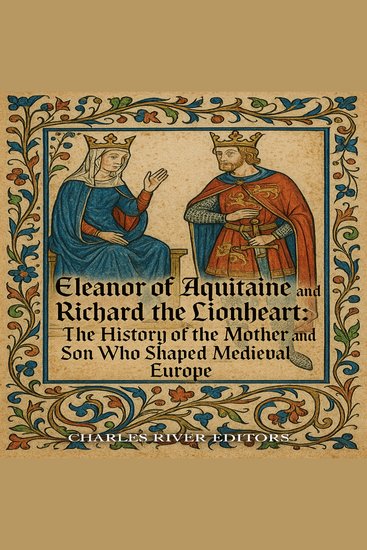
  • Eleanor of Aquitaine and Richard the Lionheart: The History of the Mother and Son Who Shaped Medieval Europe - cover

    Eleanor of Aquitaine and Richard...

    Charles River Editors

    • 0
    • 0
    • 0
    Laying next to the tomb effigy of King Henry II of England in France's Fontevraud Abbey is a curious coffin chiseled in the shape of a young woman in repose. The once vibrant paint on the effigy is flaking, and several areas of the centuries-old tombs are chipped, but her general features are still somewhat recognizable. The beautiful, crowned queen, depicted with a soft smile on her face, was dressed in a simple, but elegant gown in white and blue, and an open book in her arms. The effigy is for none other than Duchess Eleanor of Aquitaine. 
    	Over the years, this mysterious 12th century figure has been portrayed in countless ways, from a valiant warrior queen and resourceful politician to a control-obsessed and manipulative siren whose only objective in life was power. What is clear is that during her long life, Eleanor she played an outsized role in both French and English history, and she also had an impact on the course of the Crusades, not just with her first husband, France’s King Louis VII, but also through her offspring with her second husband, Henry II.  
    	The enduring figure of the Middle Ages is the chivalrous knight who served as a hero across much of Europe, and nobody played a more defining role in casting the popular image of medieval knights than Eleanor’s son Richard the Lionheart, one of the most famous English kings and crusaders. In many respects, it was ironic that Richard became one of the central characters of the Middle Ages, and his very popular legacy today belies centuries of controversy. Richard I Plantagenet, better known by his nickname “Coeur de Lion” (Lionheart), eventually became King of England, Grand Duke of Aquitaine, Duke of Poitou, and Duke of Anjou, but as the third son in a large family, he did not expect to or even want to rule England. Nevertheless, it was he who eventually came to the throne upon his father's death, assisted in great measure by his statesmanlike mother Eleanor.
    Ver libro
  • Riding Jane Crow - African American Women on the American Railroad - cover

    Riding Jane Crow - African...

    Miriam Thaggert

    • 0
    • 0
    • 0
    Miriam Thaggert illuminates the stories of African American women as passengers and as workers on the nineteenth- and early-twentieth-century railroad. As Jim Crow laws became more prevalent and forced Black Americans to "ride Jim Crow" on the rails, the train compartment became a contested space of leisure and work. Riding Jane Crow examines four instances of Black female railroad travel: the travel narratives of Black female intellectuals such as Anna Julia Cooper and Mary Church Terrell; Black middle-class women who sued to ride in first class "ladies' cars"; Black women railroad food vendors; and Black maids on Pullman trains. Thaggert argues that the railroad represented a technological advancement that was entwined with African American attempts to secure social progress. Black women's experiences on or near the railroad illustrate how American technological progress has often meant their ejection or displacement; thus, it is the Black woman who most fully measures the success of American freedom and privilege, or "progress," through her travel experiences.
    Ver libro
  • Essay Concerning Human Understanding An - cover

    Essay Concerning Human...

    John Locke

    • 0
    • 0
    • 0
    Dive into the timeless wisdom of John Locke, one of the most influential philosophers of the Enlightenment era. This collection of Locke's essays offers a sweeping exploration of politics, religion, education, economics, and human understanding. Spanning 17th-century thought and still resonating today, these essays lay foundational groundwork for modern democracy, epistemology, and intellectual freedom. 
    This audiobook features key works like: 
    - *A Vindication of the Reasonableness of Christianity*: Locke defends the harmony of faith and reason. 
    - *Some Thoughts Concerning Reading and Study for A Gentleman*: Practical guidance on lifelong learning and intellectual growth. 
    - *A Discourse of Miracles*: Locke examines miracles and faith. 
    - *Considerations Concerning Raising the Value of Money*: Analysis of economic systems and currency manipulation. 
    Locke's ideas shaped the Age of Enlightenment and influence political, educational, and philosophical thought worldwide. He argued humans are free, equal, and capable of shaping governments and societies. As a philosopher, Locke saw himself as an "under-labourer" clearing the path to knowledge, asking: _What do we know? How do we know it?_ 
    Mark G. Spencer notes Locke wrote for "the ordinary man," exploring how humans gain knowledge through experience and reason – ideas that paved the way for the 18th century and remain relevant today. 
    Whether you're interested in modern thought, political philosophy, or faith and reason, this collection offers rich insights into Western philosophy's foundations. Locke's ideas spark debate and inspire readers globally. 
    This unabridged audiobook presents Locke's essays with an informative introduction. Listen to explore the origins of modern ideas – and find arguments for today's debates.
    Ver libro
  • Assyrian Empire The: An Enthralling Overview of the History of Assyria the Assyrians and Their Role in Ancient Mesopotamia - cover

    Assyrian Empire The: An...

    Billy Wellman

    • 0
    • 0
    • 0
    The Assyrians: Builders of the First Great Empire 
    Are you ready to discover the story of one of the world’s most powerful empires? The Assyrians built a mighty civilization over five thousand years ago that ruled the Middle East. Learn how they rose to power and what caused their sudden fall, all while shaping the world in ways we still feel today. 
    What You’ll Learn:Why They Built Ziggurats: Discover the meaning behind the stepped pyramids the Assyrians created.Their System of Writing: Find out how the Assyrians developed a writing system using wedge-shaped marks on clay tablets.Ancient Consumer Rights: Did you know that Assyrians had rights when they bought goods like metal, animals, or even slaves? Learn about their surprisingly modern laws.The Many Meanings of “Ashur”: See how one word could mean a god, a city, a nation, or its people and how this connected the Assyrians to their land and beliefs.The First Great Library: Meet King Ashurbanipal, who created the largest library of his time and helped preserve Assyrian knowledge for the future.Mass Relocations: Discover why Assyrian kings moved thousands of people across their empire, reshaping cities and cultures.A Postal System That Worked: The Assyrians had a reliable postal system; it was better than today’s in some ways! However, you needed the right stamps to use it. 
    If you want to step into the shoes of an Assyrian and uncover their incredible empire, this audiobook is for you.  
    Scroll up and click the “add to cart” button to start your journey into the ancient world today!
    Ver libro