¡Acompáñanos a viajar por el mundo de los libros!
Añadir este libro a la estantería
Grey
Escribe un nuevo comentario Default profile 50px
Grey
Suscríbete para leer el libro completo o lee las primeras páginas gratis.
All characters reduced
Fort Lee: The Film Town - cover

Fort Lee: The Film Town

Richard Koszarski

Editorial: John Libbey Publishing

  • 0
  • 0
  • 0

Sinopsis

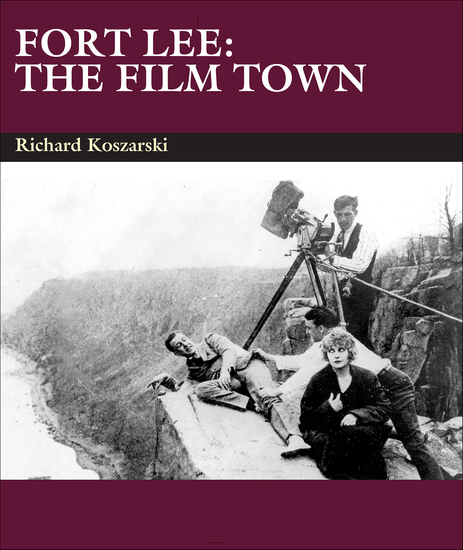
During the 1910s, motion pictures came to dominate every aspect of life in the suburban New Jersey community of Fort Lee. During the nickelodeon era, D.W. Griffith, Mary Pickford, and Mack Sennett would ferry entire acting companies across the Hudson to pose against the Palisades. Theda Bara, "Fatty" Arbuckle, and Douglas Fairbanks worked in the rows of great greenhouse studios that sprang up in Fort Lee and the neighboring communities. Tax revenues from studios and laboratories swelled municipal coffers.Then, suddenly, everything changed. Fort Lee, the film town once hailed as the birthplace of the American motion picture industry, was now the industry's official ghost town. Stages once filled to capacity by Paramount and Universal were leased by independent producers or used as paint shops by scenic artists from Broadway. Most of Fort Lee's film history eventually burned away, one studio at a time.Richard Koszarski re-creates the rise and fall of Fort Lee filmmaking in a remarkable collage of period news accounts, memoirs, municipal records, previously unpublished memos and correspondence, and dozens of rare posters and photographs—not just film history, but a unique account of what happened to one New Jersey town hopelessly enthralled by the movies.Distributed for John Libbey Publishing
Disponible desde: 02/03/2005.
Longitud de impresión: 380 páginas.
Otros libros que te pueden interesar

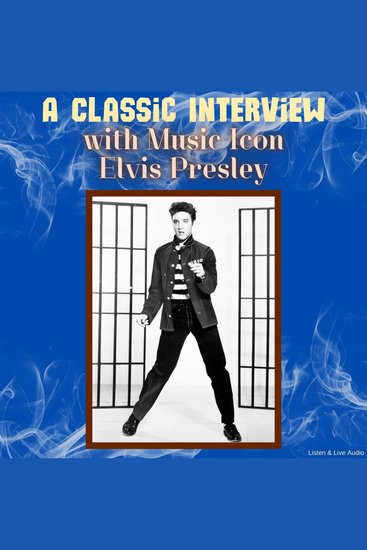
  • A Classic Interview with Music Icon Elvis Presley - cover

    A Classic Interview with Music...

    Elvis Presley

    • 0
    • 0
    • 0
    Elvis Aaron Presley (January 8, 1935 - August 16, 1977), born in Tupelo, Mississippi, was an American singer and actor. Referred to as the "King of Rock and Roll," he is regarded as one of the most significant cultural figures of the 20th century. Presley's sexually provocative performance style, combined with a mix of influences across color lines during a transformative era in race relations, brought both great success and initial controversy. The following audio clips are from an interview in 1960, and press conferences in 1970 and 1972.
    Ver libro
  • Outside In - Interiors Born from Nature - cover

    Outside In - Interiors Born from...

    Brian Paquette

    • 0
    • 0
    • 0
    An honest, introspective essay introduces Paquette’s second book, which represents the most recent steps in his evolution as an interior designer. Some are ground-up homes that he worked on from the iteration, some are remodels of existing spaces in various scales, and some are furnishings of existing homes for clients. Concise chapter introductions are followed by gallery-like displays of images that the reader can become immersed in and interpret for themselves. For the reader, this book will prompt keener observation of the natural surroundings and how to bring those poignant moments into their own homes.
    Ver libro
  • Apocalypse Television - How The Day After Helped End the Cold War - cover

    Apocalypse Television - How The...

    David Craig, Robert Iger

    • 0
    • 0
    • 0
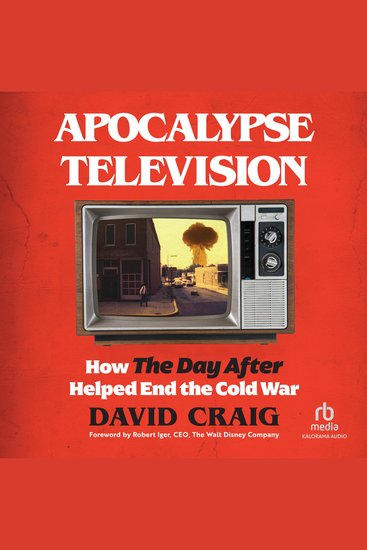
    On November 20, 1983, a three-hour made-for-TV movie, The Day After, premiered on ABC. Set in the heartland of Lawrence, Kansas, the film depicted the events before, during, and after a Soviet nuclear attack with vivid scenes of the post-apocalyptic hellscape that would follow. The film was viewed by over 100 million Americans and remains the highest rated TV movie in history. 


    The path to primetime for The Day After proved nearly as treacherous as the film's narrative. Battles ensued behind the scenes at the network, between the network and the filmmakers. But these skirmishes pale in comparison to the culture wars triggered by the film in the press, alongside a growing Nuclear Freeze movement, and from a united, pro-nuclear Right. Once efforts to alter the script failed, the White House conducted a full-throttled propaganda campaign to hijack the film's message. 


    Apocalypse Television features a dramatic insider's account of the making of and backlash against The Day After. No other book has told this story in similar fashion, venturing behind-the-scenes of the programming and news divisions at ABC, the backlash from the conservative movement and Religious Right, the challenges encountered by the film's production team, and the experiences of the citizens of Lawrence, Kansas, where the film was set and shot.
    Ver libro
  • How to Wear Everything - A No-Nonsense Guide to Dressing - cover

    How to Wear Everything - A...

    Kay Barron

    • 0
    • 0
    • 0
    At last—a fun, chic, no-nonsense guide to getting dressed. 


    What we wear matters. It matters because looking and therefore feeling like yourself is essential. Clothes can make the difference between a good day and a bad day. Clothes have the power to make your mood ten times worse or one hundred times better. 


    Clothes should give you confidence, and never make you doubt yourself. 


    Whether you already have a go-to look or feel overwhelmed by choice, How to Wear Everything covers where to start, what you need, and what you absolutely do not—whatever your age, body type, or budget. 


    Highlights include: mastering timeless classics that you will want to wear forever; what to pack and (more importantly) not pack for travel; shopping thrift and vintage like a pro; and how to find the perfect jeans for your shape. 


    A fun, no-nonsense guide with tips and tricks from the super-stylish, including Oprah Winfrey, Sofia Richie Grainge, Sarah Jessica Parker, Monica Bellucci, Jodie Turner-Smith, Ruth E. Carter, Nicky Zimmermann, and Law Roach, How to Wear Everything reveals the fashion industry's best-kept secret: getting dressed is not that hard.
    Ver libro
  • King of the Blues - The Rise and Reign of BB King - cover

    King of the Blues - The Rise and...

    Daniel de Visé

    • 0
    • 0
    • 0
    Riley “Blues Boy” King (1925-2015) was born into deep poverty in Jim Crow Mississippi. Wrenched away from his sharecropper father, B.B. lost his mother at age ten, leaving him more or less alone. Music became his emancipation from exhausting toil in the fields. Inspired by a local minister’s guitar and by the records of Blind Lemon Jefferson and T-Bone Walker and encouraged by his cousin, the established blues man Bukka White, B.B. taught his guitar to sing in the unique solo style that, along with his relentless work ethic and humanity, became his trademark. In turn, generations of artists claimed him as inspiration, from Jimi Hendrix and Eric Clapton to Carlos Santana and the Edge. King of the Blues presents the vibrant life and times of a trailblazing giant. Witness to dark prejudice and lynching in his youth, B.B. performed incessantly (some 15,000 concerts in 90 countries over nearly 60 years). Several of his concerts, including his landmark gig at Chicago’s Cook County Jail, endure in legend to this day. His career roller-coastered between adulation and relegation, but he always rose back up. At the same time, his story reveals the many ways record companies took advantage of artists, especially those of color. Daniel de Visé has interviewed almost every surviving member of B.B. King’s inner circle, and their voices and memories enrich and enliven the life of this Mississippi blues titan, whom his contemporary Bobby “Blue” Bland simply called “the man.”
    Ver libro
  • Living Landmarks of Chicago - Tantalizing Tales and Skyscraper Stories; Bringing Chicago's Landmarks to Life - cover

    Living Landmarks of Chicago -...

    Theresa L. Goodrich

    • 0
    • 0
    • 0
    From the man shipped home in a rum barrel to the most dangerous woman in America, Chicago history comes to life in these tantalizing tales. 
    "A wonderful bible of Chicago." WGN 
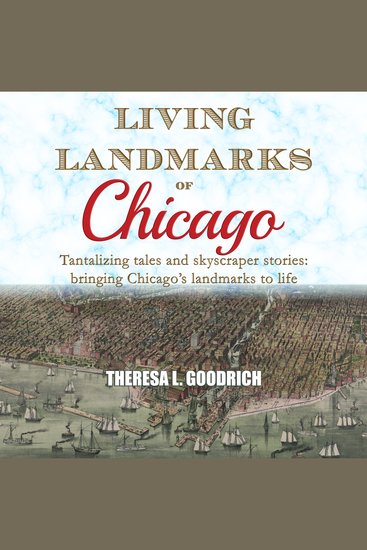
    Living Landmarks of Chicago goes beyond the what, when, and where to tell the how and why of fifty Chicago landmarks. More than a book about architecture, these are stories of the people who made Chicago and many of its most popular tourist attractions what they are today. Each chapter is a vignette that introduces the landmark and brings it to life, and the book is organized chronologically to illustrate the development of the city's distinct personality. These fifty landmarks weave an interconnected tale of Chicago between 1836 and 1932 (and beyond). 
    History lines Chicago’s sidewalks. Stroll down LaSalle or Dearborn or State and you’ll see skyscrapers that have been there for a century or more. It’s easy to scurry by, to dismiss the building itself, but a hunt for placards turns up landmarks every few feet, it seems. Here’s a Chicago landmark; there’s a National Historic landmark. They’re everywhere. 
    Ironically, these skyscrapers keep the city grounded; they illustrate a past where visionaries took fanciful, impossible ideas and made them reality. Buildings sinking? Raise them. River polluting the lake and its precious drinking water? Reverse it. Overpopulation and urban sprawl making it challenging to get to work? Build up. From the bare to the ornate, from exposed beams to ornamented facades, the city’s architecture is unrestrainedly various yet provides a cohesive, beautiful skyline that illustrates the creativity of necessity, and the necessity of creativity.
    Ver libro