Junte-se a nós em uma viagem ao mundo dos livros!
Adicionar este livro à prateleira
Grey
Deixe um novo comentário Default profile 50px
Grey
Assine para ler o livro completo ou leia as primeiras páginas de graça!
All characters reduced
The Greatest Works of Ralph Waldo Emerson - cover
LER

The Greatest Works of Ralph Waldo Emerson

Ralph Waldo Emerson

Editora: DigiCat

  • 0
  • 0
  • 0

Sinopse

In "The Greatest Works of Ralph Waldo Emerson," the celebrated transcendentalist philosopher and essayist compiles his profound meditations on individuality, nature, and society. This anthology showcases Emerson's distinctive literary style, characterized by an eloquent prose that seamlessly fuses poetic sensibility with rigorous philosophical inquiry. Within its pages, readers are invited to engage with pivotal essays such as "Self-Reliance," where Emerson champions the importance of personal intuition, and "Nature," wherein he articulates the intrinsic connection between humanity and the natural world. This collection not only reflects the intellectual currents of 19th-century America, marked by Romanticism and a burgeoning sense of American identity, but also poses timeless questions about the essence of existence and the individual's role in shaping their destiny. Ralph Waldo Emerson (1803-1882) emerged as a central figure in the Transcendentalist movement, grounding his philosophical explorations in personal experience and the quest for truth. His formative years, shaped by a Unitarian upbringing and a profound engagement with European Romantic thinkers, influenced his belief in the inherent goodness of both people and nature. Emerson's experiences with loss and community further galvanized his commitment to advocating self-sufficiency and authenticity, themes that resonate powerfully throughout his oeuvre. For readers seeking intellectual stimulation and spiritual insight, "The Greatest Works of Ralph Waldo Emerson" is an essential exploration of the human experience. Its thought-provoking essays prompt self-reflection and inspire a deeper understanding of one's relationship with the world. This timeless collection is highly recommended for scholars, students, and anyone interested in the enduring power of literature to illuminate the complexities of life.
Disponível desde: 16/12/2023.
Comprimento de impressão: 854 páginas.

Outros livros que poderiam interessá-lo

  • Democratic Delusions - How the Media Hollows Out Democracy and What We Can Do About It 1st Edition - cover

    Democratic Delusions - How the...

    Natalie Fenton

    • 0
    • 0
    • 0
    A free media is inextricably linked to a healthy democracy, but in many parts of the world liberal democracies are deemed to be dying or on the demise—a demise that many forms of media have enabled while heralding themselves as democracy's savior. The hollowing out of democracy in these ways has left many people questioning the value of (neo)liberal democratic societies. What can we do about it? 


    Democratic Delusions explores the potential of our media and tech systems to be democratic and contribute to a just and transformative democracy. This is only possible, Natalie Fenton argues, by first situating our political systems and mediated worlds within global capitalism. By interrogating different media and their relationship to seven key elements of democracy—power, participation, freedom, equality, public good, trust, and hope—the book asks: What is the response of society when the ability of news media to speak truth to power has been restricted by corporate logic? And, how do we tackle a deep-rooted market logic that shifts public debate towards private interest and marginalizes progressive perspectives? The book explores how these elements can be reimagined through newly conceived media and tech landscapes and, ultimately, what democracy might be in a future mediated world that places more power in the hands of more people.
    Ver livro
  • The Autobiography of Benjamin Franklin - cover

    The Autobiography of Benjamin...

    Benjamin Franklin

    • 0
    • 0
    • 0
    "The Autobiography of Benjamin Franklin" is a foundational work of American literature, offering an intimate portrayal of one of the United States' founding fathers. Written from 1771 to 1790, this work is divided into four parts, reflecting different periods in Franklin’s life. The Autobiography offers insights into his formative years, diverse accomplishments, inventions, philosophical insights, and contributions to American society and governance. Franklin's narrative is imbued with wit, wisdom, and a sense of self-reflection, making it not only a historical document but also a work of literature that explores themes of self-improvement, virtue, and civic duty.
    Ver livro
  • Allied Invasions of France in 1944 The: The History and Legacy of the Campaigns that Began the Liberation of Western Europe from the Nazis - cover

    Allied Invasions of France in...

    Editors Charles River

    • 0
    • 0
    • 0
    By the end of D-Day, the Allies had managed to successfully land 170,000 men, including over 75,000 on the British and Canadian beaches, 57,000 on the American beaches, and over 24,000 airborne troops. Thanks to Allied deception, the German army had failed to react to prevent the Allies from making the most of their landings. Just one division, the Hitlerjugend, would arrive the following day. Despite a fearsome and bloody day, the majority of the Allied forces had held their nerve, and most importantly, achieved their objectives. This ensured Operation Overlord was ultimately successful, and victory in Europe would be achieved within less than a year. 	Churchill was not overstating the achievements of the invasion when he described the plan “the greatest thing we have ever attempted”. The greatest armada the world had ever seen had landed 170,000 soldiers on the heavily defended beaches of Normandy in just 24 hours. More remarkable was the fact that the operation was a success on every major level. Deception, tactical surprise and overwhelming force had contributed to the establishment of an adequate beachhead. Confusion and dissent had stopped the Germans massing for any great counterattack. The Atlantic Wall which Hitler had placed so much faith in had been breached, and the race to Paris was on. The landings in Normandy and the campaign that followed were successful, but that very success brought its own problems.  
    	While D-Day is one of the most famous events of the war, it is widely overlooked that about two months after the landings in Normandy, there was a second Allied landing in France. On August 15, 1944, a combined US-French force landed in southern France on the beaches of the Côte d'Azur as part of Operation Dragoon. In just over four weeks of fighting, the Allied landing led to the liberation of most of southern France and to one of the most audacious and successful Allied operations of World War II. 
    Ver livro
  • I Want My Daddy - cover

    I Want My Daddy

    Casey Watson

    • 0
    • 0
    • 0
    A 5-year-old boy, Ethan, is brought to Casey in the middle of the night after the sudden death of his young mother after a drug overdose. 
    Estranged from her parents, Ethan’s mum had been abused by her ex-partner, and began taking drugs to cope. Ethan is obviously lost and bewildered, and regularly wakes up screaming for his mum in the night. He begins to lash out at other kids at school and his behaviour becomes more volatile. When arrangements are made for Ethan to see his dad in prison, Casey recognises the name and face… It turns out she’s far more familiar with this case than first imagined. 
    In this heart-wrenching biography, Casey Watson, the Sunday Times bestselling author, delves into the personal struggles of Ethan, a child thrust into the world of fostering and adoption after a family tragedy. The narrative explores the complex relationships within the social work system, and Ethan's survival in the face of adversity. 
    For fans of Linda Watson-Brown (Don't Say A Word), Katy Weitz (The Girl for the Job), Veronica Clark (Snatched), Maggie Hartley (Battered, Broken, Healed), and Toni Maguire (No Going Home). 
    HarperCollins 2023
    Ver livro
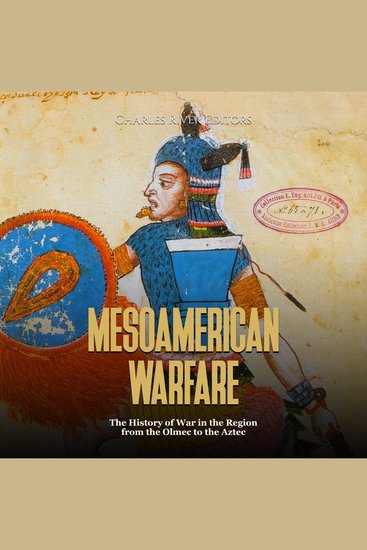
  • Mesoamerican Warfare: The History of War in the Region from the Olmec to the Aztec - cover

    Mesoamerican Warfare: The...

    Editors Charles River

    • 0
    • 0
    • 0
    Throughout history, warfare has played an important role in the development of many cultures around the world, and Mesoamerica is no exception. As J.M. Francis and T.M. Leonard noted, “The history of pre-Columbian Mesoamerica was one of violence, though no more so than that of any other region of the ancient world. It was a universe of shifting alliances and mutual antagonisms, in which increasingly strong political entities forged themselves and then broke apart.” 
    	Of course, the history of warfare in Mesoamerica is a long one, tracing its origins back to the Preclassic period with the Olmecs, who were the first group to expand their influence. There is clear evidence they had a military development, but it seems to have been mainly focused on protecting their trade networks instead of on conquest. After the Olmecs, Teotihuacan rose as the first main center of military expansion during the Classic period, extending its influence across Mesoamerican territory. After its collapse, the vacuum of power created an unstable period, and new expanding polities emerged, including Cacaxtla, Xochicalco, and Tula. They became important regional centers that took control of most of central Mesoamerica through the use of military interventions. After their decline, during the Postclassic period, the Aztecs eventually emerged as the dominant empire in Mesoamerica and continued expanding their control and influence until the arrival of the Spanish in the 16th century. 
    	Perhaps not surprisingly, there are many misconceptions about Prehispanic warfare, so it is important to keep in mind that military conflicts in Mesoamerica were greatly diverse and cannot be summarized by simply analyzing Aztec militarism.
    Ver livro
  • Saving Port Moresby - Fighting at the end of the Kokoda Track - cover

    Saving Port Moresby - Fighting...

    David W. Cameron

    • 0
    • 0
    • 0
    Powerfully written by Australia's leading military historian, Saving Port Moresby commemorates the 80th Anniversary of the Battles in New Guinea. 
    Japanese Major General Horii Tomitarô, commanding the South Seas Force, was after taking Kokoda Plateau in late July tasked with entering the Owen Stanley Range to capture Port Morseby.  
    After the battles for Deniki and Isurava, his troops were pushing south through the mountains. The Australians under Brigadier Arnold Potts, however, were not in rout, but were involved in a determined fighting withdraw. After fighting a delaying action at Templeton’s Crossing, the Australians took up a position along Mission Ridge, just south of Efogi Village.  
    Horii and his battalions attacked and after two days of bloody hand-to-hand fighting, the Australians were forced to again withdraw. To the veterans who fought here the battle would become known as ‘Butcher’s Corner’. After several further delaying actions, Potts and his men took up a position on Ioribaiwa Ridge, just 50-kilometres north of Port Moresby. 
    His brigade by now numbered fewer than 300 men. Here they were reinforced with the men of the 25th Brigade. Horii decided that he would establish himself of Ioribaiwa Ridge as his base for operations against the township. After a week of fighting the Japanese cut through the centre right flank of the Australian 25th Brigade, forcing the Australians to fall back to Imita Ridge, the last defensible ridge in the Owen Stanleys immediately behind lay Port Moresby.
    Ver livro