Begleiten Sie uns auf eine literarische Weltreise!
Buch zum Bücherregal hinzufügen
Grey
Einen neuen Kommentar schreiben Default profile 50px
Grey
Jetzt das ganze Buch im Abo oder die ersten Seiten gratis lesen!
All characters reduced
Gorgias - cover

Gorgias

Plato

Übersetzer Benjamin Jowett

Verlag: DigiCat

  • 0
  • 0
  • 0

Beschreibung

In "Gorgias," Plato delves into the intricate interplay between rhetoric, ethics, and the pursuit of truth through a vivid dialogue primarily featuring Socrates and the titular Sophist. The text, structured as a dialectical exploration, critiques the power of persuasive speech devoid of moral grounding, juxtaposing the superficiality of rhetoric against the deeper quest for genuine knowledge. With its philosophical dialectic, "Gorgias" stands as a pivotal work in the Socratic tradition, reflecting the tensions of Classical Athens' intellectual landscape where the burgeoning art of persuasion often collided with philosophical inquiry. Plato, a student of Socrates and a central figure in Western philosophy, was profoundly influenced by the moral dilemmas he witnessed within Athenian society. His dialogues often serve as both a homage to his mentor and a counterpoint to the Sophists, whose teachings championed rhetoric as an end in itself. Through the character of Socrates, Plato articulates a vision of philosophy that seeks truth and virtue, challenging conventional thought and engaging readers in the moral implications of their beliefs. Readers of "Gorgias" will find not only a sophisticated critique of rhetoric but also a timeless reflection on the ethical responsibilities of communicators. This work is essential for anyone seeking to understand the philosophical foundations of argumentation and the moral implications of persuasion, making it a compelling read for scholars, students, and anyone interested in the intersections of ethics, politics, and philosophy.
Verfügbar seit: 15.09.2022.
Drucklänge: 144 Seiten.

Weitere Bücher, die Sie mögen werden

  • Navy Dog - A Dog's Days in the US Navy - cover

    Navy Dog - A Dog's Days in the...

    Captain US Navy (ret) Neal J....

    • 0
    • 0
    • 0
    Having Seaman Jenna as the mascot on the USS Vandegrift was never meant to be a statement or symbolic act, or to put the crew on the radars of four-star admirals. Jenna came aboard unannounced, a Christmas gift that brought instant joy to the crew and transformed a gray ship into a home for 225 sailors. Her addition was not pre-approved by the chain of command—contrary to military protocol. Before long, Jenna became a phenomenon—the only dog on a Navy ship since World War II—despite the best efforts to keep her from the public eye. This orphaned Shiba Inu and the displaced crew shared countless adventures and trials during her five years on board. Jenna dodged being eaten in Korea (a country that still views dogs as edible fare), sidestepped Hawaii's strict quarantine law, avoided threats of being shot in Australia, charmed a Chinese admiral, and nearly initiated an international incident in Pakistan. Jenna became a symbol of the ship and of free will, and created a bond amongst the crew that remains strong decades later . . . long after her death. Neal Kusumoto is proud to say that he was the captain of that fine ship, blessed with a magnificent crew that included one special sea dog. Join Seaman Jenna as a part of the crew on her five-year adventure on the high seas.
    Zum Buch
  • Rise and Fall of the Third Reich The: The History and Legacy of Nazi Germany under Adolf Hitler - cover

    Rise and Fall of the Third Reich...

    Editors Charles River

    • 0
    • 0
    • 0
    The early 1930s were a tumultuous period for German politics, even in comparison to the ongoing transition to the modern era that caused various forms of chaos throughout the rest of the world. In the United States, reliance on the outdated gold standard and an absurdly parsimonious monetary policy helped bring about the Great Depression. Meanwhile, the Empire of Japan began its ultimately fatal adventurism with the invasion of Manchuria, alienating the rest of the world with the atrocities it committed. Around the same time, Gandhi began his drive for the peaceful independence of India through nonviolent protests against the British. 
    	It was in Germany, however, that the strongest seeds of future tragedy were sown. The struggling Weimar Republic had become a breeding ground for extremist politics, including two opposed and powerful authoritarian entities: the right-wing National Socialists and the left-wing KPD Communist Party. As the 1930s dawned, these two totalitarian groups held one another in a temporary stalemate, enabling the fragile ghost of democracy to continue a largely illusory survival for a few more years.  
    	That stalemate was broken in dramatic fashion on a bitterly cold night in late February 1933, and it was the Nazis who emerged decisively as the victors. A single act of arson against the famous Reichstag building proved to be the catalyst that propelled Adolf Hitler to victory in the elections of March 1933, which set the German nation irrevocably on the path towards World War II. That war would plunge much of the planet into an existential battle that ultimately cost an estimated 60 million lives. 
    Zum Buch
  • Quakers and the Amish The: The History and Legacy of the Two Unique Religious Communities - cover

    Quakers and the Amish The: The...

    Editors Charles River

    • 0
    • 0
    • 0
    Few today know much about the Quakers. Whenever the subject of Quakerism slips into conversation, most picture a rosy-cheeked fellow in a simple black overcoat, and a wide brim hat atop his thick, cloud-white hair, inspired by the famous logo of the Quaker Oats company. In spite of the stereotype, Quakers today come in all colors, shapes, and sizes, with the more liberal folk sporting trendy haircuts, tattoos, and various piercings. They call themselves “Friends,” a starkly different but very devout following of God. They strive for a world empowered by peace and acceptance, an ambitious mission fueled by diversity, blind to race, gender, or creed. 
    Buggies, straw hats, long and plain dresses in shades of blue and black, charming log cabins reminiscent of the Little House on the Prairie – this is often the mental image that comes to mind when one thinks of the Amish. Nowadays, many have become accustomed to being within a 10 foot radius of at least 3 pieces of technology every hour of the day. World news and current events has never been more readily available, accessible by just a touch of a fingertip. Yet there exists a collection of cultures worldwide that steer clear of contemporary society for a range of reasons. 
    Americans have heard of the Amish, but most know little about them. They are often seen as unconventional and strictly religious, but quiet, calm folk who keep to themselves. Those who have heard of them know of their rejection of electricity and most, if not all modern aspects of life. Those who have taken a gander at the dozens of “reality shows” that have sprung up over recent years may have even heard of the ever-so-famous – but often inaccurately depicted – Rumspringa. But beyond the buggies and prayer bonnets lies an intriguing culture that has remained strictly loyal to its roots.
    Zum Buch
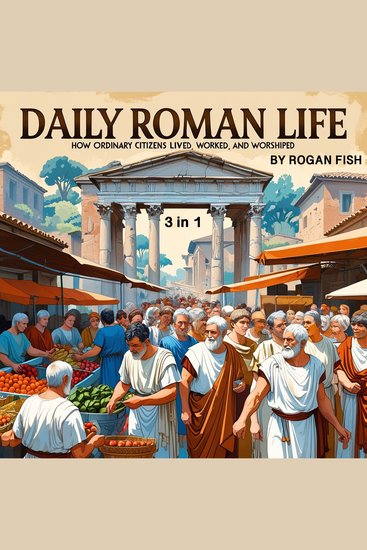
  • Daily Roman Life - How Ordinary Citizens Lived Worked and Worshiped (3 in 1) - cover

    Daily Roman Life - How Ordinary...

    Rogan Fish

    • 0
    • 0
    • 0
    This bundle of books brings the ancient world of Rome to life by immersing readers in the everyday experiences of its people. Far from the battles and politics that dominate history books, this volume explores how Roman citizens spent their days—from bustling markets in the forum to quiet evenings with family in modest insula apartments or rural villas. Readers will gain insight into the structure of Roman homes, the diet of the average citizen, and the significance of clothing, hygiene, and household roles in shaping Roman identity. 
    The second part of the book focuses on work and social structure. Whether farmers in the countryside, artisans in the city, or traders in the empire’s vast markets, Romans occupied a wide range of roles. The influence of slaves, apprenticeships, and labor guilds is discussed alongside the rising middle class and their contributions to the Roman economy. Readers will also learn about education for boys and girls, how marriage and divorce functioned, and the importance of public spaces like bathhouses, theaters, and circuses in daily life. 
    The final section explores Roman religious life—both public and private. From ancestor worship at household shrines to elaborate temple ceremonies for gods like Jupiter, Venus, and Mars, religion permeated every aspect of Roman existence. This section also covers omens, superstitions, and the Roman calendar of festivals that blended spirituality with community. Daily Roman Life presents a vivid portrait of a complex, vibrant society—reminding us that behind every empire are the lives of ordinary people who cooked, prayed, worked, and dreamed.
    Zum Buch
  • The Principles of Masonic Law - cover

    The Principles of Masonic Law

    Albert G. Mackey

    • 0
    • 0
    • 0
    "The Principles of Masonic Law" by Albert G. Mackey is a foundational text that delves into the legal framework and traditions governing Freemasonry. Originally published in 1856, this work explores the constitutional laws, customs, and landmarks that define Masonic governance and practice. Mackey, a respected Masonic scholar, offers a detailed analysis of the rights and duties of Masonic lodges and individual members, the structure and authority of Grand Lodges, and the procedures for addressing Masonic offenses. Written in a clear and systematic style, this book remains a vital resource for anyone interested in Masonic law, history, and organizational principles, providing timeless insights into the fraternity's governance and ethical standards.
    Zum Buch
  • Escaping Addiction - cover

    Escaping Addiction

    Patrick Bordeaux, George Koob

    • 0
    • 0
    • 0
    Addiction is a worldwide curse that seems to be growing in seriousness on a yearly basis. While to the general public addiction may seem almost inescapable, the truth is that there are solutions to overcoming the various addictions, though to date they seem more elusive than attainable. The goal of Escaping Addiction is to highlight the variety of causes of addiction alongside an array of useful tools anyone can use to break the cycle of addiction, whether it’s to alcohol, drugs, food, or video games. The seeds of addictive behavior are often planted in childhood then fed to grow over years of the input-and-reward cycle. Detaching the rewards from the addictive input is key to breaking the habits that keep us addicted. Presented here are a variety of treatments—from medications to therapeutic approaches—that can help. Offering a better understanding of the mechanisms of addiction, this book can help anyone struggling with addiction to unravel it in their own lives.
    Zum Buch