Begleiten Sie uns auf eine literarische Weltreise!
Buch zum Bücherregal hinzufügen
Grey
Einen neuen Kommentar schreiben Default profile 50px
Grey
Jetzt das ganze Buch im Abo oder die ersten Seiten gratis lesen!
All characters reduced
Letters of Abelard and Heloise - To which is prefix'd a particular account of their lives amours and misfortunes - cover

Letters of Abelard and Heloise - To which is prefix'd a particular account of their lives amours and misfortunes

Héloïse, Peter Abelard

Übersetzer John Hughes

Verlag: DigiCat

  • 0
  • 0
  • 0

Beschreibung

The 'Letters of Abelard and Heloise' stand as a poignant testament to the depth and complexity of human emotion and intellect during the medieval period. This collection deftly captures the range of literary styles from the philosophical inquiries and theological musings to the deeply personal and emotive exchanges that characterize the correspondence between these two iconic figures. The anthology not only encompasses intimate discourse on love and tragedy but also reveals profound reflections on faith, destiny, and the pursuit of knowledge, marking it as a significant cultural artifact of its time. This volume brings together the compelling voices of Héloïse and Peter Abelard, whose dynamic relationship transcended traditional bounds. Both figures are eminent in their own rites—Abelard as a renowned philosopher and theologian, Héloïse a learned abbess—and their dialogue offers profound insights into the intellectual and emotional preoccupations of the era. Their letters reflect the influence of twelfth-century scholasticism, a movement rich in dialectical reasoning and rigorous debate, which sheds light on the broader social issues of that period, including gender roles and ecclesiastical authority. Readers are invited to explore this rich tapestry of medieval thought and sentiment through the deeply personal lens of Abelard and Héloise. This collection provides a multifaceted exploration of human experience, offering educational value and a gateway into medieval intellectual thought and personal reflection. The letters serve not only as historical documents but as an enduring dialogue urging contemporary reflection on the timeless themes of love, faith, and personal sacrifice, making it a compelling read for scholars and enthusiasts alike.
Verfügbar seit: 21.11.2022.
Drucklänge: 117 Seiten.
Weitere Bücher, die Sie mögen werden

  • The Isolated Presidency - cover

    The Isolated Presidency

    Jordan T. Cash

    • 0
    • 0
    • 0
    How powerful is the President of the United States? For many scholars, this is a question that can be answered only by considering factors outside the office itself, such as the president's popularity, personal clout, political talents, or institutional relationships. 


    In The Isolated Presidency, Jordan T. Cash reframes this question to instead ask what authority is available to all presidents. Drawing on the Constitution itself, Cash argues that the presidency possesses an internal logic derived from its structure, duties, and powers which not only grants the president a unique institutional perspective, but also provides the president with considerable agency and discretion in pursuing agendas. 


    To gain a clear view of how the Constitution creates a baseline of authority that is available to all presidents, Cash examines the "isolated presidents"—presidents who were unelected, faced divided government, and were opposed by major factions of their own political parties. Stripped of all external supports, these presidents were left with nothing but their constitutional authority to rely on. Through three case studies of isolated presidents, Cash illustrates how the Constitution creates an empowering logic within the presidency which orients presidential behavior and grants every president significant power and agency.
    Zum Buch
  • Nazis on the Potomac - The Top-Secret Intelligence Operation that Helped Win World War II - cover

    Nazis on the Potomac - The...

    Robert K. Sutton

    • 0
    • 0
    • 0
    “A fascinating account” of the secret Virginia facility code-named PO Box 1142, where the US gathered intelligence and interrogated German prisoners (Journal of Counterterrorism & Homeland Security International).   About fifteen miles south of Washington, DC, Fort Hunt, Virginia is a green open space enjoyed by residents. But not so long ago, it was the site of one of the highest-level clandestine operations of World War II.   Shortly after the US entered the war, the military realized it had to work on exploiting any advantages it might gain on the Axis Powers. One part of this endeavor was to establish a secret facility not too close to—but also not too far from—the Pentagon, which would interrogate and eavesdrop on the highest-level Nazi prisoners and also translate and analyze captured German war documents. That complex was established at Fort Hunt, known by the code name: PO Box 1142.   The American servicemen who did the interrogating and translating were young, bright, hardworking, and absolutely dedicated to their work. Many of them were Jews who’d escaped Nazi Germany as children—some had come to America with their parents, others had escaped alone, but their experiences, and what they’d been forced to leave behind, meant they had personal motivation to do whatever they could to defeat Nazi Germany. They were perfect for the difficult and complex job at hand. They never used corporal punishment in interrogations of German soldiers but developed and deployed dozens of tricks to gain information. The Allies won the war against Hitler for a host of reasons, discussed in hundreds of volumes. This is the first book to describe the intelligence operations at PO Box 1142 and their part in that success. It will never be known how many American lives were spared, or whether the war ended sooner with the programs at Fort Hunt, but it’s doubtless that they made a difference—and gave the young Jewish men stationed there the chance to combat the evil that had befallen them and their families.   “Fills a gap in World War II intelligence history by documenting the origins of a number of European Theater intelligence successes thanks to the work of Ft. Hunt interrogators.” —Studies in Intelligence  Includes photographs
    Zum Buch
  • The Offensive Church - Breaking the Cycle of Ethnic Disunity - cover

    The Offensive Church - Breaking...

    Bryan C. Loritts

    • 0
    • 0
    • 0
    Crises around race have put the church in a defensive posture, always reacting to racial conflicts in society. But Jesus wants more. He wants Christians to play offense by discipling people into a new humanity, where we push beyond mere diversity and into a biblical vision for ethnic unity. 


    Bryan Loritts calls Christians to proactively and intentionally live out the embodied reality of a people at one with one another. We play offense by practicing a robust gospel, preparing reliable leadership, and providing relational environments so that the church becomes the aroma of Christ to our culture and gains ground against the demonic foothold of racism in all its forms.
    Zum Buch
  • How we save the world - The Fight to Rewrite Our Future Begins Now - cover

    How we save the world - The...

    Jack Jay

    • 0
    • 0
    • 0
    How We Save The World by Jack Jay is a manifesto for those eager to reshape humanity’s future. Blending philosophy with actionable wisdom, Jay explores pressing global issues like inequality, environmental damage, and AI ethics. 
    Chapter 1: Introduces a new meta-narrative, emphasizing the need for a better global story. 
    Chapter 2: Explores the rapid evolution of technology. 
    Chapter 3: Discusses how information shapes reality through the butterfly effect. 
    Chapter 4: Outlines pragmatic philosophies for creating effective global movements. 
    Chapter 5: Introduces the concept of the “Prodemic” — viral methods anyone can use to upgrade humanity. 
    Chapter 6/7: Focus on hacking dopamine systems to avoid burnout and redefine laziness. 
    Chapter 8: Advocates for simplicity in self-improvement and avoiding over-optimization. 
    Chapter 9: Addresses the AI alignment problem, offering a solution for humanity to collectively manage the risks of AI. 
    Chapter 10: Redefines consumerism and philanthropy through designer goods purchased via tax-deductible donations. 
    Chapter 11: Introduces “storyhacking” to help individuals start global movements. 
    Chapter 12: Emphasizes long-term thinking in a future dominated by AI. 
    Chapter 13: Presents the concept of "spear ritual wisdom" as a catalyst for positive global change. 
    Chapter 14-16: Dive deeper into leading and sustaining such a movement. 
    Chapter 17: Discusses real-world operations for achieving tipping points in society. 
    Chapter 18: Focuses on the strategy behind global leadership and spear rituals. 
    Chapter 19: Recaps the book’s worldview, offering new solutions and missions for a brighter future. 
    The book combines deep reflections with practical approaches for individuals and movements to spark change, encouraging people to take action in reshaping the world.
    Zum Buch
  • A Burning House - Redeeming American Evangelicalism by Examining Its History Mission and Message - cover

    A Burning House - Redeeming...

    Brandon Washington

    • 0
    • 0
    • 0
    Despite the civil rights progress he fought for and saw on the horizon in the 1950s and '60s, Martin Luther King Jr.—increasingly concerned by America's moral vision, admitted—"I've come to believe that we are integrating into a burning house." 
    In A Burning House, Brandon Washington contends that American Evangelicalism is a house ablaze: burning in the destructive fires of discrimination and injustice. The stain of segregation remains prevalent, not only in our national institutions, but also in our churches, and this has long tarnished the witness of Christianity and hampered our progress toward a Christ-like vision of Shalom—peace, justice, and wholeness—in the world. Common doctrine may unite black and white evangelicals, but rifts such as social ethics and cultural influences still separate us. 
    Throughout this challenging but reconciliatory book, Washington gives a historical and theological appraisal of American evangelicalism to understand how we came to be where we are and what our response should be. Instead of calling the movement to become something new, he challenges it to live into what it has always been in Christ and strive for deliberate and sacrificial integration—the unity of believers of all ethnicities. 
    A Burning House is a rallying call to a waning movement whose most public leaders have often turned a blind eye to, or even justified, the sin of racism—a movement whose theology is sometimes compromised by a secular anthropology. This is a call to both white and black evangelicals to better understand our past so that we can better embrace the unifying and comprehensive message of the gospel we preach.
    Zum Buch
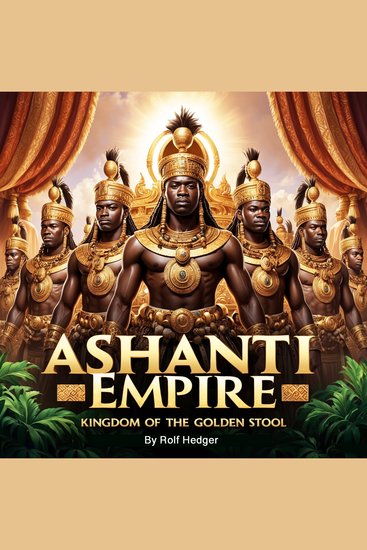
  • Ashanti Empire - Kingdom of the Golden Stool - cover

    Ashanti Empire - Kingdom of the...

    Rolf Hedger

    • 0
    • 0
    • 0
    The Ashanti Empire, flourishing from the 17th to the 19th century in what is now Ghana, stands as a testament to the resilience and sophistication of African states. This powerful kingdom was established through a unique blend of indigenous cultural traditions and political innovations, creating a centralized authority that not only governed a vast territory but also unified diverse ethnic groups under a single national identity. At the heart of this unity was the revered Golden Stool, a symbol of divine providence and the collective spirit of the Ashanti people. 
    Emerging from a landscape rich in natural resources and strategic trade routes, the Ashanti Empire developed robust economic foundations. Gold, kola nuts, and other valuable commodities flowed through well-established networks, facilitating both internal prosperity and external exchanges with neighboring regions and distant trading partners. This economic strength enabled the empire to invest in military expansion and administrative structures that further consolidated its power. 
    The political organization of the Ashanti Empire was characterized by a sophisticated hierarchy led by the Asantehene, whose authority was both political and spiritual. This dual role was crucial in maintaining social order and ensuring loyalty among the various clans and communities within the empire. The administration was further supported by councils of elders and local chiefs, who played significant roles in the governance process by mediating disputes and enforcing the laws that held the society together.
    Zum Buch