Join us on a literary world trip!
Add this book to bookshelf
Grey
Write a new comment Default profile 50px
Grey
Subscribe to read the full book or read the first pages for free!
All characters reduced
The Salving of the "Fusi Yama" - A Post-War Story of the Sea - cover

The Salving of the "Fusi Yama" - A Post-War Story of the Sea

Percy F. Westerman

Publisher: Good Press

  • 0
  • 0
  • 0

Summary

In "The Salving of the 'Fusi Yama,'" Percy F. Westerman takes readers on a high-stakes adventure set amidst the treacherous waters of maritime salvage. Through masterful prose that combines vivid descriptions and gripping dialogue, Westerman crafts a tale that is as much about camaraderie and bravery as it is about the challenges of recovering a distressed vessel. The narrative weaves elements of early 20th-century nautical technology with themes of resilience and teamwork, reflecting the period's burgeoning fascination with sea exploration and adventure literature, particularly popularized in Britain and beyond. Percy F. Westerman, a prolific writer and naval officer, drew upon his maritime experiences to create engaging stories that resonated with young readers and adventure enthusiasts alike. Having served in the Royal Navy during World War I, Westerman's intimate understanding of naval life and the intricacies of seamanship infused his literature with authenticity. His numerous works often showcase the enduring spirit of exploration and the moral courage embodied by seafaring men and women, making him a significant figure in children's adventure literature. This book is highly recommended for readers seeking an exhilarating escape into the world of naval adventures. With its thrilling narrative and richly drawn characters, "The Salving of the 'Fusi Yama'" not only entertains but also imparts valuable lessons about resilience and teamwork, making it a timeless classic for both young readers and nostalgic adults.
Available since: 10/28/2023.
Print length: 162 pages.

Other books that might interest you

  • How It Went - Thirteen More Stories of the Port William Membership - cover

    How It Went - Thirteen More...

    Wendell Berry

    • 0
    • 0
    • 0
    Thirteen new stories of the Port William membership spanning the decades from World War II to the present moment 


    For those readers of his poetry and inspired by his increasingly vital work as advocate for rational land use and the right-size life, these stories of Wendell Berry's offer entry into the fictional place of value and beauty that is Port William, Kentucky. Berry has said it's taken a lifetime for him to learn to write like an old man, and that's what we have here, stories told with grace and ease and majesty. Wendell Berry is one of our greatest living American authors, writing with the wisdom of maturity and the incandescence that comes of love. 


    These thirteen new works explore the memory and imagination of Andy Catlett, one of the well-loved central characters of the Port William saga. From 1932 to 2021, these stories span the length of Andy's life, from before the outbreak of the Second World War to the threatened end of rural life in America.
    Show book
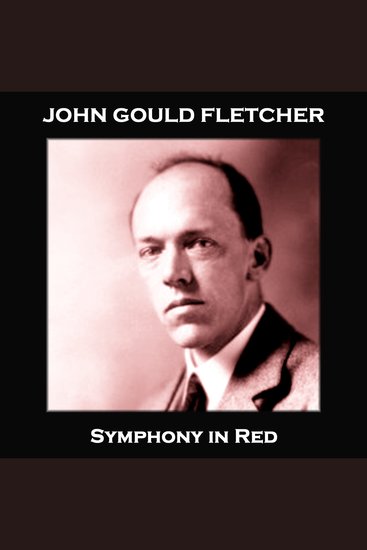
  • Symphony in Red - From their pens to your ears genius in every story - cover

    Symphony in Red - From their...

    John Gould Fletcher

    • 0
    • 0
    • 0
    John Gould Fletcher was born in Little Rock, Arkansas on 3rd January 1886 to a socially prominent family.  
    He was educated at Phillips Academy, Andover before advancing to Harvard University which he attended from 1903 to 1907, before dropping out after his father's death. 
    As a young man Fletcher spent many years in England where he became part of the influential Imagist group of poets together with Amy Lowell and Ezra Pound.   
    His first marriage came from a resumed relationship with the now married Florence Emily ‘Daisy’ Arbuthnot. Her adultery with Fletcher was the grounds for her divorce from Malcolm Arbuthnot.  They married on 5th July 1916 but later divorced.  
    Fletcher first published in 1912, with ‘The Dominant City’ too much praise and admiration and followed this with other well-regarded volumes such as ‘Irradiations: Sand and Spray’, and ‘Goblins and Pagodas’. 
    In the late 1920s and 1930s Fletcher became increasingly active with a group of Southern writers and poets known as the Southern Agrarians. They published the classic ‘I'll Take My Stand: The South and the Agrarian Tradition’. 
    Although he was highly regarded as a poet he was not very prolific.  However, such was the undoubted quality that in 1939 he received the Pulitzer Prize for his work ‘Selected Poems’.  He was the first poet from the south to receive such an accolade.  Fletcher’s other passion and pursuit was as an authority on modern painting, a subject on which he also published. 
    A second marriage followed in 1936 to the children’s author, Charlie May Simon. They built ‘Johnswood’, a residence on the bluffs of the Arkansas River and travelled frequently to New York for shots of modern culture and intellectual stimulation as well as to the American West and South for the climate after Fletcher developed chronic arthritis. 
    In 1937 he wrote his autobiography, ‘Life is My Song’. 
    His developing passion for his roots and background resulted in the writing of a history of his State and published in 1947; ‘Arkansas’. 
    By now Fletcher was suffering from bouts of depression and on 10th May 1950, he committed suicide by drowning himself in a pond near his home in Little Rock, Arkansas.
    Show book
  • A Comedy In Rubber - cover

    A Comedy In Rubber

    O. Henry

    • 0
    • 0
    • 0
    Delve into the humor and charm of early 20th-century city life with O. Henry’s delightful short story, A Comedy in Rubber. Known for his clever wit and unexpected twists, O. Henry brings us a playful tale of misadventure, following a character who encounters a string of amusing predicaments—all set in motion by a simple trip in a vintage automobile. With every turn, the story unfolds with O. Henry’s signature blend of humor and irony, giving readers a nostalgic glimpse into a bygone era.Narrated by Joe Reeder, this audiobook brings the story’s lighthearted tone and comedic nuances to life. Reeder’s engaging narration draws listeners into the delightful absurdities of O. Henry’s world, where every encounter holds a surprise, and humor is woven into each scene. Perfect for listeners seeking a brief escape into a world filled with laughter, nostalgia, and classic Americana.Whether you’re a long-time fan of O. Henry or discovering his work for the first time, A Comedy in Rubber is an entertaining listen that highlights the timeless appeal of his storytelling. This short, whimsical tale is ideal for those looking for a quick, enjoyable break filled with humor and classic charm.
    Show book
  • The Bull - From their pens to your ears genius in every story - cover

    The Bull - From their pens to...

    Saki Saki

    • 0
    • 0
    • 0
    Hector Hugh Munro, more familiarly known by his pen-name ‘Saki’ was born in what was then Akyab in British Burma on 18th December 1870. His father was an Inspector General for the Indian Imperial Police, and his mother the daughter of a Rear Admiral. 
    When he was 2 his mother died and he and his siblings were sent back to England to be raised by their grandmother and paternal maiden aunts in a strict, puritanical household near Barnstaple, Devon. Educated by governesses Saki used many of these women as character models for his later writing. 
    At 17 his father retried and returned to England and then embarked on a series of European travels with Saki and his siblings. 
    After a short stint working in Burma with the Indian Imperial Police Saki decided to move to London to make a living as a writer. Initially he wrote as a journalist for a number of newspapers and magazines before attempting an historical study, ‘The Rise of the Russian Empire’, whose real value lay in directing him to writing short stories instead, the first of which, ‘Dogged’, he published in 1899. 
    From here it was a short stab of the pen to writing political satire before in 1902 he became the foreign correspondent for The Morning Post, first in the Balkans, then Russia, Paris and back to London in 1908, where 'the agreeable life of a man of letters with a brilliant reputation awaited him.'  
    Collections of his short stories full of witty, mischievous and often macabre stories that satirized Edwardian society and two novels now appeared in the years up to the Great War.  At its’ outbreak he was 43 but managed to join as an ordinary trooper. More than once he returned to the battlefield when officially too sick or injured.  
    On 14th November 1916 Hector Hugh Munro was sheltering in crater during the Battle of the Ancre, when he was shot and killed by a German sniper. According to several sources, his last words were "Put that bloody cigarette out!"
    Show book
  • The Untilled Field - Irish Stories of Priests Exiles and Artists - cover

    The Untilled Field - Irish...

    George Moore

    • 0
    • 0
    • 0
    Ireland in a dozen stories: a priest who drives a girl from the parish, an emigrant's letter, a stonecutter, a village where nothing will grow because everyone who could has gone. Moore was an Irish landlord's son who went to Paris to paint, failed, and came back with Zola's method; several of these 1903 stories first appeared in Irish translation, and it is the book that taught Joyce what a Dubliners might look like.
    Show book
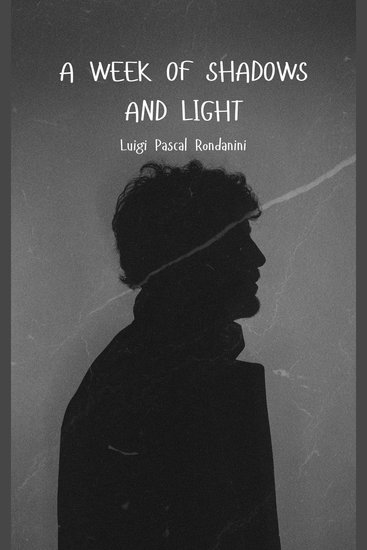
  • A Week of Shadows and Light - A Journey Through Grief and Hope - cover

    A Week of Shadows and Light - A...

    Luigi Pascal Rondanini

    • 0
    • 0
    • 0
    In A Week of Shadows and Light, the author presents a touching account of grieving, resilience and the human ability to recover. 
      
    David is adrift. Grieving the sudden death of his wife, Sarah, he now wallows in his own despair, his life teetering on the edge of vainness. Does he have the resolve to find purpose again in the week that will decide his fate? Feeling lost in the grip of depression, David encounters unexpected allies to help him rediscover his strengths. 
      
    Concentrating on the period that signals the height of his depression, this short story is a poignant tale of journeying from despair to the first bright rays of hope. Its disarming honesty and empathy vividly capture both the tragic complexity of mental health struggles and the simple beauty of human connection. 
      
    A Week of Shadows and Light reminds us to keep climbing that dark stair, even when we feel like we might fall. It extends its comforting, dancing darkness – its light-suffused shadow – to anyone who has loved and lost and gives inspiration to anyone confronting shadows. 
      
    This book focuses on the invisible battles fought daily by many and helps foster understanding and compassion. 
      
    If you are struggling and cannot afford this book, contact the author 
      
    Remember, You are not alone.
    Show book