Rejoignez-nous pour un voyage dans le monde des livres!
Ajouter ce livre à l'électronique
Grey
Ecrivez un nouveau commentaire Default profile 50px
Grey
Abonnez-vous pour lire le livre complet ou lisez les premières pages gratuitement!
All characters reduced
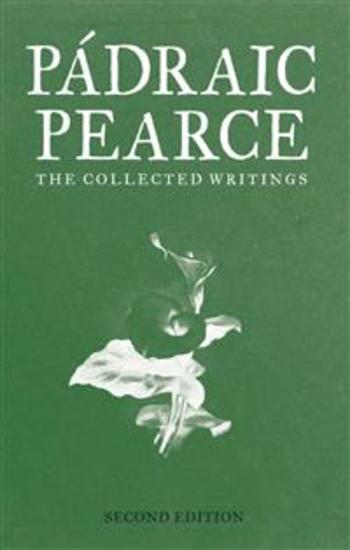
The Collected Works of Padraic Pearse - cover

The Collected Works of Padraic Pearse

Pearse Pádraic

Maison d'édition: Antelope Hill Publishing LLC

  • 0
  • 0
  • 0

Synopsis

Pádraic Pearse held many titles; academic, teacher, brother, son, and revolutionary, but, before all else, Pearse was an Irishman. Born in 1879, Pearse dedicated his life to Ireland and the liberation of Ireland from British rule. In May 1916, he paid the ultimate price for this dedication. Pearse was martyred for his role in forming The Provisional Government of the Irish Republic and the events surrounding what became known as the Easter Rising.​
 
The Collected Works of Pádraic Pearse include his essays, speeches, and select poetry, written between the years of 1912 and 1916. His first essay “The Murder Machine” (1912) details his argument that the existing Irish education system is a means of repression and cannot be reformed, only destroyed and replaced. As an educator and academic, Pearse details his experience and proposal for a new system based on the Irish tradition and temperament.
 
​His next essays include reflections on the failed previous national revolutions of Wolfe Tone and Robert Emmet, a loving graveside oration for his friend and Fenian revolutionary O’Donovan Rossa, and his exhortations to the Irish people detailing the nationalist cause and demanding recruits. Pearse also provides a detailed analysis and comparison of previous Irish nationalists—Theobald Wolfe Tone, Thomas Davis, James Fintan Lalor, and John Mitchel—who he referred to as “ghosts” haunting the spirit of the Irish, begging Pearse and his contemporaries to raise the flag in their stead and overthrow their English lords. ​
 
Full of poetic interjections in both English and Gaelic throughout the book, The Collected Works concludes with four poems—The Fool, The Rebel, The Mother, and The Wayfarer—indicating that Pearse, though resolute and commanding in his essays and speeches, also held a calm and loving relationship with Irish nationalism.
Disponible depuis: 15/07/2022.

D'autres livres qui pourraient vous intéresser

  • The Fall of Communism - Understanding the Collapse of the Soviet Union and Its Impact - cover

    The Fall of Communism -...

    Arlo Holders

    • 0
    • 0
    • 0
    The origins of communism can be traced back to the mid-19th century, largely shaped by the theories of Karl Marx and Friedrich Engels. Marx's writings, particularly The Communist Manifesto (1848), presented a vision for a classless society where the working class, or proletariat, would overthrow the capitalist bourgeoisie and establish a dictatorship of the proletariat. Marx believed this revolution would lead to the eventual abolition of private property, creating a system where resources and wealth were shared equally among all people. Engels, Marx’s collaborator, helped to spread these ideas, laying the theoretical foundation for communism as a political ideology. 
    In the early 20th century, the ideas of Marxism found fertile ground in Russia, where economic disparity and social unrest were widespread. The Russian Empire, under Tsar Nicholas II, faced increasing pressure from industrialization, a growing working class, and a largely disenfranchised peasantry. The Russian Revolution of 1917, led by the Bolshevik Party under Vladimir Lenin, marked the beginning of communism’s practical implementation. The Bolsheviks sought to establish a socialist state where the working class would control the means of production and dismantle the old Tsarist monarchy. 
    Following the revolution, the Soviet Union was formed in 1922, uniting the Russian Federation and several other Soviet republics under a single communist government. The new government, however, faced significant challenges, including civil war, foreign intervention, and the task of restructuring a country that had been predominantly agrarian into a socialist industrialized state. Lenin’s death in 1924 led to the rise of Joseph Stalin, who consolidated power through brutal purges and policies such as forced collectivization and rapid industrialization.
    Voir livre
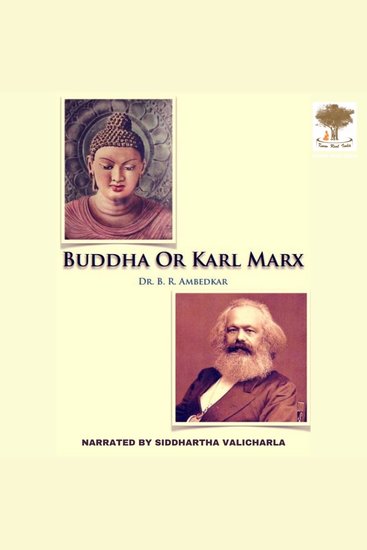
  • Buddha or Karl Marx - cover

    Buddha or Karl Marx

    Dr. B R Ambedkar

    • 0
    • 0
    • 0
    Buddha or Karl Marx - is a comparative study of the two philosophies Buddhism and Marxism. 
    It concludes by presenting in plain English that Buddhism through changing man's disposition is a superior way to achieve and most importantly maintain a society sans suffering, greed and fostering Maitri (universal love and brotherhood).
    Voir livre
  • The Civic Bargain - How Democracy Survives - cover

    The Civic Bargain - How...

    Josiah Ober, Brook Manville

    • 0
    • 0
    • 0
    A powerful case for democracy and how it can adapt and survive—if we want it to 


    Is democracy in trouble, perhaps even dying? Pundits say so, and polls show that most Americans believe that their country's system of governance is being "tested" or is "under attack." But is the future of democracy necessarily so dire? In The Civic Bargain, Brook Manville and Josiah Ober push back against the prevailing pessimism about the fate of democracy around the world. Instead of an epitaph for democracy, they offer a guide for democratic renewal, calling on citizens to recommit to a "civic bargain" with one another to guarantee civic rights of freedom, equality, and dignity. That bargain also requires them to fulfill the duties of democratic citizenship: governing themselves with no "boss" except one another, embracing compromise, treating each other as civic friends, and investing in civic education for each rising generation. 


    Manville and Ober trace the long progression toward self-government through four key moments in democracy's history: Classical Athens, Republican Rome, Great Britain's constitutional monarchy, and America's founding. Comparing what worked and what failed in each case, they draw out lessons for how modern democracies can survive and thrive.
    Voir livre
  • The Disenlightenment - Politics Horror and Entertainment - cover

    The Disenlightenment - Politics...

    David Mamet

    • 0
    • 0
    • 0
    AN INSTANT NEW YORK TIMES BESTSELLER 
    One of America's greatest living literary legends invites you think for yourself in this compelling narrative of manipulation, power, and the human condition. 
    ""Government, like Circe, turns men into swine,"" David Mamet writes in his latest political tour de force. Prepare to be challenged, enlightened, and entertained by The Disenlightenment as Mamet dissects the modern world with enthusiasm, wisdom, and lots of references to movies about the mafia. 
    Once a stalwart of liberal thought, Mamet now turns his penetrating gaze on the cultural milieu that nurtured his artistic growth, revealing how America's elites have twisted our institutions into tools of manipulation. With his one-of-a-kind wit, he exposes the intricate dance between power and myth, unmasking how the elites manipulate media and culture to maintain control. 
    The Disenlightenment fearlessly tackles topics from war to love, success to death, offering a fresh perspective on the human condition. His observations, ranging from the carnival-like nature of politics to the power of language, reflect a society where traditional values are under siege. 
    This book is an opportunity to engage with one of the most provocative and insightful writers of the modern era. Whether you're a long-time Mamet aficionado or new to his work, The Disenlightenment promises to challenge your perceptions, stimulate your mind, and perhaps change how you view the world.
    Voir livre
  • Gustave le Bon: The Crowd – A Study of the Popular Mind - A seminal masterpiece on crowd psychology - cover

    Gustave le Bon: The Crowd – A...

    Gustave Le Bon, Jürgen Fritsche

    • 0
    • 0
    • 0
    What happens to individuals when they become part of a crowd? How can it be explained that intelligent human beings commit unspeakable cruelties once they have become one with an anonymous mass of people? Le Bon's analysis dates back to 1895 – however, the razor-sharp analysis of human behavior is still valid today! Included: a pdf document with track list.
    Voir livre
  • Puzzles and Conundrums - The Ultimate Historical Riddles Explained (4 in 1) - cover

    Puzzles and Conundrums - The...

    John Harpoon

    • 0
    • 0
    • 0
    This book is a bundle of several titles which are: 
    - Dawn's Dilemma: Waking up in the morning is supposed to be a fresh start—a chance to begin anew, to seize the day. But for many, it is instead a moment of resistance, a time when the comfort of the bed feels more appealing than the promise of a productive day ahead. This paradox, where the desire to be productive and successful clashes with the reluctance to rise from sleep, is at the heart of what I call the "Awakening Paradox." 
    - The Ultimate Enigma: The story of this enigma begins with a seemingly ordinary event that spiraled into an extraordinary mystery, captivating the minds of people across the globe. What started as an unexplained disappearance soon transformed into one of the most perplexing and widely discussed mysteries in recorded history. The vanishing of this individual—or object, depending on the version of the story one hears—left behind only traces of confusion, a scattering of evidence, and no clear answers. 
    - The Emperor's Edge: Napoleon Bonaparte's journey from a modest Corsican background to one of history's greatest military leaders is nothing short of remarkable. Born on August 15, 1769, in Ajaccio, Corsica, a French territory that had only recently been acquired from the Genoese, Napoleon’s early years were shaped by the turbulent political climate of his homeland.  
    - The Shadow Agents: Covert operations are a cornerstone of modern intelligence and national security strategies. They are defined by their secrecy and the fact that they are often conducted in a manner that prevents any overt acknowledgment of their existence. In essence, covert operations are activities undertaken by government agencies, intelligence services, or other organizations to influence events or gather information while keeping their involvement hidden from the public eye.
    Voir livre