Rejoignez-nous pour un voyage dans le monde des livres!
Ajouter ce livre à l'électronique
Grey
Ecrivez un nouveau commentaire Default profile 50px
Grey
Abonnez-vous pour lire le livre complet ou lisez les premières pages gratuitement!
All characters reduced
Applied Eugenics - cover

Applied Eugenics

Paul Popenoe, Roswell H. Johnson

Maison d'édition: DigiCat

  • 0
  • 0
  • 0

Synopsis

Delve into the intricate tapestry of inherited traits and societal evolution with *Applied Eugenics*, a thought-provoking anthology exploring the concept of genetic enhancement and its implications. This collection stands as a critical discourse on eugenics, reflecting early 20th-century beliefs and its spectrum of literary styles ranging from analytical essays to manifestos. Each piece offers unique insights into the aspirations and ethical dilemmas of eugenics, providing a fascinating, albeit controversial, glimpse into a period where science and social engineering intertwined at the heights of modernism. The compilation is curated by authoritative figures Paul Popenoe and Roswell H. Johnson, whose expertise in eugenics and human biology shapes this seminal work. Their academic prowess provides a cohesive examination of eugenic theories, profoundly influencing contemporary socio-biological dialogues. Contributors range from acclaimed scientists to social reformers, each bringing distinct cultural and scientific perspectives that draw from the eugenics movement's alignment with Progressive Era reforms. Together, they craft a narrative that interrogates the boundaries between nature and nurture, progress, and the human condition. *Applied Eugenics* is an essential read for those seeking to understand the historical underpinnings of genetics and public policy. Its diverse perspectives invite readers into an engaging dialogue on ethics and human potential, making it an invaluable resource for students of history, sociology, and ethics. Embrace the complexities of this multifaceted exploration, where each composition encourages reflection on the evolving interplay between genetics and society, and the legacy such discourses leave in contemporary thought.
Disponible depuis: 15/09/2022.
Longueur d'impression: 455 pages.


D'autres livres qui pourraient vous intéresser

  • The Iran-Iraq War - A Decade of Conflict - cover

    The Iran-Iraq War - A Decade of...

    Nova Ashford

    • 0
    • 0
    • 0
    The Iran-Iraq War, which raged from 1980 to 1988, was one of the longest and most devastating conflicts of the 20th century. To understand its eruption, one must look back at the complex web of historical grievances, ideological clashes, and strategic calculations that set the stage for war. The roots of the conflict lay not only in territorial disputes and regional rivalry but also in the dramatically shifting political landscapes within both nations. 
    Iran, under the rule of Shah Mohammad Reza Pahlavi until 1979, had enjoyed a close relationship with the West, particularly the United States. The Shah’s regime was modernizing but also increasingly authoritarian, and his reliance on foreign powers alienated large segments of the Iranian population. This discontent culminated in the Islamic Revolution of 1979, which swept Ayatollah Ruhollah Khomeini to power and replaced the monarchy with a theocratic republic. The revolution shocked the region, especially its Sunni neighbors and secular governments, as Iran began exporting its revolutionary ideology and calling for the overthrow of what it labeled as corrupt, un-Islamic regimes. 
    Iraq, ruled by the secular Ba'ath Party under Saddam Hussein, was especially alarmed. Not only did Iraq share a long and often contentious border with Iran, but it also had a significant Shi’a majority population that Saddam feared could be influenced by Khomeini’s message. Additionally, Iraq had longstanding territorial disputes with Iran, particularly over the Shatt al-Arab waterway, a critical channel for oil exports. Saddam believed that post-revolution Iran, weakened by purges and internal strife, presented a unique opportunity for Iraq to assert dominance in the region.
    Voir livre
  • Hijacked! - How Dr King's Dream Became a Nightmare - cover

    Hijacked! - How Dr King's Dream...

    Clarence Washington Sr.

    • 0
    • 0
    • 0
    In this four-volume series, Hijacked!: How Dr. King's Dream Became a Nightmare, author Clarence Washington, Sr. dissects Dr. Martin Luther King's dream and explores how our failure to adhere to its principles has allowed the dream to be hijacked and turned to a nightmare - and it’s time to wake up. 
    In the first volume of the Hijacked! collection, The Dream, the author clarifies the principles for social justice and freedom for all Americans that Dr. King delineated in his monumental speech. God gave Dr. Martin Luther King a road map for America to follow in his "I Have a Dream" speech and his numerous other orations and writings. 
    In order to apply the principles of the dream effectively and make it a reality, one must understand:The goals and methods of the dreamThe methods employed in the hijack of the dreamThe devastating, nightmarish consequences produced by the hijack The revival, government reformation strategy, and reformation of other institutions that must be executed to accomplish the recovery from the nightmarish times in which we are living 
    For the full dissection of Dr. King's dream and how our failure to adhere to its principles has led to a nightmare, explore the other volumes in Hijacked!: How Dr. King's Dream Became a Nightmare. Other volumes in this series focus on the hijack itself, the nightmare, and how we can recover.
    Voir livre
  • The Psychedelic Therapy Workbook - Harm Reduction Techniques for Integrating Psychedelics in Therapy and Personal Growth - cover

    The Psychedelic Therapy Workbook...

    PhD Elizabeth Nielson, PhD...

    • 0
    • 0
    • 0
    If you've sought conventional treatment for depression, anxiety, substance-use disorder, or post-traumatic stress disorder (PTSD) and have been disappointed by a lack of positive results, know that you're not alone. The good news is that there is hope. More and more, research shows the tremendous benefit of psychedelic drugs like psilocybin, MDMA, LSD, and ketamine for people suffering from difficult-to-treat mental health issues. But how do you integrate them into your life effectively? 


    In The Psychedelic Therapy Workbook, psychologists Elizabeth Nielson and Ingmar Gorman present a pioneering approach to maximizing the therapeutic potential of psychedelics. Drawing on their extensive experience and research, the authors introduce their psychedelic harm reduction and integration (PHRI) method, offering a comprehensive framework for integrating the lessons you've learned from psychedelic experiences into your daily life. 


    With this step-by-step guide, you will: learn how to choose the right setting and set intentions for a positive experience; explore evidence-based practices to ensure healing and growth; and empower yourself to navigate the psychedelic landscape with confidence and mindfulness. This workbook provides the tools you need to explore the benefits of psychedelics for profound transformation, healing, and self-discovery.
    Voir livre
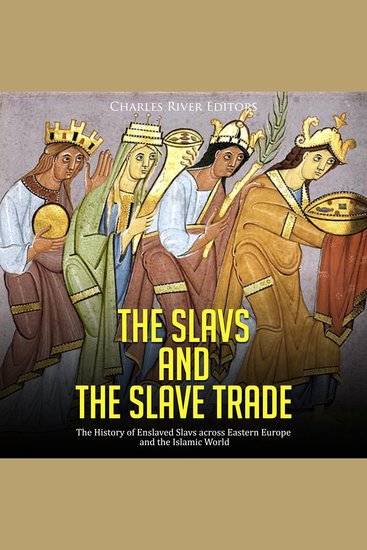
  • Slavs and the Slave Trade The: The History of Enslaved Slavs across Eastern Europe and the Islamic World - cover

    Slavs and the Slave Trade The:...

    Editors Charles River

    • 0
    • 0
    • 0
    some historians have aligned the term Slav as deriving from descriptions of slaves: “The word “slave” and its cognates in most modern European languages is itself derived from “sclavus,” meaning “slav,” the ethnic name for the inhabitants of this region.” Some historians have outlined how they believe that Slavic slaves were used intensively in the ninth and tenth centuries and acted as a driver of Western European economic growth and allowed them to “emerge from the Dark Ages.” It is only fair to note that this assertion has been disputed. Separately, other scholars have asserted that Constantinople’s rapid rise to become one of Europe’s largest cities was fueled by a large supply of Slavic slaves. 
    	These trans-European routes diminished somewhat from the thirteenth century but demonstrated how common slave trading was in the region during these centuries. The majority of the people would have been kidnapped from Southeast Europe, as well as the Eurasian and Caucasus regions. Today, that encompasses Russia, Ukraine, Georgia, the Baltic states, Poland, Romania, Bulgaria, and the states of the former Yugoslavia. Crucially, an important component of Slavic identity was the Christian faith, in particular Orthodox Christianity.  
    	In the medieval period, a slave trading network became more entrenched, transporting people from Slavic lands in Eastern Europe to the Mediterranean and beyond. The growing schism between the Catholic and Orthodox versions of Christianity made Orthodox Christians targets of the former’s slave traders. As a result, Slavic slaves were captured and taken to parts of Christian Spain, including Aragon and Valencia, in the fourteenth and fifteenth centuries.
    Voir livre
  • Norse Mythology Legends - Epic Stories Quests Myths & More from The Most Powerful Characters Gods Goddesses & Heroes of Norse & Viking Folklore - cover

    Norse Mythology Legends - Epic...

    History Brought Alive

    • 0
    • 0
    • 0
    Discover the legendary characters of Norse mythology and their epic stories.The Norse god Odin went to great lengths in his quest for knowledge...and as long as there is breath in your lungs, your quest for knowledge should never stop....Odin learned alone, but he would often turn to the council of gods and his ravens for guidance. Imagine yourself as Odin, and us as your ravens who have collected the stories, myths, and legendary characters of Norse mythology for you.So take your place upon your own Hlidskjalf, and let’s get ready to meet the characters of Norse mythology!Inside this audiobook, you will discover: 
    The characters of norse mythology: myths, quests, stories and more. 
    Explore the history of Norse mythology and the viking age: what happened, what drove them to pillage and plunder, and was it all just myths? 
    Enjoy epic stories like The Aesir-Vanir War, Loki’s Pranks, Thor and The Giant’s Bride, Valhalla, The Twilight of The Gods, and many more. 
    A Brief But Detailed Re-Telling of The Creation Myth. 
    We can’t mention creation without destruction: Ragnarök and the end of the world! 
    Discover the nine realms of Norse cosmology held in the branches and roots of the world tree of yggdrasil. 
    Uncovering the history and beliefs of Ásatrú (the ancient religion of the vikings). 
    How Norse mythology has thrived in pop culture: uncovering the shows, movies, video games, and more that have kept it alive. 
    And much, much more!Begin your quest into Norse mythology and its legendary characters with this audiobook!
    Voir livre
  • Hope Under Oppression - cover

    Hope Under Oppression

    Katie Stockdale

    • 0
    • 0
    • 0
    We have all been told, at one time or another, to "never give up hope." It's a common injunction to children, but as we grow older, sustaining hope becomes more challenging, particularly in a world we come to see as often frightening, dark, and unjust. But what is this thing "hope," and why is hope so valuable that we are so often urged to preserve and protect it? 


    This book explores the nature and essential role of hope in human life under conditions of oppression. Oppression is often a threat and damage to hope, yet many members of oppressed groups, including prominent activists pursuing a more just world, find hope valuable and even essential to their personal and political lives. Katie Stockdale offers a unique evaluative framework for hope that captures its intrinsic value, the rationality and morality of hope, and ultimately how we can hope well in the non-ideal world we share. She develops an account of the relationship between hope and anger about oppression and argues that when people are angry about oppression, they tend to also harbor hope for repair. 


    Ultimately, this work illustrates the crucial value of hope for both individuals and collectives in the pursuit of justice, and in an increasingly uncertain world.
    Voir livre