Begleiten Sie uns auf eine literarische Weltreise!
Buch zum Bücherregal hinzufügen
Grey
Einen neuen Kommentar schreiben Default profile 50px
Grey
Jetzt das ganze Buch im Abo oder die ersten Seiten gratis lesen!
All characters reduced
Applied Eugenics - cover

Applied Eugenics

Paul Popenoe, Roswell H. Johnson

Verlag: DigiCat

  • 0
  • 0
  • 0

Beschreibung

Delve into the intricate tapestry of inherited traits and societal evolution with *Applied Eugenics*, a thought-provoking anthology exploring the concept of genetic enhancement and its implications. This collection stands as a critical discourse on eugenics, reflecting early 20th-century beliefs and its spectrum of literary styles ranging from analytical essays to manifestos. Each piece offers unique insights into the aspirations and ethical dilemmas of eugenics, providing a fascinating, albeit controversial, glimpse into a period where science and social engineering intertwined at the heights of modernism. The compilation is curated by authoritative figures Paul Popenoe and Roswell H. Johnson, whose expertise in eugenics and human biology shapes this seminal work. Their academic prowess provides a cohesive examination of eugenic theories, profoundly influencing contemporary socio-biological dialogues. Contributors range from acclaimed scientists to social reformers, each bringing distinct cultural and scientific perspectives that draw from the eugenics movement's alignment with Progressive Era reforms. Together, they craft a narrative that interrogates the boundaries between nature and nurture, progress, and the human condition. *Applied Eugenics* is an essential read for those seeking to understand the historical underpinnings of genetics and public policy. Its diverse perspectives invite readers into an engaging dialogue on ethics and human potential, making it an invaluable resource for students of history, sociology, and ethics. Embrace the complexities of this multifaceted exploration, where each composition encourages reflection on the evolving interplay between genetics and society, and the legacy such discourses leave in contemporary thought.
Verfügbar seit: 15.09.2022.
Drucklänge: 455 Seiten.
Weitere Bücher, die Sie mögen werden

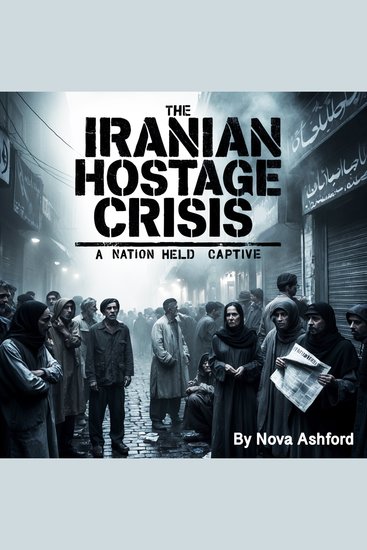
  • The Iranian Hostage Crisis - A Nation Held Captive - cover

    The Iranian Hostage Crisis - A...

    Nova Ashford

    • 0
    • 0
    • 0
    The Iran Hostage Crisis did not emerge in isolation but was the culmination of a series of events that built tension between the United States and Iran over the course of several years. At the heart of this turmoil was the downfall of the Pahlavi monarchy and the rise of the Islamic Republic, a shift that drastically altered Iran's relationship with the West. The turning point came in 1979 when the Iranian Revolution ousted the U.S.-backed Shah, Mohammad Reza Pahlavi, and brought Ayatollah Khomeini to power. While the revolution was a victory for many Iranians seeking an end to decades of autocratic rule and foreign influence, it created an atmosphere of political uncertainty, particularly regarding U.S.-Iranian relations. 
    The United States had long supported the Shah, who was seen as a crucial ally in the Middle East during the Cold War. In return, the Shah implemented policies that favored American economic and military interests, while also suppressing dissent within Iran. However, his reign became increasingly unpopular among Iranians, particularly the religious clerics and the working class, who viewed his modernization policies as an imposition of Western culture and values. By 1978, protests and demonstrations had erupted across Iran, eventually leading to the Shah’s exile in January 1979. 
    In the wake of the Shah’s departure, Iran underwent a dramatic transformation. The revolutionary movement, initially diverse in its goals, quickly coalesced under Khomeini’s leadership. Khomeini’s vision of an Islamic Republic, where political power was rooted in Shi’a religious authority, resonated with a wide segment of the population. His rhetoric condemned not only the Shah’s regime but also U.S. imperialism, which was seen as a driving force behind Iran’s oppressive system. Khomeini’s calls for a return to Islamic principles and the removal of foreign influence became central tenets of the revolution.
    Zum Buch
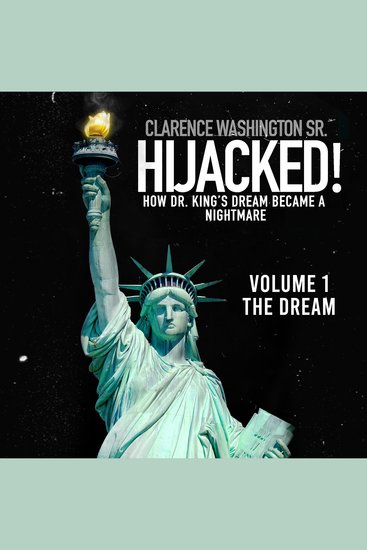
  • Hijacked! - How Dr King's Dream Became a Nightmare - cover

    Hijacked! - How Dr King's Dream...

    Clarence Washington Sr.

    • 0
    • 0
    • 0
    In this four-volume series, Hijacked!: How Dr. King's Dream Became a Nightmare, author Clarence Washington, Sr. dissects Dr. Martin Luther King's dream and explores how our failure to adhere to its principles has allowed the dream to be hijacked and turned to a nightmare - and it’s time to wake up. 
    In the first volume of the Hijacked! collection, The Dream, the author clarifies the principles for social justice and freedom for all Americans that Dr. King delineated in his monumental speech. God gave Dr. Martin Luther King a road map for America to follow in his "I Have a Dream" speech and his numerous other orations and writings. 
    In order to apply the principles of the dream effectively and make it a reality, one must understand:The goals and methods of the dreamThe methods employed in the hijack of the dreamThe devastating, nightmarish consequences produced by the hijack The revival, government reformation strategy, and reformation of other institutions that must be executed to accomplish the recovery from the nightmarish times in which we are living 
    For the full dissection of Dr. King's dream and how our failure to adhere to its principles has led to a nightmare, explore the other volumes in Hijacked!: How Dr. King's Dream Became a Nightmare. Other volumes in this series focus on the hijack itself, the nightmare, and how we can recover.
    Zum Buch
  • Normally Weird and Weirdly Normal - My Adventures in Neurodiversity - cover

    Normally Weird and Weirdly...

    Robin Ince

    • 0
    • 0
    • 0
    This audiobook is read with warmth, humility and humour by the author, Robin Ince, and includes an audio-exclusive Q&A between Robin and scientist and author Camilla Pang.'Authentic, heartbreakingly wonderful and refreshingly grounded — this book captures the internal neurodivergent experience with rare grace and warmth' - Camilla Pang'Tingles with the joy of being different. This book made me so happy' - Chris Packham, naturalist and author of Fingers in the Sparkle JarA powerful, personal exploration of anxiety, ADHD and neurodiversity, Normally Weird and Weirdly Normal reminds us all – no matter how weird we feel – that it’s okay to be a little different. We all are. What if being a bit weird is actually entirely normal? What if sharing our internal struggles wasn’t a sign of weakness, but strength?For over thirty years, award-winning broadcaster and comedian Robin Ince has entertained thousands in person and on air. But underneath the surface, a whirlwind was at play – a struggle with sadness, concentration, self-doubt and near-constant anxiety. But then he discovered he had all the hallmarks of ADHD and his stumbling blocks became stepping stones.In Normally Weird and Weirdly Normal, Robin uses his own experiences to explore the neurodivergent experience and to ask what the point of 'being normal' really is. Packed with personal insights, intimate anecdotes and interviews with psychologists, neuroscientists and many neurodivergent people he has met along the way, this is a quirky and witty dive into the world of human behaviour.'This is a comforting hug of a book. Insightful, warm, funny and compassionate, it will make readers, whether neurotypical or neurodivergent, feel less alone' - Laura Bates, bestselling author of Everyday Sexism'Weirdness is inescapable, and no one does it better than Robin Ince. A superb book, celebrating the needed weirdness in us all' - Chris Hadfield, astronaut and five-time bestselling author
    Zum Buch
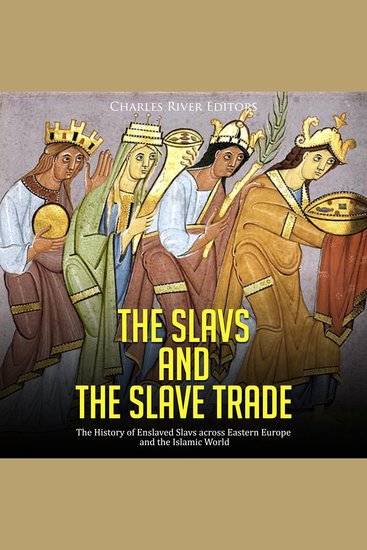
  • Slavs and the Slave Trade The: The History of Enslaved Slavs across Eastern Europe and the Islamic World - cover

    Slavs and the Slave Trade The:...

    Editors Charles River

    • 0
    • 0
    • 0
    some historians have aligned the term Slav as deriving from descriptions of slaves: “The word “slave” and its cognates in most modern European languages is itself derived from “sclavus,” meaning “slav,” the ethnic name for the inhabitants of this region.” Some historians have outlined how they believe that Slavic slaves were used intensively in the ninth and tenth centuries and acted as a driver of Western European economic growth and allowed them to “emerge from the Dark Ages.” It is only fair to note that this assertion has been disputed. Separately, other scholars have asserted that Constantinople’s rapid rise to become one of Europe’s largest cities was fueled by a large supply of Slavic slaves. 
    	These trans-European routes diminished somewhat from the thirteenth century but demonstrated how common slave trading was in the region during these centuries. The majority of the people would have been kidnapped from Southeast Europe, as well as the Eurasian and Caucasus regions. Today, that encompasses Russia, Ukraine, Georgia, the Baltic states, Poland, Romania, Bulgaria, and the states of the former Yugoslavia. Crucially, an important component of Slavic identity was the Christian faith, in particular Orthodox Christianity.  
    	In the medieval period, a slave trading network became more entrenched, transporting people from Slavic lands in Eastern Europe to the Mediterranean and beyond. The growing schism between the Catholic and Orthodox versions of Christianity made Orthodox Christians targets of the former’s slave traders. As a result, Slavic slaves were captured and taken to parts of Christian Spain, including Aragon and Valencia, in the fourteenth and fifteenth centuries.
    Zum Buch
  • A Rare Recording of Isaac Asimov - cover

    A Rare Recording of Isaac Asimov

    Isaac Asimov

    • 0
    • 0
    • 0
    Isaac Asimov (January 2, 1920 - April 6, 1992) was an American writer and professor of biochemistry at Boston University. During his lifetime, Asimov was considered one of the "Big Three" science fiction writers, along with Robert A. Heinlein and Arthur C. Clarke. Asimov also wrote mysteries and fantasy, as well as popular science and other non-fiction.
    Zum Buch
  • Hope Under Oppression - cover

    Hope Under Oppression

    Katie Stockdale

    • 0
    • 0
    • 0
    We have all been told, at one time or another, to "never give up hope." It's a common injunction to children, but as we grow older, sustaining hope becomes more challenging, particularly in a world we come to see as often frightening, dark, and unjust. But what is this thing "hope," and why is hope so valuable that we are so often urged to preserve and protect it? 


    This book explores the nature and essential role of hope in human life under conditions of oppression. Oppression is often a threat and damage to hope, yet many members of oppressed groups, including prominent activists pursuing a more just world, find hope valuable and even essential to their personal and political lives. Katie Stockdale offers a unique evaluative framework for hope that captures its intrinsic value, the rationality and morality of hope, and ultimately how we can hope well in the non-ideal world we share. She develops an account of the relationship between hope and anger about oppression and argues that when people are angry about oppression, they tend to also harbor hope for repair. 


    Ultimately, this work illustrates the crucial value of hope for both individuals and collectives in the pursuit of justice, and in an increasingly uncertain world.
    Zum Buch