Join us on a literary world trip!
Add this book to bookshelf
Grey
Write a new comment Default profile 50px
Grey
Subscribe to read the full book or read the first pages for free!
All characters reduced
The Quill's Roar - cover

The Quill's Roar

Pasquale De Marco

Publisher: Publishdrive

  • 0
  • 0
  • 0

Summary

In a world where information is power, journalism stands as a beacon of truth and accountability. This comprehensive book takes readers on a captivating journey through the history, challenges, and enduring importance of journalism.

From the printing press of John Peter Zenger to the digital age of today, journalists have played a crucial role in shaping public opinion, holding those in power accountable, and fighting for the truth. This book delves into the fascinating stories of these brave individuals, exploring the key events and technological advancements that have shaped the evolution of journalism.

Readers will gain a deep understanding of the complex relationship between the press and the government, examining the tension between the need for transparency and the need for confidentiality. The book also explores the challenges journalists face in reporting on crime, trials, and other sensitive topics, and discusses the legal framework that governs the press and its activities.

Furthermore, the book investigates the impact of new technology on journalism, exploring how the rise of the internet and social media has changed the way news is gathered, reported, and consumed. It also considers the challenges facing journalism in the 21st century, including the decline of print media, the rise of fake news, and the increasing polarization of the public.

Throughout the book, readers will encounter inspiring stories of journalists who have risked their lives and careers to uncover the truth and hold those in power accountable. From the courageous reporting of war correspondents to the dogged pursuit of justice by investigative journalists, these stories highlight the vital role that journalism plays in society.

This book is an essential read for anyone who wants to understand the role of journalism in a democracy and the challenges it faces today. Whether you are a seasoned journalist, a student of history, or simply a curious reader, this book will offer you a deeper appreciation for the importance of a free and independent press.


If you like this book, write a review!
Available since: 06/02/2025.
Print length: 163 pages.
Other books that might interest you

  • Ultimate Shadow Work Journal & Workbook The - 2 Books in 1 - A Comprehensive Collection of Exercises Journal Prompts and Affirmations for Profound Self-Discovery Emotional Healing and Personal Growth - cover

    Ultimate Shadow Work Journal &...

    Leigh W. Hart

    • 0
    • 0
    • 0
    This COMPREHENSIVE 2-IN-1 BUNDLE combines the foundational insights from Self-Guided Shadow Work for Beginners with the more advanced practices in Advanced Self-Guided Shadow Work.What unexpected and even amazing secrets does your shadow side hide? It’s time to forget the fear and shine a light on a hidden part of you that could be one of your absolute strengths! 
    The word shadow is dark and mysterious – something that you want to be cautious of and possibly even avoid. When you think about your own shadow side, you may feel a little fear and trepidation. So many questions arise, such as:Can I honestly not be aware of some deep, dark side of myself?If I step onto this path will I discover something I truly don’t want to face?Is this something I can really do on my own? 
    Shadow work is not something to be afraid of – in fact, it is all about shining the light of self-awareness and self-compassion into the dark so that you can embrace your whole self. It is a key step for anyone who wants to reach their full life potential.In this practical and supportive guide, you will discover:Strategies for handling overwhelming emotions and knowing if shadow work is effectiveEmotional mastery techniques to transform intensity into strength and resilienceCognitive reframing and confidence-building to overcome negative thoughts and create healthier habitsEnhanced relationship dynamics, including empathy, forgiveness, and effective communication skillsBeginners and Advanced self-reflection strategies to reveal the profound truths of your subconsciousTools for transforming past traumas and achieving a healed self
    Show book
  • Airplanes and the history of aviation - cover

    Airplanes and the history of...

    KidsChoice

    • 0
    • 0
    • 0
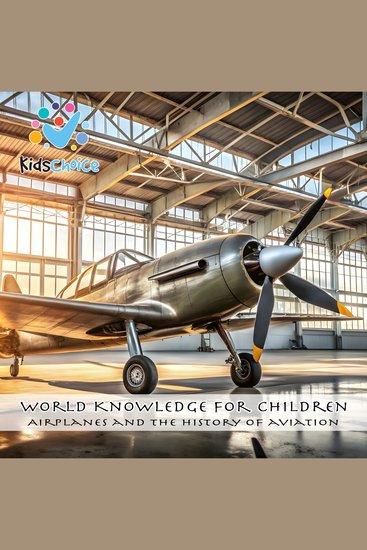
    KidsChoice: World knowledge for Children is an engaging audiobook series that takes young listeners on a fascinating journey to explore and understand the world around them. Aimed at curious children aged 7 to 99, this series dives into a variety of topics in science, society, and culture, making complex ideas accessible and exciting.  Each episode brings a unique theme to life—whether exploring the mysteries of space, uncovering the secrets of the human body, or discovering the diversity of cultures and traditions worldwide. With lively narration, interesting facts, and interactive elements, the series guides young listeners on an adventure full of discovery, encouraging them to ask questions and expand their understanding in a fun way.  In the scientific world of KidsChoice, children learn about the wonders of nature and the universe. Concepts like the solar system, animal behavior, the human body, and Earth's various ecosystems are explained in a way that is easy for kids to grasp and find fascinating. Exciting analogies and vivid examples help spark curiosity, turning learning into an adventure.  Societal topics also have a special place in the series. KidsChoice introduces young listeners to the basics of community, compassion, and making a positive impact. Children learn what it means to be a good citizen and how they can make small, meaningful contributions to their communities.  Additionally, KidsChoice opens a window to the vibrant world of global cultures. Through a virtual journey around the globe, children discover how people in other countries live, the customs and traditions they follow, the languages they speak, and the foods they enjoy. This fosters understanding and respect for diverse ways of life, celebrating the richness of human experience as a beautiful, valuable part of the world.  With its vivid language and captivating soundscapes, "KidsChoice: World knowledge for Children" turns learning into an exciting experience, sparking a lifelong curiosity and a deeper understanding of the world around them.
    Show book
  • Utopia (Hero Classics) - cover

    Utopia (Hero Classics)

    Thomas Moore

    • 0
    • 0
    • 0
    Part of the Hero Classics series 
    Utopia is a distant island where the inhabitants are thriving and justice and reason prevail, in contrast to the realities of sixteenth-century Europe, where greed, superstition and unenlightened tradition reign. Using the framework of a traveller’s account to a fictional land, Thomas More created an ingenious treatise which envisioned a more humanist approach to laws and social structures, and coined the now common term “utopia”. 
    The Hero Classics series:MeditationsThe ProphetA Room of One’s OwnIncidents in the Life of a Slave GirlThe Art of WarThe Life of Charlotte BronteThe RepublicThe PrinceNarrative of the Life of Frederick Douglass, an American SlaveUtopia
    Show book
  • Right This Way - A History of the Audience - cover

    Right This Way - A History of...

    Robert Viagas

    • 0
    • 0
    • 0
    When you sit down at a play, movie, or concert—or even in front of the TV or scrolling on your phone—you are taking part in one of the oldest and most mysterious forms of human behavior. Being part of an audience is an age-old experience that we all crave, one that has evolved from amphitheaters to screens. Right This Way is a pop history of audiences through the ages. Playbill editor Robert Viagas unfolds the unique aspects of what he calls “audiencing” with stories from the age of the Greeks to the world of Zoom. He walks through the different types of audiences and the history of their responses, what science has to say about how our brains respond to what they see and the reactions of the people around them, and why, during COVID-19, people risked a deadly virus to be part of a crowd. Right This Way explores what the audience experience brings us and how it may evolve in the 21st century.
    Show book
  • First Book of Thessalonians The - The World English Bible Book 52 (Unabridged) - cover

    First Book of Thessalonians The...

    Various Authors

    • 0
    • 0
    • 0
    The First Book of Thessalonians is a Pauline epistle of the New Testament of the Christian Bible. The epistle is attributed to Paul the Apostle, and is addressed to the church in Thessalonica, in modern-day Greece. It is likely among the first of Paul's letters, probably written by the end of AD 52, though some scholars believe the Epistle to Galatians may have been written by AD 48.
    Show book
  • Samoan Crisis The: The History of the Military Standoff Between the United States Germany and Great Britain over the Samoan Islands - cover

    Samoan Crisis The: The History...

    Editors Charles River

    • 0
    • 0
    • 0
    Samoa is a group of about 20 islands in the South Pacific Ocean, totaling slightly over 1,100 square miles, about a fifth the size of Hawai’i. The ancestors of the Samoans arrived there many centuries ago. Archaeological artifacts suggest Polynesians arrived perhaps three thousand years before the present, or perhaps even earlier (O’Connor, 2017). 
    Samoans remained part of an isolated Pacific Ocean region for a very long time, with trade and social links with the people of the Fiji and Tonga islands. That inter-island world was not “discovered” by European explorers until 1722, when a Dutch ship, captained by Joseph Roggeveen, visited. The next European view of the Samoan islands was in 1778 by a French expedition, commanded by Louis-Antoine de Bougainville. A later French expedition under La Perouse found the islands far from congenial; a fight erupted and the French lost 12 men (O’Connor, 2017). 
    The pace of contact with the outside world quickened by the end of the 1700s. Explorers visited, naval expeditions checked out Samoa and other islands, a few European beachcombers arrived, and so did missionaries. Samoa, like many other Pacific Island groups, attracted outside interest for several reasons. Missionaries found souls to save. Whaling ships found places to resupply themselves with food, water, sometimes crew, and for rest and recreation. As navies converted to steam, islands became useful as coaling stations, and as the Industrial Revolution spread, islands offered raw materials and goods for potential profit. The Pacific Islands also became pawns in what is best described as a global imperial competition.
    Show book