Join us on a literary world trip!
Add this book to bookshelf
Grey
Write a new comment Default profile 50px
Grey
Subscribe to read the full book or read the first pages for free!
All characters reduced
The Prince + The Art of War - 2 Masterpieces of Strategy - cover

The Prince + The Art of War - 2 Masterpieces of Strategy

Niccolo Machiavelli

Publisher: DigiCat

  • 0
  • 0
  • 0

Summary

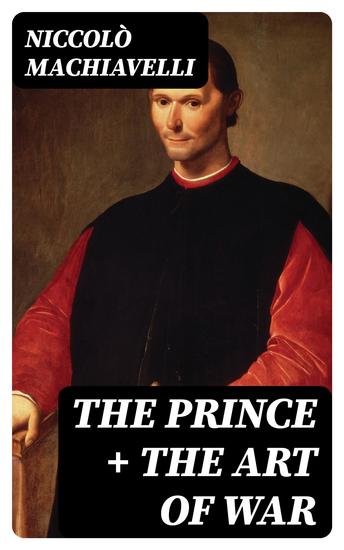
In Niccolò Machiavelli's seminal works, *The Prince* and *The Art of War*, the author intricately examines the mechanics of power and governance, delivering profound insights into the nature of political leadership and military strategy during the Italian Renaissance. Written in a direct and pragmatic style, these texts reflect a stark realism, eschewing moralistic narratives in favor of candid advice for rulers and military leaders. The intertwining of warfare and politics is explored through Machiavelli's analytical lens, making these treatises foundational to modern political theory and military thought. Machiavelli, a diplomat and political theorist from Florence, was profoundly influenced by the tumultuous political landscape of his time, characterized by petty rivalries, shifting allegiances, and the rise and fall of city-states. His personal experiences, including his imprisonment and exile, shaped his understanding of power dynamics, making him a keen observer of human behavior and government. As a product of the Italian Renaissance, Machiavelli sought to revive classical ideas while confronting the realities of contemporary politics. *The Prince* and *The Art of War* are essential readings for anyone interested in political philosophy, history, or military strategy. Machiavelli's work remains relevant, offering critical reflections that provoke thought about authoritative governance, ethics in leadership, and the complexities of war, making this a compelling exploration for scholars and general readers alike.
Available since: 05/25/2022.
Print length: 440 pages.
Other books that might interest you

  • The Poet Li Po - A Study Of One Of China's Great Cultural Treasures - cover

    The Poet Li Po - A Study Of One...

    Arthur Waley

    • 0
    • 0
    • 0
    A dive into one of China's great poets by the first great populariser of Chinese literature, Arthur Waley.Also known as Li Bai (Chinese: 李白; pinyin: Lǐ Bái, 701–762), also pronounced as Li Bo, courtesy name Taibai (Chinese: 太白), was a Chinese poet, acclaimed from his own time to the present as one of the greatest and most important poets of the Tang dynasty and in Chinese history as a whole. He and his friend Du Fu (712–770) were two of the most prominent figures in the flourishing of Chinese poetry under the Tang dynasty, which is often called the "Golden Age of Chinese Poetry". The expression "Three Wonders" denotes Li Bai's poetry, Pei Min's swordplay, and Zhang Xu's calligraphy. - From the wiki
    Show book
  • Jewish History: An Enthralling Guide from Ancient Kingdoms to Modern Times - cover

    Jewish History: An Enthralling...

    Billy Wellman

    • 0
    • 0
    • 0
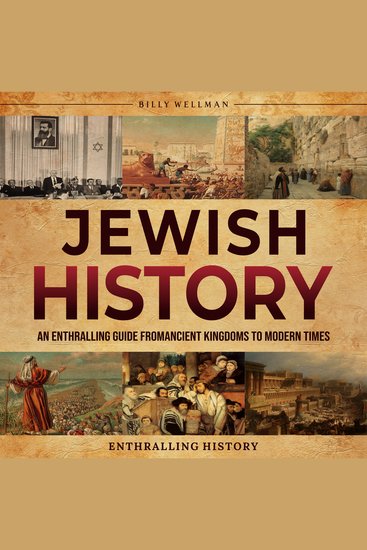
    Two manuscripts in one audiobook:History of the Jews: An Enthralling Guide from Ancient Times to the PresentAncient Israel: An Enthralling Guide to Jewish Kingdoms and the Israelites 
    In the first part of this audiobook, you will know:What spectacular events are celebrated at Pesach (Passover)?How did the Jews escape the Babylonian exile?Who sacrificed a pig to the god Saturn in Jerusalem’s Second Temple?How did Muslim rule mostly improve life for Jews in Spain and North Africa?What underlying philosophies led to the Nazis’ attempt to annihilate the Jewish race?How did Israel defeat eight Arab nations in the Six-Day War?What led to a lasting peace between Israel and Egypt? 
    In the second part of this audiobook, you will discover:How the ancient Israelites ended up in Canaan and began to build a civilizationThe establishment of the United Kingdom of IsraelThe split of the United Kingdom of Israel and the Babylonian invasion of the Kingdom of JudeaThe Achaemenid liberation of the Jews and the formation of Yehud MedinataThe period and process of Hellenization commenced by the Greeks and the resulting Maccabean Revolt, which gave birth to the Hasmonean dynastyThe end of the Hasmoneans and the formation of the Herodian dynastyAnd so much more! 
    To explore Jewish history and legacy, scroll up and click the “add to cart” button!
    Show book
  • Roosevelt's New Deal - cover

    Roosevelt's New Deal

    Davis Truman

    • 0
    • 0
    • 0
    The Roosevelt New Deal was a series of domestic programs and initiatives launched by President Franklin D. Roosevelt shortly after he assumed office in 1933. At the time, the United States faced one of the worst economic crises in its history, with unemployment rates exceeding 25%, banks failing, and businesses closing down. In response to this crisis, Roosevelt sought to implement a range of policies to address the immediate needs of the people and the underlying causes of the economic downturn. 
    The New Deal was based on three primary goals: relief, recovery, and reform. Relief measures aimed to provide immediate assistance to those most affected by the Great Depression, including the unemployed, farmers, and the elderly. Recovery efforts focused on restoring the economy and creating jobs. At the same time, reform measures sought to address the structural issues that had contributed to the crisis, such as the lack of financial regulation and social safety nets. 
    Some of the critical initiatives of the New Deal included the creation of the Civilian Conservation Corps (CCC), which employed young men to work on public projects such as road building and conservation; the establishment of the Works Progress Administration (WPA), which provided jobs and training to millions of unemployed workers; and the implementation of agricultural subsidies to support struggling farmers. 
    The New Deal also saw significant changes in the regulation of the financial sector, including the creation of the Federal Deposit Insurance Corporation (FDIC) to insure bank deposits and the Securities and Exchange Commission (SEC) to regulate the stock market. Other reforms included establishing social security, which provided retirement benefits to elderly Americans, and the National Labor Relations Act, which protected workers' rights to unionize.
    Show book
  • REDEFINING SUCCESS FOR EMPOWERED LIVING - Balancing body mind and soul - cover

    REDEFINING SUCCESS FOR EMPOWERED...

    Eshita Singh

    • 0
    • 0
    • 0
    ABOUT THE BOOK 
    Taking care of oneself is the most vital aspect that contributes to our self-improvement journey. Self-care is a journey that begins when we genuinely commit to looking after all dimensions of ourselves. This involves nurturing our physical, mental, and spiritual well-being. Our body is akin to a temple where numerous essential tasks and functions occur, playing a crucial role in achieving our life's purpose. 
    Writing this book is my endeavor to offer insights drawn from my personal experiences and research, aimed at guiding and motivating readers to prioritize their holistic health. 
    My journey towards health and fitness began in my childhood, and it was further strengthened post-pregnancy when I managed to reduce my weight from 90 kg to 63 kg within less than 18 months through mindful dietary choices. 
    Drawing from these life-changing experiences and my unique perspective, I felt compelled to share my insights with others. If I could bring about transformative changes in my life by nurturing holistic health, I believed anyone could. 
    My journey has led me to believe that true success emerges from a balanced approach to life, where physical, mental, and spiritual well-being converge to shape a fulfilled and purposeful existence. 
    My intention behind writing this book is to share my experiences and insights, hoping to inspire and guide readers on their own journeys towards holistic well-being. If even a single person benefits from my experiences, it would be a significant achievement. 
      
     
    Show book
  • Pollution is Colonialism - cover

    Pollution is Colonialism

    Max Liboiron

    • 0
    • 0
    • 0
    In Pollution Is Colonialism Max Liboiron presents a framework for understanding scientific research methods as practices that can align with or against colonialism. They point out that even when researchers are working toward benevolent goals, environmental science and activism are often premised on a colonial worldview and access to land. Focusing on plastic pollution, the book models an anticolonial scientific practice aligned with Indigenous, particularly Métis, concepts of land, ethics, and relations. Liboiron draws on their work in the Civic Laboratory for Environmental Action Research (CLEAR)—an anticolonial science laboratory in Newfoundland, Canada—to illuminate how pollution is not a symptom of capitalism but a violent enactment of colonial land relations that claim access to Indigenous land. Liboiron's creative, lively, and passionate text refuses theories of pollution that make Indigenous land available for settler and colonial goals. In this way, their methodology demonstrates that anticolonial science is not only possible but is currently being practiced in ways that enact more ethical modes of being in the world.
    Show book
  • If We Had No Belief What Would Happen to Us? - Ojai 1949 - Public Talk 3 - cover

    If We Had No Belief What Would...

    Jiddu Krishnamurti

    • 0
    • 0
    • 0
    If we had no belief what would happen to us? - 23 July 1949 
    • Without self-knowledge we cannot go beyond the self-projected illusions of the 
    mind. 
    • It’s only in relationship that one can know oneself as one is. 
    • A mind that is filled with beliefs, dogmas, assertions and quotations is an un 
    creative, repetitive mind. 
    • Can we look at ourselves without beliefs? 
    • A mind that is quiet because it understands fear and understands itself is 
    creative. 
    • Q: Our mind knows only the known. What is it in us that drives us to find the 
    unknown, reality, or God?
    Show book