Unisciti a noi in un viaggio nel mondo dei libri!
Aggiungi questo libro allo scaffale
Grey
Scrivi un nuovo commento Default profile 50px
Grey
Iscriviti per leggere l'intero libro o leggi le prime pagine gratuitamente!
All characters reduced
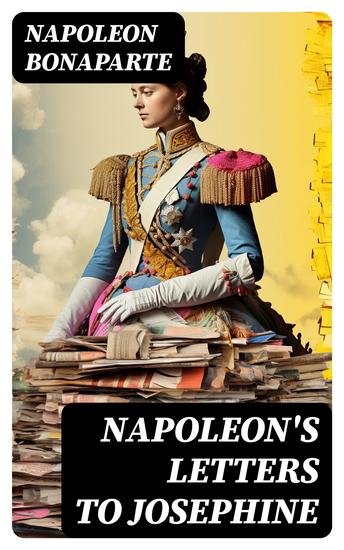
Napoleon's Letters to Josephine - cover

Napoleon's Letters to Josephine

Napoleon Bonaparte

Casa editrice: DigiCat

  • 0
  • 0
  • 0

Sinossi

In "Napoleon's Letters to Josephine," the intimate correspondence between the formidable military leader and his beloved wife reveals a kaleidoscopic portrait of passion, longing, and emotional vulnerability. Written during a time of political upheaval and personal turmoil, these letters are both eloquent and poignant, showcasing Bonaparte's mastery of language and ability to convey deep feelings. The literary style is characterized by fervent expressions and heartfelt rhetoric, capturing the essence of their tumultuous relationship against the backdrop of Napoleonic France, where personal and political spheres often collided. Napoleon Bonaparte, one of history's most recognized figures, was deeply influenced by his complex relationships, especially with Josephine de Beauharnais. Born into modest circumstances, Napoleon rose to iconic status as Emperor, a position that demanded both ruthlessness and charisma. His letters to Josephine not only reveal the softer, romantic side of this military genius but also reflect the emotional strife he faced, offering a glimpse into the vulnerabilities that propelled him beyond the battlefield. "Napoleon's Letters to Josephine" is essential reading for those interested in understanding the multifaceted nature of human emotions, leadership, and love. This collection invites readers into the heart of a legendary figure, making it a poignant exploration of both historical significance and intimate connection.
Disponibile da: 19/11/2023.
Lunghezza di stampa: 233 pagine.

Altri libri che potrebbero interessarti

  • Quel che ho da dire è che sono innocente - cover

    Quel che ho da dire è che sono...

    Bartolomeo Vanzetti

    • 0
    • 0
    • 0
    Vanzetti nacque a Villafalletto, in provincia di Cuneo, l'11 giugno del 1888, primogenito dei quattro figli di Giovanna Nivello (1862-1907) e Giovanni Battista Vanzetti (1849-1931), modesto proprietario terriero e gestore di una piccola caffetteria. Pur non vivendo in ristrettezze economiche, a spingerlo a emigrare negli Stati Uniti d'America furono soprattutto l'improvvisa e tragica morte dell'amata madre, che lo portò quasi alla follia, e probabilmente una consuetudine familiare (anche il padre era stato emigrante per un breve periodo, dal 1881 al 1883 in California). Fece molti lavori, accettando tutto ciò che gli capitava. Lavorò in varie trattorie, in una cava, in un'acciaieria e in una fabbrica di cordami, la Plymouth Cordage Company. Spirito libero e indipendente, era un avido lettore soprattutto delle opere di Marx, Darwin, Hugo, Gorkij, Tolstoj, Zola e Dante. Nel 1916 guidò uno sciopero contro la Plymouth e per questo motivo nessuno volle più dargli un lavoro. Più tardi, nel 1919, si mise in proprio facendo il pescivendolo fino al momento dell'arresto.
    Mostra libro
  • Defeating Jihadist Terrorism - cover

    Defeating Jihadist Terrorism

    Jacques Baud

    • 0
    • 0
    • 0
    Since the early 1990s, terrorism and its victims have increased exponentially. Without any action strategy or exit solution, through political and military incompetence, stupidity and ideological blindness, Western interventions have only contributed to its development. We eliminate terrorists, but not terrorism. The solution lies in a more holistic, more subtle, more intelligent and less dogmatic approach. Terrorism is not an ideology. It is a method that takes many forms, including jihadist terrorism. Each form of terrorism is fought with a specific strategy. Based on the original texts of jihadist strategists as well as on their own analyses of attacks in France, Belgium, Great Britain and the United States, Jacques Baud explains the reasons for Western failure. He uses the analyses of Western intelligence services to decipher the mechanisms of jihadist terrorism, in order to extract strategies of action likely to avoid it or to fight it effectively and durably. The author is a former head of Swiss strategic intelligence and former head of UN peace operations doctrine. In the course of his missions in Africa and Central Asia, the author has had several encounters with jihadists in the field. 
    This audiobook is read by a synthesized voice.
    Mostra libro
  • Writing the Wisdom - Creative writing as healing from childhood trauma - cover

    Writing the Wisdom - Creative...

    Penny Johnson, Barbara Glasson

    • 0
    • 3
    • 0
    Writing the Wisdom explores the effects and emotional impact that trauma and abuse have on a person's life whilst also bringing together religious, spiritual, pastoral and therapeutic understandings. In a partnership between a church minister and an accredited counsellor, Barbara Glasson and Penny Johnson have used “creative writing for wellbeing” with women survivors of childhood trauma, including organized ritual abuse, a subject that still remains largely hidden from our society.


    The poetry and prose that have been produced during these creative writing workshops may help those who have lived through such devastation to feel less isolated, by giving them the opportunity to read about others' experiences.
    
     
    Writing the Wisdom also explores church practices that are unhelpful for those who have experienced abuse. Language and litany, listening and witnessing, healing, forgiveness and wisdom are all discussed, in the hope of enabling faith communities to look more closely and honestly at our way of life and to be mindful of the difficulties that some survivors of childhood abuse face.
    Mostra libro
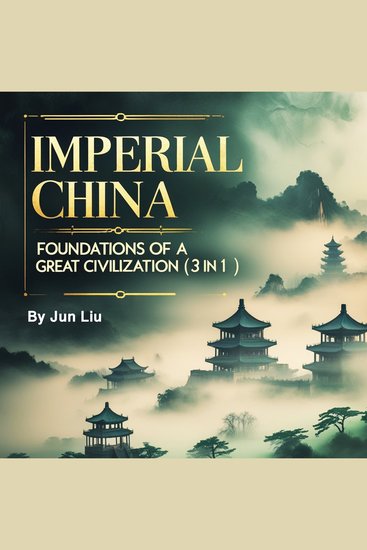
  • Imperial China - Foundations of a Great Civilization (3 in 1) - cover

    Imperial China - Foundations of...

    Jun Liu

    • 0
    • 0
    • 0
    This book offers an in-depth exploration of three of the most influential dynasties in Chinese history: the Han, Qin, and Tang Dynasties. This book delves into the powerful legacies of these dynasties, each of which shaped China’s cultural, political, and social development in profound ways. The Qin Dynasty, under the leadership of Emperor Qin Shi Huang, is known for unifying China and initiating monumental infrastructure projects such as the Great Wall and the Terracotta Army. The Han Dynasty, a golden age in Chinese history, expanded China’s borders, solidified Confucian ideals, and fostered the flourishing of trade along the Silk Road. Finally, the Tang Dynasty, often regarded as the most prosperous period in China’s imperial history, saw significant advancements in arts, culture, and governance. 
    In the Qin Dynasty, China was unified for the first time under a single ruler, marking the beginning of imperial rule. Emperor Qin’s centralization of power, creation of a standardized legal system, and the construction of defensive walls set the stage for the future of Chinese civilization. Although short-lived, the Qin Dynasty’s impact on Chinese governance and infrastructure would echo through the centuries.  
    Meanwhile, the Han Dynasty succeeded the Qin, ushering in an era of stability, economic prosperity, and cultural development. The Han established a strong bureaucracy and military, advanced in science and technology, and integrated Confucianism as the official philosophy, influencing Chinese society for over two millennia. 
    The Tang Dynasty, which followed the collapse of the Sui Dynasty, is celebrated for its cultural achievements, including the flourishing of poetry, painting, and literature. The Tang Empire expanded China's territory to its greatest extent, and its cosmopolitan capital, Chang'an, became a vibrant hub for international trade and cultural exchange.
    Mostra libro
  • Occupation and Liberation of France during World War II The: The History of the Decisive Campaigns in 1940 and 1944 - cover

    Occupation and Liberation of...

    Editors Charles River

    • 0
    • 0
    • 0
    One of the most famous people in the world came to tour the city of Paris for the first time on June 28, 1940. Over the next three hours, he rode through the city’s streets, stopping to tour L’Opéra Paris. He rode down the Champs-Élysées toward the Trocadero and the Eiffel Tower, where he had his picture taken. After passing through the Arc de Triomphe, he toured the Pantheon and old medieval churches, though he did not manage to see the Louvre or the Palace of Justice. Heading back to the airport, he told his staff, “It was the dream of my life to be permitted to see Paris. I cannot say how happy I am to have that dream fulfilled today.” 
    Four years after his tour, Adolf Hitler would order the city’s garrison commander, General Dietrich von Choltitz, to destroy Paris, warning his subordinate that the city "must not fall into the enemy's hand except lying in complete debris." Of course, Paris was not destroyed before the Allies liberated it, but it would take more than 4 years for them to wrest control of France from Nazi Germany after they took the country by storm in about a month in 1940. That said, it’s widely overlooked today given how history played out that as the power of Nazi Germany grew alarmingly during the 1930s, the French sought means to defend their territory against the rising menace of the Thousand-Year Reich. As architects of the most punitive measures in the Treaty of Versailles following World War I, France was a natural target for Teutonic retribution, so the Maginot Line, a series of interconnected strongpoints and fortifications running along much of France's eastern border, helped allay French fears of invasion. 
    The French had not expected the Germans would be able to move armored units through the Ardennes Forests, a heavily wooded region spanning parts of Belgium, France and the Netherlands. To the Allies’ great surprise, the Germans had no trouble rolling across these lands in the span of weeks.
    Mostra libro
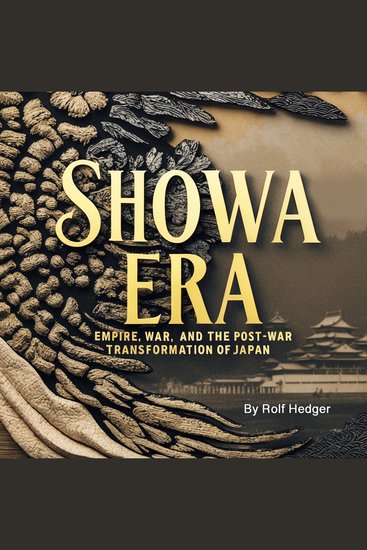
  • Showa Era - Empire War and the Post-War Transformation of Japan - cover

    Showa Era - Empire War and the...

    Rolf Hedger

    • 0
    • 0
    • 0
    The Showa Era began on December 25, 1926, with the ascension of Emperor Hirohito following the death of his father, Emperor Taisho. This period marked a critical turning point in Japan’s history, as the nation transitioned from the political turbulence of the Taisho democracy to a time of increasing militarism and nationalist sentiment. Although the early years of the Showa Era were characterized by economic struggles and political instability, they also set the stage for Japan’s dramatic expansion and eventual involvement in global conflict. 
    Emperor Hirohito’s rise to the throne was met with both hope and uncertainty. Many saw him as a symbol of continuity and strength, while others were concerned about the growing influence of the military in governmental affairs. Unlike his father, whose reign was defined by a parliamentary democracy, Hirohito’s early years as emperor witnessed the gradual erosion of democratic institutions. The shift toward a more authoritarian government was driven by widespread dissatisfaction with the parliamentary system and the belief that Japan needed strong leadership to navigate domestic and international challenges. 
    One of the most pressing issues Japan faced at the beginning of the Showa Era was economic instability. The global economy had already begun to weaken, and in 1929, the Wall Street Crash sent shockwaves through Japan’s financial system. The economic downturn led to mass unemployment, factory closures, and widespread poverty, exacerbating social tensions. Farmers, who made up a significant portion of Japan’s population, suffered greatly as the price of rice plummeted, leading to rural hardships that fueled growing resentment toward the government. In response, nationalist and ultraconservative factions gained popularity, advocating for territorial expansion as a means to secure resources and economic stability.
    Mostra libro