Join us on a literary world trip!
Add this book to bookshelf
Grey
Write a new comment Default profile 50px
Grey
Subscribe to read the full book or read the first pages for free!
All characters reduced
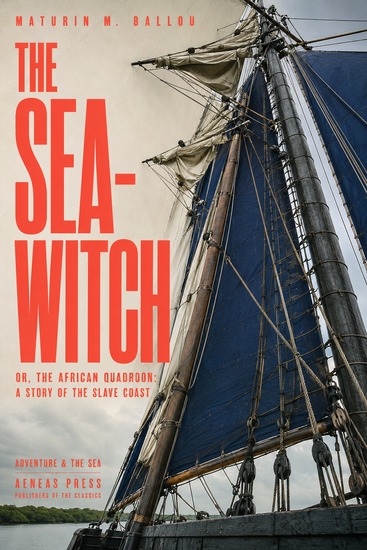
The Sea-Witch - or The African Quadroon - cover

The Sea-Witch - or The African Quadroon

Maturin M. Ballou

Publisher: Aeneas Press

  • 0
  • 0
  • 0

Summary

A slaver on the West African coast, a quadroon woman sold with the cargo, and a Yankee captain who has to decide what he is. Ballou founded Ballou's Pictorial and, with a partner, the first American story paper, turning out cheap romances by the yard. Read it as evidence: this is how the American mass market of the 1850s told itself about slavery, and the telling is worth examining. Fifty-five plates of sea and shore by Turner, Aivazovsky and others run from 1771 to 1910, matching the novel's watery reach from the African coast to the open Atlantic.
Available since: 08/19/2026.
Print length: 180 pages.

Other books that might interest you

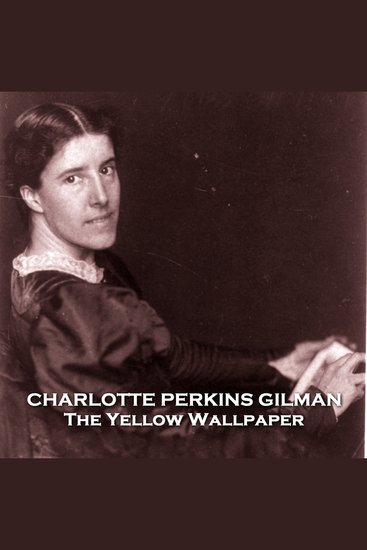
  • The Yellow Wallpaper - From their pens to your ears genius in every story - cover

    The Yellow Wallpaper - From...

    Charlotte Perkins Gilman

    • 0
    • 0
    • 0
    Charlotte Perkins Gilman was born on 3rd July 1860 in Hartford, Connecticut, to an unaffectionate mother and a father who abandoned her and her older brother to a life of poverty. 
    Inevitably her schooling was limited and by 15 she had attended seven different schools but received only four years education.  However Charlotte was resourceful and did spend time with her father’s aunts – the suffragist Isabella Beecher Hooker and the ‘Uncle Tom Cabin’s’ author, Harriet Beecher Stowe as well as many hours at the public library studying ancient civilisations. 
    In 1878, she enrolled in classes at the Rhode Island School of Design where she met Martha Luther and they developed a close relationship until Luther married in 1881. Charlotte was devastated and detested romance and love until she met and married the artist Charles Walter Stetson.  
    Their only child, Katharine Beecher Stetson, was born in 1885 but left Charlotte with post-natal depression, then often dismissed as a case of hysteria or nerves.  Unsuited to domestic life she ruptured her life and moved to California with Katherine.  She divorced in 1894 and then sent Katharine east to live with her father and his second wife confirming that his paternal rights be acknowledged and that Katherine establish a relationship with her father. 
    After her mother died in 1893, Charlotte moved back east and became involved with her first cousin, Wall Street attorney, Houghton Gilman who she married in 1900. After his death she moved back to California, where Katherine now lived.   
    Her most popular story is ‘The Yellow Wallpaper’ which touched on her own post-partum depression and underlined the need for women to be responsible for their mental and physical well-being, as the narrator is ordered by her husband/doctor to take compete rest in her room where she is isolated and becomes obsessed with the revolting yellow wallpaper.   
    She wrote other notable short stories the best of which we also include.   
    Charlotte lectured widely for social reform, wrote important non-fiction works that questioned our patriarchal system and left a legacy as a leading and positive spokesperson for feminism.  
    She was diagnosed with incurable breast cancer in 1932 and, as she wrote in her suicide note and autobiography, she ‘chose chloroform over cancer’    
    Charlotte Perkins Gilman took her own life on 17th August 1935, aged 75, in Pasadena, California.
    Show book
  • The Medallion of Petra - cover

    The Medallion of Petra

    Christopher Cartwright

    • 0
    • 0
    • 0
    During Operation Desert Storm, Major William Harrison led a team of Special Forces on a secret mission to capture Haidar Kamel, a ruthless arms dealer. 
    The operation revealed a treasure trove of dangerous weapons, along with a series of strange artifacts from the ancient world. One of the most unlikely discoveries was a small bronze medallion. 
    They named it the Medallion of Petra, and somehow, it was much more dangerous and valuable than anyone could have ever imagined… 
    …and now Sam Reilly must unlock its secrets, before it’s too late.
    Show book
  • Zone Rouge - A Bone-Chilling Collection of 18 Short Horror Stories - cover

    Zone Rouge - A Bone-Chilling...

    Alphonse Schaller

    • 0
    • 0
    • 0
    Wrong place, wrong time. 
    "…will leave even the most stalwart horror fans sleeping with the lights on."—K.C. Finn for Readers’ Favorite 
    Eighteen voices share their harrowing encounters with the uncanny, the grotesque, and the utterly inexplicable. 
    Stories of old gods and new nightmares, of the evil men do, and of the terrors lingering in the dark. A young woman's horrifying discovery in her roommate, a family's legacy of guarding a monstrous secret, a man's desperate flight from a ravenous beast—each story is a descent into fear, madness, and the realization that the world is far more terrifying than we ever imagined. 
    Journey into the darkness, but remember, these witnesses carry a burden you may not want to share.
    Show book
  • For Your Eyes Only - A James Bond Adventure - cover

    For Your Eyes Only - A James...

    Ian Fleming

    • 0
    • 0
    • 0
    A STUNNING COLLECTION OF STORIES THAT SENDS BOND TO BERMUDA, THE BAHAMAS, AND BEYOND. Narrated by Johnny Flynn! 
     “From a View to a Kill” whisks Bond to the French countryside where he must go undercover to expose a deadly secret-intelligence plot, and in “For Your Eyes Only,” 007 is absorbed into a private vendetta of M’s, blurring the lines between the personal and professional. In “Quantum of Solace,” Bond attends a dinner party in the Bahamas and learns how passion can soon twist into cruelty, while “Risico” forces the secret agent to fight for the lesser of two evils in a smuggling war set amid the Mediterranean. Finally, “The Hildebrand Rarity” lands 007 in an old-fashioned murder mystery at sea, where even he has a secret to keep. 
     A collection of both classic intrigue and intrepid self-examination, For Your Eyes Only packs full, vibrant worlds into five classic tales.
    Show book
  • The Miracle of Mind - cover

    The Miracle of Mind

    Joseph Murphy

    • 0
    • 0
    • 0
    In The Miracles of Your Mind, renowned author Joseph Murphy reveals how your thoughts shape your reality and how you can harness the incredible power of your subconscious to achieve success, happiness, wealth, and inner peace.This audiobook takes you on a transformative journey into the deeper layers of your mind, where beliefs, habits, and emotions silently influence your daily life. Through simple yet powerful techniques such as visualization, affirmations, and focused intention, you'll learn how to reprogram negative patterns and replace them with empowering thoughts.Whether you want to improve your health, attract abundance, build confidence, or overcome fear, this audiobook provides practical tools to help you take control of your mental programming and create the life you truly desire.
    Show book
  • The Avenger - From their pens to your ears genius in every story - cover

    The Avenger - From their pens to...

    Edgar Rice Burroughs

    • 0
    • 0
    • 0
    Edgar Rice Burroughs (1875-1950) is a celebrated American novelist best known for the creation of the fictional character and immortal icon Tarzan as well as for the creation of the now famous hero John Carter. By and large, although Burroughs’s fictional production is often classified among ‘pulp literature’ by many a canonical critic, his numerous novels revolutionized the science-fiction novel and the adventure novel. Burroughs’s extraordinary characters rapidly found their way to other media than literature including cartoons, radio and cinema and thus made his fortune and fame. Edgar Rice Burroughs was born in Chicago in 1875 and educated in a number of different schools. It is said has it that as a teenager he had to move from one school to another because of the influenza epidemic of 1891. At a certain point of his early life, his father who was himself a civil war veteran, decided to give his son a military education and sent him to the Michigan Military Academy.  
    Burroughs almost had a life-time career in the army was it not for his health problems that disqualified him from the service. He then engaged in different jobs in which he was not very successful. These included running a stationery store in Pocatello, Idaho, as well as working in his father’s firm. He later worked in his father’s American Battery Company before he got married to his childhood’s love Emma Centennia Hulbert in 1900. 
    Burroughs was almost obsessed with running his own business. This made him feel uneasy with the many positions that he fulfilled in private companies. After moments of financial crises, he eventually established a private business selling pencil sharpeners to retailers. The tradition goes that when Burroughs was waiting for his salesmen he used to browse through magazines to check the placement of the advertisements of his own business. Many of such magazines were pulp fiction magazines that published serialized stories belonging to the romance, crime and science-fiction genres. It was thus that the idea came to him to start writing similar stories and sell them to such magazines. Once famous, Burroughs never stopped evoking this story, relating that he believed himself able to write much better stories than the ones he chanced to read. By 1911, he started writing stories to be serialized in magazines with the aim of just making money. However, his stories happened to please the famous magazine publisher Frank Munsey and the editor Thomas Metcalf who paid him generously. 
    Under the pseudonym Norman Bean, Burroughs published his first story Under the Moons of Mars whose title was chosen by the editor. The story became popular and encouraged the author to follow it up with sequels to be later referred to as the ‘Barsoom’ series. Before the publication of the last installment of Under the Moons of Mars, Burroughs’s second novel was completed and entitled The Outlaw of Torn. Though the latter was to be posthumously hailed as one of his finest achievements, Burroughs’s editor refused to serialize it. The novel was then sent to be published in five installments in the New Story Magazine in 1914. It was, however, Burroughs’s third work that brought him to immediate and unprecedented success with the creation of the immortal character of Tarzan, a good-natured savage born in the African jungle to dead English parents. He is brought up by a monkey tribe to become a man of great physical and intellectual abilities. Tarzan’s perfection was often a subject of disagreement between his creator and cinema directors who rather tend to highlight the animalistic side of the character. Burroughs often explained that Tarzan should not be portrayed as the savage from a colonialist perspective. For him, Tarzan should rather stand for all the qualities and the goodness of natural life. Indeed, after a journey into the ‘civilized’ world, Tarzan eventually decides to regain to the jungle, realizing that the latter is actually more natural, more true
    Show book