Join us on a literary world trip!
Add this book to bookshelf
Grey
Write a new comment Default profile 50px
Grey
Subscribe to read the full book or read the first pages for free!
All characters reduced
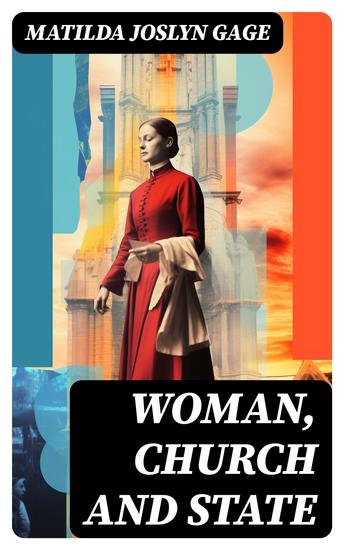
Woman Church and State - The Status of Woman Through the Christian Ages with Reminiscences of Matriarchate - cover

Woman Church and State - The Status of Woman Through the Christian Ages with Reminiscences of Matriarchate

Matilda Joslyn Gage

Publisher: DigiCat

  • 0
  • 0
  • 0

Summary

In "Woman, Church and State," Matilda Joslyn Gage offers a groundbreaking critique of the intertwining roles of religion and patriarchal authority in the historical subjugation of women. Written in the late 19th century, this scholarly work employs a provocative and incisive literary style, combining historical analysis with passionate advocacy for women's rights. Gage meticulously unravels the societal structures that have long marginalized women, revealing how religious institutions have often upheld the existing power dynamics that perpetuate gender inequality. Her approach reflects the intellectual fervor of the women's suffrage movement and the broader context of social reform prevalent during her time. Matilda Joslyn Gage, an outspoken suffragist, abolitionist, and advocate for Native American rights, was heavily influenced by her own experiences and the prevailing socio-political climate of her era. As a contemporary of Susan B. Anthony and Elizabeth Cady Stanton, Gage's involvement in the women's rights movement propelled her to investigate and articulate the systemic forces that hindered women's autonomy. Her extensive research and passionate activism provided a robust foundation for the arguments she presents in this pivotal work. For readers interested in feminist theory, history, or social justice, "Woman, Church and State" is an essential text that not only lays bare the historical injustices faced by women but also serves as a clarion call for continued advocacy for gender equality. Gage's unique perspective and compelling narrative will inspire a new generation to rethink the legacies of religion and patriarchy in shaping women's lives.
Available since: 01/01/2024.
Print length: 423 pages.

Other books that might interest you

  • Spanish Made Easy - Beginner - Volume 2 of 3 - cover

    Spanish Made Easy - Beginner -...

    Lingo Wave

    • 0
    • 0
    • 0
    We broke our new series on learning Spanish down into different learning stages. Start with the "Lower Beginner" books followed by the "Beginner" and "Upper Beginner" books. Next, progress to the "Intermediate" series, then test and reinforce your knowledge with the "Conversations" series. 
    This audiobook is divided into units.While it provides different learning patterns and accommodates various needs, this audiobook focuses on helping you improve your ability to understand, speak, and memorise Spanish.  
    In Unit 1 you will hear Spanish decoded with each syllable spoken very slowly and clearly with repetition. Immediately before each sentence is spoken, you will hear the translation, so you will always understand what is being said. 
    Unit 2 focuses solely on increasing your listening ability, which will improve your abilities to engage in dialogue with a native Spanish speaker. This chapter requires you to listen very carefully to nuances in the language. 
    By Unit 3 you will already notice progress in your abilities to speak and understand Spanish. The spoken translation is followed by two repetitions in Spanish at a completely natural speed. While you are learning to process naturally spoken Spanish, Units 3 and 4 will help you memorise new vocabulary and full sentences. 
    In Unit 5 you can test yourself on how much you have learned. If you are having difficulties, we suggest you revisit the listening, speaking, or memorisation section of Units 1, 2 3 or 4, according to what you need more help with. 
    Topics covered in this book: 
    1. Asking about family 
    2. Asking about relationship status 
    3. Expressing frequency 
    4. Talking about spare time activities and hobbies 
    5. Using quantifiers/determiners 
    6. Talking about preference 
    7. Talking about abilities 
    8. Talking about location of places 
    9. Describing appearance 
    10. Talking about personality 
    ...
    Show book
  • The Bhagavad Gita - Hindi Presentation - cover

    The Bhagavad Gita - Hindi...

    Vyasa

    • 0
    • 0
    • 0
    The original "Yoga Secrets of Patanjali" are in themselves exceedingly brief, less than 10 pages in the original ancient texts. Yet, as they are based upon the great, timeless Bhagavad Gita, they contain the essence of all practical wisdom, set forth in admirable order and great detail. This timeless theme brings forth a palpable spiritual regeneration, the rebirth of the spiritual from the psychical: the same sacred theme that the realized yogis of India so wisely and eloquently set forth over 5,000 years ago. 
     
    Vyasa is the legendary Indian sage who is credited with compiling the Mahabharata, a collection of legendary and didactic poetry worked around a central heroic narrative. In India his birthday is celebrated as Guru Purnima, on Shukla Purnima day in the month of Ashadha (June–July). 
    Vyasa was the son of the ascetic Parashara and the dasyu (aboriginal) princess Satyavati and grew up in forests, living with hermits who taught him the Vedas. Thereafter he lived in the forests near the banks of the river Sarasvati, becoming a teacher and a priest, fathering a son and disciple, Shuka, and gathering a large group of disciples. Late in life, living in caves in the Himalayas, he is said to have divided the Vedas into the four traditional collections, composed Puranas, and, in a period of two and a half years, composed his great poetic work, the Mahabharata, supposedly dictating it to his scribe, Ganesha, the elephant god. 
     
    Perfect for all students of the eight-fold yoga path, curious commuters, and all library and school collections. A once-in-a-lifetime audio experience event. Perfect for universities and digital educational media.
    Show book
  • Patagonia: The History of the Southernmost Region in South America - cover

    Patagonia: The History of the...

    Editors Charles River

    • 0
    • 0
    • 0
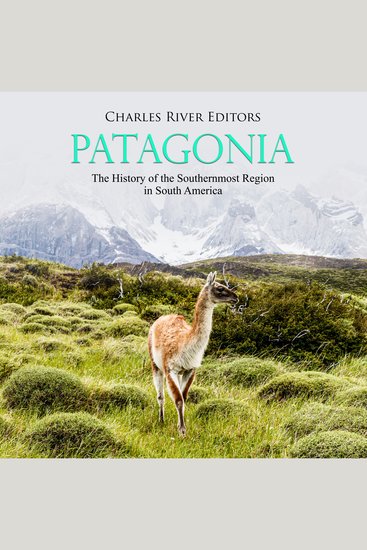
    The name, "Patagonia" comes from an observation made by Ferdinand Magellan, who visited the region during his historic expedition around the world. Marveled by the height of the indigenous people, he referred to the region as a “land of giants.” Those giants were the Tehuelches, named by Magellan’s expedition as Patagones, and the chronicles of that trip, written by Antonio Pigafetta, popularized the term “Patagones,” a term that refers to their big feet (in Spanish, “patones” means "of big feet"). This description would later derive in the name Patagonia. 
    	From its discovery until the 20th century, the borders of Patagonia as well as those elements that define it as such have gone through several changes and names. The main thing for understanding its limits during the Spanish conquest is that Patagonia referred to the land south of the European area of influence. Back then, Patagonia was under control of indigenous inhabitants and, as such, outside European control or only partly influenced. It is no wonder, then, that the earliest limit was the Río de la Plata itself, where in 1536 (and again in 1580) the city of Buenos Aires was founded. Later on, the conquest of the territory, along with the work of cartographers from around the world, gave shape to the region.
    Show book
  • Plastic Capitalism - Banks Credit Cards and the End of Financial Control - cover

    Plastic Capitalism - Banks...

    Sean H. Vanatta

    • 0
    • 0
    • 0
    American households are awash in expensive credit card debt. But where did all this debt come from? In this history of the rise of postwar American finance, Sean H. Vanatta shows how bankers created our credit card economy and, with it, the indebted nation we know today. 


    America's consumer debt machine was not inevitable. In the years after World War II, state and federal regulations ensured that many Americans enjoyed safe banks and inexpensive credit. Bankers, though, grew restless amid restrictive rules that made profits scarce. They experimented with new services and new technologies. They settled on credit cards, and in the 1960s mailed out reams of high-interest plastic to build a debt industry from scratch. 


    In the 1960s and 70s consumers fought back, using federal and state policy to make credit cards safer and more affordable. But bankers found ways to work around local rules. Beginning in 1980, Citibank and its peers relocated their card plans to South Dakota and Delaware, states with the weakest consumer regulations, creating "on-shore" financial havens and drawing consumers into an exploitative credit economy over which they had little control. We live in the world these bankers made.
    Show book
  • When She’s in the Room: How Empowering Women Empowers the World - cover

    When She’s in the Room: How...

    Edwina Dunn, Martha Lane Fox

    • 0
    • 0
    • 0
    One of the most creative and influential entrepreneurs of our timeBrains behind the Tesco Clubcard, the first and largest loyalty card globallyA successful pioneer in the data industry 
    We have heard of the hidden ways in which women are forgotten, unseen, overlooked, and the profound impact this has on us all. Now Edwina Dunn reveals what needs to happen in ourselves, our communities, and workplace to see lasting change. 
    A pioneer in data science research, business and female empowerment, Edwina Dunn uses her knowledge of research and data collection to present solutions, models and simple actions that impact on the lives of women and men. She has listened to women and knows the change we want to see in ourselves, in business, and in academic and government arenas. 
    Let’s talk about what a world where women are empowered looks like and it’s okay for women to embrace ambition and drive. Women represent just over half the world’s population. They are not secondary characters. What if they were empowered to realise their potential in leadership and decision-making roles? 
    Imagine a world of possibilities with equal pay progressions, rather than endless discussions. Let’s see what progress in individual fulfilment and societal change looks like. 
    This data-based guide is the manual that challenges the norm. It is the science-based exposé with insightful, inspiring, and ground-breaking evidence presenting a road map for us all. This conversation starter presents a strategy for the world we want to see and one that will make the world work better for women and men. 
    Edwina Dunn, a pioneer in feminist theory and gender studies, presents a compelling argument for social and economic equality. Her non-fiction work, When She's in the Room, is a testament to her commitment to feminism and the empowerment of women. 
    For fans of Jemma Roedel (She Thinks Like a Boss), David Novak (O Great One!), Mary Ann Sieghart (The Authority Gap), Laura Bates (Fix the System, Not the Women), and Marshall Goldsmith (Becoming Coachable). 
    HarperCollins 2024
    Show book
  • The Flag and the Cross - White Christian Nationalism and the Threat to American Democracy - cover

    The Flag and the Cross - White...

    Philip S. Gorski, Samuel L....

    • 0
    • 0
    • 0
    Most Americans were shocked by the violence they witnessed at the nation's Capital on January 6th, 2021. And many were bewildered by the images displayed by the insurrectionists: a wooden cross and wooden gallows; "Jesus saves" and "Don't Tread on Me;" Christian flags and Confederate Flags; even a prayer in Jesus's name after storming the Senate chamber. Where some saw a confusing jumble, Philip S. Gorski and Samuel L. Perry saw a familiar ideology: white Christian nationalism. 


    Gorski and Perry explain what white Christian nationalism is; when it first emerged and how it has changed; where it's headed and why it threatens democracy. Tracing the development of this ideology over the course of three centuries—and especially its influence over the last three decades—they show how, throughout American history, white Christian nationalism has animated the oppression, exclusion, and even extermination of minority groups while securing privilege for white Protestants. It enables white Christian Americans to demand "sacrifice" from others in the name of religion and nation, while defending their "rights" in the names of "liberty" and "property." 
     
    The future of American democracy will depend on whether a broad spectrum of Americans can unite in a popular front to combat the threat to liberal democracy posed by white Christian nationalism.
    Show book