Join us on a literary world trip!
Add this book to bookshelf
Grey
Write a new comment Default profile 50px
Grey
Subscribe to read the full book or read the first pages for free!
All characters reduced
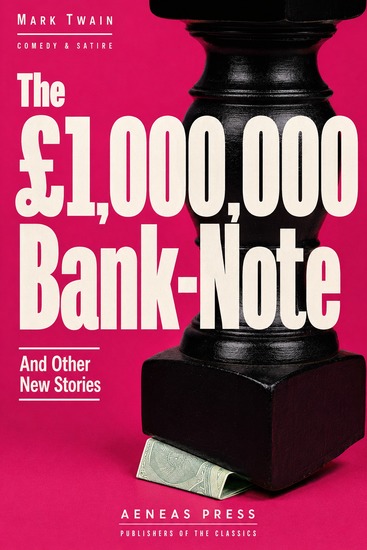
The £1000000 Bank-Note and Other New Stories - A Bank-Note No One Can Change - cover

The £1000000 Bank-Note and Other New Stories - A Bank-Note No One Can Change

Mark Twain

Publisher: Aeneas Press

  • 0
  • 0
  • 0

Summary

A pair of rich brothers bet on what will happen to a penniless man given a million-pound banknote he cannot spend, and the other late stories. Twain wrote this in 1893, as his own finances were collapsing, and the joke about credit is not entirely a joke. This edition is bound with a gallery of 59 plates of painting, among them works by William Powell Frith, Albert Bierstadt, James McNeill Whistler and Winslow Homer.
Available since: 09/16/2026.
Print length: 194 pages.

Other books that might interest you

  • Minnie and Earl - The Complete Collection - cover

    Minnie and Earl - The Complete...

    Adam-Troy Castro

    • 0
    • 0
    • 0
    Who are Minnie and Earl?
    In the earliest days of constructing the first permanent colony on the moon, they are the single secret shared by the everyone working on the project: two friendly old people, who somehow beat the astronauts to the lunar surface and are perfectly happy with hosting the kids to nightly dinners, but remain close-mouthed about who they are and how they got there.
    But they are not the strangest thing to be found on the moon.
    Four entries from Adam-Troy Castro's Nebula-nominated series feature some of the adventures stemming from this extremely weird period in the history of lunar colonization. Get ready to find out about the explanation that doesn't matter. About the first gunfight in the history of lunar colonization. About the strangely familiar couple doing pratfalls out in the lunar wastes, where only one deeply confused team engineer can see them. And about just what Wyatt Earp has to do with all this.
    Don't be afraid. You can always drop on and Minnie and Earl for advice.
    This collection includes:
    "Sunday Night Yams At Minnie and Earl's," a 2002 Analytical Laboratory Winner for Best Novella and 2003 Nebula Nominee for Novella
    "Gunfight on Farside," 3rd Place for 2010 Analytical Laboratory Award for Best Novella
    "The Gorilla In A Tutu Principle or, Pecan Pie at Minnie and Earl's," a 2020 Analog Analytical Laboratory Award Winner for Best Novella
    "Minnie and Ear Have a Kitten," 2nd place for 2024 Analog Analytical Laboratory Award for Best Novella
    Show book
  • The Selected Short Stories of Frank Herbert - Missing Link Old Rambling House Operation Haystack The Nothing and Try to Remember - cover

    The Selected Short Stories of...

    Frank Herbert

    • 0
    • 0
    • 0
    The Selected Short Stories of Frank Herbert brings together a fascinating collection of early speculative fiction from the legendary author of Dune. Featuring “Missing Link,” “Old Rambling House,” “Operation Haystack,” “The Nothing,” and “Try to Remember,” this volume showcases Herbert’s sharp intellect, psychological depth, and early exploration of ideas that would later define his iconic career. 
    These stories blend science fiction, mystery, and quiet philosophical tension, examining themes of human perception, memory, fear, and the unseen forces shaping everyday life. From subtle mind-bending concepts to eerie, atmospheric settings, Herbert demonstrates a mastery of speculative storytelling even in his shorter works. 
    Perfect for fans of classic science fiction, thoughtful short stories, and readers interested in the origins of one of the genre’s most influential voices, this collection offers a compelling glimpse into Frank Herbert’s creative foundations and literary range.
    Show book
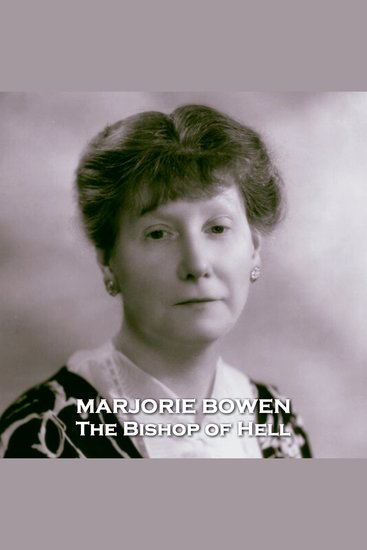
  • The Bishop of Hell - An abusive man runs off with a married woman and tragedy ensues - cover

    The Bishop of Hell - An abusive...

    Marjorie Bowen

    • 0
    • 0
    • 0
    Margaret Gabrielle Vere Campbell was born on 1st November 1885 on Hayling Island in Hampshire.  
     
    Her childhood was fraught with problems, her alcoholic father left early in her life and was later found dead on a London Street. Life thereafter was poverty with an uncaring mother. 
     
    However, her talents took her to the Slade School of Fine Art and later to study in Paris.  
     
    Her first fiction, written at a mere 16, was a violent medieval historical novel, ‘The Viper of Milan’. Initially rejected by several publishers it went on to become a best-seller  
     
    After this her prolific writings were the main financial support for the family.  Her literary output numbered over 150 volumes, mainly under the pseudonym of Marjorie Bowen but she also used the names Joseph Shearing, George R Preedy, John Winch, Robert Paye and Margaret Campbell.  Within this output she assigned the pseudonyms to the various genres she worked across, from Historical fiction to supernatural short stories.  
     
    Perhaps her best known work is the 1909 book ‘Black Magic’, a Gothic horror novel about a medieval witch. 
     
    Several of her works were also adapted into films.   
     
    She was married twice.  The first to Zefferino Emilio Constanza (they had two children), who died of tuberculosis, and then to Arthur L Long (and another two children) 
     
    Marjorie Bowen died on 23rd December 1952 at St Charles Hospital in North Kensington, London after suffering serious concussion from a fall in her bedroom.  She was 67.
    Show book
  • Last Train Home - cover

    Last Train Home

    Wayne Creed

    • 0
    • 0
    • 0
    A COLLECTION OF STORIES FROM THE MARGINS OF AMERICAN LIFE Wayne Creed's debut collection pulls no punches. These are stories about people surviving on the edges—Eastern Shore watermen whose lives have collapsed, the junkies and car thieves marking time, and the wheelchair-bound and forgotten trying to carve out meaning in a world that's moved on without them. Written with unflinching honesty and surprising lyricism, Last Train Home maps the forgotten corners of life where loneliness mingles with grace, violence brushes against tenderness, and the desperate search for connection plays out in dive bars, detention centers, and abandoned churches. Creed's characters—ex-nuns and altar boys, teachers and drifters, boxers and bell ringers—navigate worlds where the American Dream has curdled into something darker, yet somehow, improbably, moments of beauty still break through. Raw, lyrical, and uncompromising, Last Train Home announces a bold new voice in American fiction—one unafraid to look directly at what we'd rather turn away from. From fishing villages to the streets of Moscow, Creed finds in the darkest corners the beauty and persistence of the human spirit. Last Train Home offers no easy answers—only the hard truth that grace sometimes arrives on the last train, just before the station closes for good.
    Show book
  • Job Stories Vol 3 - At Life's Core - Voices of the Workforce - True & Unfiltered - cover

    Job Stories Vol 3 - At Life's...

    Nick Messerli

    • 0
    • 0
    • 0
    Job Stories – Vol. 3: At Life's Core offers a vivid and honest glimpse into the working lives of people whose professions shape the rhythm of everyday life. From the sizzling hustle of a kebab shop owner to the strategic mind of an international sales manager, each voice opens a window into the often-overlooked moments that define what it means to work, strive, and live with purpose.In this diverse collection, you'll meet a streetwise policeman navigating daily tension, a passionate musician chasing creativity, and a private investigator revealing truths hidden in plain sight. A triathlete shares her intense routine of discipline and ambition, while a cart attendant reflects on unnoticed routines with quiet dignity. A meter maid describes encounters that range from comic to confrontational, and an electrical engineer explains the precision and pressure behind complex systems.These stories are raw, authentic, and deeply human—offering not just insights into different careers, but also into the motivations, struggles, and satisfactions that lie beneath job titles. Perfect for listeners curious about real working lives, career seekers, or anyone who values genuine stories from the heart of society.Job Stories – Vol. 3 reminds us that life's core is not found in grand achievements alone, but in everyday perseverance, self-expression, and the unseen labor that powers our shared world.Job Stories – Vol. 2 captures the heart of everyday heroism – not through grand gestures, but through compassion, resilience, and a commitment to serving others. Let these voices inspire you, challenge you, and bring you closer to the world of work as it truly is: complex, meaningful, and deeply human.
    Show book

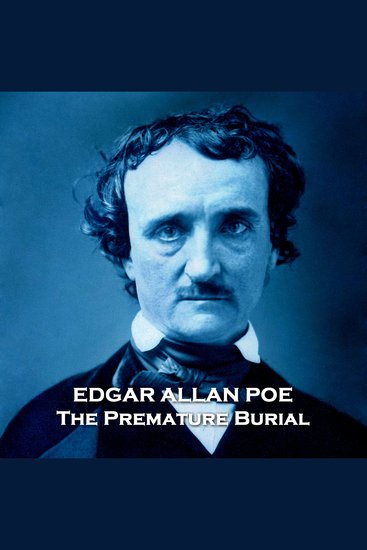
  • The Premature Burial - From their pens to your ears genius in every story - cover

    The Premature Burial - From...

    Edgar Allan Poe

    • 0
    • 0
    • 0
    Edgar Poe was born in Boston Massachusetts on 19th January 1809. His father abandoned his family the following year and within a year his mother had died leaving him an orphan.   
    He was taken in by the Allan family but never formally adopted although he now referred to himself as Edgar Allan Poe.  His father alternatively spoiled or chastised him and tension was frequent over gambling debts and monies for his education.  His university years to study ancient and modern languages was cut short by lack of money and he enlisted as a private in the army claiming he was 22, it is more probable he was 18. After 2 years he obtained a discharge in order to take up an appointment at the military academy, West Point, where he failed to become an officer. 
    Poe had released his 1st poetry volume in 1827 and after his 3rd turned to prose and placing short stories in several magazines and journals.  At age 26 he obtained a licence to marry his cousin.  She was a mere 13 but they stayed together until her death from tuberculosis 11 years after. 
    In January 1845 ‘The Raven’ was published and became an instant classic.  Thereafter followed the prose works for which he is now so rightly famed as a master of the mysterious and the macabre. 
    Edgar Allan Poe died at the tragically early age of 40 on 7th October 1849 in Baltimore, Maryland. Newspapers at the time reported Poe's death as ‘congestion of the brain’ or ‘cerebral inflammation’, common euphemisms for death from disreputable causes such as alcoholism but the actual cause of death remains a mystery. 
    Poe is also one of a number of authors credited with inventing the detective genre with his Parisian sleuth C. Auguste Dupin.  He featured in three stories including the legendary ‘Murders in the Rue Morgue’ and by sheer deduction, logic and a touch of Gallic arrogance revealed what was hidden to the rest of us.
    Show book