Join us on a literary world trip!
Add this book to bookshelf
Grey
Write a new comment Default profile 50px
Grey
Subscribe to read the full book or read the first pages for free!
All characters reduced
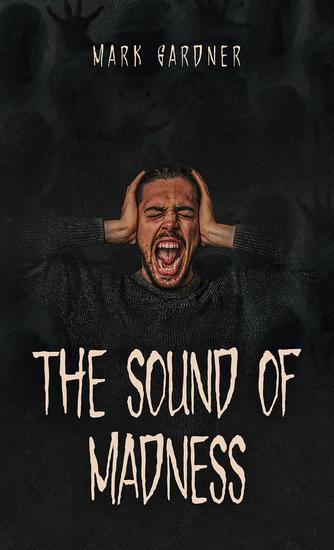
The Sound of Madness - cover

The Sound of Madness

Mark Gardner

Publisher: Austin Macauley Publishers

  • 0
  • 0
  • 0

Summary

Step into the labyrinth of the mind, where reality bends and the unseen whispers louder than the world outside. The Sound of Silence is a haunting collection of poetry that explores the fragile boundary between sanity and madness. Through vivid imagery, raw emotion, and fractured rhythms, these poems navigate the chaos of inner turmoil, the beauty hidden in despair, and the relentless search for meaning amidst confusion. Each verse is a descent into the mind's darkest corners—a journey that is unsettling, profound, and deeply human. Perfect for readers drawn to the complexities of mental struggle and the poetic expression of the soul's most tumultuous storms.
Available since: 09/11/2026.
Print length: 74 pages.

Other books that might interest you

  • Stock - cover

    Stock

    Jennifer Bowering Delisle

    • 0
    • 0
    • 0
    Stock photographs are everywhere. With their contrived poses, unusual angles, and bizarre visual metaphors, they’re instantly familiar – and familiarly narrow in their vision of our society. Their ubiquity shapes and reinforces the biases, privilege, and stereotypes of their distinct aesthetic. 
    From found poems using metadata and keywords to riffs on stock image database search results with titles like ‘Good Mother Morning Family Happy,’ ‘Beautiful Woman Eating Salad,’ and ‘Lady Boss Smiles with Arms Folded,’ Delisle’s ekphrastic poems take a playful look at stock photography’s clichés and delight in all its strangeness, while casting a critical eye on its representations of women.
    Show book
  • The Prophet - cover

    The Prophet

    Kahlil Gibran

    • 0
    • 0
    • 0
    This audiobook is narrated by an AI Voice. 
    Kahlil Gibran “The Prophet” - Timeless Reflections on Love, Life, Freedom, Work & the Human Spirit 
     
    Kahlil Gibran’s classic “The Prophet” is one of the most enduring works of spiritual and philosophical literature. This poetic collection follows the prophet Almustafa as he shares his final reflections with the people of Orphalese before departing for his homeland. 
     
    Through lyrical prose and deeply reflective teachings, Gibran explores love, marriage, children, giving, work, joy and sorrow, freedom, reason and passion, friendship, prayer, beauty, death, and the meaning of human existence. His writing blends philosophy, spirituality, poetry, and universal wisdom into a meditation on how to live with greater awareness, compassion, and inner freedom. 
     
    In this audiobook, you’ll discover: 
     
    - Timeless reflections on love, relationships, and marriage 
    - Insights into work, purpose, giving, and personal responsibility 
    - Meditations on joy, sorrow, freedom, and self-knowledge 
    - Reflections on friendship, beauty, prayer, and spirituality 
    - Philosophical perspectives on life, death, and the human soul 
    - Poetic wisdom about inner peace, compassion, and personal growth 
    - A spiritual approach to everyday human experience 
     
    Perfect for listeners interested in spirituality, philosophy, poetry, personal growth, mindfulness, inner peace, wisdom literature, self-discovery, meditation, and inspirational classics. 
     
    A timeless classic for readers drawn to Rumi, Khalil Gibran, spiritual poetry, philosophical literature, mysticism, inspirational writing, and books about love, life, meaning, and the human spirit.
    Show book

  • Good Grief - cover

    Good Grief

    Brianna Pastor

    • 0
    • 0
    • 0
    “Brianna Pastor is by far one of my favorite new writers. Good Grief is a powerful testament that shows how hard the past can be and that overcoming it is possible. If you want to feel seen and deeply moved, read Good Grief. Brianna Pastor has unparalleled talent, let the power of her writing guide you to a better life.”—yung pueblo, #1 New York Times bestselling author 
    An expanded edition with over forty brand-new poems of the bestselling poetry collection Good Grief by Brianna Pastor 
    When Brianna Pastor released her self-published poetry collection, Good Grief, she was blown away by the outpouring of support from people who reached out and said, “Yes. Me too.” For anyone who has struggled with questions of identity or coped with serious emotional issues, including grief, trauma, anxiety, and depression, this collection will help you find hope on the other side. 
    we don’t know how long our pain will last. we assume that because it hurts now, it is probably going to hurt tomorrow. it may even hurt the next day. perhaps it will get worse. but we sleep, and you see, and we do this marvelous thing in our sleep—we mend. And tomorrow is not always what we thought it would be.—from Good Grief
    Show book
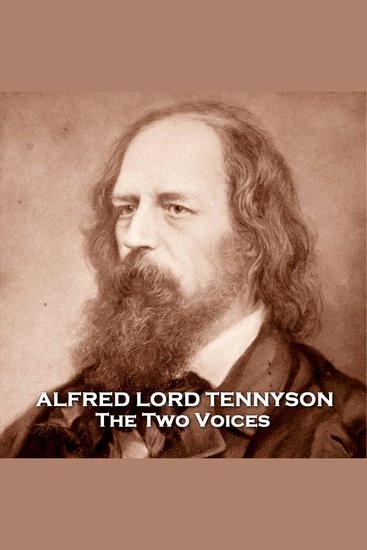
  • The Two Voices - An autobiographical poem written by Tennyson after his friend committed suicide - cover

    The Two Voices - An...

    Alfred Lord Tennyson

    • 0
    • 0
    • 0
    Alfred Tennyson was born on August 6th, 1809, in Somersby, Lincolnshire, the fourth of twelve children. 
    Most of Tennyson's early education was under the direction of his father, although he did spend four unhappy years at a nearby grammar school.  He also showed an early and burgeoning talent for writing; by the age of twelve he had written a 6,000-line epic poem.  
    In the 1820s, however, Tennyson’s father began to suffer frequent mental breakdowns exacerbated by his alcoholism. One brother had frequent violent quarrels with his father, a second would be confined to an insane asylum, and another was later an opium addict. 
    Tennyson left home in 1827 to join his brothers at Trinity College, Cambridge and with it escape from Somersby. At Trinity he was those who knew little of the problems that clouded his life. Although shy he was keen to make new friends; he was handsome, intelligent, humorous, and a gifted impersonator. 
    That same year, he and his brother Charles published Poems by Two Brothers. It attracted the attention of the “Apostles," a select undergraduate literary club led by Arthur Hallam. They provided friendship and confidence. Hallam and Tennyson became the best of friends. 
    The pair, in the summer of 1830, were involved in a ridiculous jaunt to take money and secret messages to revolutionaries plotting to overthrow the Spanish king. Tennyson's political enthusiasm was marginal compared to Hallam's, but he was glad to make his first trip abroad.  
    The landscape and atmosphere of the Pyrenees generated such wonderful poems as "Oenone," "The Lotus-Eaters;" inspired by a waterfall in the mountains; and "The Eagle;" invoked from the sight of the great hunters circling above them. The small village of Cauteretz and the surrounding valley became a location Tennyson would return to many times over the next sixty years. 
    In 1830, he published Poems, ‘Chiefly Lyrical’ and in 1832 a volume entitled ‘Poems’.  Tennyson, stung by the harshness of several reviews, would not publish again for nine years.  
    In the autumn of 1833, in what was meant as a gesture of gratitude and reconciliation to his father, Hallam accompanied him to the Continent. In Vienna Hallam died suddenly of apoplexy as a result of a congenital malformation of the brain.  
    Hallam’s death, together with that of his father and a myriad of anxieties, stem-ming mainly from the belief that his family were grimly attached to poverty, and fears that he might become a victim of epilepsy, madness, alcohol, and drugs, as others in his family had, or that he might die like Hallam, conspired to upset the delicate balance of Tennyson's emotions.  
    In 1836, he became engaged to Emily Sellwood. From their correspondence it is clear that she was very much in love with him. He seems to excessively worry about not having the financial means to marry.  He was also falling into trances, which he thought were connected with the epilepsy from which other family members suffered. To marry, he thought, would mean passing on the disease to any children he might father. He broke off the engagement. 
    During these years he used the dark feelings and events to write many of his finest works; "Ulysses," "Morte d'Arthur," "Tithonus," "Tiresias," and "Break, break, break."  
    In 1842 Tennyson’s Poems (in two volumes) was a tremendous critical and popular success.  
    In 1845 he was granted a government pension of £200 a year in recognition of his poetic achievements and his financial need.  Despite this financial support his doubts persisted.  
    Life for Tennyson was becoming increasingly productive and more lucrative.  By 1849 ‘The Princess’ had been published. He was now offered a large advance if he would assemble his elegies on Hallam into one complete poem.  
    Tennyson had now also resumed his relationship with Emily Sellwood and by the following year was talking again of marrying her. 
    In the Spring of 1850 the Poet Laureate William Wordsworth died and a new Laureate was
    Show book
  • Elsewhere the Cosmos Cracks - cover

    Elsewhere the Cosmos Cracks

    Chrystal Ho

    • 0
    • 0
    • 0
    Elsewhere, the Cosmos Cracks is a poetry collection that asks, amidst the climate crisis, how one continues to find wonder in the everyday.  
     
    Beginning from the confines of a HDB estate, the poems present a way of walking through Singapore’s landscape, to find moments of reconnection across time. In pieces that reconsider public housing as a garden, revisit the well-worn story of a national flower, and return to familiar rituals and language as inherited wisdom, the collection posits that some of our answers might just be awaiting us in plain sight—so long as we learn how to look.
    Show book
  • Oedipus at Colonus - cover

    Oedipus at Colonus

    Sophocles

    • 0
    • 0
    • 0
    Dive into the mesmerizing conclusion of Sophocles' Theban Trilogy with 'Oedipus at Colonus,' a captivating audiobook that stands as a testament to the enduring power of Greek tragedy.In the final chapter of his tumultuous life, Oedipus, once a proud king brought low by fate and his own actions, seeks solace and redemption in the town of Colonus. Blinded and exiled, he embarks on a profound journey toward tranquility, only to find himself once more at the center of earthly and divine conflicts.This audiobook brings Sophocles' timeless text to life with skillful narration, immersing you in Oedipus' poignant quest for peace. Experience the deeply human themes of repentance, forgiveness, and the desire for rest after a life filled with hardship. Observe how Oedipus, in his final hours, grapples with the repercussions of his past, the nature of his present, and the uncertainty of his legacy.'Oedipus at Colonus' is more than a tragic tale—it is a profound exploration of human endurance in the face of suffering, and the possibility of redemption even in the bleakest of circumstances. Whether you're a student of classical literature, a lover of timeless dramas, or an audiobook enthusiast seeking a thought-provoking listen, this rendition of 'Oedipus at Colonus' offers a rich, immersive experience that will resonate long after the final words have been spoken.Step into the world of ancient Greek drama and explore the depths of human resilience and the quest for peace with 'Oedipus at Colonus.' Let this immortal story touch your heart, challenge your perceptions, and leave you with timeless insights into the human condition.
    Show book