¡Acompáñanos a viajar por el mundo de los libros!
Añadir este libro a la estantería
Grey
Escribe un nuevo comentario Default profile 50px
Grey
Suscríbete para leer el libro completo o lee las primeras páginas gratis.
All characters reduced
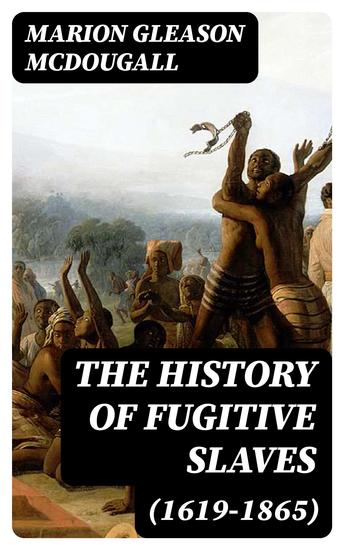
The History of Fugitive Slaves (1619-1865) - cover

The History of Fugitive Slaves (1619-1865)

Marion Gleason McDougall

Editorial: DigiCat

  • 0
  • 0
  • 0

Sinopsis

In "The History of Fugitive Slaves (1619-1865)," Marion Gleason McDougall meticulously chronicles the harrowing experiences and the significant narratives of enslaved individuals who dared to escape their bondage in America. Delving into a rich spectrum of primary sources, McDougall employs a blend of historical analysis and narrative storytelling to illuminate the multifaceted lives of fugitive slaves, offering a comprehensive examination of their quests for freedom. The text situates itself within the broader literary contexts of abolitionist literature and slave narratives, illustrating the intersections of personal agency and systemic oppression that characterized this tumultuous period in American history. Marion Gleason McDougall, a distinguished historian and advocate for social justice, has devoted significant portions of her career to exploring the complexities of slavery and its aftermath in the United States. Her extensive research is deeply rooted in a commitment to amplifying marginalized voices and understanding the socio-political frameworks that have perpetuated inequality. These motivations inform her passionate portrayal of fugitive slaves as agents within their own stories, encouraging readers to confront the legacy of slavery. This essential volume is highly recommended for scholars, students, and general readers alike, offering a profound understanding of the struggle for freedom that shaped American identity. McDougall's erudite yet accessible writing invites readers to engage critically with history and to appreciate the resilience and courage of those who sought to escape oppression, making it a vital addition to the discourse on American slavery.
Disponible desde: 13/11/2022.
Longitud de impresión: 160 páginas.

Otros libros que te pueden interesar

  • A Modest Proposal - cover

    A Modest Proposal

    Jonathan Swift

    • 0
    • 0
    • 0
    Dive into Jonathan Swift’s sharp satire in A Modest Proposal, one of literature’s most famous works of dark humor and social criticism. Written in 1729, Swift offers a shocking "solution" to the poverty and famine affecting Ireland, proposing the unthinkable with a calm, calculated rationale that highlights the cruelty and indifference of the ruling classes. Through biting irony, Swift forces readers to confront the realities of exploitation and dehumanization in society. 
    Narrated by Ian Michael Turrell, this audiobook brings Swift’s complex wit to life. Turrell’s performance captures the serious tone Swift adopts to drive home his satire, immersing listeners in the mock-serious prose and unrelenting logic of Swift’s voice. 
    Perfect for fans of classic literature, satire, and thought-provoking commentary, A Modest Proposal remains as impactful today as when it was first published, challenging listeners to question societal values and human compassion.
    Ver libro
  • The Kings and Queens of Britain - cover

    The Kings and Queens of Britain

    Cath Senker

    • 0
    • 0
    • 0
    For more than 1,000 years the British monarchy has dramatically shaped national and international history. Kings and queens have conquered territory, imposed religious change and extracted taxation, each with their own motivations and ambitions. 
     
    This fascinating audiobook delves into the extraordinary history of the British monarchy, from Alfred the Great in the 9th century to the Windsors in the 21st. Key moments are explored, including the signing of the Magna Carta, the Battle of Hastings and the abdication of King Edward VIII, and the part they played in the rich tapestry of British history.
    Ver libro
  • Gupta Empire - Golden Age of Art Science and Literature - cover

    Gupta Empire - Golden Age of Art...

    Rolf Hedger

    • 0
    • 0
    • 0
    The Gupta Empire, one of the most influential dynasties in Indian history, emerged in the early 4th century CE. It marked the beginning of a new era characterized by political stability, territorial expansion, and remarkable advancements in various fields. The foundation of the empire was laid by Chandragupta I, whose leadership and strategic alliances set the stage for the golden age that followed. 
    The origins of the Gupta dynasty remain somewhat obscure, but historical records suggest that they were a powerful regional clan in the Magadha region, present-day Bihar. Unlike the Mauryan Empire, which had a centralized administrative structure, the Gupta rulers adopted a more decentralized approach, allowing local rulers to maintain a degree of autonomy while still pledging allegiance to the empire. This governance model contributed to their long-lasting rule and ensured stability across their vast territories. 
    Chandragupta I, who ascended the throne around 320 CE, played a crucial role in the establishment of the empire. His most significant achievement was his matrimonial alliance with the Licchavi princess Kumaradevi, which not only strengthened his position but also expanded his influence in the fertile Ganges basin. This strategic marriage helped him consolidate power and gain the support of powerful regional factions. As a result, the empire's boundaries began to expand, laying the groundwork for future conquests.
    Ver libro
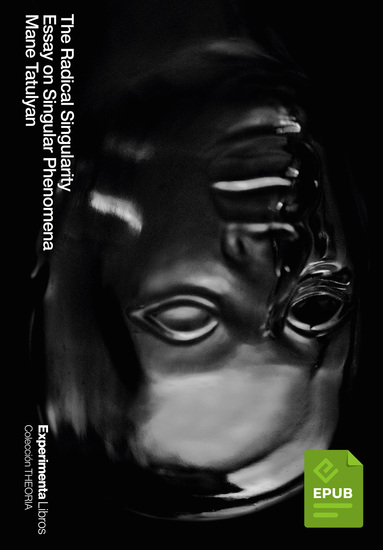
  • The Radical Singularity - Essay on Singular Phenomena - cover

    The Radical Singularity - Essay...

    Mane Tatulyan

    • 0
    • 0
    • 0
    All the energies of our civilisation are destined to the construction of a new artifical world, a totally technological world in which the human being is one more cog in the cybernetic system. This world is totally exposed, programmed, quantified, technical, artificial, and, above all, autonomous.
    
    This autonomous world will be able to function without us. This world is an objective world that will have neither subjectivity nor meaning. But while all our efforts are projected towards the horizon of technological singularity, the same language reminds us that there is another meaning of the word singularity. The Radical Singularity is an original project about human singularity in the era of technological singularity. The work addresses, in a unique, extreme, and even ironic way, the mutation from modern humanism to posmodern posthumanism, revealing the light of Reason between the lines. What is singular -along with human Reason- is the resistance to globalisation, to homogenisation, to the terror of the same, to automation, to technological singularity, and so on.
    
    This work remind us that, even when things become so violently homogeneous, the radicalism of thought will appear. The world is dialectical, and we cannot escape the logic of the world, of which its representation is our Reason. Due to its radical singularity, human Reason always has the last word.
    Ver libro
  • Nightstalkers - The Wright Project and the 868th Bomb Squadron in World War II - cover

    Nightstalkers - The Wright...

    Richard Phillip Lawless

    • 0
    • 0
    • 0
    “Takes the reader into the Pacific war and offers a front-row seat to the exploits of the Wright Project and their highly innovative technology.” —War History Network 
     
    In August 1943, a highly classified US Army Air Force unit, code-named the “Wright Project,” departed Langley Field for Guadalcanal in the South Pacific to join the fight against the Empire of Japan. Operating independently, under sealed orders drafted at the highest levels of Army Air Force, the Wright Project was unique, both in terms of the war-fighting capabilities provided by classified systems the ten B-24 Liberators of this small group of airmen brought to the war, and in the success these “crash-built” technologies allowed. The Wright airmen would fly only at night, usually as lone hunters of enemy ships. In so doing they would pave the way for the United States to enter and dominate a new dimension of war in the air for generations to come.  
     
    This is their story, from humble beginnings at MIT’s Radiation Lab and hunting U-boats off America’s eastern shore, through to the campaigns of the war in the Pacific in their two-year march toward Tokyo. The Wright Project would prove itself to be a combat leader many times over and an outstanding technology innovator, evolving to become the 868th Bomb Squadron.  
     
    Comprehensive and highly personal, this story can now be revealed for the very first time, based on official sources, and interviews with the young men who flew into the night. 
     
    “A limber romp across the world of electronics and into the history of World War II.” —ARGunners.com
    Ver libro
  • On the Parts of Animals - cover

    On the Parts of Animals

    Aristotle

    • 0
    • 0
    • 0
    "On the Parts of Animals" is a biological treatise written by Aristotle, in which he extensively examines the anatomy and physiology of different animals, including humans. The book is divided into four sections, each focusing on a different aspect of animal life. In the first section, Aristotle explores the concept of soul and distinguishes between different types of souls that exist in animals. In the second section, he discusses the structure and function of sensory organs, such as eyes and ears, and how animals use them to interact with their environment. In the third section, he analyzes the digestive system and other internal organs, as well as the reproductive system, to understand how animals sustain themselves and reproduce. Finally, in the fourth section, he looks at the differences between different animal species and the variations in their anatomy and physiology. Read in English, unabridged.
    Ver libro