Join us on a literary world trip!
Add this book to bookshelf
Grey
Write a new comment Default profile 50px
Grey
Subscribe to read the full book or read the first pages for free!
All characters reduced
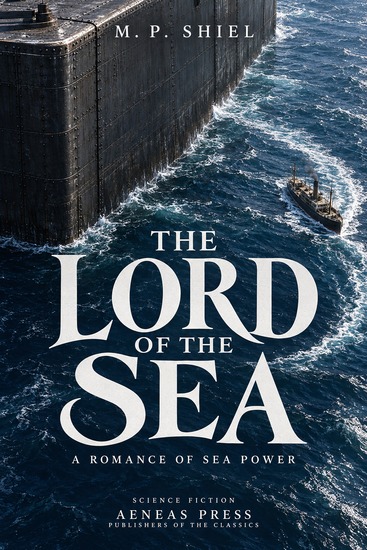
The Lord of the Sea - A Romance of Sea Power - cover

The Lord of the Sea - A Romance of Sea Power

M. P. Shiel

Publisher: Aeneas Press

  • 0
  • 0
  • 0

Summary

A man wrongly imprisoned finds a fortune, builds a fortress on the sea and takes control of the world's shipping lanes, then has to decide what to do with the power. Shiel wrote it in 1901 and the book is as strange as everything else he did. This edition binds 59 plates of painting with the text, among them Winslow Homer, Edvard Munch and J. M. W. Turner, all on the subject of fishermen and the sea.
Available since: 09/16/2026.
Print length: 263 pages.

Other books that might interest you

  • A Christmas Carol - In Prose; Being a Ghost Story of Christmas - cover

    A Christmas Carol - In Prose;...

    Charles Dickens

    • 0
    • 0
    • 0
    Scrooge is visited by his dead partner and then by three spirits, and has one night to see what his life has cost the people in it. Dickens wrote it in six weeks in the autumn of 1843, walking London after dark, and published it at his own expense when his sales were falling. It sold out by Christmas Eve and largely invented the season as the English-speaking world now keeps it — a strange fate for a ghost story about a man alone. Ninety-nine plates, from Constable's Salisbury Cathedral to a winter landscape, gather the cold streets and warm rooms of the season the story fixed in place.
    Show book
  • Nathaniel Hawthorne - Short Stories - cover

    Nathaniel Hawthorne - Short Stories

    Nathaniel Hawthorne

    • 0
    • 0
    • 0
    Embark on a mesmerizing journey into the captivating world of Nathaniel Hawthorne's timeless tales with our digital audiobook collection.  
     
    Delve into the eerie and mysterious realms of 'An Old Woman's Tale,' experience the enigmatic 'The Intelligence Office,' and explore the profound allegories within 'The Vision of the Fountain.' Finally, get lost in the powerful narrative of 'The Great Stone Face.' With expert narrators bringing these classics to life, this collection promises hours of enthralling storytelling that will captivate listeners and transport them to Hawthorne's enchanting literary universe.
    Show book
  • Ten Years Later - cover

    Ten Years Later

    Alexandre Dumas

    • 0
    • 0
    • 0
    A gripping continuation of power struggles, hidden loyalties, and unforgettable characters set against the backdrop of royal France.
    
    Ten years after the dramatic events that shaped the fate of kings and kingdoms, old alliances are tested and new dangers emerge. The once-unbreakable bonds between heroes are now strained by time, ambition, and conflicting loyalties. As political tensions rise, personal vendettas and buried secrets begin to resurface, setting the stage for another storm of intrigue.
    
    In a world where honor and betrayal walk side by side, the characters must navigate shifting loyalties, dangerous conspiracies, and the ever-present shadow of power. Every decision carries consequences that ripple through court politics and personal relationships alike, leading toward a destiny shaped by courage, deception, and sacrifice.
    
    Rich in historical detail and dramatic intensity, this novel continues the epic saga of friendship, conflict, and royal ambition. It offers a vivid portrayal of 17th-century France, where loyalty is tested and history is shaped by both sword and strategy.
    
    Written by Alexandre Dumas, this classic delivers a powerful blend of adventure, history, and emotional depth that continues to captivate readers of historical fiction.
    Show book
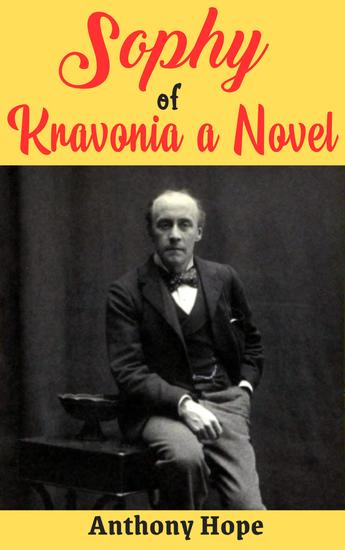
  • Sophy of Kravonia A Novel - cover

    Sophy of Kravonia A Novel

    Anthony Hope

    • 0
    • 0
    • 0
    The following narrative falls naturally into three divisions, corresponding to distinct and clearly marked periods of Sophy's life. Of the first and second—her childhood at Morpingham and her sojourn in Paris—the records are fragmentary, and tradition does little to supplement them. As regards Morpingham, the loss is small. The annals of a little maid-servant may be left in vagueness without much loss. Enough remains to show both the manner of child Sophy was and how it fell out that she spread her wings and left the Essex village far behind her. It is a different affair when we come to the French period. The years spent in and near Paris, in the care and under the roof of Lady Margaret Duddington, were of crucial moment in Sophy's development. They changed her from what she had been and made her what she was to be. Without Paris, Kravonia, still extraordinary, would have been impossible.Yet the surviving history of Paris and the life there is scanty. Only a sketch is possible. A record existed—and a fairly full one—in the Julia Robins correspondence; that we know from Miss Robins herself. But the letters written from Paris by Sophy to her lifelong friend have, with some few exceptions, perished. Miss Robins accounts for this—and in view of her careful preservation of later correspondence, her apology must be accepted—by the fact that during these years—from 1866 to 1870—she was constantly travelling from town to town and from lodging to lodging, as a member of various theatrical companies; this nomadic existence did not promote the careful and methodical storage of her letters. It may, of course, be added that no such obvious interest attached to these records as gathered round Sophy's doings after she had exchanged Paris and the Rue de Grenelle for Slavna and the Castle of Praslok.When this migration has been effected, the historian is on much firmer ground; he is even embarrassed sometimes by the abundance of material of varying value. Apart from public records and general memory (both carefully consulted on the spot), the two main sources flow from Sophy's own hand. They are the Robins correspondence and the diary. Nearly to the end the letters are very constant, very full, very instructive; but they are composed with an obvious view to the tastes and interests of their recipient, and by no means always devote most space to what now seems of greatest interest. In one point, however, Miss Robins's tastes prove of real service. This lady, who rose to a respectable, if not a high, position as a Shakespearian actress, was much devoted to the study of costume, and Sophy, aware of this hobby, never omits to tell her with minute care what she herself wore on every occasion, what the other ladies wore, and what were the uniforms, military or civil, in which the men were arrayed. Trivial, perhaps, yet of great value in picturing the scenes!In her letters Sophy is also copious in depicting places, houses, and landscapes—matters on which the diary is naturally not so full. So that, in spite of their great faults, the letters form a valuable supplement to the diary. Yet what faults—nay, what crimes! Sophy had learned to talk French perfectly and to write it fairly well. She had not learned to write English well or even decently; the letters are, in fact, a charnel-house of murdered grammar and broken-backed sentences. Still there emerge from it all a shrewdness and a rural vigor and raciness which show that the child of the little Essex farm-house survived in the writer.But for this Kravonian period—the great period—the diary is the thing. Yet it is one of the most unconscientious diaries ever written. It is full of gaps; it is often posted up very unpunctually; it is sometimes exasperatingly obscure—there may be some intention in that; she could not tell into what hands it might fall.
    Show book

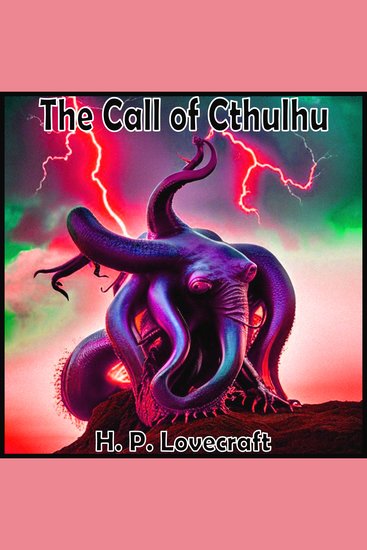
  • The Call of Cthulhu - cover

    The Call of Cthulhu

    H. P. Lovecraft

    • 0
    • 0
    • 0
    The Call of Cthulhu 
    H. P. Lovecraft 
     
    Adherents of this archaic, tentacled monstrosity persist, yearning for its reawakening and seeking revenge on a world populated by non-followers. In his narratives about Cthulhu, Lovecraft delves deeply into this ancient cult and provides insight into their methods of worship and the obscene rituals they perform. 
     
    Track List 
     
    01	The Horror in Clay	 
     
    02	The Tale of Inspector Legrasse.	 
     
    03	The Madness from the Sea.
    Show book
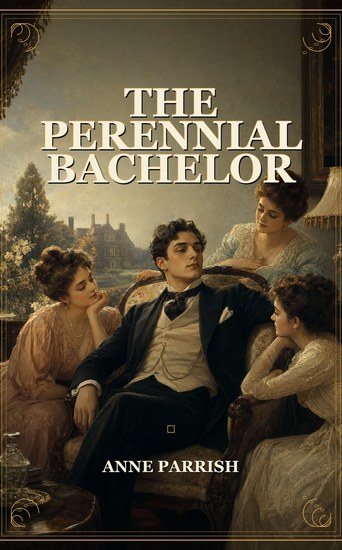
  • The Perennial Bachelor - cover

    The Perennial Bachelor

    Anne Parrish

    • 0
    • 0
    • 0
    The Campion family of Delaware is living a genteel existence, even after the sudden, unexpected death of the family patriarch. When the family's first son, Victor, is born, he's doted on by his mother and three sisters. But as the days turn to decades the family's devotion to Victor, and their hopes that he'll be the key to their entrance into Gilded Age society, robs them of their own chances for happiness. Victor grows into a man of charm and social promise but little real urgency, drifting through opportunities and relationships while remaining the unquestioned center of the household. In the end, the Campions are left to confront the consequences of a life organized around possibility rather than fulfillment. The Perennial Bachelor is Anne Parrish's most acclaimed novel. It won the Harper Novel Prize in 1925, and was one of the top ten most popular books of the year. Anne Parrish (died 1957) was an influential writer of the modernist period. Their work has endured across generations and continues to be read and studied worldwide. As a work of classic literary fiction, The Perennial Bachelor exemplifies the narrative craft and social insight that defined great storytelling of its era. Literary fiction of this period was characterized by careful attention to character psychology, social milieu, and the moral questions that animated public discourse.
    Show book