Join us on a literary world trip!
Add this book to bookshelf
Grey
Write a new comment Default profile 50px
Grey
Subscribe to read the full book or read the first pages for free!
All characters reduced
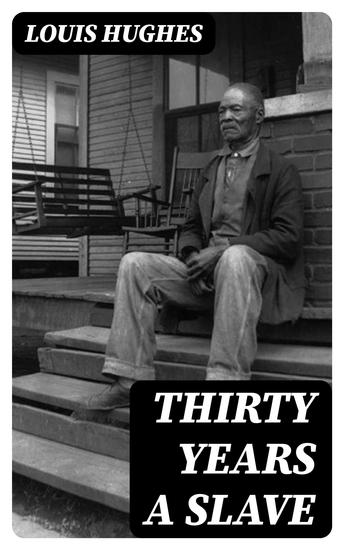
Thirty Years a Slave - From Bondage to Freedom: The Institution of Slavery as Seen on the Plantation and in the Home of the Planter: Autobiography of Louis Hughes - cover

Thirty Years a Slave - From Bondage to Freedom: The Institution of Slavery as Seen on the Plantation and in the Home of the Planter: Autobiography of Louis Hughes

Louis Hughes

Publisher: DigiCat

  • 0
  • 0
  • 0

Summary

In "Thirty Years a Slave," Louis Hughes presents a poignant autobiographical account of his life as an enslaved African American, capturing the harrowing realities of slavery with unflinching honesty. This narrative, penned in the late 19th century, is characterized by its direct and accessible prose, which starkly contrasts with more romanticized depictions of slavery prevalent in American literature of the time. Hughes chronicles his experiences from the brutalities of physical labor to the emotional toll of separation from family, grounding his story in personal detail while also reflecting broader themes of resilience and hope within the African American community. Louis Hughes, born into slavery in Virginia in 1832, endured the dehumanizing experiences that many of his contemporaries faced. His life journey, which included a harrowing escape and eventual freedom, provided him with a unique perspective that he sought to convey through this narrative. Hughes's commitment to educating his readers on the realities of slavery stems from his own painful experiences and desire to inspire social change, making this work a crucial contribution to American social history. "Thirty Years a Slave" is essential reading for anyone seeking to understand the personal and collective struggles of enslaved individuals in America. Hughes's vivid storytelling and sincere reflections invite readers to engage with this critical chapter of American history, making it a profound exploration of identity, resilience, and the enduring quest for freedom.
Available since: 09/15/2022.
Print length: 109 pages.
Other books that might interest you

  • From Persia to America - The Life and Work of Emma Ordjanian Melikian - cover

    From Persia to America - The...

    Stephen K. Batalden

    • 0
    • 0
    • 0
    Set within the contexts of American immigration history and women's philanthropy, From Persia to America recounts the remarkable journey of a prominent Persian-Armenian immigrant and her commitment to a life of generosity in her adopted American homeland. Emma Ordjanian Melikian was born in Teheran into a family that, having earlier faced imprisonment in Russia following the Revolution of 1917, fled to Persia where the Ordjanian family had longstanding roots. The account traces Emma's family life in Teheran and the move to New York where she completes her schooling, marries, has four children, and begins charitable work within the Armenian community of metropolitan New York. The biography concludes with her years in Phoenix where her civic leadership and philanthropy included the founding of the non-profit organization, "Thank you America," and the endowment of The Melikian Center at Arizona State University. From Persia to America draws upon extended first-person interviews with Emma Ordjanian Melikian who remains deeply engaged and discerning in her tenth decade.
    Show book
  • Marcus Crassus: The Life and Legacy of Ancient Rome’s Richest Man - cover

    Marcus Crassus: The Life and...

    Editors Charles River

    • 0
    • 0
    • 0
    The reasons for Spartacus’s enduring appeal are obvious, but his uprising has overshadowed the fact that his was actually the third such uprising against the Roman Republic in a short span. Preceding this, the First and Second Servile Wars had already demonstrated that revolts against Rome and the whole institution of slavery could gain momentum, and these earlier uprisings provided a blueprint for the larger attempt by Spartacus to win freedom.  
    	At the same time, it’s often overlooked how the revolt affected Rome, and how the leader who put it down propelled his career and played an outsized role in Roman politics ahead of the civil war between Pompey and Caesar. Marcus Licinius Crassus is most remembered today for being the richest Roman in history, and arguably the richest man in world history, but that came about in part because he played a key role in the revolutionary events that took place in Rome throughout the 1st century BCE, including the dictatorship of Sulla, the Third Servile War, the First Triumvirate, and the Parthian Wars. Crassus was the son of Publius Licinius Crassus, who was consul in 97 BCE, and while very little is known of Crassus’ early life, his career as a military figure began in earnest when he escaped from Rome in 87 BCE to Spain to avoid Lucius Cornelius Cinna, who, along with Gaius Marius, led the opposition against Sulla.  
    	Thanks to his rise in the military and politics, Crassus’s renown and riches heavily influenced his contemporaries. In the wake of the Third Servile War, Crassus’ patronage helped position Julius Caesar to be appointed governor of Hispania Ulterior. In order to maintain political office, which made him immune from prosecution for his debts, he left for modern day Spain before his praetorship expired.
    Show book
  • The Girl Who Survived Auschwitz - cover

    The Girl Who Survived Auschwitz

    Eti Elboim, Sara Leibovits

    • 0
    • 0
    • 0
    ‘You are no longer a number’  
    Poland, 1944The train slowed and halted with a squeal of the breaks. It felt like we waited in the carriage for an eternity, but eventually, the heavy doors opened, directly into the chaos inside. 
    Sara Leibovitz, a 16-year-old Jewish girl, was a passenger on the train with her family. They spent their final moments together on the platform in Auschwitz before their horrific fates were sealed. Sara’s mother and baby brothers were sent straight to their deaths. Her father was made to work in the Sonderkommando as one of the men forced to remove the bodies from the gas chambers, and was later executed. Sara survived. 
    This is the powerful true story of Sara Leibovits and the incredible pain and hardships she went through during her time in the death camp. Yet despite the horrors she faced, she always tried to maintain her family’s values of courage, faith and kindness to others. In this compelling memoir, Sara’s story is intertwined with that of her daughter, Eti. Seventy years after the horrors of the Holocaust, Eti reveals the inherited trauma of the second generation and completes the Holocaust survivor’s tale.What readers are saying about The Girl Who Survived Auschwitz: 
    ‘Let us never stop reading these novels. These memoirs are the ones that keep all the voices alive’ 
    ‘Highly recommend… I finished reading it with a newfound sense of love and compassion’ 
    ‘Reading this family’s memories is a rewarding experience in that it will ensure future generations will remember and learn. Many thanks to the author…for the trust in allowing me to review this life-changing memoir.’ 
    ‘A raw and gripping Holocaust recount’ 
    ‘What I loved most about this book is that it is a dual perspective…I was grateful to have a little glimpse into the mind of Eti and her absolute respect for her parents…together they learned, they grieved and they healed’ 
    ‘It makes me really proud of my Jewish heritage and this story of perseverance. I highly recommend this book for any and all to read so we can keep survivor's stories alive and never let this type of tragedy happen again’ 
    ‘Powerful, heartbreaking and inspiring. We need to know what happened. It will make your heart break. It is beyond horrific. But we need to know in memory of the six million innocents who died and of those who survived’ 
    ‘A haunting and beautiful read…I give it a resounding 5 stars’ 
    ‘We have the perspective of a woman who survived the holocaust as well as her daughter who had never known the horrrors her mother endured, yet asked…I feel honored to have read this memoir’ 
    ‘Anyone who reads this book will not be left untouched…truly moving' 
    ‘This is one of those books everyone should read' 
    ‘Remarkable… a profoundly impactful book, one which should be required reading for everyone' 
    'Sara Leibovits is an amazing lady. She showed strength of character, resilience and maintained a kind heart, as she shared what little she had with those around her in Auschwitz' 
    HarperCollins 2023
    Show book
  • KNOW ABOUT "Martin Luther King Jr" - A Significant Role in American History and the Civil Rights Movement - cover

    KNOW ABOUT "Martin Luther King...

    Saurabh Singh Chauhan

    • 0
    • 0
    • 0
    This is small part of the introduction of the book: KNOW ABOUT "Martin Luther King Jr" A Significant Role in American History and the Civil Rights Movement by Saurabh Singh Chauhan. 
    Welcome to the captivating journey through the life and legacy of one of America's most iconic figures, Martin Luther King Jr. In the following pages, we will embark on an exploration of his remarkable contributions to American history and the civil rights movement. Born on January 15, 1929, in Atlanta, Georgia, Martin Luther King Jr. emerged as a beacon of hope during a tumultuous era. His unwavering dedication to justice, equality, and nonviolent protest left an indelible mark on society, transforming the course of history and inspiring generations to come. This biography aims to illuminate the various facets of Martin Luther King Jr.'s life – from his early years in the segregated South to his pivotal role in breaking down racial barriers and advocating for civil rights. Through his eloquent speeches, passionate activism, and strategic leadership, King became a driving force in the fight against racial discrimination and social injustice. As we delve into the chapters that follow, we will journey through his formative experiences, the influences that shaped his worldview, the challenges he confronted, and the triumphs he achieved. We will witness the rise of his nonviolent philosophy, inspired by the teachings of Mahatma Gandhi, and its profound impact on the civil rights movement's strategies. 
    Show book
  • Good-Bye to All That: An Autobiography - cover

    Good-Bye to All That: An...

    Robert Graves

    • 0
    • 0
    • 0
    "Good-Bye to All That: An Autobiography" by Robert Graves is a seminal work that vividly captures the harrowing experiences of a young British officer during World War I. Published in 1929, the book provides a candid and unflinching portrayal of life in the trenches, exploring the brutality and absurdity of war. Graves recounts his childhood, education, and early literary career, interweaving personal anecdotes with his wartime experiences. The autobiography delves into his friendships with notable figures like Siegfried Sassoon and critiques the societal norms of early 20th-century Britain. The title reflects Graves' profound disillusionment with the pre-war world and the irrevocable changes brought by the conflict. With its clarity, wit, and honesty, "Good-Bye to All That" remains an essential work in the canon of war literature, offering insights into the personal and collective trauma of a generation.
    Show book
  • Mary of Guise in Scotland 1548–1560 - A Political Career - cover

    Mary of Guise in Scotland...

    Pamela E. Ritchie

    • 0
    • 0
    • 0
    Challenging the conventional interpretation of Mary of Guise as the defender of Catholicism whose regime climaxed with the Reformation Rebellion, Pamela Ritchie shows that Mary was, on the contrary, a shrewd and effective politique, whose own dynastic interests and those of her daughter took precedence over her personal and religious convictions. Dynasticism, not Catholicism, was the prime motive force behind her policy.  Mary of Guise’s dynasticism, and political career as a whole, were inextricably associated with those of Mary Queen of Scots, whose Scottish sovereignty, Catholic claim to the English throne and betrothal to the Dauphin of France carried with them notions of Franco-British Imperialism. Mary of Guise's policy in Scotland was dictated by European dynastic politics and, specifically, by the Franco-Scottish alliance of 1548–1560. Significantly more than a betrothal contract, the Treaty of Haddington established a ‘protectoral’ relationship between the ‘auld allies’ whereby Henri II was able to assume control over Scottish military affairs, diplomacy and foreign policy as the ‘protector’ of Scotland. Mary of Guise’s assumption of the regency in 1554 completed the process of establishing French power in Scotland, which was later consolidated, albeit briefly, by the marriage of Mary Stewart to Francois Valois in 1558. International considerations undermined her policies and weakened her administration, but only with her death did Mary of Guise’s regime and French power in Scotland truly collapse.
    Show book