Begleiten Sie uns auf eine literarische Weltreise!
Buch zum Bücherregal hinzufügen
Grey
Einen neuen Kommentar schreiben Default profile 50px
Grey
Jetzt das ganze Buch im Abo oder die ersten Seiten gratis lesen!
All characters reduced
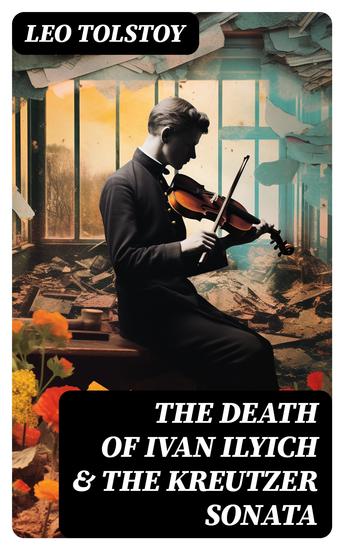
The Death of Ivan Ilyich & The Kreutzer Sonata - Two Psychological Novellas - cover

The Death of Ivan Ilyich & The Kreutzer Sonata - Two Psychological Novellas

Leo Tolstoy

Übersetzer Aylmer Maude, Benjamin Tucker

Verlag: DigiCat

  • 0
  • 0
  • 0

Beschreibung

In "The Death of Ivan Ilyich" and "The Kreutzer Sonata," Leo Tolstoy explores the profound themes of mortality, existential despair, and the complexities of human relationships. While the former exists as a poignant novella revealing the stark confrontation between life and death, emphasizing the futility of materialism, the latter takes the form of a powerful novella that critiques bourgeois marriage and explores moral dilemmas surrounding love and sexuality. Tolstoy's succinct prose combines realism with deep philosophical inquiries, painting psychological portraits steeped in the author's introspective style. These works reflect the social context of 19th-century Russia, as the author scrutinizes the moral decay of society amidst the quest for authenticity and truth. Leo Tolstoy, a titan of literature and philosophy, was inspired by his own experiences with existential crises and spiraling disillusionment with the superficial nature of contemporary society. After personal tragedies and spiritual awakenings, Tolstoy distilled his observations into narrative form, compelling readers to confront their own lives. His moral reflections were shaped by the tumultuous transformations of Russian society and his internal battles between faith, love, and duty. Both novellas remain essential reading for anyone engaged with the human condition, as they invite introspection about life, love, and death. Engaging with Tolstoy's works is not merely an academic exercise but a profound journey towards understanding one's own existence and moral choices.
Verfügbar seit: 09.11.2023.
Drucklänge: 177 Seiten.
Weitere Bücher, die Sie mögen werden

  • The Dream of a Ridiculous Man - cover

    The Dream of a Ridiculous Man

    Fyodor Dostoyevsky

    • 0
    • 0
    • 0
    While contemplating his life and deeming himself ridiculous, a man on the verge of suicide is interrupted by a young girl begging for his help. In his dark mood, he brushes her away, but when he returns home to commit the act he cannot move past his feelings of guilt over his treatment of the girl.
    
    The Dream of a Ridiculous Man was adapted into a 1990 BBC production entitled The Dream, starring Jeremy Irons.
    
    Fyodor Dostoyevsky was a Russian novelist, journalist, and short-story writer who had an immense influence on 20th-century fiction. He is commonly regarded as one of the finest novelists who ever lived, penning classics that include: Crime and Punishment, The Idiot, Demons, and The Brothers Karamazov. His ideas profoundly shaped literary modernism, existentialism, and various schools of psychology, theology, and literary criticism.
    Zum Buch
  • Far from the Madding Crowd - cover

    Far from the Madding Crowd

    Thomas Hardy

    • 0
    • 0
    • 0
    "Far from the Madding Crowd," published in 1874, is one of Thomas Hardy's most celebrated novels and the first to introduce readers to the fictional county of Wessex. The story follows the independent and headstrong Bathsheba Everdene, who inherits her uncle's farm and decides to manage it herself, which was unusual for a woman of her time. Throughout the narrative, Bathsheba attracts three very different suitors: the loyal shepherd Gabriel Oak, the mature and prosperous farmer Mr. Boldwood, and the dashing but reckless Sergeant Troy. As the story unfolds, it delves deep into themes of love, honor, and betrayal against the backdrop of the pastoral English countryside.
    Zum Buch
  • Bless Me Father - cover

    Bless Me Father

    Louis Saulino

    • 0
    • 0
    • 0
    “A man of God debates his next course of action when a penitent’s confession reveals startling information regarding a woman’s unsolved murder in this quiet mystery. A Lou Saulino solid crime story sharing the spotlight with a priest’s family and nagging doubts.” - Kirkus Book review 
    BLESS ME FATHER has captured the curiosity and evoked enthusiasm of law enforcement professionals and former Catholic priest. “Bless Me Father is a departure from Lou Saulino’s previous books about growing up with the love of sports. His first crime story hits it out of the ballpark….a great read and definitely a page-turner.” - John E. Sullivan Det. NYPD Ret. 
    “I liked this book. It is a tough, smart, and compassionate story. There are memorable characters. I know of no one who could have written a book like this. Lou has the real-life experience and the heart to give all of us the life-changing thoughts.” - P. Olsinski, Teacher, Counselor, Student of People 
    “Family, families---intertwined by: love and protection of each other, right or wrong; sports, sorrow and guilt, Bless Me Father entertains with a little sports history; but also is thought-provoking ---what, how do you honor faith, a memory and vows to ‘family’. An enjoyable weekend read.” - Cecile T. Woodward, Assistant Police Chief, Phoenix PD Ret
    Zum Buch
  • Don Quixote - The Lost Manuscript - cover

    Don Quixote - The Lost Manuscript

    Miguel de Cervantes

    • 0
    • 0
    • 0
    Miguel de Cervantes Saavedra was born September 29, 1547, was a Spanish writer widely regarded as the greatest writer in the Spanish language and one of the world's pre-eminent novelists. He is best known for his novel Don Quixote, a work often cited as both the first modern novel and one of the pinnacles of world literature. Much of his life was spent in poverty and obscurity, many of its details are disputed or unknown, and the bulk of his surviving work was produced in the three years preceding his death. Despite this, his influence and literary contribution are reflected by the fact that Spanish is often referred to as "the language of Cervantes".[12] An incident in the story of Don Quixote (1870), by English painter Robert Hillingford, depicts a scene from Cervantes' magnum opus. In 1569, Cervantes was forced to leave Spain and moved to Rome, where he worked in the household of a cardinal. In 1570, he enlisted in a Spanish Navy infantry regiment and was badly wounded at the Battle of Lepanto in October 1571. He served as a soldier until 1575 when he was captured by Barbary pirates; after five years in captivity, he was ransomed and returned to Madrid. His first significant novel, titled La Galatea, was published in 1585, but he continued to work as a purchasing agent, then later a government tax collector. Part One of Don Quixote was published in 1605, Part Two in 1615. Other works include the 12 Exemplary Novels a long poem, Journey to Parnassus); and Eight Plays and Eight Entr'actes. The Travails of Persiles and Sigismunda, was published posthumously in 1616.
    Zum Buch
  • The Light Princess - cover

    The Light Princess

    George MacDonald

    • 0
    • 0
    • 0
    A delightful and whimsical fairy tale from the master of fantasy, The Light Princess by George MacDonald is a timeless story of enchantment, love, and self-discovery. When a royal curse robs a princess of her gravity—both physical and emotional—she is left floating above the world, unable to feel the weight of life’s joys and sorrows. As she drifts through her days, untouched by hardship, only a journey of true love and sacrifice can bring her back down to earth. 
    Blending humor, adventure, and profound insight, The Light Princess is a captivating tale that explores the importance of empathy, resilience, and the balance between lightness and depth. Narrated by Tony J. Martin, this audiobook brings to life MacDonald’s lyrical prose, enchanting listeners of all ages with its fairy-tale magic.
    Zum Buch
  • War And Peace - The Original Manuscript - cover

    War And Peace - The Original...

    Leo Tolstoy

    • 0
    • 0
    • 0
    Arguably the greatest literary masterpiece, War and Peace is an amazing blend of philosophy, history, spirituality, and love told through two families, the Rostovs and the Bolkonskys. The Rostovs personify the Russian spirit. Count Rostov, a generous, kind spendthrift, can deny his family nothing. His countess is a warm, loving, overindulged woman. These characteristics are reflected in their children, while the austere Bolkonskys are duty-bound. As normal human beings do, the three main characters grow, expand, and change over the course of fifteen years (1805-1820) beginning when Natasha Rostov is a young girl. It is a joy to watch her evolve into a beautiful, mature woman who loves two men: Prince Andrey Bolkonsky, an elegant, aristocratic army officer, and his friend, Count Pierre Bezukhov, a bear of a man who seeks answers to life in Freemasonry, mysticism, and superstition, and finally finding them in the philosophy of Platon Karatayev, an illiterate peasant soldier. Andrey and Pierre argue the plight of the peasants, the rights of the aristocracy, and the merits of war, mirroring Tolstoy’s own reflections. The main focus is Napoleon’s invasion of Russia and his ignominious retreat.
    Zum Buch